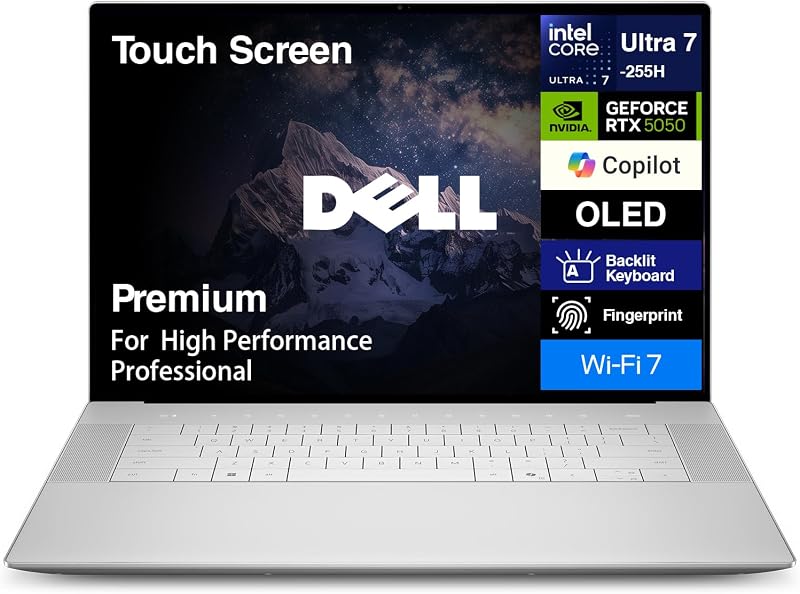
The single technical divide between these two AM5 motherboards comes down to platform lane distribution: the Asus ROG Strix B650E-F concentrates its high-speed bandwidth into dedicated gaming audio, a PCIe 5.0 x16 graphics slot, and a streamlined single-chipset layout, whereas the MSI MPG X670E Carbon uses a dual-chipset design to feed extra SATA channels, accelerated DDR5 memory frequencies, and expansive drive arrays for intensive desktop workstations.
Builders assembling a pure gaming rig should select the Asus ROG Strix B650E-F for its integrated Savitech headphone amplifier and expansive rear USB port selection. Builders creating a multi-drive production setup or pushing memory overclocks should invest in the MSI MPG X670E Carbon for its six SATA ports, heavy heat-pipe thermal array, and DDR5-6600 support.


Asus ROG Strix B650E-F vs MSI MPG X670E Carbon at a Glance
| Attribute | Asus ROG Strix B650E-F | MSI MPG X670E Carbon |
|---|---|---|
| Chipset | AMD B650 | AMD X670 |
| Processor Socket | Socket AM5 (Ryzen 9000, 8000, 7000) | Socket AM5 (Ryzen 9000, 8000, 7000) |
| Power Stages | 12 + 2 power stages (8+4 pin ProCool) | Aluminum cover with heat-pipe design |
| Memory Clock Speed | 6400 MHz (DDR5) | 6600 MHz (DDR5-5600+ OC) |
| M.2 Storage Slots | 3 (1x PCIe 5.0, 2x PCIe 4.0) | Lightning Gen 5 x4 M.2 with M.2 Shield Frozr |
| SATA Ports | 4 (Serial ATA/600) | 6 (SATA 3 / 6Gb/s) |
| Networking | Intel 2.5G Ethernet, WiFi 6E, Bluetooth 5.2 | 2.5Gbps LAN, Wi-Fi 6E, Bluetooth 5.3 |
| USB Ports | 12 rear ports (including USB 3.2 Gen 2×2 Type-C) | 7 ports (USB 3.2 Gen 2) |
| Audio Hardware | ALC4080 Codec with Savitech SV3H712 Amp | Optical S/PDIF Audio Solution |
| Best For | Competitive PC gaming and headphone listening | Multi-drive workstations and high-speed memory tuning |
Chipset Architecture and PCIe Lane Allocation
The fundamental operational difference between these two motherboards rests in the silicon supporting the AM5 socket. The Asus ROG Strix B650E-F utilizes AMD’s B650 chipset, modified under the “Extreme” specification to guarantee PCIe 5.0 connectivity directly to the primary PCIe x16 SafeSlot and one M.2 storage connector. By using a single platform controller hub, the Asus board generates less idle heat and keeps power consumption low while routing high-speed traces cleanly across the printed circuit board. For gamers running a modern discrete graphics card and a lightning-fast operating system drive, this architecture supplies maximum bus speed without excess complexity, as detailed in our asus rog strix b650e-f vs proart x670e-creator analysis.
In contrast, the MSI MPG X670E Carbon employs AMD’s dual-promontory X670 chipset architecture, which daisy-chains two physical controllers to double the platform multiplexing bandwidth. This dual-chip design grants the motherboard significantly greater high-speed input and output lanes from the chipset itself, enabling a denser spread of high-bandwidth slots and peripheral channels. When examining B650E vs X670E PCIe lanes, the X670E platform allows power users to connect multiple add-in cards, capture devices, and secondary high-speed controllers simultaneously without choking the primary PCIe graphics slot or stealing lanes from internal drives.
Choosing between these two approaches depends entirely on how many physical expansion cards and secondary PCIe controllers your system requires. While the Asus board cleanly satisfies standard gaming configurations with its single PCIe 5.0 x16 slot, the MSI board distributes its lane wealth across a more complex topology suited for heavy multitasking hardware. For a simple graphics-card-only build, the single-chip B650 layout avoids unnecessary driver routing, but power users managing extensive expansion hardware will find the expanded lane foundation of the MSI platform essential.
Edge: MSI MPG X670E Carbon delivers greater total high-speed platform bandwidth through its dual-chipset PCIe configuration.
Storage Expansion and M.2 Drive Configurations
Storage potential is one of the clearest dividing lines in this ROG Strix B650E-F vs MPG X670E Carbon specs breakdown. The Asus ROG Strix B650E-F provides three onboard M.2 slots, consisting of one PCIe 5.0 slot wired for next-generation solid-state drives and two PCIe 4.0 slots for current high-speed storage. Every M.2 position features its own dedicated metal heatsink to keep thermal throttling at bay during intense gaming sessions. Backing up these NVMe locations are four Serial ATA/600 (SATA) ports, giving users standard room for mechanical storage drives or bulk 2.5-inch solid-state arrays.
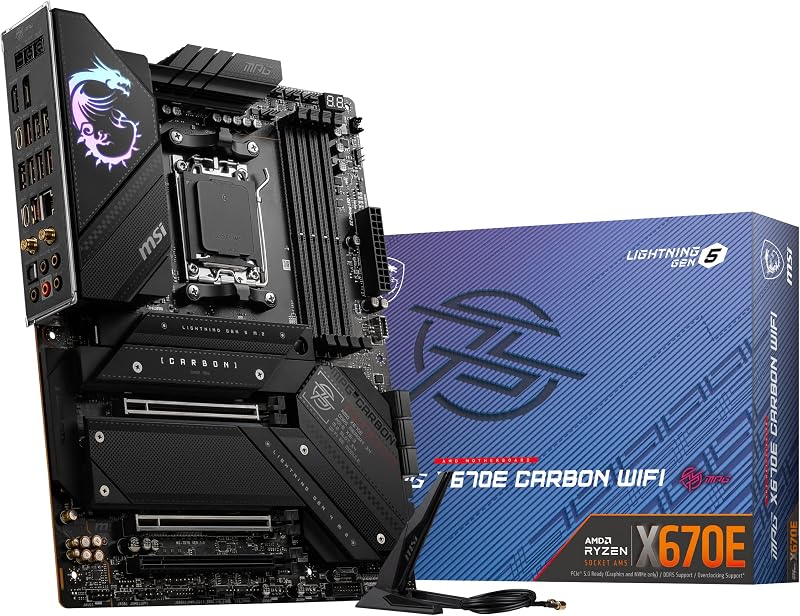
The MSI MPG X670E Carbon takes storage potential considerably further by providing six SATA 6Gb/s ports alongside its Lightning Gen 5 x4 M.2 configuration. To control the blistering heat generated by high-speed solid-state drives, MSI equips the board with its patented M.2 Shield Frozr double-sided heatsinks. The presence of six full SATA connectors makes the MSI board far better suited for multi-drive workstation arrays, Network Attached Storage backup roles, or users migrating extensive mechanical drive libraries from older computers, similar to the drive management seen in the asus tuf gaming b650-plus wifi vs msi mpg x670e carbon match-up.
For dedicated gamers, the three M.2 slots on the Asus motherboard are more than sufficient to host an operating system drive along with two dedicated game library volumes. However, workstation professionals and content creators who edit raw 4K footage or maintain mirrored disk pools will quickly fill four SATA ports. If you rely on multiple mass-storage drives alongside cutting-edge Gen 5 NVMe hardware, the extra SATA capacity and advanced M.2 Shield Frozr cooling on the Carbon give it a definitive advantage.
Edge: MSI MPG X670E Carbon wins with six SATA ports and double-sided M.2 Shield Frozr thermal management.
VRM Delivery and Thermal Cooling Solutions
Voltage regulation determines how reliably a motherboard supplies power to demanding AMD Ryzen processors under extended computing loads. In any MSI MPG X670E Carbon vs ROG Strix B650E-F VRM evaluation, power stage layout and heat dissipation dictate sustained performance. The Asus ROG Strix B650E-F features a 12 + 2 power stage design fueled by an 8 + 4 pin ProCool power connector configuration. ASUS pairs these stages with high-grade alloy chokes and durable capacitors, sheltered beneath massive VRM heatsinks that feature strategically cut airflow channels and high-conductivity thermal pads to dissipate heat through normal chassis ventilation.
The MSI MPG X670E Carbon approaches voltage delivery with an uncompromising industrial thermal design. MSI deploys a massive aluminum I/O cover linked via an integrated cross-heat-pipe directly to the secondary heatsink, maximizing the surface area available to pull heat away from active circuitry. Furthermore, MSI uses premium MOSFET thermal pads rated for a high 7W/mK conductivity, alongside additional thermal pads placed over the chokes. This thermal density ensures that high-core-count processors running sustained rendering workloads remain remarkably cool, mirroring high-end thermal engineering found on boards in the asus proart x670e-creator vs msi mpg x670e carbon class.
In real-world gaming scenarios, the 12 + 2 power delivery of the Asus board will effortlessly drive high-end AMD Ryzen 7000, 8000, and 9000 series processors without entering thermal saturation. However, the MSI board provides greater thermal safety margins due to its direct-contact heat-pipe design and 7W/mK thermal interface materials. Users running overnight video exports or intense multi-threaded production tasks will appreciate the cooler VRM operating temperatures afforded by MSI’s heavier thermal array.
Edge: MSI MPG X670E Carbon takes the lead with its integrated heat-pipe design and 7W/mK thermal conductivity pads.
Rear I/O Connectivity and USB Configuration
External connectivity dictates how easily you can interface with modern peripherals, external capture devices, and high-speed storage drives. The Asus ROG Strix B650E-F stands out dramatically in this category by providing 12 rear-panel ports. The highlight of the Asus rear panel is an ultra-fast USB 3.2 Gen 2×2 Type-C port capable of 20Gbps data throughput, paired with an internal front-panel USB 3.2 Gen 2 Type-C connector. With ten additional rear USB ports spanning various speed standards, the Strix accommodates flight sticks, racing wheels, webcams, streaming decks, and USB audio DACs without requiring an external USB hub, a point frequently highlighted in every thorough Asus ROG Strix B650E-F review.
The MSI MPG X670E Carbon takes a different route, prioritizing USB 3.2 Gen 2 connectivity but providing a more modest count of 7 total ports according to its hardware listing specifications. While it supports lightning-fast communication across its Type-C and Type-A ports, users with dense peripheral configurations will exhaust the native rear I/O quickly. MSI does incorporate modern video outputs with HDMI and DisplayPort, alongside an optical S/PDIF port, matching the Asus board’s video display versatility for processors equipped with integrated RDNA graphics.
For high-performance sim rigs and streaming setups, port density is paramount. Having a 20Gbps USB 3.2 Gen 2×2 interface on the Asus board cuts file transfer times in half when moving massive game directories to compatible external SSDs compared to standard 10Gbps connections. The massive 12-port rear capacity of the Asus board makes everyday cable management effortless, avoiding bandwidth contention across external hubs.
Edge: Asus ROG Strix B650E-F dominates with 12 rear I/O ports and a blistering 20Gbps USB 3.2 Gen 2×2 Type-C connection.
Gaming Audio and Dedicated Hardware Controls
Onboard sound quality is a decisive factor for competitive gamers who rely on pinpoint spatial audio to identify footsteps and environmental cues. The Asus ROG Strix B650E-F incorporates an audiophile-grade ROG SupremeFX ALC4080 audio codec integrated alongside a premium Savitech SV3H712 amplifier. This dedicated hardware amplifier drives high-impedance studio headphones with clean, distortion-free output, lowering total harmonic distortion. Asus supplements this hardware with DTS Sound Unbound, Sonic Studio III software, an optical S/PDIF connector, and Two-Way AI Noise Cancelation to strip background noise from both incoming and outgoing voice communications.
The MSI MPG X670E Carbon provides a capable optical S/PDIF audio solution designed for modern digital sound output, but its listing does not highlight a dedicated internal headphone amplifier. Instead, MSI centers its hardware personalization around physical visual control via MYSTIC LIGHT. The board offers full RGB illumination with 16.8 million colors, 29 selectable lighting effects, and an exclusive front LED strip that can be synchronized to deliver in-game status cues and real-time system notifications alongside standard RGB and Rainbow LED light strips.
When comparing the Asus ROG Strix B650E-F or MSI MPG X670E Carbon for gaming, the audio engineering of the Asus board gives it an undeniable edge. Gamers who plug premium analog headsets directly into the motherboard backplate or front panel will hear richer bass response, wider soundstage separation, and clearer vocal audio through the Savitech SV3H712 amplifier. MSI provides superior visual feedback via its chassis LED integration, but audio hardware plays a far more critical role in competitive gameplay.
Edge: Asus ROG Strix B650E-F wins decisively due to its ALC4080 codec, integrated Savitech amplifier, and Two-Way AI Noise Cancelation.
Memory Support and Overclocking Potential
Operating high-speed DDR5 memory improves framerate stability in CPU-bound titles and accelerates compute workloads. The Asus ROG Strix B650E-F features four DIMM slots supporting DDR5 memory up to 6400 MHz. The board listing indicates compatibility with up to 192 GB of high-density memory modules (with traditional specifications noting a 128 GB standard ceiling), allowing users to install high-capacity kits. ASUS includes AI Networking and hardware tuning profiles that stabilize memory timings across standard four-layer and six-layer traces, an impressive baseline when set against value offerings in the msi pro b650-p wifi vs asus rog strix b650e-f comparison.
The MSI MPG X670E Carbon pushes memory overclocking capabilities even higher, officially supporting dual-channel DDR5 at speeds of 5600+ (OC) and tuning up to 6600 MHz in its hardware listings. The board’s optimized DDR5 memory traces and reinforced physical DIMM slots allow aggressive overclockers to extract lower latencies and higher overall memory bandwidth from top-tier DDR5 memory kits. For users engaged in competitive memory sub-timing benchmarking or compute-heavy rendering, this additional clock speed headroom provides tangible performance gains over boards like those reviewed in the msi mag b650 tomahawk wifi vs asus rog strix b650e matchup.
While DDR5-6000 to DDR5-6400 is considered the sweet spot for the AMD Ryzen memory controller’s 1:1 fabric clock ratio, having certified hardware headroom up to 6600 MHz gives the MSI MPG X670E Carbon the higher performance ceiling. Builders aiming to future-proof their memory configurations for upcoming BIOS updates and faster memory standards will appreciate the added signaling headroom provided by the Carbon’s robust trace engineering.
Edge: MSI MPG X670E Carbon holds the edge with validated memory clock speeds reaching 6600 MHz.
Pros and Cons
Asus ROG Strix B650E-F

Pros
- Superior ALC4080 audio with Savitech SV3H712 amplifier
- 12 rear USB ports with 20Gbps Type-C
- Two-Way AI Noise Cancelation technology
- PCIe 5.0 graphics and M.2 support
Cons
- Only 4 SATA ports included
- Lower 6400 MHz memory clock ceiling
View Asus ROG Strix B650E-F on Amazon
MSI MPG X670E Carbon
Pros
- Six SATA 6Gb/s storage ports
- DDR5 memory support up to 6600 MHz
- Heavy-duty VRM heat-pipe with 7W/mK pads
- Updated Bluetooth 5.3 connectivity
- M.2 Shield Frozr thermal cooling
Cons
- Only 7 rear ports listed
- Lacks integrated dedicated headphone amplifier
View MSI MPG X670E Carbon on Amazon
Who Should Buy Each One
Choose the Asus ROG Strix B650E-F If
- You want integrated high-end audio featuring the ALC4080 codec and Savitech SV3H712 amplifier for studio gaming headphones.
- You connect numerous external peripherals and need 12 rear USB ports along with a 20Gbps USB 3.2 Gen 2×2 Type-C connector.
- You are planning a streamlined Asus ROG Strix B650E-F AM5 build centered strictly around a single PCIe 5.0 graphics card and up to three M.2 NVMe drives.
- You rely on clear voice communications during multiplayer sessions and want hardware-accelerated Two-Way AI Noise Cancelation.
Choose the MSI MPG X670E Carbon If
- You maintain a dense local storage array and need six full SATA 6Gb/s ports alongside multiple M.2 solid-state drives.
- You run continuous high-load compute tasks and require heavy-duty thermal cooling with an integrated heat-pipe and 7W/mK thermal pads.
- You want maximum DDR5 memory frequency headroom with support extending up to 6600 MHz.
- You desire advanced chassis illumination control, utilizing 29 Mystic Light lighting effects and a dedicated real-time front LED notification strip.
Final Verdict
For the vast majority of PC enthusiasts and competitive gamers, the Asus ROG Strix B650E-F is the smarter, more practical motherboard. It focuses resources on what gamers actually interact with every day: class-leading ALC4080 onboard sound paired with a dedicated Savitech headphone amplifier, a massive 12-port rear I/O layout featuring a 20Gbps Type-C port, and a Gen 5 graphics slot ready for next-generation hardware. Unless you actively require the multi-card lane routing or specialized mass-storage channels of the dual-chipset platform, the Strix delivers every high-end AM5 feature without unnecessary platform overhead, proving its outstanding worth in any Asus B650E-F vs MSI X670E Carbon evaluation.
However, when asking is MSI MPG X670E Carbon worth it, the answer is a resounding yes for content creators, workstation users, and dedicated memory tuners. With its six SATA ports, superior double-sided M.2 Shield Frozr cooling, integrated heat-pipe VRM solution, and DDR5-6600 overclocking support, the MSI MPG X670E Carbon stands as the superior platform for sustained multi-core production. If your daily workflow depends on massive local storage pools, complex expansion cards, or push-to-the-limit memory tuning, the MPG X670E Carbon provides the industrial-grade expansion foundation your system demands.
FAQ
Does the Asus ROG Strix B650E-F support AMD Ryzen 9000 series processors?
Yes, the Asus ROG Strix B650E-F is ready for AMD Ryzen 9000, 8000, and 7000 series desktop processors. As noted in the manufacturer specifications, a BIOS update may be required when pairing the motherboard with AMD Ryzen 9000 and 8000 series CPUs.
How do the SATA storage capabilities compare between these motherboards?
The Asus ROG Strix B650E-F features 4 SATA ports running on the Serial ATA/600 standard. The MSI MPG X670E Carbon offers expanded storage capabilities with 6 SATA 6Gb/s ports, making it better suited for users running multiple hard drives or SATA solid-state arrays.
What are the primary differences in rear USB connectivity?
The Asus ROG Strix B650E-F provides a total of 12 ports on its rear I/O, including an ultra-fast USB 3.2 Gen 2×2 Type-C connector capable of 20Gbps data speeds. The MSI MPG X670E Carbon provides 7 external ports featuring USB 3.2 Gen 2 connectivity along with a USB 2.0 interface.
Which motherboard has better onboard audio for gaming headsets?
The Asus ROG Strix B650E-F offers a superior onboard audio design for gaming headsets. It features the ROG SupremeFX ALC4080 codec combined with an integrated Savitech SV3H712 amplifier, DTS Sound Unbound, and Two-Way AI Noise Cancelation. The MSI MPG X670E Carbon provides standard high-definition audio with an optical S/PDIF output but lacks the dedicated Savitech headphone amplifier.
What memory speeds do the Asus B650E-F and MSI X670E Carbon support?
The Asus ROG Strix B650E-F supports DDR5 memory clock speeds up to 6400 MHz across 4 DIMM slots. The MSI MPG X670E Carbon supports dual-channel DDR5-5600+ (OC) with validated overclocking capabilities reaching up to 6600 MHz.
What wireless and networking standards are included on both boards?
Both motherboards feature high-speed 2.5G wired Ethernet and Wi-Fi 6E connectivity for 6GHz wireless networking. For peripheral pairing, the Asus board includes Bluetooth 5.2, while the MSI board features the newer Bluetooth 5.3 standard.