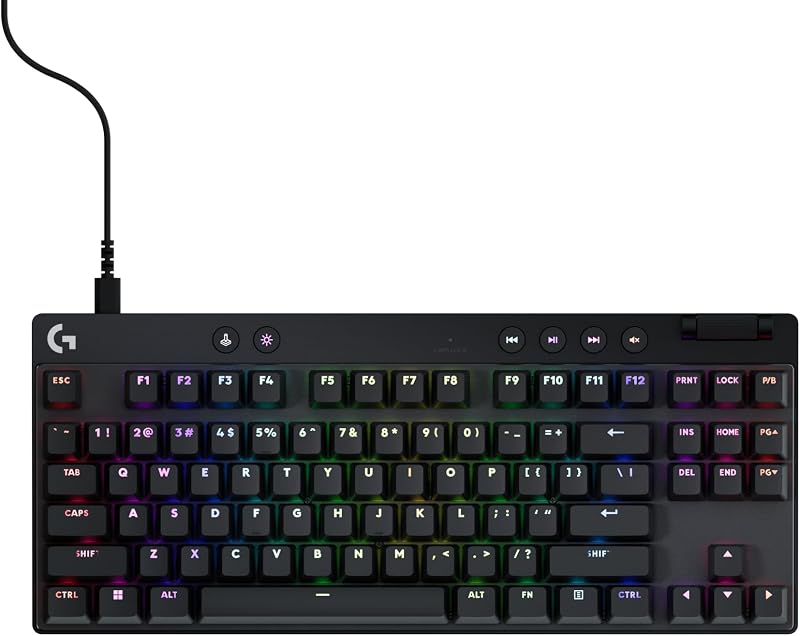
The decisive difference between these two compact 75% mechanical keyboards centers entirely on physical architecture: the Nuphy Air75 V2 is built around an ultra-slim, low-profile aluminum chassis engineered for mobile productivity, while the Epomaker TH80 V2 delivers a tall, full-height acoustic typing profile packed with multi-layered sound dampening foams and an integrated metal rotary knob.
Buyers seeking an ultra-thin keyboard that slips effortlessly into a commuter bag and supports open-source QMK/VIA firmware should choose the Nuphy Air75 V2. Those who want deep, cushioned acoustic resonance, dedicated multimedia hardware control, and twice the battery capacity for a permanent desk station should select the Epomaker TH80 V2.


Nuphy Air75 V2 vs Epomaker TH80 V2 at a Glance
| Feature | Nuphy Air75 V2 | Epomaker TH80 V2 |
|---|---|---|
| Keyboard Profile | Low-profile slim design | Full-height mechanical profile |
| Key Count and Controls | 84 keys (button quantity 78) | 79 keys plus 1 metal rotary knob |
| Chassis Construction | Aluminum frame with translucent bottom shell | Standard casing with dynamic RGB side-plate |
| Switch Configuration | Gateron Cowberry low-profile switch | Hot-swappable custom switch |
| Acoustic Dampening | Not listed | PORON, IXPE, latex, silicone, and PED pad |
| Battery Capacity | 4000mAh | 8000mAh |
| Wireless Device Memory | Up to 4 devices | Up to 5 devices |
| Firmware and Software | QMK/VIA open-source support | Proprietary remapping and macro software |
| Gaming Latency and Polling | Not listed | 1000Hz polling rate and 2ms low latency |
| Keycap Material | PBT material | Not listed |
| Best For | Commuters, Mac users, and low-profile typists | Dedicated desktop setups and acoustic enthusiasts |
Form Factor, Portability, and Physical Profile
The physical footprint and casing height represent the starkest contrast when looking at the Epomaker TH80 V2 vs Nuphy Air75 V2. Nuphy engineered the Air75 V2 around an ultra-compact, low-profile footprint featuring an anodized aluminum top frame and an updated translucent bottom shell that reveals the internal hardware. Because it uses low-profile switches and ultra-thin keycaps, the board rests almost flat against the desk surface. This design eliminates the steep front angle common to mechanical decks, allowing users to type comfortably for extended sessions without propping their hands on an external wrist rest or cramming a bulky case into a travel bag.
By contrast, the Epomaker TH80 V2 is a full-height desktop board measuring 12.73 inches long, 5.54 inches wide, and 1.74 inches tall. That height accommodates full-travel mechanical switches, heavy internal plate materials, and multiple sound-absorbing layers. While Epomaker describes the 75% footprint as compact enough to preserve mouse swiping room on a crowded desk, the keyboard remains decidedly anchored to one spot. Packing a keyboard that measures 1.74 inches tall into an everyday commuter backpack requires significant space compared to the sleek silhouette of Nuphy boards, a contrast also explored when comparing the nuphy air75 v2 vs lofree flow.
Choosing between these two form factors comes down to where you intend to type. If you frequently transition between coffee shops, client offices, and home workstations, Nuphy offers unmatched ease of transport. The TH80 V2 trades away that flat transportability to deliver a deep, rigid desktop presence that will not slide or shift during aggressive typing or gaming sessions.
Edge: Nuphy Air75 V2 for users needing lightweight travel portability, or Epomaker TH80 V2 for typists who prefer a heavy, tall desktop anchor.
Typing Feel, Switch Design, and Acoustic Engineering
Acoustic design and key travel separate these boards as sharply as their physical heights. The Nuphy Air75 V2 low profile switch setup on this configuration utilizes the Gateron Cowberry switch paired with fade-resistant PBT keycaps. Low-profile switches feature distinctly shorter total travel distances and higher actuation points than standard mechanical switches. This gives the Air75 V2 a crisp, immediate bottom-out that feels snappy and fast, making it particularly inviting for users accustomed to modern laptop scissor-switch keyboards who still desire tactile mechanical feedback. However, because low-profile switches have reduced internal housing volume, acoustic resonance is naturally tighter and more muted.
Epomaker takes the opposite path by prioritizing sound modification directly out of the box. Any thorough Epomaker TH80 V2 review must highlight its complex internal acoustic sandwich: the chassis incorporates noise-cancelling layers made from PORON foam, IXPE switch padding, latex, molded silicone, and an additional PED acoustic pad. This multi-layer construction absorbs harsh hollow case reverberations, dampens pinging, and eliminates stabilizer rattles to produce a distinctly deep, creamy sound profile. In addition, the TH80 V2 features a fully hot-swappable circuit board that accepts standard full-height switches, allowing users to pop in different linear, tactile, or clicky options at will.
When weighing the Nuphy Air75 V2 or Epomaker TH80 V2 for typing, the decision depends on whether you value speed and short finger travel or cushioned acoustic depth. Typists who want a deep, muted thock with classic long-stem travel will find Epomaker’s multi-layered sound profile vastly superior, a design trait shared with other acoustic-focused alternatives like those detailed in our comparison of the epomaker th80 v2 vs lofree flow. Conversely, typists seeking minimal finger travel and rapid-fire input will gravitate toward the Air75 V2.
Edge: Epomaker TH80 V2 for acoustic depth and sound dampening; Nuphy Air75 V2 for short-travel typing speed.
Battery Life, Power Management, and Wireless Connectivity
Wireless stamina is a major battleground between these two units, largely dictated by their internal case volume. The Epomaker TH80 V2 battery life is anchored by a massive 8000mAh rechargeable power cell. Epomaker states that this powerhouse battery delivers over 200 hours of continuous play on a single charge. This monumental battery capacity means desktop users can operate cord-free for weeks on end without constantly searching for a charging cable, even when utilizing wireless 2.4GHz or Bluetooth connections. Furthermore, the TH80 V2 remembers up to 5 paired devices simultaneously across Bluetooth, 2.4G, and wired modes.
Because the Nuphy Air75 V2 is constrained by its razor-thin enclosure, it houses a 4000mAh battery-exactly half the capacity of the Epomaker. Nuphy provides detailed operational expectations based on experimental testing: with the RGB backlighting fully engaged, the Air75 V2 delivers between 35 and 57 hours of continuous runtime, which covers roughly a week of standard workdays. If you turn off the keyboard lighting completely, runtime scales up to 220 hours. For wireless pairing, the Air75 V2 features Bluetooth 5.1, 2.4GHz wireless, and USB-C wired modes, supporting seamless toggling between up to 4 devices across Mac, Windows, Linux, Android, and iOS.
The difference in battery capacity affects long-term ownership habits. While both keyboards can achieve well over 200 hours when lighting is disabled, the TH80 V2 has double the chemical storage. If you enjoy running vibrant RGB effects over a 2.4GHz wireless link, Epomaker’s 8000mAh reservoir handles the electrical load far longer between recharge cycles than the 4000mAh cell inside the Air75 V2.
Edge: Epomaker TH80 V2, thanks to its massive 8000mAh battery and 5-device memory.
Firmware Flexibility and Software Customization
Customization philosophy is another area where these keyboards appeal to entirely different user groups. The Nuphy Air75 V2 is built with open-source QMK/VIA firmware support. This is a massive selling point for enthusiasts and productivity power users. VIA enables real-time, browser-based key remapping, lighting adjustments, and macro programming without requiring the user to install background software suites or corporate drivers. Because the configuration is stored directly on the keyboard’s internal memory, your customized layers and shortcuts function identically whether you plug into a locked-down corporate PC, a MacBook, or a Linux workstation. This platform versatility makes the board a frequent benchmark in comparisons like the gmmk pro vs nuphy air75 v2.
The Epomaker TH80 V2 handles customization through its dedicated proprietary software suite. Epomaker’s software provides comprehensive control over key remapping, deep macro recording, and personalized RGB backlighting patterns. While the software is functional and accessible for typical everyday adjustments, proprietary keyboard utilities can be restrictive for users running non-Windows environments or those using corporate laptops that prohibit the installation of third-party peripheral software.
If you switch regularly between operating systems or want open-source freedom without intrusive utilities running in your system tray, Nuphy’s VIA integration offers an unmatched operational advantage. Epomaker’s companion tool gets the job done for Windows gaming and macro setups, but it lacks the universal, driverless flexibility that makes QMK/VIA the industry standard.
Edge: Nuphy Air75 V2, driven by native QMK/VIA open-source firmware.
Gaming Latency, Hardware Controls, and Desk Ergonomics
When assessing the Nuphy Air75 V2 or Epomaker TH80 V2 for gaming, input speed and onboard hardware controls determine the winner based on your playstyle. Epomaker specifically targets competitive players by equipping the TH80 V2 with a 1000Hz (1k) polling rate, 2ms low latency, and complete anti-ghosting circuitry. These specifications ensure that rapid keystrokes register instantaneously during high-stakes gaming sessions. Additionally, the TH80 V2 features a built-in metal rotary volume knob in the top-right corner, granting immediate hardware control over audio levels and media without forcing you to memorize function key shortcuts.
Nuphy’s Air75 V2 listing does not specify exact millisecond latency numbers or polling rates, though its 2.4GHz and wired USB-C connectivity are designed for both gaming and productivity. Where the Air75 V2 excels in gaming is ergonomic comfort. Its low height places keycaps significantly closer to the desk surface, allowing your wrists to rest at a natural, neutral angle. During multi-hour gaming marathons, this low-angle layout reduces wrist strain compared to tall mechanical boards. Gamers who prefer retro styling or standard heights often weigh similar trade-offs when looking at the nuphy air75 v2 vs 8bitdo retro mechanical.
Aesthetics on both boards are elevated through creative illumination. Nuphy equips the Air75 V2 with over 21 backlight effects, custom console tuning, and dual decorative RGB light bars running down the outer edges of the aluminum frame. Epomaker counters with south-facing per-key LEDs and a dedicated dynamic RGB side-plate accent. For players who demand dedicated volume knobs and stated low-latency gaming specs, Epomaker holds the advantage; for those prioritizing flat wrist ergonomics and ambient edge lighting, Nuphy remains compelling.
Edge: Tie. Epomaker TH80 V2 wins on dedicated rotary controls and stated 2ms gaming latency, while Nuphy Air75 V2 wins on low-strain wrist ergonomics.
Pros and Cons
Nuphy Air75 V2

Pros
- Slim low-profile aluminum frame
- Open-source QMK and VIA firmware support
- Durable fade-resistant PBT keycaps
- Lightweight portable design for commuters
Cons
- Smaller 4000mAh battery capacity
- No dedicated rotary volume knob
Epomaker TH80 V2

Pros
- Massive 8000mAh rechargeable battery
- Multi-layer sound dampening with PORON and IXPE
- Integrated metal rotary volume knob
- Stores memory for up to 5 devices
Cons
- Bulky full-height 1.74-inch casing
- Uses proprietary software instead of QMK/VIA
View Epomaker TH80 V2 on Amazon
Who Should Buy Each One
Choose the Nuphy Air75 V2 If
- You need an ultra-thin mechanical keyboard that easily slides into a laptop sleeve for daily commuting.
- You rely on driverless, open-source QMK/VIA firmware to remap keys across Mac, Windows, and Linux.
- You prefer a low-profile switch like the Gateron Cowberry for rapid actuation and flat ergonomic typing without a wrist rest.
- You want a sleek aluminum top case with translucent underpinnings and dual RGB ambient side bars.
Choose the Epomaker TH80 V2 If
- You want an acoustic powerhouse loaded with PORON, IXPE, latex, silicone, and PED sound-dampening layers.
- You require a massive 8000mAh battery that delivers extended wireless freedom and pairs with up to 5 devices.
- You want an integrated physical metal rotary knob for instant volume and media adjustment.
- You prefer standard full-height hot-swappable switches and south-facing RGB lighting for desktop gaming setups, a setup often compared against vintage-themed alternatives like the epomaker th80 v2 vs 8bitdo retro mechanical.
Final Verdict
Choosing between these two standout 75% mechanical keyboards ultimately comes down to your physical workspace. The Nuphy Air75 V2 is the superior overall choice for mobile professionals, hybrid commuters, and typists who prioritize clean desk ergonomics. Its low-profile chassis, responsive Gateron Cowberry switches, durable PBT keycaps, and universal QMK/VIA configuration make it exceptionally adaptable across diverse operating systems. If you need a premium keyboard that transitions effortlessly between a crowded coffee shop and a home office dock, the Air75 V2 proves its worth every time you pack your bag.
However, if your keyboard will live permanently at a dedicated gaming or office desk, the Epomaker TH80 V2 delivers features the slim Nuphy cannot match. With its colossal 8000mAh battery, custom acoustic construction packing five distinct noise-dampening layers, dedicated metal volume roller, and hot-swappable switch sockets, the TH80 V2 provides a rich, creamy typing sensation and marathon battery life. For stationary desktop users who crave deep sound profiles and hardware multimedia dials, the TH80 V2 is clearly the better fit.
FAQ
Can you install standard full-height switches into the Nuphy Air75 V2?
No. The Nuphy Air75 V2 uses a specialized low-profile switch footprint, such as the Gateron Cowberry switches included in this listing. Standard full-height mechanical switches will not fit into the low-profile sockets or align with the ultra-slim aluminum plate.
How does the Epomaker TH80 V2 battery life compare to the Nuphy Air75 V2?
The Epomaker TH80 V2 features an 8000mAh battery that provides over 200 hours of continuous use on a single charge. The Nuphy Air75 V2 contains a 4000mAh battery, delivering 35 to 57 hours with the backlighting active, and up to 220 hours only when the RGB lighting is completely turned off.
Is the Nuphy Air75 V2 or Epomaker TH80 V2 better for gaming setups?
The Epomaker TH80 V2 includes specific gaming specifications, including a 1000Hz polling rate, 2ms low latency, anti-ghosting, and an onboard volume knob. The Nuphy Air75 V2 supports gaming through 2.4GHz and wired modes, but its primary gaming benefit is low-profile ergonomics that reduce wrist strain during long sessions.
Does the Epomaker TH80 V2 support QMK or VIA firmware?
No. The Epomaker TH80 V2 relies on Epomaker’s proprietary companion software for key mapping, macro editing, and RGB customization. If you need open-source QMK/VIA remapping directly in a web browser, the Nuphy Air75 V2 supports it natively.
How many wireless devices can each keyboard pair with at one time?
The Epomaker TH80 V2 remembers up to 5 devices across Bluetooth, 2.4GHz wireless, and wired modes. The Nuphy Air75 V2 supports multi-device connectivity for up to 4 devices simultaneously across Bluetooth 5.1, 2.4GHz, and USB-C.
Are the keycaps on the Nuphy Air75 V2 shine-through for backlighting?
No. The product listing specifically notes that while the Nuphy Air75 V2 features over 21 RGB backlight effects and side light bars, the PBT keycaps are not backlit shine-through caps. The RGB lighting glows around the perimeter of each switch rather than illuminating the legends directly.