The fundamental difference between an air fryer and a toaster oven comes down to airflow velocity versus radiant thermal exposure. An air fryer relies on a high-velocity fan situated directly adjacent to dense heating elements, blowing targeted, turbulent convection currents across a concentrated basket to dehydrate outer surface moisture rapidly and create crisp textures. A toaster oven relies on stationary radiant heating rods mounted across the top and bottom of a horizontal cavity, depending on natural convection or gentle interior air movement to warm, bake, broil, and toast foods steadily across a flat wire rack.
Choose an air fryer if your primary goal is slashing dinner prep times and creating deep-fried textures on poultry, vegetables, and frozen snacks using minimal oil. Choose a toaster oven if you prioritize horizontal cooking space for open-faced sandwiches, morning toast, and personal pizzas that require flat, non-turbulent heat.
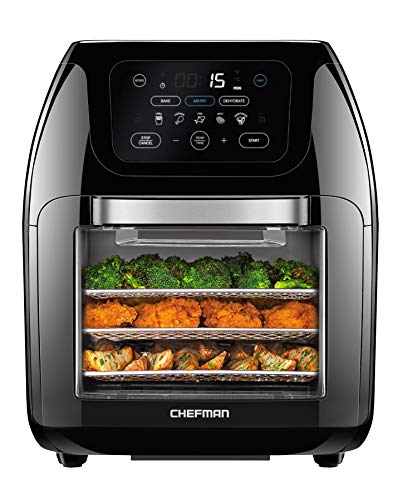

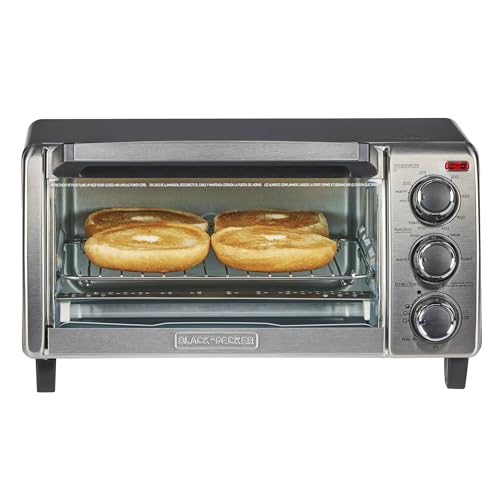

Air Fryer vs Toaster Oven at a Glance
| Feature | Air Fryer | Toaster Oven |
|---|---|---|
| Primary Heating Method | Rapid forced-air convection | Radiant elements with natural convection |
| Typical Wattage | 1,700W to 1,725W | 1,150W |
| Temperature Range | 90°F to 450°F | Up to 450°F |
| Internal Chamber Capacity | 6 to 10 Quarts | 4 Slices of Bread / 9-Inch Pizza |
| Standard Accessories | Crisper plates, rotisserie spits, mesh racks | Wire rack, bake/broil pan, crumb tray |
| Control Interface | Digital capacitive touch with multi-mode presets | Manual analog turn knobs |
| Preheating Time | 0 to 3 minutes | Up to 10 minutes |
| Footprint Orientation | Vertical and upright | Horizontal and wide |
| Best For | Rapid crisping, frozen foods, and lean proteins | Toasting bread, flat baking, and melting cheese |
Cooking Speed and Airflow Dynamics
Cooking speed is the primary operational difference between air fryer and toaster oven appliances. Air fryers utilize an internal fan motor designed to displace air at high speeds inside a compact chamber. For instance, the Cosori TurboBlaze Air Fryer uses an integrated motor that spins up to 3,600 RPM across five selectable fan speeds. This high-speed airflow strips moisture away from food surfaces almost instantaneously, driving heat directly into proteins and starches. Because heat transfers via forced convection rather than passive ambient air, foods crisp in a fraction of standard oven times, and units rarely require lengthy warm-up cycles. The CHEFMAN Multifunctional Digital Air Fryer+ explicitly eliminates the traditional oven preheat phase, using rapid heating elements to reach operational temperatures right away.
By contrast, standard toaster ovens rely on natural convection and passive thermal radiation. The BLACK+DECKER TO1313SBD Toaster Oven and the BLACK+DECKER 4-Slice Toaster Oven with Natural Convection use internal engineering based on thermodynamic principles to circulate warm air naturally rather than forcing it with high-velocity blowers. The manufacturer explicitly recommends a 10-minute preheat period to stabilize internal temperatures before baking or crisping begins. This gentle radiant approach prevents foods from drying out too quickly, making it suitable for delicate baked goods, but it dramatically increases total cook times for everyday proteins and appetizers compared to high-output forced air. Readers comparing different convection configurations often weigh these airflow traits in the ninja af161 vs sp101 head-to-head.
When measuring pure air fryer vs toaster oven cooking speed, the air fryer wins decisively. A batch of frozen french fries or chicken tenders that requires 20 minutes in a standard radiant cavity will finish in 10 to 12 minutes inside a high-speed forced-air basket, with significantly more exterior blistering and surface crunch.
Edge: Air fryer, because its high-velocity convection fans eliminate preheat delays and cut cooking times nearly in half.
Power Output and Electrical Load
Evaluating air fryer wattage vs toaster oven specifications reveals how each appliance draws utility power to achieve its target cooking temperatures. Dedicated air fryers are high-draw appliances engineered to supply rapid surges of thermal energy. The Cosori model operates at 1,725 watts, while the Chefman air fryer draws 1,700 watts from a standard 120-volt outlet. This heavy power consumption feeds both the top-mounted heating elements and the high-RPM convection fan, allowing the chamber to reach cooking ranges between 90°F and 450°F in seconds. Because the running time per meal is brief, the total kilowatt-hour usage remains modest despite the elevated instantaneous draw.
Toaster ovens operate at noticeably lower wattage ratings. Both Black+Decker units listed draw 1,150 watts on standard electrical service. This lower wattage means the heating elements warm up more slowly, explaining why the cavity requires an extended preheat window to reach its maximum 450°F threshold. However, an 1,150-watt load places substantially less instantaneous stress on shared kitchen circuits, making it less likely to trip breakers in older homes or apartments where multiple countertop devices share a single electrical branch. Similar electrical considerations arise when analyzing commercial-grade countertop units in the cuisinart toa-60 vs instant omni plus matchup.
While the air fryer pulls approximately 550 to 575 more watts than a four-slice toaster oven, its shortened cooking cycle offsets the power disparity. A toaster oven running for 30 minutes at 1,150 watts consumes comparable or greater total electrical energy than an air fryer completing the same task in 15 minutes at 1,725 watts.
Edge: Tie, because the toaster oven draws fewer instantaneous watts on shared circuits, but the air fryer runs for a shorter duration.
Chamber Layout and Kitchen Footprint
The question of choosing an air fryer or toaster oven for small kitchen spaces depends on available clearance, cabinet positioning, and food geometry. Air fryers prioritize vertical interior capacity. The Chefman provides a generous 10-quart (10-liter) interior footprint, measuring 12 inches deep, 12 inches wide, and 15 inches high, with a weight of 14.2 pounds. The Cosori unit measures 14.4 inches deep, 11.8 inches wide, and 11.9 inches high at 13.2 pounds. These vertical designs save horizontal counter width, but their tall profiles and top-exhaust venting can cause clearance issues under low upper cabinets where escaping steam and hot air accumulate.
Toaster ovens adopt a low-slung, horizontal orientation engineered to fit under almost any standard upper cabinet line. The Black+Decker TO1313SBD measures 14.5 inches wide, 10.8 inches deep, and only 8.8 inches high, while the natural convection variant spans 16.9 inches wide, 11.63 inches deep, and 9.07 inches high. Their dropdown doors open forward into the room rather than upward, providing direct access to the interior wire shelf. However, their outer metal chassis radiates heat directly into the immediate room, requiring at least several inches of side and rear clearance away from combustible walls and pantry items. Comparing these physical profiles against larger combo units is a frequent topic in the breville smart oven air fryer pro vs cuisinart toa-60 review.
If your kitchen features cramped countertops with low upper cupboards, the toaster oven provides a safer height profile. Conversely, if horizontal counter space is strictly limited and you have ample overhead clearance, the narrow base of a vertical air fryer preserves working room along your prep surface.
Edge: Toaster oven, because its low-profile height slips easily under standard upper kitchen cabinets without vertical clearance conflicts.
Cooking Versatility: Pizza, Toast, and Baking
Food geometry dictates which appliance handles specific meals effectively. In any evaluation of an air fryer or toaster oven for pizza, the toaster oven holds a clear design advantage. Both Black+Decker toaster ovens feature a curved interior cavity specifically engineered to accommodate a standard 9-inch personal pizza or four full slices of sandwich bread laid completely flat. Dual heating elements positioned both above and below the wire rack deliver direct, balanced radiant heat, melting cheese thoroughly on top while gently crisping the bottom crust without blowing lightweight toppings off the pie.
Air fryers approach versatility through specialized air modes and multi-tier accessories rather than wide rack surfaces. The Chefman includes three air flow racks, a drip tray, and an internal rotisserie spit with a dedicated retrieval tool, allowing users to dehydrate snacks, roast whole poultry, or bake on multiple levels simultaneously. The Cosori TurboBlaze features precise temperature management from 90°F to 450°F, allowing it to proof bread at low temperatures, dehydrate fruit, broil meats, and bake soft cookies in its 6-quart square basket. However, putting sliced sandwich bread or flat pizzas into a high-powered air fryer often leads to curling edges, airborne cheese, or uneven bottom browning because the airflow pulls intensely from the top. Those exploring alternative high-capacity configurations often examine the ninja af300 vs sp101 breakdown.
For breakfast staples like buttered toast, open-faced melted sandwiches, and flat personal pies, the toaster oven performs reliably. The air fryer dominates for foods with irregular shapes that benefit from 360-degree heat exposure, including whole rotisserie chickens, meatballs, roasted root vegetables, and breaded cutlets.
Edge: Toaster oven, because its flat wire rack excels at everyday staples like four slices of bread and 9-inch pizzas that struggle in turbulent vertical baskets.
Controls, Usability, and Cleaning Maintenance
Control interfaces and post-meal clean-up differ significantly between these appliance formats. Air fryers utilize digital microprocessors with capacitive touch panels. The Chefman incorporates 17 digital touch presets alongside an internal viewing light and a large door window, letting home cooks monitor cooking progress without opening the cooking chamber. The Cosori model offers integrated touch controls, customizable preheat options, and a soft-start fan motor that keeps operational noise under 53 decibels. When meal preparation finishes, cleaning is simple: Cosori provides a PFAS-free nonstick ceramic-coated basket and crisper plate that are dishwasher safe, while Chefman supplies a removable drip tray and dishwasher-safe racks.
Toaster ovens rely entirely on manual mechanical interfaces. Both Black+Decker models utilize analog turn knobs to control temperature, functional modes (bake, broil, toast, and keep warm), and cooking duration. The 30-minute mechanical timer requires users to turn past 10 minutes and back to set short intervals, or manually toggle a stay-on function for longer roasts. The interior features a dropdown glass door, a removable slide-out crumb tray, and an included bake/broiler pan. However, the interior walls of small toaster ovens feature exposed heating elements and unlined metal that collect grease splatters, requiring careful manual scrubbing to avoid damaging the heating rods. Evaluating these maintenance trade-offs is a staple in the ninja dz071 vs sp101 analysis.
The programmable nature of air fryers offers greater convenience for busy cooks who value single-touch operation and automatic shutoff. Furthermore, enclosed dishwasher-safe baskets and trays contain grease far better than open wire racks and crumb trays, reducing the time spent scrubbing countertops and appliance interiors.
Edge: Air fryer, due to its intuitive digital presets, auto-shutoff safety, and dishwasher-safe nonstick ceramic and stainless components.
Pros and Cons
Air Fryer

Pros
- Rapid cooking with high-velocity airflow
- Dishwasher-safe nonstick ceramic components
- Rotisserie and dehydration modes on select models
- Minimal preheat time needed
Cons
- High vertical height under low cabinets
- Turbulent airflow blows light toppings
View CHEFMAN Multifunctional Digital Air Fryer+ Rotisserie on Amazon
Toaster Oven

Pros
- Flat rack fits 9-inch pizzas easily
- Even radiant browning on sandwich bread
- Low vertical height fits cramped spaces
- Lower 1150-watt power draw
Cons
- Requires 10-minute preheat period
- Manual interior cleaning around heating rods
View BLACK+DECKER TO1313SBD Toaster Oven 15.47 Inch on Amazon
Who Should Buy Each One
Choose the Air Fryer If
- You want rapid cooking speeds that eliminate traditional 10-minute oven preheating cycles entirely.
- Your weekly menu focuses heavily on chicken wings, roasted vegetables, lean proteins, and frozen finger foods that need blistered crunch.
- You prefer digital touchscreens, multi-speed airflow adjustments, and dishwasher-safe nonstick baskets for minimal cleanup.
- You want advanced cooking modes like rotisserie roasting, multi-tier dehydrating, or low-temperature bread proofing in a single machine.
Choose the Toaster Oven If
- Your daily breakfast routine revolves around evenly toasted sliced bread, bagels, and English muffins placed on a flat wire rack.
- You regularly cook 9-inch personal pizzas, melted tuna melts, or small casseroles that require stable radiant heat from top and bottom elements.
- Your kitchen features low overhead cabinetry that cannot accommodate tall, upright appliances venting hot air upward.
- You favor simple, long-lasting mechanical knobs over digital touchscreens and need a stay-on timer for extended low-heat baking.
Final Verdict
For most modern households seeking to upgrade their everyday meal preparation, the air fryer represents the better overall investment. With power ratings reaching up to 1,725 watts and fan speeds hitting 3,600 RPM, devices like the Cosori TurboBlaze and Chefman Multifunctional Air Fryer cook food substantially faster than conventional ovens while stripping away excess surface moisture. Their programmable digital interfaces, quiet motor designs, and fully dishwasher-safe nonstick ceramic components transform daily cooking from a chore into a seamless, fast process. If your routine revolves around weeknight dinners, meal-prep proteins, and rapid snacks, any comprehensive air fryer review highlights how dramatically these machines outperform radiant heat.
Nevertheless, a traditional toaster oven remains an indispensable countertop tool for specific culinary habits. If your household relies on four-slice morning toast, open-faced melts, and 9-inch frozen pizzas, the horizontal layout and dual radiant heating elements of the Black+Decker models provide consistent, non-turbulent results that an air fryer cannot replicate. An authentic toaster oven review confirms that for low-clearance counters, mechanical simplicity, and flat baking tasks, this classic kitchen workhorse continues to earn its countertop space.
FAQ
Can a toaster oven toast bread as well as a standalone toaster?
Yes, toaster ovens toast bread effectively because they use top and bottom radiant heating elements. Models like the Black+Decker 4-slice units feature dedicated toast settings engineered to brown both sides of up to four bread slices simultaneously on an open wire rack, making them an excellent dual-purpose replacement for a traditional slot toaster.
Can you cook a 12-inch frozen pizza in a standard toaster oven?
No, compact toaster ovens such as the Black+Decker TO1313SBD and TO1760SS feature curved interiors specifically dimensioned for 9-inch pizzas or four bread slices. Cooking a full-size 12-inch frozen pizza requires a much wider, extra-deep countertop convection oven.
Is an air fryer worth it if I already own a toaster oven?
An air fryer is worth adding if you frequently cook proteins, roasted root vegetables, or frozen snacks and want them cooked in half the time with deep-fried crispness. The intense, high-velocity airflow from a 3,600 RPM motor produces blistering and crisp textures that the gentle, natural convection of a standard toaster oven cannot match.
Is a toaster oven worth it if I already have a full-size kitchen oven?
A toaster oven is worth keeping because it heats up faster and draws only 1,150 watts, compared to full-sized ranges that consume 2,500 to 5,000 watts. It allows you to warm sandwiches, toast bagels, or bake a 9-inch personal pizza without heating up the entire kitchen or running an empty standard oven.
Do air fryers blow cheese and lightweight toppings off food?
Yes, because air fryers use high-velocity forced convection fans, loose ingredients like shredded cheese, pepperoni slices, or lightweight parchment paper can get blown around inside the chamber. Toaster ovens use non-turbulent radiant heat, making them significantly better suited for open-faced melts and custom pizza toppings.
Can you bake cookies and cakes inside an air fryer?
Yes, air fryers can bake small-batch cookies and pastries using specialized lower-fan settings or dedicated bake modes. Models like the Cosori TurboBlaze feature multi-speed fans and temperature controls starting at 90°F, preventing high-speed air from drying out soft cookie dough before the interior sets.


