When choosing between a gas range vs induction cooktop, the deciding factor comes down to whether you need a permanent, heavy-duty culinary workstation with an integrated baking oven or a standalone, ultra-efficient surface burner that runs on standard household electricity. A gas range combines an open-flame cooktop with a spacious roasting and baking cavity in a single freestanding chassis, giving you the ability to prepare complex, multi-dish feasts using any cookware material you already own. In contrast, an electric induction cooktop delivers rapid, flameless heat through electromagnetic energy directly to your pan base, offering unmatched thermal efficiency, digital temperature repeatability, and effortless portability without requiring a dedicated fuel line or specialized ventilation.
Choose a gas range if you need an all-in-one appliance to bake, broil, and sear across four or five simultaneous burners using traditional open flames. Choose an induction cooktop if you prioritize energy conservation, easy flat-glass maintenance, and a compact cooking surface that plugs into standard 120-volt outlets for small kitchens or mobile spaces.

Gas Range vs Induction Cooktop at a Glance
| Feature | Gas Range | Induction Cooktop |
|---|---|---|
| Appliance Configuration | Freestanding 2-in-1 range (cooktop plus oven) | Standalone portable countertop single burner |
| Heat Generation Method | Open flame combustion (natural gas or liquid propane) | Electromagnetic field heating pan directly |
| Burner / Element Quantity | 4 to 5 sealed burners | 1 induction glass-ceramic zone |
| Thermal Output Range | 4,000 to 18,000 BTU burners (plus oven burners) | 100 to 1800 Watts (100°F to 460°F) |
| Oven Functionality | 2.1 to 4.8 cu. ft. oven with bake, broil, or convection | Not listed (cooktop surface only) |
| Cookware Compatibility | Universal (cast iron, stainless steel, aluminum, copper) | Magnetic-bottom cookware only (5 to 12 inches) |
| Control Mechanism | Analog mechanical rotary dials | Digital push buttons with LED screen and timer |
| Power / Fuel Connection | Gas line hookup plus 120V electronic ignition cord | Standard 120V, 15A electrical wall outlet |
| Physical Weight | 104 to 185.2 pounds | 5.8 to 6.2 pounds |
| Best For | Full kitchen setups and multi-course oven baking | Compact spaces, mobile cooking, and energy efficiency |
Cooking Power and Heat Responsiveness
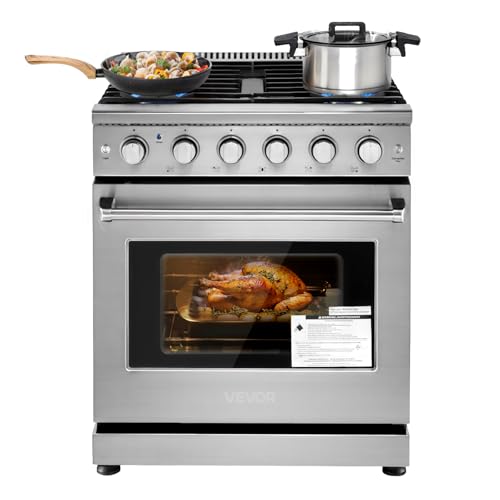
Cooking power on a gas stove relies on open flame combustion, which transfers thermal energy through the air directly to the base and up the sides of your cookware. High-output units like the VEVOR Gas Range Oven showcase the dynamic potential of this system, featuring five sealed aluminum burners engineered for specific kitchen tasks: an intense 18,000 BTU primary burner for high-heat wok tossing and searing, supported by intermediate 9,000 BTU, 8,000 BTU, 6,000 BTU, and a 4,000 BTU simmer burner. Even smaller compact platforms, such as the Avanti Compact Gas Range Oven, generate an 8,800 BTU output across four sealed burners to handle everyday sauteing and boiling. The primary advantage of gas range btu output is visual responsiveness: when you turn a mechanical dial, the physical flame grows or shrinks instantly, providing immediate visual feedback and wrap-around heat that warms the curved walls of skillets.
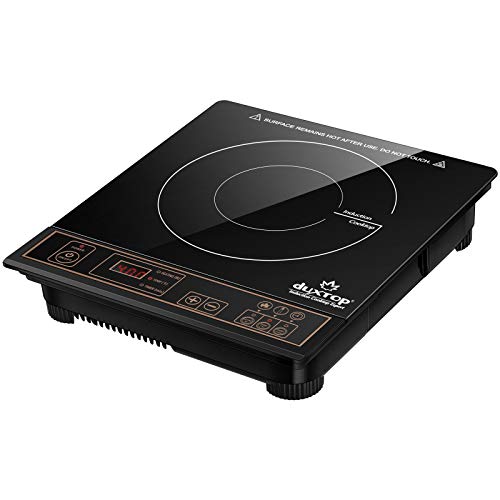
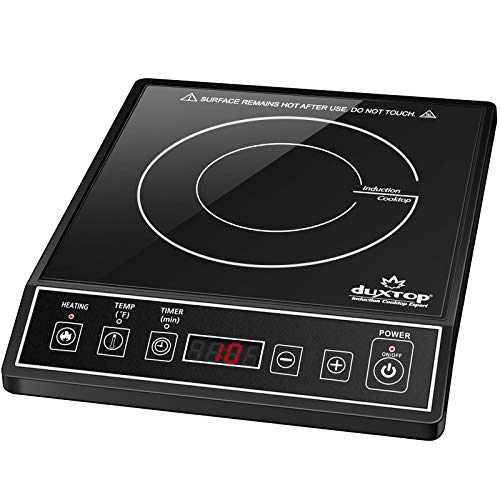
Induction heating works on an entirely different scientific principle. Instead of radiating thermal energy from a burner, an induction coil beneath the ceramic glass generates an alternating electromagnetic field. When magnetic cookware enters this field, the magnetic current excites the iron molecules inside the pan base, turning the cooking vessel itself into the heat source. Countertop models like the Duxtop Gold 8100MC draw up to 1800 watts of electrical power across 15 discrete levels ranging from 200 to 1800 watts, while the Duxtop Black 9100MC expands that granularity to 20 power settings spanning 100 to 1800 watts. Because there is no ambient heat transfer loss through the air, induction boils liquids noticeably faster than standard burners. The difference in operational philosophy mirrors mechanical debates seen in outdoor equipment like a gas vs electric chainsaw, where raw combustion brute force goes toe-to-toe with clean, instantaneous electrical torque.
Where induction cooktop temperature control truly shines is sustained, low-temperature discipline. While gas ranges rely on delicate gas valve balancing to prevent scorching delicate sauces, the Duxtop platforms allow you to dial in specific thermal targets from 100°F or 140°F up to 460°F. However, because induction coils focus magnetic currents strictly through the pan bottom, they do not heat the flared sidewalls of a skillet the way an open flame does. If your cooking technique involves lifting, tilting, and swirling pans away from the surface, an induction cooktop pauses heating the moment contact is broken, whereas a gas flame continues to deliver steady thermal energy.
Edge: Gas Range – Broad multi-burner flame coverage and high-output searing burners allow dynamic pan movement and diverse pan heating that induction cannot match.
Baking Capacity and Multi-Dish Cooking
The single greatest operational difference when evaluating an induction cooktop vs gas range is the presence of an integrated oven cavity. A freestanding gas range is a complete culinary station that lets you roast meats, bake pastries, and broil casseroles while simultaneously using the cooktop above. In any thorough gas range review, capacity determines usability. The 30-inch VEVOR range delivers a massive 4.8 cubic foot (136 liter) oven cavity equipped with two detachable chrome racks across six positions. It combines a 10,000 BTU tube broiler with an 18,500 BTU U-shaped main bake burner, alongside specialized convection bake and convection roast modes that circulate hot air for uniform browning. Even compact alternatives like the 20-inch Avanti provide a 2.1 cubic foot interior, complete with two oven racks, an interior light, a 60-minute monitoring timer, and a dedicated bottom broiler drawer supplied with a broiling pan.
Portable induction units, by contrast, are strictly single-burner surface elements. They possess no baking capabilities, no internal heating cavities, and no integrated broilers. If you prepare a dish on an induction cooktop, you are limited to surface techniques such as boiling, simmering, shallow frying, and pan searing. If you want to roast root vegetables, bake bread, or melt cheese over a gratin, you must rely on separate standalone appliances like a countertop toaster oven, an air fryer, or a full-sized wall oven.
This structural difference dictates your daily kitchen workflow. On a five-burner gas range, you can boil pasta water on the high-output burner, reduce a tomato reduction on the simmer burner, saute vegetables on an intermediate burner, and roast a whole chicken inside the 4.8-cubic-foot oven cavity all at once. An induction burner requires sequential meal staging unless you invest in multiple individual burners, each of which demands its own dedicated electrical outlet. For households that cook multi-part meals, the integrated multi-tier capacity of a gas range is indispensable.
Edge: Gas Range – An integrated multi-rack baking and broiling cavity allows complex, multi-course meal preparation that single-surface induction burners cannot perform.
Cookware Compatibility and Material Flexibility
Cookware versatility is an area where gas ranges demonstrate unrestricted freedom. A gas burner does not care what metal or alloy your pan is fabricated from; an open flame will transfer heat effectively into cast iron, copper, multi-clad stainless steel, carbon steel, stoneware, and pure aluminum. Furthermore, heavy cast iron grates, such as the durable heat-resistant grates on the VEVOR range, securely support curved round-bottom woks, irregularly shaped cast iron skillets, and older griddles that may have developed slight warping over years of heavy use.
Conversely, induction cooktop cookware compatibility is governed by strict physics. Because an induction unit heats via electromagnetic fields, the cooking vessel must be fabricated from a ferrous, magnetic metal. Both the Duxtop 8100MC and 9100MC require induction-ready magnetic cookware, such as enameled iron, plain cast iron, or stainless steel constructed with a magnetic base layer. If a standard refrigerator magnet does not cling firmly to the underside of the vessel, the induction coil cannot excite the metal, and no heat will be produced. Non-magnetic solid aluminum, solid copper, and standard borosilicate glass vessels will not function at all on an induction cooktop.
Beyond material composition, pan geometry is equally critical. The Duxtop product specifications stipulate that compatible cookware must possess a flat bottom with a minimum diameter of 5 inches and a maximum diameter of 12 inches. Both models feature integrated auto-pan detection sensors that automatically shut the unit off after 60 seconds if no pan or an incompatible pan is detected. Cooks who have invested in high-end culinary collections often find themselves comparing cookware constructions, much like evaluating all-clad vs made in collections, to ensure the bottom layers contain the necessary magnetic stainless steels required to activate induction surfaces. With a gas range, every pan in your cabinet is ready to cook immediately without magnetic testing.
Edge: Gas Range – Complete compatibility with all metals, pan shapes, and base sizes eliminates the need to replace or magnetically verify your cookware collection.
Kitchen Footprint, Installation, and Portability
When selecting a gas range or induction cooktop for small kitchen layouts, the spatial requirements and installation hurdles differ drastically. A freestanding gas range requires a permanent, dedicated footprint within your kitchen architecture. The compact 20-inch Avanti unit measures 22 inches deep by 26 inches wide by 40 inches high and weighs 104 pounds, designed specifically for tight apartments, condos, and vacation homes. The full-size 30-inch VEVOR range spans 29.9 inches deep by 30.3 inches wide by 37.4 inches high, weighing a substantial 185.2 pounds. Beyond physical mass, a gas range requires a certified fuel line-either a natural gas connection or a liquid propane conversion setup-alongside a standard 120V outlet to power the automatic electronic ignition system and interior lighting.
Evaluating a gas stove vs portable induction cooktop highlights an entirely different level of user mobility. A portable induction burner has zero permanent footprint. The Duxtop 8100MC measures 11.5 inches deep by 13 inches wide by 2.5 inches high and weighs just 5.8 pounds, while the Duxtop 9100MC measures 12.7 by 16.3 by 3.8 inches and weighs 6.2 pounds. These units can be pulled from a cabinet, set onto any stable table or countertop, plugged into a standard 120-volt, 15-amp household electrical outlet, and put away after cooling. The shift toward corded electric portability over heavy mechanical infrastructure echoes the broader evolution seen in outdoor gear comparisons like battery vs gas lawn mower equipment, where eliminating fuel logistics simplifies day-to-day operation.
For temporary living quarters, office breakrooms, dorm rooms, studio kitchenettes, and RV travel, a portable induction cooktop avoids all structural remodeling. It demands no gas line certifications, no complex pipe fitting, and no structural floor reinforcement. While a gas range delivers a permanent cooking anchor for a full-scale residential build, the portable induction cooktop offers unmatched spatial agility for minimal footprints.
Edge: Induction Cooktop – Featherweight dimensions under 7 pounds and standard 120-volt wall plug operation make induction cooktops infinitely more portable and easier to install.
Energy Efficiency and Kitchen Safety
Analyzing a gas range or induction cooktop for energy efficiency reveals an enormous disparity in thermal transfer. In traditional open-flame cooking, a large fraction of the heat generated by burning natural gas or propane bypasses the pot entirely, escaping into the surrounding room. This ambient heat loss forces your kitchen air conditioning to work harder and introduces combustion byproducts into the living area. Even an Energy Star certified gas appliance, such as the Avanti 20-inch range, still operates through combustible open-flame burners that radiate heat into the room.
In contrast, any modern induction cooktop review highlights superior thermal economy. The Duxtop 9100MC features an 83% energy efficiency rating, transferring nearly all consumed electrical energy directly into the cookware base. Because thermal excitation happens internally within the pan, the surrounding air stays remarkably cool, making an induction burner ideal for small spaces during hot summer months. Readers weighing home energy changes often analyze similar thermodynamic efficiency gains when comparing a heat pump vs gas furnace, where targeted electrical transfer consistently outperforms fuel-combustion losses.
From a safety standpoint, induction eliminates the primary hazards associated with gas ranges: open flames, unburned fuel leaks, and scorching cast iron grates that stay dangerously hot long after cooking ends. Duxtop induction cooktops incorporate extensive digital protection protocols, including diagnostic error message displays, low and high voltage warning systems, and auto-pan detection that automatically shuts off the power supply after 60 seconds if a pan is removed. While the glass surface does absorb some residual heat from the hot cookware base, the cooktop itself does not generate heat independently. For households with young children, curious pets, or limited kitchen ventilation, induction represents a significantly safer operational profile.
Edge: Induction Cooktop – An 83 percent energy efficiency rating, zero open flames, cool ambient operation, and multi-stage electronic auto-shutoff protections make induction far safer and more efficient.
Controls, Maintenance, and Daily Usability
Daily usability is shaped by how you interact with an appliance and how much labor is required to clean it after cooking. A gas range uses mechanical analog knob dials that offer fluid, infinite physical adjustments between high flames and tiny simmer points. There are no digital menus to scroll through, making adjustments instinctive. However, maintaining a gas range demands physical effort. Units like the VEVOR feature cast iron grates, sealed burner caps, and aluminum burner assemblies that sit over a recessed stainless steel drip basin. Spilled sauces, boiling starch, and grease splatter can bake onto these components under the high heat of an open flame, requiring you to lift heavy grates, disassemble burner heads, and scrub around ignition electrodes to keep the range operating cleanly.
An induction burner takes an entirely different approach to daily maintenance. The cooking surface is a continuous sheet of smooth glass. Because the glass itself is not an active heat source, food splatters, boiling liquids, and dripped sauces do not bake or burn onto the glass surface. According to the Duxtop 9100MC specifications, cleaning the cooktop requires nothing more than wiping the surface with a damp towel once the pan is removed and residual heat dissipates. There are no heavy grates to remove, no burner orifices to unclog, and no recessed drip wells to scrub.
The control experience on induction models is digital and precise. Duxtop units provide clear digital display screens and built-in countdown timers that can be set in 1-minute increments up to 170 minutes, allowing you to walk away from a simmering broth without fear of boiling over. The primary operational trade-off noted in the Duxtop documentation is acoustic: while induction itself is a noiseless process, multi-ply clad cookware can produce a high-pitched buzzing or vibration sound as the alternating magnetic layers interact with the field at high wattages. For home cooks who prioritize spotless cleanup and programmable shutoff timers, these digital trade-offs are often well worth the convenience.
Edge: Induction Cooktop – The completely flat glass surface prevents baked-on food messes for instant cleanup, while integrated 170-minute countdown timers automate cooking sessions.
Pros and Cons
Gas Range

Pros
- Integrated baking and broiling oven cavity
- Compatible with all cookware materials and shapes
- High-output burners up to 18,000 BTU
- Simultaneous multi-burner cooking capacity
Cons
- Substantial weight up to 185.2 pounds
- Requires gas line installation and dedicated space
- Cast iron grates require tedious cleaning
View Avanti Compact Gas Range Oven 4 on Amazon
Induction Cooktop

Pros
- High 83 percent energy efficiency rating
- Lightweight design under 7 pounds
- Flat glass surface wipes clean easily
- Plugs into standard 120V household outlets
- Programmable timer up to 170 minutes
Cons
- No integrated oven for baking
- Requires magnetic-bottom cookware
- Single-burner cooking surface
View Duxtop 1800W Portable Induction Cooktop Countertop on Amazon
Who Should Buy Each One
Choose the Gas Range If
- You need a complete all-in-one kitchen center with an integrated oven for baking breads, roasting poultry, and broiling casseroles.
- You regularly cook multi-course family meals requiring four or five independent burners running simultaneously at different heat levels.
- You already own a diverse cookware collection made of non-magnetic aluminum, solid copper, or round-bottom woks that will not work on induction.
- You have existing natural gas or liquid propane utility hookups in your home and prefer physical mechanical control knobs over digital push buttons.
Choose the Induction Cooktop If
- You live in an apartment, dorm, tiny home, or RV where spatial footprint is minimal and a 120-volt, 15-amp outlet is the only available power source.
- You want maximum energy efficiency with an 83 percent thermal transfer rating that keeps ambient kitchen air cool during heavy cooking.
- You prefer a flat-glass surface that wipes clean with a damp cloth without disassembling heavy cast iron grates or scrubbing burner heads.
- You value precise safety features like automatic pan detection, low/high voltage monitoring, and a programmable 170-minute countdown shutoff timer.
Final Verdict
For most homeowners building out a primary residential kitchen, the gas range remains the most comprehensive culinary solution. Products like the 30-inch VEVOR range and the 20-inch Avanti compact range give you an expansive, integrated cooking system capable of handling complex meals from start to finish. With burner outputs reaching 18,000 BTUs and integrated oven cavities up to 4.8 cubic feet featuring convection modes and dedicated broilers, a gas range provides unmatched versatility. It accommodates every pan material in your kitchen without restriction, supports dynamic pan tossing over open cast-iron grates, and allows you to bake, roast, and saute simultaneously without crowding your counter space with secondary appliances.
However, when asking is an induction cooktop worth it, the answer is a resounding yes for compact spaces, auxiliary cooking, and energy-conscious cooks. Standalone units like the Duxtop 8100MC and Duxtop 9100MC deliver rapid thermal transfer, an 83 percent energy efficiency rating, and surgical digital temperature control from 100°F to 460°F. If you do not need an integrated baking oven, do not possess gas utility hookups, and want a lightweight, flameless burner that cleans up in seconds and stows neatly in a cabinet, an induction cooktop is the smarter, safer, and far more modern choice.
FAQ
Can you use any cast iron pan on an induction cooktop?
Yes, standard cast iron and enameled cast iron cookware are naturally magnetic and work exceptionally well on induction cooktops. However, the cookware base must be flat and measure between 5 and 12 inches in diameter to satisfy the auto-pan detection sensors on units like the Duxtop 8100MC and 9100MC. Cooks should also take care when placing heavy cast iron on the glass surface to avoid scratching the ceramic panel.
How does an 1800-watt induction cooktop compare to a gas range BTU output?
An 1800-watt induction cooktop delivers approximately 6,140 BTUs of electrical energy per hour, but it transfers about 83 percent of that energy directly into the pan. A standard gas range burner rated at 9,000 to 18,000 BTUs loses roughly 60 percent of its generated heat into the surrounding air. Consequently, an 1800W induction cooktop boils water just as fast as, or faster than, a mid-tier gas burner despite using fewer total energy units.
Does a gas range require an electrical outlet to operate?
Yes, modern gas ranges such as the Avanti Compact Gas Range and the VEVOR Gas Range utilize a standard 120-volt electrical connection to operate their automatic electronic ignition systems, oven interior halogen lights, and digital timers. While the burners generate heat purely from natural gas or liquid propane fuel, the electrical connection is necessary for push-button sparking and oven illumination.
What happens if you place a non-magnetic pan on an induction burner?
If you place an incompatible pan-such as pure aluminum, solid copper, or glass-onto an induction cooktop, the internal coil will fail to detect a magnetic circuit. Units like the Duxtop 9100MC feature an auto-pan detection system that alerts the user with a diagnostic error message and automatically powers off the appliance after 60 seconds if suitable magnetic cookware is not positioned on the heating zone.
Why does an induction cooktop produce a buzzing noise during operation?
Induction heating itself is completely noiseless, but high-frequency magnetic fields can cause physical vibrations within multi-ply clad cookware. If a pan has multiple layers of different metals sandwiched together, the alternating magnetic forces can cause those internal metal bonds to vibrate, generating a faint humming or high-pitched buzz. This sound is normal, harmless, and often diminishes when heat is reduced or heavier cast iron is used.
Can you run a gas range on liquid propane instead of natural gas?
Many freestanding gas ranges, including the VEVOR 30-inch Gas Range, are engineered to be dual-fuel compatible with both natural gas (NG) and liquid propane (LPG). Converting the appliance typically requires installing specific propane burner orifices to accommodate the higher pressure of propane fuel, allowing flexible installation in rural homes, RVs, cabins, and residential apartments alike.