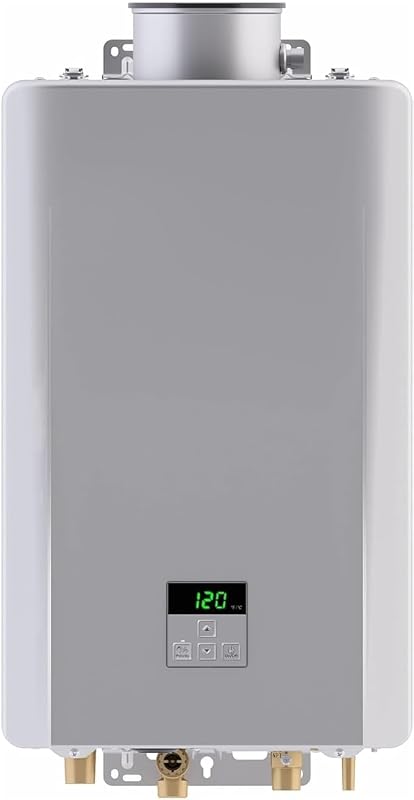
The decisive factor when comparing a heat pump versus a gas furnace is whether you require a dual-purpose electric system that manages both summer cooling and moderate winter warming, or a dedicated combustion powerhouse built strictly to defeat severe freezing weather. An electric heat pump operates by extracting and relocating ambient heat using a refrigeration loop, making it an all-in-one year-round thermal regulator. A natural gas furnace, by contrast, burns fuel across a heavy-duty heat exchanger to generate massive volumes of instantaneous heat, moving air across central ductwork regardless of outdoor temperatures.
Choose a heat pump if your priority is multi-season climate control, zone-based efficiency, and heating in moderate climates without installing gas lines. Choose a gas furnace if you face prolonged sub-freezing winters, possess existing ductwork, and demand high-volume thermal output that never drops off when the mercury plummets.


Heat Pump vs Gas Furnace at a Glance
| Feature | Heat Pump | Gas Furnace |
|---|---|---|
| Primary Function | 4-in-1 (Heating, Cooling, Dehumidifier, Fan) | Dedicated Central Heating (0 BTU Cooling) |
| Thermal Capacity (Heating) | 12,000 to 24,000 BTU | 60,000 to 100,000 BTU |
| Fuel / Power Source | Corded Electric / DC (110V or 220V) | Natural Gas (115V for blower/controls) |
| Cold Climate Operating Floor | Functional down to 5°F (-15°C) | No ambient low-temperature shutoff |
| Airflow Capacity | Zoned air handler circulation | 1,200 to 1,600 CFM central distribution |
| Compressor / Motor Design | DC Inverter Rotary Scroll Compressor | Multi-Speed ECM Blower Motor |
| Efficiency Rating Standard | DC Inverter / AHRI Certified | 96% AFUE Energy Star Certified |
| Operating Sound Level | 28 dB to 34 dB (Indoor units) | Not listed (ECM dampens operational sound) |
| Smart Connectivity | Alexa-enabled with app routine control | Not listed (Standard thermostat relay) |
| Best For | Year-round zoned heating and cooling | High-capacity whole-home winter heating |
Heating Output and Air Delivery
Heating output determines how quickly and effectively a heating system can raise indoor temperatures across a given square footage. In a charcoal vs gas grill comparison, fuel combustion delivers aggressive radiant warmth, and the same underlying physical principle governs heating appliances. A natural gas furnace operates as an active thermal generator, burning natural gas inside an aluminized steel primary heat exchanger to produce extreme thermal volume. The representative Goodman 96% AFUE Two Stage Upflow/Horizontal multi-speed 60k BTU Low NOx Natural Gas furnace delivers 60,000 BTU of heating output, while the larger Goodman 96% AFUE Two Stage Upflow/Horizontal multi-speed 100k BTU Low NOx Natural Gas furnace scales up to 100,000 BTU. This sheer volume of heat is propelled throughout an entire structure using heavy-duty blowers moving between 1,200 and 1,600 CFM of air through central ducting.
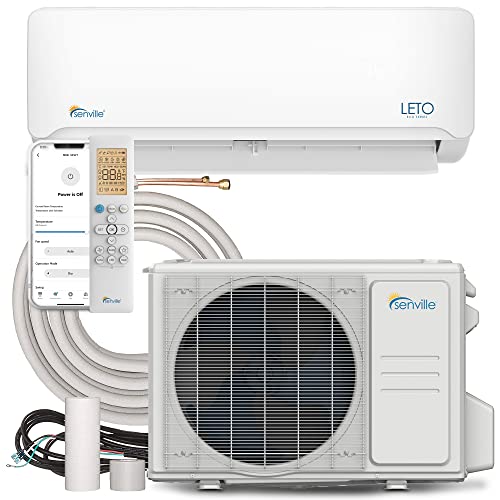
Conversely, a mini split heat pump relies on thermodynamic transfer rather than fuel combustion. The representative Senville LETO Mini Split Air Conditioner, Heat Pump, White, 12000 BTU produces 12,000 BTU of cooling and heating capacity, while the larger Senville LETO Mini Split Air Conditioner, Heat Pump, White, 24000 BTU outputs 24,000 BTU. Because a heat pump moves warmth from outdoor air into the room via R-454B refrigerant loops, the heat supplied at the indoor air handler feels steady and moderate rather than the scorching supply-air blast created by a combustion burner. In a direct heat pump vs gas furnace heating output assessment, the furnace provides between three to eight times the raw thermal power of single-zone ductless units, allowing it to satisfy the heavy heating load of an entire multi-story residence from a single basement or utility closet location.
Edge: Gas Furnace, because its 60,000 to 100,000 BTU output and 1,200 to 1,600 CFM airflow deliver vastly superior whole-home heating capacity compared to localized mini split units.
Cold-Climate Reliability and Operating Limits
When selecting a heat pump or gas furnace for cold climates, the minimum ambient operating limit becomes the single most critical technical specification. Air-source heat pumps must extract ambient warmth from outdoor air that is already cold. As exterior temperatures sink, the thermodynamic yield decreases. Senville rates both its 12,000 BTU and 24,000 BTU LETO systems to remain functional down to 5°F (-15°C). While this operational floor allows the mini split to cover late autumn chills and normal freezing spells, exterior drops below 5°F cause the system to lose heating efficacy or stop functioning entirely, leaving spaces without sufficient heating unless auxiliary thermal backups exist.
A gas furnace bypasses this thermal limitation because its fuel source is independent of outside air temperatures. Whether the external air sits at 35°F or -25°F, natural gas routed into the burner combusts at identical temperatures. In any gas furnace review, this weather immunity stands as the defining advantage for regions with deep, prolonged freezes. Homeowners evaluating gas furnace vs heat pump installations in northern climates must factor in this absolute heating reliability. The combustion process within the Goodman two-stage burner continues uninterrupted during sub-zero cold waves, eliminating the drop in capacity that affects electric heat absorption cycles.
Edge: Gas Furnace, due to its ability to generate full heating output during severe freezes well below the 5°F operational floor of the heat pump.
Energy Efficiency and Operational Mechanics
Operational efficiency measures how effectively an appliance converts energy into indoor warmth, but the two systems use completely divergent metrics. In a gas furnace vs heat pump evaluation, the furnace operates under Annual Fuel Utilization Efficiency (AFUE). The Goodman units feature a 96% AFUE rating, signifying that 96% of every thermal unit of natural gas consumed is converted directly into residential warmth, while only 4% escapes through the exhaust flue. These furnaces utilize a two-stage gas valve coupled with an electrically commutated motor (ECM). The multi-speed ECM motor enhances overall operational efficiency by dynamically modulating airflow control, which improves continuous heat circulation while minimizing electrical draw on standard 115-volt circuits.
A heat pump uses an electric DC inverter to drive a rotary scroll compressor, altering its electrical draw rather than burning fossil fuels. The 12,000 BTU Senville system consumes 1,020 watts on a 110-volt circuit, whereas the 24,000 BTU model draws 2,500 watts on a 220-volt connection. Because heat pumps move heat rather than generating it from combustion, their heat pump vs furnace operational efficiency allows them to achieve effective thermodynamic efficiencies well over 100% under mild outdoor temperatures. Homeowners examining whether a heat pump or gas furnace for efficiency is the right pick will find that the Senville units, with their AHRI certification, excel in moderate seasons by modulating down to low power states via variable inverter technology. When managing indoor air comfort and humidity, pairing efficient climate gear is as crucial as comparing a dedicated dehumidifier like the homelabs 4500 vs midea cube 50 for moisture-heavy environments.
Edge: Heat Pump, as its DC inverter rotary scroll compressor moves ambient thermal energy with exceptional efficiency in moderate temperatures compared to combustion losses.
All-Season Versatility and Secondary Functions
A central gas furnace is exclusively a heating appliance. Both the 60,000 BTU and 100,000 BTU Goodman models provide 0 BTU of cooling capability and 0 kW of electric resistance backup out of the box. To achieve summer air conditioning, a furnace requires the addition of a secondary uncased or cased evaporator coil, an exterior condenser unit, and integrated refrigerant lines. Operating alone, the furnace serves strictly as an air handler and burner assembly for the cold months of the year, leaving total seasonal versatility dependent on separate equipment investments.
In contrast, the Senville LETO mini split functions as a comprehensive 4-in-1 climate system. It delivers dedicated air conditioning, a reversible heat pump cycle, a dehumidification mode, a fan setting, and a turbo function. Homeowners using the 24,000 BTU model gain 24,000 BTU of summer cooling power alongside heating and air circulation, all driven by the same indoor air handler and outdoor condenser. Furthermore, the heat pump provides modern voice and mobile integration. Built-in Alexa compatibility enables automated voice adjustments, remote temperature management via smartphone apps, and scheduled routines. Anyone wondering is a heat pump worth it will appreciate that a single mini split installation covers cooling in July and heating in November without adding secondary machinery.
Edge: Heat Pump, thanks to its 4-in-1 design combining air conditioning, heating, dehumidification, and smart Alexa controls in one package.
Physical Installation, Footprint, and Acoustic Impact
The structural demands of installing these two heating types differ substantially. A natural gas furnace requires rigid architectural infrastructure. The Goodman units require a central utility closet, basement, or attic space with upflow or horizontal clearance (note that neither model can be configured as a downflow unit). Cabinet widths range from 17.5 inches for the 60,000 BTU unit to 21 inches for the 100,000 BTU model, with total unit weights reaching 110.9 to 140 pounds. Additionally, installations demand hard-piped natural gas supply lines, dedicated high-efficiency venting kits to route flue gases outdoors, and duct transitions. When evaluating gas connections, homeowners often compare fuel infrastructure much like choosing between a propane vs natural gas grill, remembering that LP conversion kits for Goodman furnaces must be purchased separately.
A ductless mini split heat pump bypasses ductwork entirely, utilizing an indoor wall-mounted air handler connected to an exterior condenser via an included 16-foot line set and communication wire. The Senville units come pre-loaded with R-454B refrigerant for line runs up to 25 feet, although professional installation is explicitly required. Acoustically, the heat pump is engineered for quiet living spaces. The 12,000 BTU indoor air handler operates at a whisper-quiet 28 dB, while the 24,000 BTU air handler runs at 34 dB. The Goodman furnace utilizes its multi-speed ECM motor to reduce airflow turbulence compared to older single-stage blowers, but moving 1,200 to 1,600 CFM through metal sheet ductwork inevitably generates higher ambient mechanical and air-rushing noise within living quarters.
Edge: Heat Pump, because of its compact ductless form factor, included installation line set, and silent 28 dB to 34 dB indoor operation.
Pros and Cons
Heat Pump
Pros
- Heating and cooling in a single system
- Ultra-quiet operation down to 28 dB
- Smart home voice and app control
- Integrated dehumidifier and multi-speed fan
Cons
- Heating capability limited to 5°F temperatures
- Significantly lower BTU output than gas options
- Requires professional refrigerant line installation
View Senville LETO Mini Split Air Conditioner on Amazon
Gas Furnace
Pros
- High heating capacity up to 100,000 BTU
- High 96% AFUE fuel efficiency rating
- Robust airflow capacity up to 1600 CFM
- Extensive 10-year parts limited warranty
Cons
- Provides heating only with zero cooling capability
- Requires natural gas connection and external venting kits
- Large and heavy cabinet construction
View Goodman 96% AFUE Two Stage Upflow on Amazon
Who Should Buy Each One
Choose the Heat Pump If

- You live in a region where winter temperatures rarely drop below the 5°F (-15°C) operating floor.
- Your home lacks existing ductwork, making a ductless split system with an included 16-foot line set the most practical path.
- You need a single appliance that provides active 12,000 or 24,000 BTU air conditioning alongside winter heating and dehumidification.
- You want ultra-quiet indoor operation down to 28 dB combined with smart Alexa voice and app automation.
Choose the Gas Furnace If

- Your climate experiences deep, sub-zero winter freezes where heat pump thermodynamic output falls off.
- Your residence is already equipped with central air ducts capable of handling 1,200 to 1,600 CFM airflow.
- You demand massive heating output ranging between 60,000 and 100,000 BTU to warm an entire large home from a single central plant.
- You have an active natural gas utility connection and prefer an Energy Star 96% AFUE two-stage heating system.
Final Verdict
For most homeowners seeking an adaptable, modern climate control upgrade, the mini split heat pump represents the more versatile solution. By providing an all-season 4-in-1 platform featuring air conditioning, electric heating, dehumidification, and variable DC inverter technology, systems like the Senville LETO eliminate the necessity of maintaining separate cooling and heating machinery. Its ultra-quiet 28 dB indoor sound profile, R-454B refrigerant, and integrated smart Alexa automation make it an exceptional match for room additions, ductless homes, and temperate-to-moderate climate zones.
However, when raw heating output and extreme weather survivability are the primary concerns, the natural gas furnace remains the undisputed champion. If your home sits in an area subject to persistent sub-zero blizzards, the 5°F functional floor of an air-source heat pump leaves your home vulnerable without auxiliary heat strips. The Goodman two-stage 96% AFUE units deliver up to 100,000 BTU of relentless heating and 1,600 CFM of air distribution across whole-house ductwork, unaffected by external freezing conditions. When answering is a gas furnace worth it, the answer is an emphatic yes for cold-climate homeowners connected to natural gas who demand uncompromising winter heating power.
FAQ
Can a heat pump completely replace a gas furnace in freezing weather?
A heat pump can replace a furnace only if local winter temperatures remain within its operating envelope. The Senville LETO heat pump is rated to operate down to 5°F (-15°C). In regions where temperatures routinely plunge below 5°F, an air-source heat pump will lose capacity, meaning a high-output natural gas furnace is required to maintain adequate indoor heating.
Does a gas furnace provide air conditioning during the summer?
No. A gas furnace provides 0 BTU of cooling on its own. As listed on the Goodman units, the equipment is strictly a heating appliance and air mover. To achieve air conditioning, you must add an external AC condenser and an indoor evaporator coil to the furnace duct system, whereas a heat pump provides cooling and heating out of the box.
What electrical service is required to power these systems?
The electrical requirements vary by model and capacity. The 12,000 BTU Senville heat pump operates on a standard 110-volt circuit drawing 1,020 watts, while the 24,000 BTU unit requires a 220-volt connection drawing 2,500 watts. The Goodman gas furnaces require a 115-volt single-phase power supply to operate their ECM blower motor, gas valves, and internal control boards.
What does the 96% AFUE rating on a gas furnace mean?
AFUE stands for Annual Fuel Utilization Efficiency. A 96% AFUE rating on a Goodman furnace means that 96% of the natural gas consumed is converted directly into usable heat for your living space, while only 4% is lost through exhaust venting. This meets Energy Star certification standards for high-efficiency fuel combustion.
Can the Goodman natural gas furnace run on propane instead?
Yes, but not directly out of the box. Goodman specifies that accessories such as LP (liquid propane) conversion kits and specialized venting kits are sold separately. A certified technician must install the LP conversion kit before operating the furnace on propane fuel.
Do mini split heat pumps require professional installation?
Yes. Although the Senville systems include an installation kit with a 16-foot line set, communication wiring, and pre-loaded R-454B refrigerant for runs up to 25 feet, the manufacturer explicitly notes that professional installation is required to pull an appropriate vacuum, verify flare seals, and safely connect electrical circuits.
Related reading: pellet grill vs gas grill.