The fundamental divide between the SteelSeries Arctis Nova 7 and the HyperX Cloud II comes down to modern dual-wireless versatility versus proven, plug-and-play wired simplicity. Gamers weighing these two models must choose whether they want mobile app equalization and cable-free movement or an analog and USB sound card setup that never needs charging.
Players who balance gaming with Discord calls on their phones or swap between consoles and computers will find the Arctis Nova 7 tailored to their workflow. Conversely, desktop purists who want dependable audio hardware, zero battery degradation, and an aluminum frame should stick with the classic Cloud II.
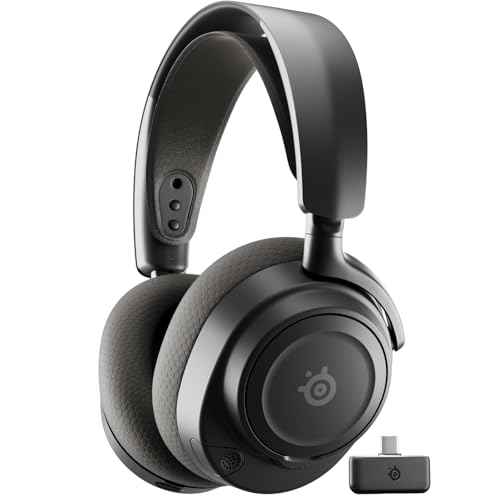

SteelSeries Arctis Nova 7 vs HyperX Cloud II at a Glance
| Feature | SteelSeries Arctis Nova 7 | HyperX Cloud II |
|---|---|---|
| Connectivity | 2.4GHz Wireless and Bluetooth (Simultaneous) | Wired (USB Sound Card Control Box) |
| Drivers | Custom Neodymium Magnetic Drivers | Large 53mm Drivers |
| Frequency Response | Up to 22,000 Hz | 15 Hz – 25,000 Hz |
| Battery Life | 50+ Hours (USB-C Fast Charge) | Not listed (Wired, no battery required) |
| Microphone | ClearCast Gen 2 Retractable (-25dB reduction, Sonar AI) | Detachable Noise-Cancelling (Discord and TeamSpeak Certified) |
| Surround Sound | 360° Spatial Audio Support | Hardware-Driven 7.1 Virtual Surround Sound |
| Software and EQ | Arctis Companion App with 200+ Game Audio Presets | Hardware Control Box (No dedicated app listed) |
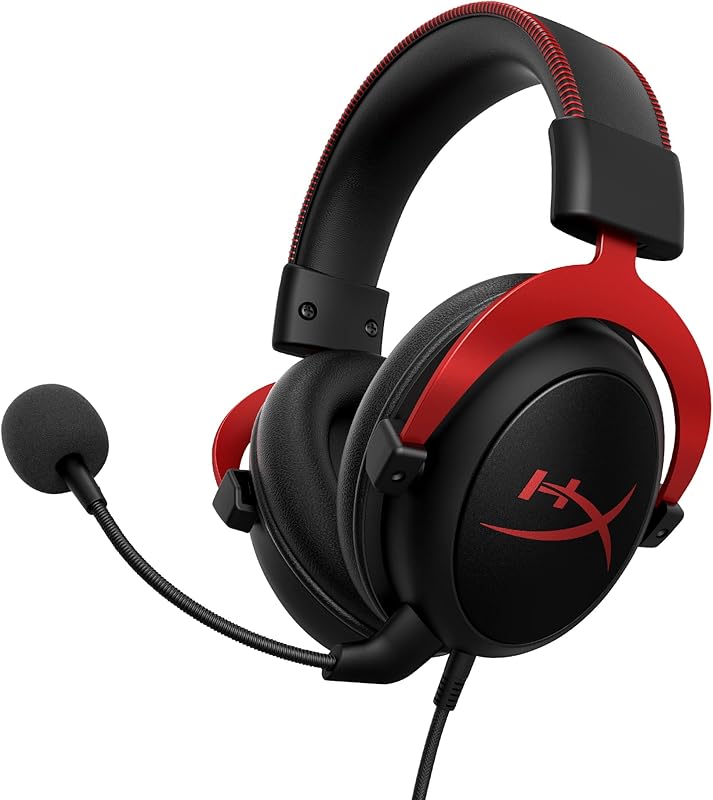
| Frame Construction | Steel Frame with Elastic Headband | Durable Aluminum Frame with Padded Leatherette |
| Weight | 11.52 oz | 11.29 oz |
| Warranty | 1 Year | 2 Year Manufacturer |
| Best For | Multi-platform wireless setups and dual-stream audio | Plug-and-play desktop gaming with no battery maintenance |
Connectivity and Simultaneous Audio Mixing
Connectivity dictates how smoothly a gaming headset fits into your daily routine. When looking at steelseries arctis nova 5 vs hyperx cloud alpha wireless or other wireless matchups, wire-free freedom changes how you navigate your space during matches. In this head-to-head, HyperX Cloud II wired vs Arctis Nova 7 wireless illustrates two completely different design philosophies. The Arctis Nova 7 operates via a compact 2.4GHz USB-C dongle (with an included USB-A adapter) for low-latency transmission, while also running an independent Bluetooth channel. This allows Arctis Nova 7 Bluetooth simultaneous audio, letting you mix live match audio from a PC or console with a Discord chat, music track, or phone call coming directly from your smartphone.
The Cloud II relies entirely on a physical cord connected to its dedicated USB sound card audio control box. There are no wireless frequencies to pair, no transmitters to swap, and zero dropouts caused by household 2.4GHz interference. For players who sit at a desk and do not leave their battle station mid-match, the Cloud II ensures permanent, low-latency audio transmission without pairing routines. However, you cannot walk into the kitchen between rounds while listening to your teammates, nor can you easily blend a mobile phone conversation into your headset stream without third-party desktop utilities.
The trade-off comes down to cable friction versus wireless convenience. The Arctis Nova 7 eliminates the physical tether to your rig and opens up multi-tasking across two active sound sources at once. The Cloud II keeps things strictly focused on the single source at the other end of the cable, delivering pure wired dependability at the cost of mobility and dual-device flexibility.
Edge: SteelSeries Arctis Nova 7 delivers dual-source wireless streaming and freedom of movement that a wired tether cannot match.
Sound Quality and Audio Customization
Evaluating Arctis Nova 7 vs Cloud 2 sound quality requires examining both physical transducer hardware and onboard processing tools. The Cloud II utilizes large 53mm dynamic drivers operating across a wide frequency response of 15 Hz to 25,000 Hz. These large drivers push substantial acoustic volume with clear separation, backed by an inline USB sound card that supplies hardware-driven 7.1 virtual surround sound at the touch of a single button. Because the Cloud II relies on hardware processing, you do not need complex background apps installed on your machine to activate its spatial algorithm.
The Arctis Nova 7 features custom-designed neodymium magnetic drivers tuned up to a 22,000 Hz frequency response with a 36-ohm impedance. SteelSeries supplements this acoustic hardware with 360° Spatial Audio support and extensive software customization. Through the Arctis Companion mobile app, users gain real-time game audio control with over 200 tailored EQ profiles created specifically for titles like Call of Duty, Fortnite, and Minecraft. Players can boost critical environmental cues such as enemy footsteps or weapon reloads on the fly without minimizing their game window to adjust settings.
For readers researching headsets in our steelseries arctis nova 5 vs hyperx cloud ii guide, the contrast in control is immediately noticeable. The Cloud II delivers a balanced, rich, plug-and-play acoustic signature out of the box, but it locks you into its factory tuning and generic 7.1 toggle. The Arctis Nova 7 gives competitive players precise parametric control to shape frequencies for individual games, giving it a technical advantage in tactical shooters.
Edge: SteelSeries Arctis Nova 7 wins for its extensive mobile app EQ library and fine-grained spatial tuning options.
Battery Life and Power Management
Power management is an operational factor unique to wireless gaming headsets. SteelSeries Arctis Nova 7 battery life stands at an impressive 50+ hours of continuous runtime per charge, representing over 40% more capacity than the prior generation. SteelSeries also incorporates optimized USB-C Fast Charge, which rapidly restores hours of gameplay after a brief charging session. You can easily complete a full week of intense gaming sessions without ever reaching for a cable, and the headset can continue playing while charging via USB-C.
The Cloud II circumvents the concept of battery life entirely. Because it is a hardwired USB headset, it draws continuous power directly from your PC, console, or controller. You never have to track charge percentages, remember to dock the headset overnight, or deal with lithium battery capacity loss five years down the line. When you sit down to play, the Cloud II is guaranteed to operate indefinitely.
Deciding between these approaches depends on whether you view battery charging as an acceptable maintenance step. While the Arctis Nova 7 provides exceptional endurance that ranks among the longer-lasting wireless options in its class, the Cloud II provides indefinite uptime. Gamers who hate managing recharge cycles will always appreciate the zero-maintenance reality of a wired peripheral.
Edge: HyperX Cloud II takes this category by eliminating battery degradation and charging routines completely.
Build Quality, Comfort, and Frame Durability
Physical longevity and ergonomic comfort determine how well a headset performs during marathon gaming sessions. The Cloud II has built a legendary reputation around its industrial design, featuring a solid, durable aluminum frame designed to withstand the drops and knocks of daily use. It weighs a nimble 11.29 ounces and pairs memory foam ear cushions with a thickly padded leatherette headband. The closed ear cup design delivers strong passive noise cancellation, sealing out ambient household noise purely through mechanical clamping force and acoustic dampening.
The Arctis Nova 7 approaches ergonomics with a rugged steel headband paired with an elastic suspension ski-goggle band. Weighing 11.52 ounces, it distributes its weight evenly across the top of your head, eliminating direct pressure points on the skull. It features memory foam ear cushions that promote breathability, alongside an active noise cancellation specification noted in its product listing to help suppress environmental disruptions. Similar build comparisons are detailed in our analysis of the steelseries arctis nova pro wireless vs hyperx cloud ii.
While the Arctis Nova 7 suspension band provides great weight distribution, the Cloud II features an aluminum fork-and-frame construction that remains one of the most robust physical builds in gaming peripherals. The Cloud II also includes a travel mesh bag and an airplane headphone adapter in the box. Both headsets provide plush memory foam, but the all-metal structural core of the Cloud II offers rugged, proven peace of mind.
Edge: HyperX Cloud II edges ahead due to its proven aluminum chassis and stress-resistant architecture.
Microphone Performance and Noise Rejection
Voice clarity is critical for team callouts and collaborative gaming. The Arctis Nova 7 incorporates a ClearCast Gen 2 bidirectional microphone that retracts completely into the left ear cup when not in use. It features native background noise rejection that reduces ambient sounds by up to -25dB, blocking mechanical keyboard clatter, system cooling fans, and room noise. When connected to a PC, the microphone can be further enhanced using SteelSeries Sonar AI software for advanced algorithmic vocal isolation.
The Cloud II employs a detachable, noise-cancelling microphone that holds official certifications from Discord and TeamSpeak. Its flexible boom arm allows you to position the capsule directly in front of your mouth, and because it is fully detachable, you can remove it entirely when using the headset strictly for listening to music or watching media. The USB sound card control box amplifies voice audio, helping your callouts project clearly over the wire without digital compression artifacts.
Between the two, the Arctis Nova 7 offers greater daily utility. Having a microphone that slides flush into the headset frame ensures you never misplace the mic piece when traveling. Furthermore, the -25dB physical noise rejection paired with Sonar AI processing on desktop gives the Nova 7 superior suppression of ambient household distractions.
Edge: SteelSeries Arctis Nova 7 wins with its fully retractable design and advanced -25dB noise suppression.
Platform Compatibility and Setup Complexity
Setting up your peripheral across multiple systems can introduce friction if the headset lacks proper interface support. Evaluating the SteelSeries Arctis Nova 7 or HyperX Cloud II for PC and console environments reveals distinctly different strengths. The Arctis Nova 7 is built around a plug-and-play USB-C wireless dongle engineered for cross-platform gaming across PC, PlayStation 5, PlayStation 4, Nintendo Switch, and mobile platforms. The included USB-A adapter ensures backward compatibility with older towers or docks that lack native USB-C ports.
The Cloud II relies on its USB audio control box, which provides hardware 7.1 virtual surround sound functionality specifically on PC, Mac, and PS4. For systems like the Xbox One, Nintendo Switch, or mobile devices, it connects via stereo analog signals. The listing notes that older legacy platforms like Xbox 360 and PS3 are not supported, and using the headset on certain Xbox One configurations may require a separate Microsoft headset adapter.
When looking at the steelseries arctis nova 7 vs arctis nova 5 or the Cloud lineup, modern USB-C transmitter architecture makes shifting between modern hardware effortless. The Arctis Nova 7 plugs directly into modern laptops, hand-held consoles, and PlayStation consoles without requiring specialized adapters or sound cards, making it significantly more adaptable for diverse gaming stations.
Edge: SteelSeries Arctis Nova 7 provides broader plug-and-play modern console and mobile flexibility.
Pros and Cons
SteelSeries Arctis Nova 7

Pros
- Over 50 hours of battery life
- Simultaneous 2.4GHz and Bluetooth audio
- Companion app with 200+ game EQ presets
- Fully retractable noise-rejecting microphone
Cons
- More expensive wireless ecosystem
- Requires periodic battery recharging
View SteelSeries Arctis Nova 7 on Amazon
HyperX Cloud II
Pros
- Durable aluminum frame construction
- Zero battery maintenance or charging downtime
- Hardware-driven 7.1 virtual surround sound
- Includes airplane adapter and mesh carry bag
Cons
- Tethered to a physical wired connection
- Lacks mobile app sound customization
View HyperX Cloud II on Amazon
Who Should Buy Each One
Choose the SteelSeries Arctis Nova 7 If
- You want the convenience of wireless gaming with more than 50 hours of battery life and fast charging.
- You need simultaneous 2.4GHz and Bluetooth audio to take phone calls or run Discord while playing console games.
- You enjoy fine-tuning sound profiles with over 200 game-specific presets through a companion mobile application.
- You prefer a microphone that neatly retracts into the ear cup rather than a detachable piece you could misplace.
Choose the HyperX Cloud II If
- You want a zero-maintenance wired headset that never needs to be recharged or plugged into a charging cable.
- You value rugged physical durability backed by an aluminum frame and a 2-year manufacturer warranty.
- You favor a simple hardware-driven 7.1 surround sound toggle on a USB control box without needing background software.
- You want large 53mm audio drivers that deliver punchy, classic stereo sound right out of the box.
Final Verdict
Choosing between the SteelSeries Arctis Nova 7 or HyperX Cloud II for gaming ultimately reflects the shift between classic wired hardware and modern wireless multitasking. In our SteelSeries Arctis Nova 7 review assessment, the Nova 7 emerges as the superior choice for the vast majority of multi-platform gamers. Its combination of a 50+ hour battery life, low-latency 2.4GHz wireless transmission, simultaneous Bluetooth audio mixing, and 200+ mobile app EQ presets offers an expansive feature set that modern setups thrive on. Being able to step away from your desk while staying in party chat is a luxury that wired peripherals cannot match.
Nonetheless, is HyperX Cloud II worth it for players seeking simplicity? As detailed throughout our HyperX Cloud II review analysis, the answer remains an absolute yes for dedicated desktop purists. With its proven aluminum build, large 53mm drivers, comfortable memory foam ear cushions, and plug-and-play USB control box, the Cloud II removes all charging anxiety and driver complexities. If your priority is long-term structural resilience and you never want to think about battery health, the Cloud II remains a benchmark in wired gaming audio. If you are comparing newer iterations, check out our comparison of the steelseries arctis nova 5 vs hyperx cloud iii for more context on the category’s evolution.
FAQ
Can the SteelSeries Arctis Nova 7 play Bluetooth and 2.4GHz audio at the same time?
Yes. The Arctis Nova 7 features simultaneous 2.4GHz and Bluetooth audio mixing. This hardware capability allows you to connect to your PC, PlayStation, or Switch via the wireless USB-C dongle while simultaneously connecting to your mobile phone via Bluetooth. You can listen to game audio while talking on a phone call or streaming external music tracks without interrupting your match.
Does the HyperX Cloud II require software to enable 7.1 virtual surround sound?
No. The Cloud II utilizes a hardware-driven USB sound card audio control box. You enable the virtual 7.1 surround sound effect simply by pressing the dedicated 7.1 button on the inline control module. It operates independently of any desktop software on compatible systems such as PC, Mac, and PS4.
How long does the SteelSeries Arctis Nova 7 battery last on a single charge?
The Arctis Nova 7 listing specifies an improved battery life of 50+ hours of continuous usage. This is over 40% more capacity than the previous generation model. The headset also includes USB-C Fast Charge support to provide hours of play after a short connection to power.
Can you use the HyperX Cloud II on Xbox consoles?
The Cloud II works with the Xbox One, but the product details note that it delivers stereo audio rather than hardware 7.1 surround sound on that platform. Depending on the specific Xbox One controller version used, a separate Microsoft headset adapter may be required to plug in the analog connection.
What is the weight difference between the Arctis Nova 7 and Cloud II?
The Cloud II weighs 11.29 ounces, while the Arctis Nova 7 weighs 11.52 ounces. The difference is less than a quarter of an ounce, meaning both headsets rest on the head with very similar overall mass, though they distribute that weight differently between an aluminum band and an elastic suspension headband.
Is the microphone on the SteelSeries Arctis Nova 7 detachable?
The ClearCast Gen 2 microphone on the Arctis Nova 7 is not detachable; instead, it is fully retractable. You can slide the microphone completely into the left ear cup so it sits flush with the outer casing when you only want to listen to audio or take the headset on the go.


