The core difference between the Sennheiser HD 650 and the Philips SHP9500 centers on driver refinement and amplification requirements versus plug-and-play convenience. The HD 650 uses hand-selected matched drivers and acoustic silk damping tuned for resolving reference rigs, while the SHP9500 features high-efficiency 50mm drivers designed to run effortlessly off standard audio jacks.
Audiophiles and studio professionals building a dedicated monitoring chain should choose the Sennheiser HD 650 for its remarkably low distortion and tight driver tolerances. Everyday listeners and desktop gamers looking for an open-air listening experience straight out of a laptop or mobile controller should choose the Philips SHP9500.


Sennheiser HD 650 vs Philips SHP9500 at a Glance
| Feature | Sennheiser HD 650 | Philips SHP9500 |
|---|---|---|
| Driver Type | Hand-matched dynamic elements | 50mm dynamic drivers |
| Magnet Material | High-power neodymium | Neodymium |
| Frequency Response | 10 – 39,500 Hz (-10 dB) / 10 – 41,000 Hz | Not listed |
| Total Harmonic Distortion | 0.05 percent | Not listed |
| Impedance | Not listed in specification table | 32 ohm |
| Acoustic Damping | Specially designed acoustic silk | Not listed |
| Connectors Included | 3.5 mm jack and 1/4″ connector | Gold-plated 3.5 mm connector |
| Cable Length | Not listed | 1.5 meters |
| Headband Construction | Padded headband with L/R markings | Steel-reinforced with double-layered cushion |
| Warranty | 2 years | Available via customer service |
| Best For | Critical studio monitoring and audiophile playback | Direct-from-device casual listening and gaming |
Driver Architecture and Acoustic Engineering
Dynamic open-back headphones depend entirely on transducer design and internal airflow management to deliver realistic instrument separation. The HD 650 uses hand-selected driver elements matched in pairs to guarantee uniform acoustic performance across both channels. Sennheiser pairs these matched elements with high-power neodymium magnet systems engineered to minimize both harmonic and intermodulation distortion. To control back-wave reflection and unwanted cone movement, the ear cups integrate specially designed acoustic silk that delivers uniform damping across the audible frequency band.
Philips takes a different hardware approach on the SHP9500 by installing large 50mm neodymium drivers. Rather than utilizing custom silk damping layers, the SHP9500 angles its 50mm transducers to align directly with the natural geometry of the human ear canal. This physical orientation helps project sonic details directly toward the eardrum without excessive acoustic obstruction. While the large diaphragm yields impactful low-end energy and an expansive stage, the manufacturer listing does not indicate paired driver matching or specialized damping fabrics like those found in premium reference models.
Evaluating the sennheiser hd 650 vs 660s2 lineage demonstrates how Sennheiser prioritizes rigorous channel symmetry to produce stable center images. In a direct philips shp9500 vs sennheiser hd 650 comparison, the hand-matched drivers of the HD 650 maintain coherent spatial cues, whereas the larger 50mm drivers of the SHP9500 focus on broad dispersion and easy placement over the ears.
Edge: Sennheiser HD 650. Hand-selected matched drivers and precision acoustic silk damping produce superior channel balance and structural acoustic control.
Source Compatibility and Amplification Demands
Headphone impedance and source matching dictate whether a headphone can plug directly into consumer electronics or requires a dedicated amplifier to perform cleanly. The philips shp9500 impedance is rated at an ultra-efficient 32 ohm. This low resistance rating means integrated sound cards, handheld gaming consoles, and mobile devices supply ample voltage and current to reach robust listening levels without introducing strain or dynamic compression.
When assessing the sennheiser hd 650 impedance, the Amazon product listing does not specify the exact numerical resistance rating, but it explicitly packages the unit with both a 3.5 mm jack and a 1/4″ audio connector for dedicated studio gear. In practice, audiophile open-back dynamic drivers engineered for low distortion require a steady supply of current and clean voltage swings. Connecting the HD 650 directly to underpowered laptop outputs often results in reduced bass control and flattened dynamic contrasts compared to running it from a dedicated output stage, as explored in discussions like sennheiser hd 650 vs beyerdynamic dt 900 pro x.
For buyers who want zero friction, the SHP9500 connects directly to any 3.5 mm output jack without requiring external DACs or desktop amplification units. The HD 650 demands intentional hardware pairing to unlock its full resolving capabilities, making source flexibility a decisive factor between the two.
Edge: Philips SHP9500. A rated 32-ohm impedance enables effortless volume and punch straight out of ordinary headphone jacks without secondary hardware.
Harmonic Distortion and Frequency Bandwidth
Frequency bandwidth defines how far a headphone extends into the sub-bass and ultra-treble, while total harmonic distortion (THD) measures whether the driver introduces artificial resonance into the recorded signal. The HD 650 documentation lists a frequency response of 10 to 39,500 Hz at -10 dB, with extended headphone specifications reaching 10 to 41,000 Hz. Backing up this bandwidth is a verified THD rating of just 0.05 percent, achieved through optimized magnet systems that eliminate unwanted harmonic artifacts.
The Philips SHP9500 product specification does not publish an exact numerical frequency range or THD percentage in its technical data. The documentation highlights tuned 50mm drivers that deliver crisp bass, balanced midrange, and pristine high frequencies. While real-world listening confirms clear vocal reproduction and wide high-frequency shimmer, listeners looking for lab-verified distortion suppression will find no corresponding figures on the SHP9500 spec sheet.
In any rigorous sennheiser hd 650 review, the ultra-low 0.05% THD specification stands out as a core engineering accomplishment. Clean reproduction across the spectrum prevents complex acoustic arrangements from smearing together during busy orchestral passages or layered studio tracks, contrasting sharply with unrated consumer diaphragms as seen in tests like sennheiser hd 650 vs beyerdynamic dt 770 pro.
Edge: Sennheiser HD 650. Verified 0.05% THD and an extended frequency response reaching up to 41,000 Hz deliver demonstrably cleaner acoustic resolution.
Headband Construction and Wearing Comfort
Long listening sessions demand lightweight pressure distribution, breathable materials, and stable ear cup positioning. The philips shp9500 comfort system relies on a steel-reinforced headband that provides moderate clamping tension without squeezing the temples. Philips lines the frame with a double-layered headband cushion and fits the open ear cups with breathable fabric cushions that promote air circulation and reduce heat buildup around the ears.
The Sennheiser HD 650 uses a molded, rounded ear cup geometry with plush padding along the underside of the headband. Sennheiser marks each side with distinct “R” and “L” indicators and specifies that users should pull the ear cups down until they seat securely around the ear contours. The HD 650 exerts a firmer initial clamp force to ensure a consistent acoustic seal against the skull, which keeps the hand-matched drivers aligned with the ear canals.
Comparing the mechanical chassis in a philips shp9500 review reveals that its low-clamping steel band feels featherlight on larger heads, making it ideal for casual desktop marathons. The HD 650 provides a more secure, locked-in grip that prevents shifting, but users sensitive to lateral clamping pressure may notice the firmer contact compared to the relaxed fit of the Philips, a contrast echoed in beyerdynamic dt 770 pro vs philips shp9500.
Edge: Philips SHP9500. A steel-reinforced headband, double-layered padding, and breathable fabric ear cushions yield a lighter, more forgiving fit for all-day wear.
Monitoring Accuracy Versus Casual Entertainment
Selecting sennheiser hd 650 or philips shp9500 for mixing requires assessing how truthfully each headphone reproduces fine details, room acoustics, and balance errors. The HD 650 was created specifically for critical audio evaluation. Hand-matched driver pairs ensure that equalization changes, vocal panning, and compression artifacts remain distinct in the stereo image. Its natural acoustic damping avoids false treble brightness, giving sound engineers a reliable canvas that translates accurately to external speaker setups.
Evaluating sennheiser hd 650 or philips shp9500 for gaming shifts the focus toward expansive soundstage reproduction, pin-point directional awareness, and long-session fatigue resistance. The SHP9500 uses an open acoustic system and angled 50mm drivers to generate a spacious, airy soundfield that excels at rendering environmental cues, footsteps, and spatial effects in video games. Because it runs straight out of gaming controllers or desktop motherboard jacks, it eliminates the need for external hardware at your battle station.
While the SHP9500 handles spatial cues well, its unrated distortion figures and broad tuning make it less suitable for surgical EQ tweaks or master buss adjustments. For serious production work, the sennheiser hd 650 sound quality remains the benchmark, matching the standards explored across studio comparisons like sennheiser hd 660s2 vs philips shp9500.
Edge: Sennheiser HD 650. Hand-selected matched transducers and low distortion give the HD 650 an unassailable lead for professional mixing and audio production.
Connectivity and Hardware Packaging
Interfacing with consumer and professional audio hardware requires the appropriate cable lengths and termination adapters. The Philips SHP9500 includes a 1.5-meter cable terminating in a gold-plated connector. This 1.5m cord length is optimized for indoor personal computing, avoiding excess slack that catches on desk chairs or mobile setups.
The Sennheiser HD 650 arrives equipped for both home hi-fi and studio environments, listing built-in media compatibility with both a 3.5 mm jack and a full-sized 1/4″ audio connector. The inclusion of the 1/4″ adapter ensures direct compatibility with professional audio interfaces, mixing consoles, and dedicated headphone amplifiers without needing aftermarket converters. However, the listing does not specify the exact physical cable length for the HD 650.
Warranty coverage also highlights different manufacturer commitments. Sennheiser provides a formal 2-year warranty for the HD 650, offering sustained long-term protection for your investment. Philips lists its manufacturer warranty as available upon request via customer service, giving Sennheiser the clear advantage in defined post-purchase support.
Edge: Sennheiser HD 650. Dual 3.5 mm and 1/4″ hardware connectors combined with a clear 2-year factory warranty provide greater professional utility and consumer assurance.
Pros and Cons
Sennheiser HD 650
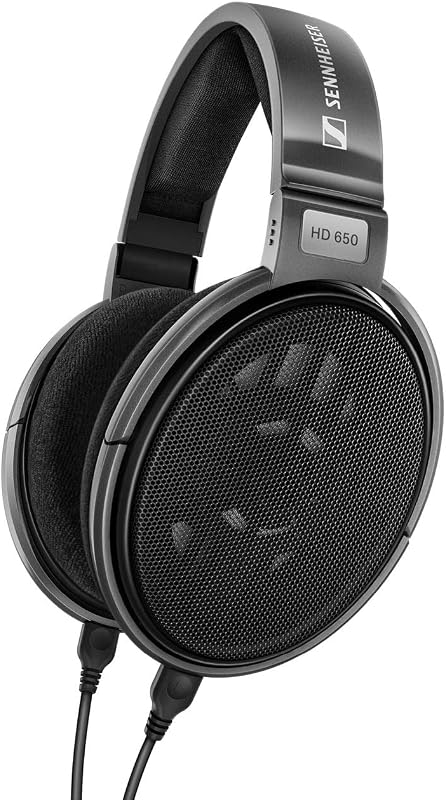
Pros
- Hand-selected matched driver elements
- Remarkably low 0.05 percent THD
- Acoustic silk damping across frequency range
- Extended response up to 41,000 Hz
- Included two-year manufacturer warranty
Cons
- Demands dedicated amplification for peak performance
- Firmer initial clamping force on headband
View Sennheiser HD 650 on Amazon
Philips SHP9500

Pros
- Low 32-ohm impedance runs off anything
- Large 50mm neodymium drivers
- Breathable ear cushions prevent heat buildup
- Durable steel-reinforced headband frame
Cons
- Listing leaves THD and frequency unrated
- No hand-matched driver pair selection
View Philips SHP9500 on Amazon
Who Should Buy Each One
Choose the Sennheiser HD 650 If
- You need hand-matched dynamic drivers with 0.05% THD for professional audio mixing, mastering, and critical listening.
- You already own or plan to purchase a dedicated headphone amplifier or audio interface with a 1/4″ headphone output.
- You demand wide, verified frequency reproduction spanning from 10 Hz all the way up to 41,000 Hz.
- You value documented long-term reliability backed by an included 2-year manufacturer warranty.
Choose the Philips SHP9500 If
- You want open-back spatial sound that runs straight from a smartphone, laptop, or game controller via an easy 32-ohm impedance.
- You prioritize relaxed, long-wearing comfort with breathable ear cushions and a low-clamp steel headband.
- You prefer a convenient 1.5-meter cord that prevents desktop clutter during everyday computer use.
- You want a capable open-back headphone for casual music and immersive gaming without investing in dedicated audio stacks.
Final Verdict
The Sennheiser HD 650 is the superior acoustic instrument for listeners dedicated to sound quality, studio production, and critical music appreciation. Its combination of hand-selected matched drivers, specialized acoustic silk damping, 0.05% total harmonic distortion, and an extended 10 to 41,000 Hz frequency range ensures pristine audio fidelity. If you operate a dedicated headphone amplifier or studio interface and need transparent acoustic reproduction that uncovers every detail in a mix, the HD 650 remains the definitive standard.
The Philips SHP9500 wins for listeners who want open-air fidelity without the financial or logistical burden of secondary amplification. Its 32-ohm impedance, steel-reinforced headband, breathable ear cushions, and included 1.5-meter cable make it an outstanding plug-and-play solution for everyday multimedia, remote work, and gaming. When direct-from-jack convenience and light clamping comfort matter most, the SHP9500 is the sensible and accessible choice.
FAQ
Is Philips SHP9500 worth it for casual desktop listening?
Yes, is philips shp9500 worth it for desktop listening because its 32-ohm impedance allows it to reach full dynamic volume directly from standard computer motherboards and laptops. You get the spacious stage of an open-back headphone without buying an external amplifier.
Can I plug the Sennheiser HD 650 directly into my phone or laptop?
The HD 650 includes a 3.5 mm jack plug that fits standard consumer headphone ports. However, because it is engineered for audiophile and studio systems, standard mobile devices and basic laptop jacks may lack the output power required to achieve optimal bass control and dynamic range.
Should I choose the Sennheiser HD 650 or Philips SHP9500 for gaming?
When choosing between the sennheiser hd 650 or philips shp9500 for gaming, the SHP9500 is often the more practical choice due to its light clamping force, breathable cushions, and easy 32-ohm driveability directly from console controllers. The HD 650 offers better audio resolution but requires dedicated amplification to perform at its peak.
Which headphone is better suited for music production and mixing?
When deciding between the sennheiser hd 650 or philips shp9500 for mixing, the HD 650 is clearly superior. It provides hand-selected matched driver elements, acoustic silk damping, an extended frequency response up to 41,000 Hz, and a verified 0.05% distortion rating for reliable mix translation.
Do either of these open-back headphones isolate outside noise?
Neither headphone isolates external noise. Because both the HD 650 and SHP9500 utilize fully open-back ear cups, ambient environmental sounds will pass through the grilles, and audio will leak outward into quiet rooms. They are designed exclusively for quiet indoor listening environments.
What audio connectors come in the box with each headphone?
The Philips SHP9500 includes a 1.5-meter cable with a gold-plated 3.5 mm connector. The Sennheiser HD 650 includes built-in media support for both a standard 3.5 mm jack and a full-size 1/4″ connector for integration with studio gear.

