The fundamental divide between these two dynamic broadcast microphones centers on signal routing and processing: the Shure MV7 provides hybrid digital USB and analog XLR outputs backed by internal digital signal processing, whereas the Shure SM7B operates strictly as a passive analog XLR transducer engineered for dedicated studio hardware chains.
Creators who need rapid plug-and-play desktop recording, mobile smartphone compatibility, and automated DSP volume leveling should select the Shure MV7. Studio engineers, voiceover artists, and broadcasters who already maintain dedicated preamp equipment and want an industry-proven stainless steel dynamic microphone should choose the Shure SM7B.

Shure MV7 vs Shure SM7B at a Glance
| Feature | Shure MV7 | Shure SM7B |
|---|---|---|
| Connectivity | USB and XLR | XLR only |
| Polar Pattern | Unidirectional | Unidirectional |
| Enclosure Material | Metal | Stainless steel |
| Signal-to-Noise Ratio | 132 dB | 75 dB |
| Frequency Range | 50 Hz to 16 kHz | Not listed |
| Onboard Controls | Touch panel (gain, mix, mute) | Two rear acoustic shaping switches |
| Software Support | ShurePlus MOTIV Desktop App | Not listed |
| Headphone Output | Built-in 3.5 mm jack | None on microphone body |
| Item Weight | 600 g | 16 oz |
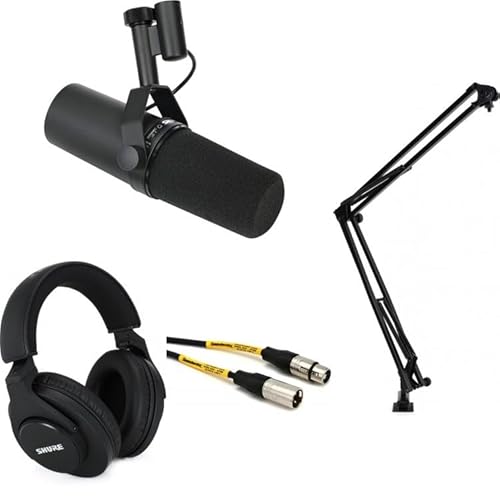
| Included Equipment | Integrated yoke mount | Boom arm, XLR cable, SRH440A headphones |
| Best For | Podcasters, streamers, and mobile creators | Dedicated vocal studios and broadcast booths |
Connectivity and Hardware Integration
Evaluating Shure MV7 vs SM7B connectivity reveals two distinct approaches to desktop and studio production. The Shure MV7 features dual-output architecture, housing both a digital USB connection and a traditional balanced analog XLR port on its rear panel. This design allows content creators to plug directly into a Mac or PC workstation, connect to a smartphone for mobile production, or patch into a standard audio mixer without requiring external format converters. Users working across varied software platforms gain immediate recording access without dealing with independent analog-to-digital converters, which matches the flexibility highlighted in the shure mv7 vs mv7+ comparison. The onboard USB dynamic architecture also supports corded electric power straight from the host device.
In contrast, examining the Shure SM7B review details demonstrates a pure analog XLR signal path. The SM7B possesses no USB controllers, digital converters, or onboard sound cards. Operating this microphone requires an external XLR audio interface, professional mixing console, or dedicated outboard hardware channel. Regarding Shure SM7B preamp requirements, passive dynamic microphones of this design produce low output voltage that demands clean, robust preamplification from an audio interface or dedicated inline hardware to reach standard digital operating levels without introducing system hum. Buyers must supply an interface that accepts three-pin XLR connectors, though this specific bundle simplifies the hardware hookup by including a 10-foot Cableworks Composer Series XLR male-to-female cable.
When assessing Shure MV7 USB vs XLR versatility, the MV7 functions as two products in one body. You can track high-resolution voice over USB today and retain the option to move the exact same microphone into a multi-channel analog studio mixer tomorrow. The SM7B offers no digital fallback; it is tethered exclusively to analog hardware. For streamers and podcasters seeking immediate plug-and-play operation without supplementary routing gear, the digital versatility of the MV7 simplifies the entire desktop chain.
Edge: Shure MV7 because its simultaneous USB and XLR outputs provide direct computer connectivity alongside traditional analog interface support.
Vocal Quality and Signal Tailoring
When comparing Shure MV7 vs SM7B vocal quality, both units rely on directional dynamic capsules designed for voice capture, but they process raw vocal tracks through fundamentally different mechanisms. The MV7 utilizes specialized voice-isolating technology and a unidirectional pickup pattern tuned specifically for speech intelligibility. Operating with a frequency range spanning 50 Hz to 16 kHz and a maximum frequency response up to 20,000 Hz, the MV7 captures clear high-frequency articulation while rejecting off-axis environmental noise. Users who manage their sound through the ShurePlus MOTIV Desktop Application can engage automated digital signal processing, selecting custom EQ presets, compression styles, and auto-gain modes that balance unpredictable vocal dynamics in real time.
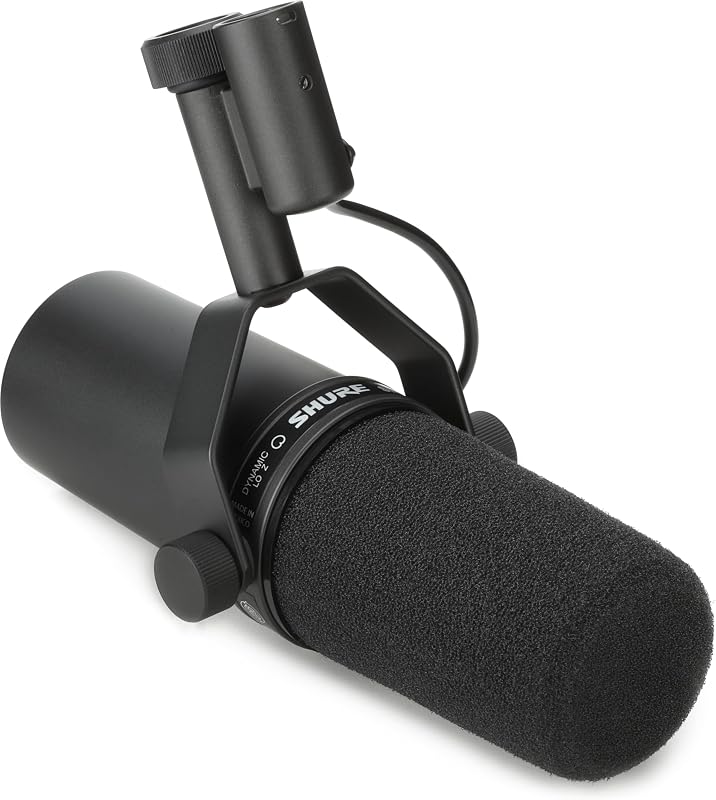
The Shure SM7B serves as a gold-standard benchmark in radio studios, professional ADR booths, and voiceover production. Classified as a large diaphragm dynamic microphone with a unidirectional cardioid pickup pattern, the SM7B is engineered to deliver natural-sounding spoken vocals with substantial depth and smooth proximity response. Rather than employing digital software algorithms, the SM7B relies entirely on acoustic engineering and internal physical design to shape sound. The back of the microphone housing features two hardware selector switches that allow creators to tailor the frequency response to broad voice ranges, enabling bass roll-off or presence boost adjustments directly on the casing.
Deciding if the Shure SM7B is worth it depends on whether your project requires pristine, uncompressed analog vocal character or the algorithmic assistance of dynamic DSP. The MV7 is tuned to keep voices crisp and intelligible even in untreated residential rooms through its onboard digital limiter and compression tools, similar to concepts explored in the shure mv7+ vs sm7b breakdown. However, the SM7B provides an uncolored, broadcast-grade analog foundation with a signal-to-noise ratio of 75 dB that responds accurately to dedicated outboard preamps, giving voiceover talent full mechanical control over their acoustic delivery.
Edge: Shure SM7B for its natural studio vocal depth and physical frequency-shaping switches that handle high-end vocal tracking without digital processing.
Hardware Controls and Monitoring Systems
Physical interface controls determine how quickly a creator can adjust levels during a live stream or interview session. The MV7 addresses live workflow via a touch panel interface built directly into the microphone barrel. This touch-sensitive strip grants tactile control over microphone input gain, headphone monitoring volume, monitor mix blend, and an instantaneous tap-to-mute function. Additionally, the MV7 integrates a 3.5 mm headphone output on its rear plate, providing direct zero-latency vocal monitoring and computer playback blending right from the microphone chassis. This eliminates the need to run separate headphone extension lines back to a computer tower, an advantage often weighed in the blue yeti vs shure mv7 evaluation.
The SM7B contains no onboard digital controls, volume dials, or monitor outputs. Because the SM7B operates solely as a passive analog microphone, level adjustments cannot be made on the microphone body during a recording take, apart from setting the two rear tone-shaping switches prior to a session. Headphone monitoring must be handled through an external audio interface, mixer, or headphone amplifier. However, the SM7B bundle addresses the monitoring equation by packing in a pair of Shure SRH440A closed-back studio headphones. These headphones feature 40 mm neodymium dynamic drivers, a 9.84-foot detachable straight cable, and a gold-plated adapter, providing the acoustic isolation necessary to track vocal takes without bleed.
The operational difference between these two systems comes down to decentralized versus centralized control. The MV7 concentrates the audio interface, headphone amplifier, monitor balance mixer, and gain knobs right on the microphone frame. The SM7B separates acoustic capture from monitoring hardware, requiring the user to rely on external interface controls while using the bundled SRH440A headphones to monitor the live take from the studio console.
Edge: Shure MV7 due to its integrated touch panel controls, direct gain adjustment, and onboard zero-latency headphone monitoring jack.
Podcasting and Streaming Suitability
Selecting the Shure MV7 or SM7B for streaming requires evaluating how each unit handles live, unpredictable broadcast scenarios. The MV7 is TeamSpeak certified and designed specifically for content creators who manage their broadcasts alone. When running live gaming broadcasts or spontaneous video calls, creators rarely have the time to monitor analog VU meters or manually ride analog gain knobs. The MV7 solves this problem through the ShurePlus MOTIV auto-gain mode, which tracks vocal volume spikes, adjusts internal digital gain instantly, and applies compression on the fly. This prevents sudden clipping distortion when a streamer laughs or raises their voice unexpectedly during gameplay.
Choosing the Shure MV7 or SM7B for podcasting brings different production considerations to the forefront. Multi-host studio podcasts and formal interview productions often lean toward the SM7B due to its uniform frequency dispersion and off-axis rejection in multi-microphone studio rooms. The SM7B cardioid pattern helps minimize room reflections and cross-talk from neighboring hosts seated across a table. Because this SM7B bundle includes the SH-BROADCAST1 deluxe articulating desktop boom stand, streamers and podcasters gain professional placement capability right out of the box. The stand features a 2.17-inch clamp range, 360-degree rotation, a 32.25-inch maximum arm extension, and an integrated cable channel to maintain an uncluttered desk presence.
While the SM7B bundle offers complete positioning hardware and reference headphones for a multi-mic broadcast desk, the MV7 remains more adaptable for single-operator creators. The MV7 can be transferred from a desktop boom mount directly to a mobile smartphone setup for field reporting or live remote streaming, while the SM7B remains anchored to its boom arm, XLR cable, and studio interface. The flexibility of USB streaming microphones is also a key factor when looking at products like the shure mv7 vs rode nt-usb+.
Edge: Tie. The MV7 provides unmatched digital convenience and auto-leveling for solo streamers, while the SM7B bundle offers complete studio mounting and acoustic control for multi-host podcasting.
Build Quality, Mounting, and Included Accessories
Physical construction dictates how well a microphone survives transport, daily studio adjustment, and desktop repositioning. The Shure MV7 features an all-metal enclosure weighing 600 grams, measuring 4.3 x 12.3 x 5 inches. It comes fitted with an integrated adjustable mounting yoke designed to thread directly onto standard desktop mic stands or broadcast arms. The metal housing protects the internal DSP boards and dynamic capsule, making it resilient enough to pack into a gear bag for mobile recording. However, the retail package does not include a broadcast boom arm or reference headphones, requiring users to source their own mounting solutions or use basic desktop stands.
The Shure SM7B features a rugged stainless steel chassis built for decades of continuous use in commercial facilities. Listed at 16 ounces for the standalone microphone unit, the SM7B is engineered around a durable capsule shock mount assembly that suppresses handling vibrations. This specific product bundle stands out by providing an entire studio hardware package. Alongside the microphone, buyers receive the SH-BROADCAST1 articulating boom stand, which features full 360-degree rotation, internal cable routing channels, and heavy-duty steel construction that easily supports the mic across its 32.25-inch reach. The package also incorporates the 10-foot Cableworks Composer Series XLR cable and Shure SRH440A professional closed-back studio headphones.
Comparing the included accessories shifts the value perspective substantially. An independent Shure MV7 review reveals that creators must supply their own desktop boom, XLR cables, and studio headphones if they intend to expand their setup beyond standard USB desktop use, as observed in discussions comparing the shure mv7+ vs rode nt-usb+. The SM7B bundle equips the buyer with an entire professional workstation: a stainless steel broadcast microphone, articulating desk arm, 10-foot studio cabling, and reference headphones with 40 mm neodymium drivers.
Edge: Shure SM7B because the bundled configuration includes a heavy-duty articulating boom stand, studio headphones, and professional XLR cabling alongside its stainless steel microphone body.
Pros and Cons
Shure MV7

Pros
- Dual USB and XLR outputs
- Onboard touch panel controls
- Built-in 3.5 mm headphone monitoring
- ShurePlus MOTIV software DSP features
- Direct PC and smartphone compatibility
Cons
- Lightning cable not included
- No boom arm included in box
Shure SM7B
Pros
- Durable stainless steel construction
- Includes boom stand and studio headphones
- Packaged with 10-foot XLR cable
- Two rear voice-tailoring acoustic switches
- Industry-standard natural broadcast tone
Cons
- Requires external XLR audio interface
- No onboard digital controls or headphone port
Who Should Buy Each One
Choose the Shure MV7 If
- You want a direct USB plug-and-play microphone that connects straight to a PC, Mac, or smartphone without an audio interface.
- You prefer real-time DSP volume automation, digital compression, and EQ presets via the ShurePlus MOTIV application.
- You require onboard touch-panel controls to adjust microphone gain, monitor headphone balance, and toggle instant mute during live sessions.
- You want the freedom to start recording over USB and transition to analog XLR studio mixers in the future.
Choose the Shure SM7B If
- You already own or plan to invest in a dedicated professional audio interface or outboard preamp setup.
- You want an industry-standard stainless steel dynamic microphone that captures deep, natural broadcast vocals without digital manipulation.
- You need an all-in-one studio bundle that provides an articulating desk boom arm, 10-foot XLR cable, and closed-back monitor headphones.
- You prefer mechanical rear-panel tone switches for bass roll-off and presence boost adjustments over computer software menus.
Final Verdict
For the majority of solo creators, remote streamers, and modern podcasters, the Shure MV7 is the more practical and adaptable microphone. Its hybrid USB and XLR architecture eliminates the need for expensive external audio interfaces, while the ShurePlus MOTIV desktop software provides automatic gain leveling, compression presets, and zero-latency monitoring through the built-in headphone jack. The MV7 gives you immediate studio-grade vocal intelligibility right out of the box, with the added benefit of future-proofing your setup if you ever decide to transition to an analog XLR mixer.
On the other hand, the Shure SM7B remains the definitive choice for dedicated recording studios, high-end broadcast facilities, and creators who prioritize uncompromised analog sound capture. Backed by a stainless steel housing, physical acoustic tailoring switches, and a complete studio bundle containing an articulating boom stand, reference headphones, and professional XLR cabling, the SM7B provides an end-to-end studio monitoring and recording solution for users who already possess the robust preamp hardware required to drive a legendary analog capsule.
FAQ
What makes the Shure MV7 connectivity different from the SM7B?
The Shure MV7 features hybrid connectivity with both a digital USB port and an analog XLR connector, allowing it to connect directly to computers, smartphones, or analog audio interfaces. The Shure SM7B is exclusively an analog microphone featuring a single three-pin XLR output, meaning it cannot connect directly to a computer without an external audio interface or mixer.
Does the Shure SM7B require an external audio interface to work?
Yes. The Shure SM7B is a passive dynamic microphone that produces a low analog output signal. It requires an external XLR audio interface, mixing console, or dedicated microphone preamplifier capable of delivering clean, high-gain amplification to bring the signal up to standard digital recording levels.
Can the Shure MV7 be used with an XLR audio interface later?
Yes. The Shure MV7 includes a standard three-pin XLR output on the back of its housing alongside the USB port. You can use it via USB today and plug it into an external analog audio interface or professional mixer via an XLR cable whenever you choose to expand your setup.
What accessories come included with this Shure SM7B bundle?
This specific Shure SM7B listing includes the SM7B dynamic microphone, the SH-BROADCAST1 articulating desktop boom stand with a 2.17-inch clamp range and 32.25-inch arm reach, Shure SRH440A closed-back studio headphones with 40 mm neodymium drivers, and a 10-foot Cableworks Composer Series XLR microphone cable.
How do onboard controls compare between the Shure MV7 and SM7B?
The Shure MV7 features an integrated digital touch panel on the microphone body that controls gain level, headphone volume, monitor mix blend, and microphone muting, in addition to software controls within the ShurePlus MOTIV app. The Shure SM7B features no digital touch controls, providing instead two mechanical tone-shaping switches on the rear panel for acoustic frequency adjustment.
Is the Shure MV7 compatible with mobile devices?
The Shure MV7 listing confirms hardware platform compatibility with PCs and smartphones. However, the product specifications note that a Lightning cable is not included in the package, so users connecting to select iOS devices must supply an appropriate compatible connection cable.