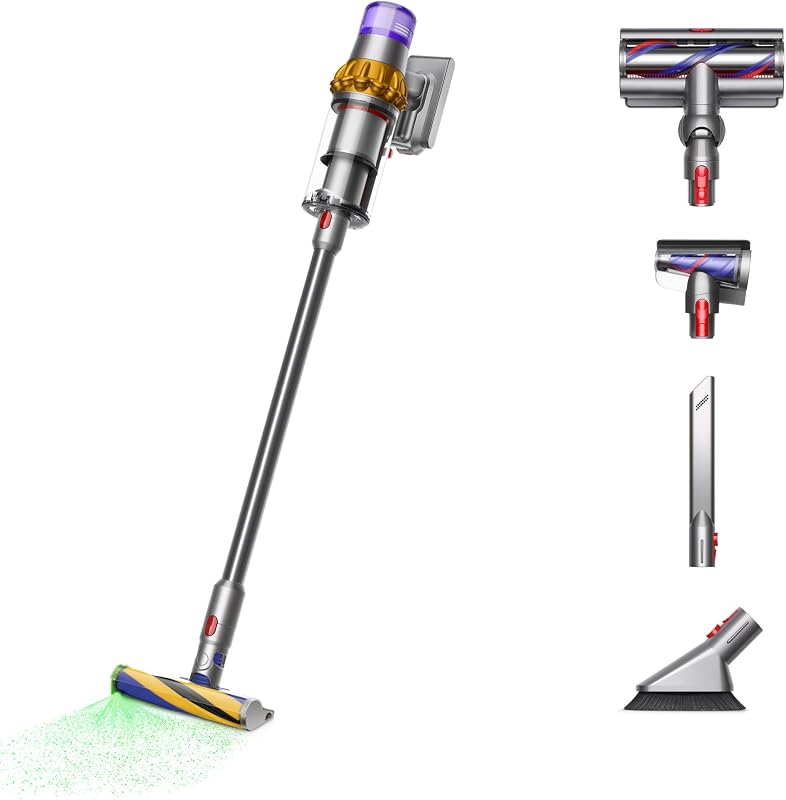
The choice between a cordless vacuum and a corded vacuum comes down to a direct trade-off between unrestricted mobility and unlimited runtime. Cordless models eliminate the hassle of power cords and wall outlets, letting you move instantly from room to room, up staircases, and into vehicles, though your cleaning session is strictly governed by battery charge. In contrast, corded units draw continuous electrical power straight from the wall, allowing you to vacuum deep-pile carpets and whole houses without ever monitoring a battery gauge or waiting hours for a recharge.
Choose a cordless vacuum if you want a lightweight, maneuverable tool for rapid daily cleanups, multi-level staircases, and quick vehicle detailing. Choose a corded vacuum if you have extensive wall-to-wall carpeting, heavy shedding pets, or a large layout where uninterrupted suction power is essential.
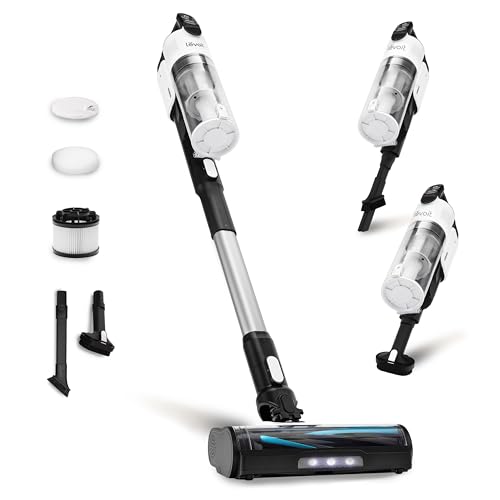


Cordless vs Corded Vacuum at a Glance
| Feature | Cordless Vacuum | Corded Vacuum |
|---|---|---|
| Power Source | Rechargeable Battery (22.2V pack or 8*2800mAh pack) | Corded Electric (100V to 120V standard outlet) |
| Motor Wattage | 180W to 650W | 500W |
| Maximum Runtime | 50 to 70 minutes (Eco/Low mode) | Unlimited continuous run time |
| High-Power Runtime | 12 minutes in Turbo (LVAC-200) | Continuous non-stop operation |
| Weight / Portability | 6.3 lbs (JELLYPIG X100) / fully free mobility | Under 9 lbs to under 10 lbs / tethered to cord |
| Dustbin Capacity | 0.75 L (0.79 qt) to 1.8 L (1.9 qt) | 0.31 qt (0.29 L) to 0.68 qt (0.64 L) |
| Noise Level | 58 dB to 77.5 dB | 80 dB |
| Filter System | Foam 5-stage (0.3 micron) or HEPA Filter | Washable Foam Filters |
| Power Levels / Speeds | 3 adjustable suction levels | 1 power level (1 to 2 speeds) |
| Best For | Quick cleanups, stairs, cars, and multi-room agility | Exhaustive carpet cleaning and nonstop whole-home jobs |
Suction Power and Deep Carpet Cleaning
Suction performance defines how thoroughly a vacuum lifts embedded debris, sand, and fine pet dander from dense carpet fibers. In any corded vs cordless drill or appliance comparison, direct wall power ensures constant, unyielding energy transfer. A corded stick vacuum pulls electricity straight from an electrical socket, driving steady draw without any drop in performance. Models like the Shark Rocket Pro DLX utilize a 500-watt, 4.2-amp motor designed specifically to provide thorough deep carpet cleaning and consistent agitation across all surfaces.
Modern battery units have closed this gap considerably through upgraded high-wattage brushless motors. The JELLYPIG X100 incorporates a 650-watt motor that reaches up to 55,000 Pa (55 kPa) of maximum suction power across three selectable levels to extract clumps of dirt and large particles from carpets and floor crevices. More standard entry-level cordless sticks, like the 180-watt Levoit LVAC-200 Essential, work at 22.2 volts on three power levels, excelling on rugs and low-pile surfaces rather than heavy, thick carpeting.
The operational divide centers on how that suction is sustained. While cordless models deliver intense peak suction in their highest settings, they consume battery power rapidly at maximum output. Corded options supply continuous 500-watt suction indefinitely, ensuring that the last square foot of carpet receives the exact same airflow and roller brush agitation as the first.
Edge: Corded vacuum, because steady outlet power provides relentless suction for deep carpet grooming without thermal drop-offs or battery drain.
Runtime and Cleaning Coverage
Runtime dictates the scope of chores you can tackle in a single session. Corded stick vacuums offer truly limitless operation. Whether using the Shark HV302 Rocket Pet or the Rocket Pro DLX, you simply plug the cord into a standard 120-volt wall outlet and vacuum until the entire house is clean. There is no battery meter to track, no countdown clock, and no pause required to recharge an internal cell.
Cordless vacuums are bound to their onboard battery capacity. The Levoit LVAC-200 Essential provides up to 50 minutes of power in Eco mode with its crevice or pet tool, dropping to 30 minutes when driving the motorized vacuum floor head, and down to just 12 minutes in Turbo mode. The JELLYPIG X100 extends this range with an 8-cell 2800mAh battery pack, delivering up to 70 minutes on low suction under no-load conditions at room temperature. Similar runtime balancing challenges appear when examining battery life in tools such as the ryobi ry404100 vs worx wg520 blower comparison.
This running time difference changes your cleaning rhythm. A cordless stick vacuum battery life vs corded comparison reveals that cordless machines favor deliberate, segmented passes or fast room maintenance. If you want to vacuum every floor, baseboard, and rug in a large multi-story home in one uninterrupted sweep, the cordless unit may demand a second battery pack or a multi-hour stop at the charger.
Edge: Corded vacuum, due to infinite continuous runtime that eliminates battery management and mid-clean shutdowns.
Maneuverability, Weight, and Storage
Maneuverability is the category where cordless machines shine most clearly. Without a power cord trailing behind you, there is no need to step over cords, untangle cables caught beneath door frames, or swap wall outlets as you navigate across a floor plan. Weighing 6.3 pounds, the JELLYPIG X100 features a self-standing structure that stays upright when you stop to pick up objects or answer a phone, as well as an LED touch screen for instant control.
Corded stick designs require managing the electrical lead throughout every room. While the Shark HV302 Rocket Pet weighs under 9 pounds and the Rocket Pro DLX weighs under 10 pounds, both models remain tethered to the wall. Both Shark units compensate by including swivel steering for tight turns around table legs, an easy-release foot pedal to detach the wand, and a low-profile head that reaches under low furniture. For storage, the HV302 allows users to unhook the hand vacuum and hang it from the base of the wand.
Cordless models also simplify off-floor and vehicle cleanup. The Levoit LVAC-200 lies completely flat at 180 degrees to sweep under beds and sofas, integrates 3 LED lights to reveal hidden dust bunnies, and features a one-click emptying 0.75-liter dustbin. Moving outside to clean floor mats inside a vehicle is virtually effortless with a cordless wand, whereas a corded model demands a nearby garage outlet or a heavy-duty extension cord.
Edge: Cordless vacuum, thanks to lighter total weight, free movement without cord snagging, and convenient self-standing or flat-folding ergonomics.
Pet Hair Pickup and Brush Roll Maintenance
Managing pet fur requires both robust mechanical pickup and roller heads that do not choke on long strands. The Levoit LVAC-200 addresses this with an anti-tangle brush roll and a specialized 2-in-1 pet tool designed to sweep up shedding hair without wrapping around the roller core. The JELLYPIG X100 utilizes a V-shaped spiral brush with an internal guide comb system, combining cutting and dredging actions to route clumps into its large 1.8-liter dust cup.
Corded stick cleaners rely on motorized floor nozzles and specialized attachments driven by dedicated motor power. The Shark Rocket Pro DLX includes dedicated pet tools to pull stubborn fur out of furniture upholstery, drapery, and high-traffic carpets. Similarly, the Shark HV302 Rocket Pet features a Pet Multi-Tool and a Precision Duster, converting with push-button ease into a handheld cleaner for high perches and cat trees, much like the targeted tools seen in the bissell pet hair eraser vs dyson v15 detect pet matchup.
When selecting a cordless or corded vacuum for pet hair, the primary difference lies in brush head design versus motor endurance. Cordless units frequently feature built-in comb teeth to prevent roller bind, saving time spent cutting tangled hair with scissors. Corded vacuums counter with steady, higher motor wattage to yank heavily matted pet hair out of upholstery weave without bleeding battery reserves.
Edge: Tie. Cordless models offer advanced anti-tangle combs, while corded models deliver continuous brush agitation and specialized pet tools for stubborn fur.
Dust Capacity, Filtration, and Noise
Dust capacity dictates how frequently you must pause your chores to empty debris. The corded Shark HV302 Rocket Pet features a compact 0.31-quart (0.29-liter) cup, while the Shark Rocket Pro DLX steps up to an XL 0.68-quart (0.64-liter) easy-empty dust cup. Both Shark corded cleaners use washable foam filters to catch dust while keeping running costs minimal.
Cordless stick vacuums offer surprisingly large capacity in newer designs. The JELLYPIG X100 incorporates an expansive 1.8-liter dustbin alongside a HEPA filtration system, operating at an exceptionally quiet 58 dB sound level. By contrast, the Levoit LVAC-200 features a 0.75-liter cup, operates at 77.5 dB, and uses a 5-stage filtration setup capturing 99.9% of particles down to 0.3 microns according to ASTM F1977-22 standards, with the manufacturer recommending filter replacements every three months.
Noise level is another noticeable differentiator. Both Shark corded stick vacuums register at 80 dB, creating a louder, more industrial pitch during continuous cleaning. With acoustic ranges dropping down to 58 dB on the JELLYPIG X100, cordless vacuums generally provide a noticeably quieter cleaning experience with high-grade multi-stage particle containment.
Edge: Cordless vacuum, offering significantly quieter motor output down to 58 dB, multi-stage HEPA filtration, and generous dustbin capacities up to 1.8 liters.
Maintenance and Long-Term Ownership
Evaluating long-term reliability involves comparing wear items, cord management, and power source degradation. Like deciding between corded and cordless tools in our dewalt dws779 vs dhs790 or milwaukee 2724-20 vs worx wg520 guides, power delivery methods determine the maintenance schedule. Corded vacuums have fewer electronic failure points regarding energy storage; there are no lithium cells that degrade after hundreds of recharge cycles. The Shark Rocket Pro DLX even backs its build with a 5-year limited warranty.
Cordless stick vacuums carry routine maintenance requirements tied to their battery packs and air pathways. The Levoit LVAC-200 documentation notes that genuine replacement filters should be installed every 3 months, and separate replacement battery packs must be purchased if you wish to expand your working runtime. The JELLYPIG X100 manual instructs owners to empty the cup after every run and wash the HEPA filter, roller, and telescopic tube every 1 to 2 weeks to prevent duct blockages from throttling suction.
When asking is corded vacuum worth it, long-term simplicity is the main justification. A corded vacuum will perform with the exact same suction power five years from now as it does today, requiring only basic filter washing. A cordless machine will eventually require battery replacement or strict adherence to filter washing schedules to preserve peak airflow.
Edge: Corded vacuum, backed by a 5-year warranty on models like the Rocket Pro DLX and no battery packs to replace over years of use.
Pros and Cons
Cordless Vacuum

Pros
- Unrestricted cordless portability across all rooms
- Lightweight design down to 6.3 pounds
- Anti-tangle brush rolls with guide combs
- Quiet operation dropping down to 58 dB
- Multi-stage filtration capturing 99.9% of particles
Cons
- Runtime limited to 12 minutes on Turbo mode
- Batteries require recharging and eventual replacement
View Levoit Cordless Vacuum Cleaner Anti-Tangle on Amazon
Corded Vacuum

Pros
- Continuous electrical power with zero battery anxiety
- Steady 500-watt motors for deep carpet cleaning
- Includes specialized pet tools and handheld conversion
- 5-year limited warranty on select models
- Washable foam filters eliminate recurring filter costs
Cons
- Tethered to wall outlets by electrical cords
- Louder operating noise reaching 80 dB
View Shark Rocket Pro DLX Corded Stick on Amazon
Who Should Buy Each One
Choose the Cordless Vacuum If
- You live in a multi-story home or apartment and need to clean stairs, ceilings, and car interiors without wrangling an extension cord.
- You prefer doing quick daily maintenance cleanups and urgent dry mess pickups rather than lengthy weekend-long chores.
- You want a quiet appliance that runs as low as 58 dB and features built-in LED touchscreens and self-standing convenience.
- You frequently battle hair wrap and want specialized V-shaped anti-winding brush rolls with integrated cutting combs.
Choose the Corded Vacuum If
- You have extensive wall-to-wall carpeting and require nonstop 500-watt motor power for continuous deep carpet grooming.
- You clean large floor plans and do not want your vacuum shutting down after 12 to 30 minutes of high-power operation.
- You want a durable machine covered by up to a 5-year limited warranty without buying replacement battery packs.
- You prefer straightforward push-button controls and simple washable foam filters over battery management and cycle maintenance.
Final Verdict
For most households tackling fast-paced everyday living, the cordless vacuum is the superior everyday choice. The agility of grabbing a 6.3-pound unit like the JELLYPIG X100 or the flat-laying Levoit LVAC-200 to clean up kitchen spills, pet fur, or car seats without hunting for an electrical socket completely changes your cleaning routine. While you do have to operate within the limits of a 12-to-70-minute battery window, the combination of multi-stage filtration, anti-tangle brush rollers, and extreme maneuverability outweighs the corded tether for modern maintenance.
However, the corded vacuum remains the undisputed champion for heavy-duty household cleaning. If your home features extensive thick carpeting, deep-shedding pets, or large multi-room layouts that take an hour or more to vacuum, models like the Shark Rocket Pro DLX and HV302 Rocket Pet provide relentless, uncompromised suction. You will never face mid-cleaning shutdowns, sluggish low-battery performance, or future battery replacement costs, making corded stick vacuums the most dependable choice for deep, marathon cleaning sessions.
FAQ
Can a cordless vacuum completely replace a corded vacuum for deep cleaning?
A high-power cordless stick vacuum with a 650W motor can match the peak suction of a corded unit, but only for brief periods. On Turbo or high-power settings, cordless vacuums typically run for 12 to 15 minutes before depleting the battery, making them less practical than corded models for whole-home deep cleaning sessions.
How long do cordless vacuum batteries typically last during a cleaning session?
Runtime depends heavily on the power level and the attachment used. The Levoit LVAC-200 lasts up to 50 minutes in Eco mode with non-motorized tools, 30 minutes with the motorized floor head, and 12 minutes on Turbo. Larger battery packs like the 8-cell system on the JELLYPIG X100 can run up to 70 minutes on low suction under no-load conditions.
Is a corded stick vacuum worth it if I already own a heavy upright vacuum?
Yes. Ultra-lightweight corded stick vacuums like the Shark Rocket series weigh under 9 to 10 pounds and convert directly into handheld units. They provide the continuous deep-cleaning suction of an upright vacuum while offering the low-profile reach, swivel steering, and overhead versatility needed for stairs and ceiling fans.
Which vacuum type is better for homes with heavy pet shedding?
Both styles excel in different ways. Cordless vacuums often feature specialized V-shaped brushes and comb teeth that actively prevent long hairs from wrapping around the roller. Corded vacuums provide endless 500-watt power to continuously pull deeply embedded fur and dander from thick carpet fibers and upholstery without draining a battery.
How often do you need to replace filters on cordless versus corded vacuums?
Corded models like the Shark Rocket series utilize washable foam filters that you simply rinse with water and air-dry. Cordless vacuums often combine washable components with replaceable multi-stage or HEPA filters; for instance, Levoit recommends replacing the LVAC-200 filter every three months to maintain peak performance.
Can cordless vacuums pick up wet spills?
No. Standard cordless stick vacuums, such as the Levoit LVAC-200, are strictly designed for dry messes only. Attempting to vacuum liquids or wet spills can damage the motor, foul the filtration system, and void the product warranty.