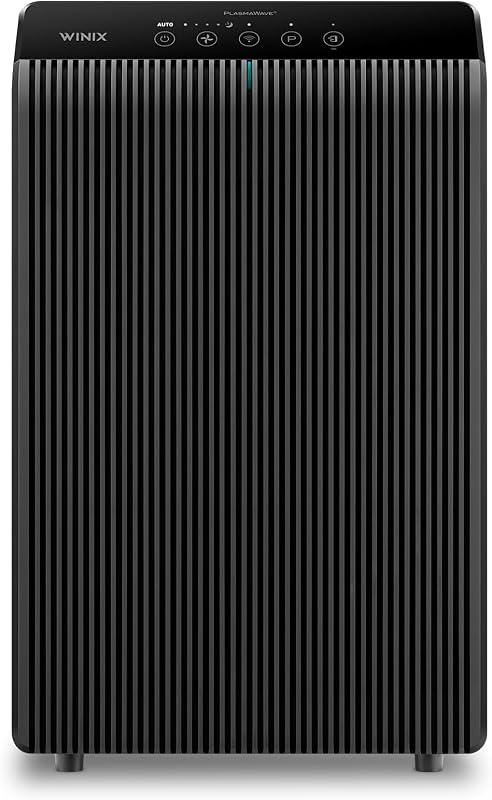
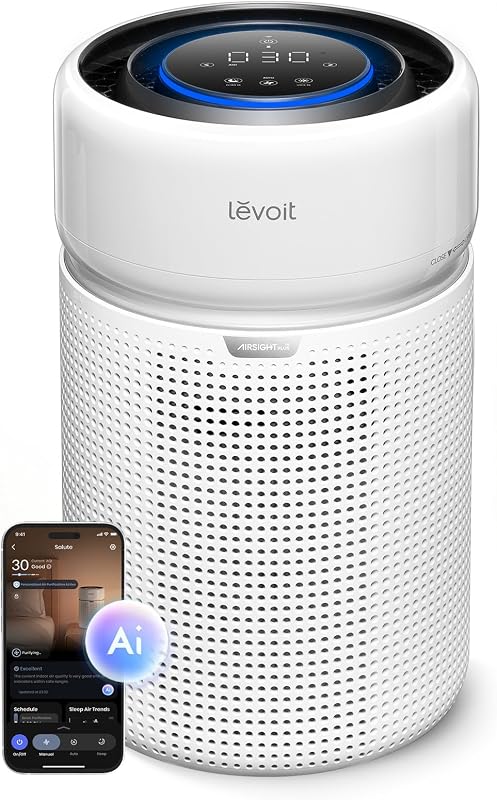
Choosing between the Coway Airmega 200M and the Dyson TP07 comes down to whether you prioritize a dedicated high-capacity air purifier designed for pure particulate extraction or a dual-purpose tower appliance that combines sealed filtration with high-velocity cooling airflow. The Coway focuses entirely on cycling air through a dense multi-stage filter arrangement in a traditional floor unit, whereas the Dyson integrates air purification into a bladeless tower fan built to circulate air across an entire living space while creating a noticeable breeze.
Choose the Coway Airmega 200M if you need aggressive room turnover, energy-saving operational modes, and dedicated filtration for heavy allergens or smoke. Choose the Dyson TP07 if you want a single machine that delivers personal cooling and certified whole-room HEPA purification without taking up wide floor real estate.


Coway Airmega 200M vs Dyson TP07 at a Glance
| Feature | Coway Airmega 200M | Dyson TP07 |
|---|---|---|
| Device Type | Dedicated Air Purifier | Purifying Tower Fan |
| Stated Coverage | 874 sq. ft. (30 min) / 1,748 sq. ft. (60 min) | Whole room (sq. ft. not listed) |
| Filtration Stages | Washable Pre-Filter, Carbon, True HEPA | Two-stage HEPA H13 sealed system |
| Particle Capture Rating | 99.97% at 0.3 microns (tested to 0.01 microns) | 99.97% at 0.3 microns |
| Airflow Mechanism | Internal intake fan with top exhaust | Bladeless Air Multiplier technology |
| Noise Level | 24.4 dB (lowest setting) | Not listed |
| Rated Power Consumption | 82 watts | Not listed |
| Dimensions | 10″D x 17″W x 18″H | 7.7″D x 8″W x 41″H |
| Weight | 12.3 pounds | 8 pounds |
| Best For | Dedicated large-space allergen extraction | Dual-purpose cooling and air cleaning |
Room Coverage and Air Cleaning Capacity
When evaluating air purifiers, room turnover capacity determines how quickly an appliance can process the volume of air inside a room and scrub airborne particles. The Coway Airmega 200M provides specific square-footage ratings: the manufacturer rates it to clean up to 874 square feet in 30 minutes, or up to 1,748 square feet in 60 minutes. This level of rapid air displacement makes it a robust contender for master suites, open-plan living rooms, and finished basements where high air volume turnover is required. Shoppers frequently search for the official Coway Airmega 200M CFM, but the product listing does not specify an official CFM rating; instead, Coway quantifies performance through its timed square-footage coverage figures. Readers exploring square footage thresholds can also evaluate our guide on the coway airmega 200m vs 400 for higher-volume coverage comparisons.
In contrast, the Dyson TP07 listing does not provide a specific square-foot clean air delivery rating. Instead, Dyson states that its Air Multiplier technology purifies the whole room while projecting cooling airflow. The TP07 works as a continuous circulation tower that draws surrounding air into its base filters and pushes the filtered air outward via its elongated amplifier loop. Because the listing does not publish standardized CFM or square-footage turnover intervals, determining exact parity for extreme air cleaning demands is less straightforward. For shoppers deciding between the Coway Airmega 200M or Dyson TP07 for large rooms, Coway provides transparent, certified spatial cleaning metrics that guarantee rapid recycling of dirty air.
The practical difference is noticeable when dealing with sudden air contamination, such as kitchen smoke or sudden dust spikes. The Airmega 200M pulls air directly from its wide front grille and blasts filtered air straight out of its top exhaust, moving dense volumes of air quickly through its physical filter media. The Dyson TP07 uses its airflow primarily to project a smooth stream of air across the room. While this keeps air circulating steadily across corners, the absence of listed CADR or square footage metrics means the Coway is the safer choice when high-volume room turnover is the primary objective.
Edge: Coway Airmega 200M because it verifies concrete cleaning metrics of up to 1,748 square feet within an hour.
Filtration Mechanics and Allergen Capture
Filter construction and seal integrity directly dictate how well an appliance cleans air of microscopic triggers. The Airmega 200M relies on Coway’s HyperCaptive Filtration System, composed of a washable pre-filter, an activated carbon deodorization filter, and an internal HEPA filter. The listing confirms that this setup captures 99.97% of 0.3-micron particles, including pollen, dust, and wildfire smoke, while reducing 99% of volatile organic compounds and household odors. In external laboratory testing cited in the specifications, Korea Conformity Laboratories (KCL) verified the capture of ultra-fine particles down to 0.01 microns under SPS-KACA standards, while SGS evaluated HEPA compliance under IEST-RP-CC007 standards at speed level 1.
The Dyson TP07 matches this capture standard by engineering its filtration system to the HEPA H13 specification. Dyson emphasizes that the entire machine-not just the filter element itself-is fully sealed to the HEPA H13 standard. This design prevents unfiltered bypass air from escaping through casing seams, ensuring that what goes inside the unit stays inside. Dyson uses two phases of purification to capture 99.97% of particles down to 0.3 microns, making it an exceptional contender when comparing Dyson TP07 filtration vs Coway Airmega. Those interested in larger dual-purpose Dyson setups can also reference our breakdown of the coway airmega 400 vs dyson tp07.
For buyers weighing the Coway Airmega 200M or Dyson TP07 for allergies, both units handle primary triggers like pet dander, mold spores, and pollen. Coway adds a permanent, washable pre-filter that intercepts larger pet hair and heavy lint before it contacts the internal HEPA filter, protecting filter life. Dyson balances this by offering an airtight, fully sealed internal channel that guarantees zero secondary leakage into the living space. While Coway presents extensive third-party lab certifications for 0.01-micron capture and VOC reduction, Dyson offers a certified HEPA H13 sealed enclosure.
Edge: Tie because both units deliver 99.97% particulate capture at 0.3 microns, backed by Dyson’s sealed H13 housing and Coway’s rigorous laboratory testing down to 0.01 microns.
Airflow Dynamics and Bladeless Cooling
Air delivery mechanics represent the most pronounced physical divergence between these two appliances. The Dyson TP07 is engineered from the ground up as a dual-action appliance: a purifying fan that delivers functional personal cooling while cleaning ambient air. Utilizing proprietary Air Multiplier technology, the TP07 draws ambient air through the base filters and amplifies it into an uninterrupted stream of high-velocity air. This design makes the Dyson Purifier Cool a genuine substitute for a standalone oscillating tower fan, eliminating the need to clutter a bedroom or living area with separate cooling and purification devices.
The Coway Airmega 200M functions strictly as a stationary air purifier. Its three-stage manual fan speed settings (low, medium, and high) intake air through the front panel and exhaust clean air vertically out the top. While the top-mounted discharge creates ambient circulation in the immediate area, it does not direct a focused breeze across the room to cool occupants. Readers comparing standard box purifiers against varied airflow designs can also examine the levoit core 400s vs coway airmega 200m to see how differing exhaust profiles operate.
This functional divide changes how you live with each unit through seasonal shifts. In summer, the Dyson TP07 provides immediate dual utility by cooling the room’s occupants while trapping airborne dust and pollen. In contrast, the Coway 200M remains an air-cleaning appliance regardless of room temperature. If you need a device that performs the physical task of a fan alongside air purification, the Coway cannot fulfill that role, whereas the Dyson executes both functions seamlessly.
Edge: Dyson TP07 because its Air Multiplier technology functions as a legitimate cooling tower fan while purifying the room.
Operational Sound and Energy Efficiency
Noise and electricity usage determine whether an air purifier can run continuously in bedrooms, nurseries, or home offices. The Coway Airmega 200M lists a minimum sound level of 24.4 dB on its lowest setting, which operates as a subtle whisper suitable for nighttime use. In terms of power, the Coway is rated at 82 watts at maximum output. However, its Eco Mode conserves electricity significantly: if the built-in air quality monitor detects clean air for 30 consecutive minutes, the fan shuts off entirely, only kicking back on when airborne pollution is detected.
Regarding the Dyson TP07 noise level, the manufacturer listing does not publish an official decibel rating or a specific wattage specification. The TP07 is engineered to sense, capture, and trap pollutants automatically, adjusting its motor speed in response to detected room air quality. While bladeless fans generally provide smooth airflow without the chopping sounds common to standard blades, the lack of published decibel figures in the listing prevents an exact baseline acoustic comparison against Coway’s verified 24.4 dB minimum.
For budget-conscious power usage, Coway’s Eco Mode is an engineered safeguard against wasted energy. Most purifiers keep their motors spinning continuously, but the Airmega 200M stops power draw to the fan motor once the room is scrubbed clean. Those evaluating low-draw units may also find value in comparing the coway airmega 200m vs honeywell hpa304. Because the Coway specifies its 24.4 dB baseline and incorporates an intelligent complete-stop Eco Mode, its operating footprint is transparent and efficient.
Edge: Coway Airmega 200M because it features a whisper-quiet 24.4 dB baseline and an Eco Mode that powers down the fan when the air is clean.
Form Factor, Footprint, and Daily Usability
Floor space, balance, and unit placement dictate how easily these units integrate into your home layout. The Coway Airmega 200M features a boxy, compact floor profile measuring 10 inches deep, 17 inches wide, and 18 inches high, weighing in at 12.3 pounds. Its wider, squat footprint makes it stable against accidental bumps, and its top-mounted touch interface and filter life indicators make filter status immediately clear. The listing also highlights that the unit is CARB certified and includes an integrated air quality monitor that changes color based on real-time room cleanliness.
The Dyson TP07 utilizes a tall, slender tower form factor measuring 7.7 inches deep, 8 inches wide, and 41 inches tall. Despite its height, it weighs only 8 pounds, making it over four pounds lighter than the Coway and easy to carry between rooms. The narrow circular base takes up substantially less horizontal floor space, allowing the Dyson to slide easily into tight corners, between furniture, or alongside a bed where a wider box purifier would obstruct walking paths. For comparisons against other compact purifiers, see our analysis of the coway airmega 200m vs blueair blue 511.
In terms of user control, both models emphasize automated monitoring. The Coway uses on-board touch controls and includes a dedicated remote control alongside real-time particle monitoring. The Dyson features intelligent onboard sensing that monitors room conditions continuously and adjusts airflow output to trap contaminants. If floor space width is your primary constraint, the Dyson’s slim 8-inch width is far easier to position, while the Coway’s lower center of gravity ensures stability in high-traffic hallways.
Edge: Dyson TP07 because its 8-pound weight and slim 8-inch footprint require minimal floor area compared to Coway’s wider chassis.
Pros and Cons
Coway Airmega 200M

Pros
- Cleans up to 1,748 sq. ft. in 60 minutes
- Washable pre-filter captures hair and large dust
- Whisper-quiet 24.4 dB minimum noise level
- Eco Mode turns fan off when air is clean
- Tested to capture particles down to 0.01 microns
Cons
- No cooling fan breeze functionality
- Wider 17-inch footprint takes more floor width
- Heavier 12.3-pound cabinet
View Coway Airmega 200M on Amazon
Dyson TP07

Pros
- Dual-function purifying and cooling fan
- Fully sealed to HEPA H13 standard
- Lightweight 8-pound tower design
- Air Multiplier projects airflow across the room
- Slim 8-inch base fits tight spaces
Cons
- Coverage square footage not specified in listing
- Noise decibel rating not listed
- No washable pre-filter stage
Who Should Buy Each One
Choose the Coway Airmega 200M If
- You need to clean expansive rooms up to 1,748 square feet with certified hourly air turnover cycles.
- You want a multi-layer filter system featuring a washable pre-filter to catch large pet hair before it reaches the HEPA media.
- You prefer an Eco Mode that turns off the fan completely when the room is clean to conserve electricity.
- You want a proven, low-profile floor box unit that rests stably without tipping in high-traffic households.
Choose the Dyson TP07 If
- You need an appliance that doubles as a powerful personal cooling fan to create a breeze in warmer weather.
- You value a fully sealed HEPA H13 system designed to stop particulate leakage through casing joints.
- You have narrow room clearance and need an ultra-slim 8-inch base that fits between furniture.
- You want a lightweight machine weighing just 8 pounds that is effortless to move across different living zones.
Final Verdict
For most readers seeking maximum air cleaning throughput per square foot, the Coway Airmega 200M is the stronger, more focused air purifier. With verified room coverage reaching up to 1,748 square feet in an hour, a quiet 24.4 dB low speed, a dedicated washable pre-filter, and an energy-saving Eco Mode, it handles smoke, pollen, and pet dander with ruthless efficiency. It treats air cleaning as a dedicated mission, delivering clear operational metrics and proven multi-stage filtration without unnecessary mechanical complexity.
However, the Dyson TP07 wins decisively if your goal is dual-function utility. By integrating whole-room HEPA H13 sealed purification directly into a bladeless cooling fan, it consolidates two separate floor appliances into one lightweight, 8-pound tower. If you want year-round air purification combined with an oscillating breeze for warm summer days, the Dyson TP07 provides a versatile, space-saving solution that justifies its place in modern homes.
FAQ
Can the Dyson TP07 replace a standard household cooling fan?
Yes. The Dyson TP07 uses Air Multiplier technology to project an uninterrupted stream of smooth air across the room, functioning as a high-performance cooling fan while simultaneously purifying the air. The Coway Airmega 200M exhausts air vertically and cannot serve as a focused personal cooling fan.
How does the Coway Airmega 200M Eco Mode work?
In Eco Mode, the Coway Airmega 200M monitors air quality continuously using its built-in particle sensor. If the air remains clean for 30 minutes or more, the unit powers down the fan motor completely to conserve energy, automatically restarting only when airborne pollution is detected.
Which unit is better for large living rooms?
The Coway Airmega 200M is better suited for large spaces because its specifications clearly confirm it can clean rooms up to 874 square feet in 30 minutes or up to 1,748 square feet in 60 minutes. The Dyson TP07 states whole-room purification, but does not list specific square-footage ratings.
Are the filters washable on both models?
Only partially on the Coway. The Coway Airmega 200M features a washable pre-filter designed to catch large dust and pet hair, but its internal carbon deodorization filter and True HEPA filter must be replaced. The Dyson TP07 uses disposable sealed HEPA H13 filter elements that require periodic replacement rather than washing.
What is the noise level difference between these two purifiers?
The Coway Airmega 200M lists a minimum operating sound level of 24.4 dB on its lowest setting, making it virtually silent during sleep. The Dyson TP07 listing does not specify an official decibel rating, though its bladeless airflow geometry is engineered for smooth acoustic output.
Does either model include an air quality monitor?
Both models feature air quality sensing. The Coway Airmega 200M has an integrated real-time air quality indicator that adjusts fan speed automatically in Auto Mode. The Dyson TP07 features intelligent sensing that automatically detects, captures, and traps pollutants in real time.