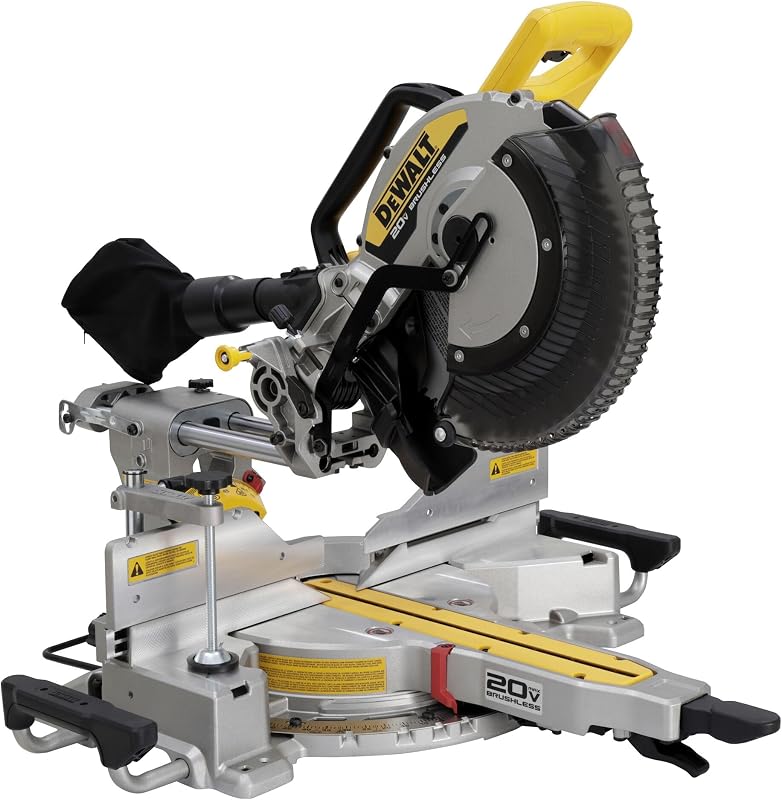
The single difference that decides the choice between these two cordless tools comes down to application scope: the DeWalt DCD996 is a heavy-duty, 3-speed hammer drill built to pulverize masonry and power through structural lumber, whereas the DeWalt DCD777 is a compact, 2-speed drill driver engineered for general fastening, cabinetry, and light drilling in confined areas.
Choose the DCD777 if you want a lightweight, complete drill kit for home maintenance and woodwork where tight clearances matter, or choose the DCD996 if your projects demand high-speed hole making, heavy masonry drilling, and superior bit-gripping hardware.

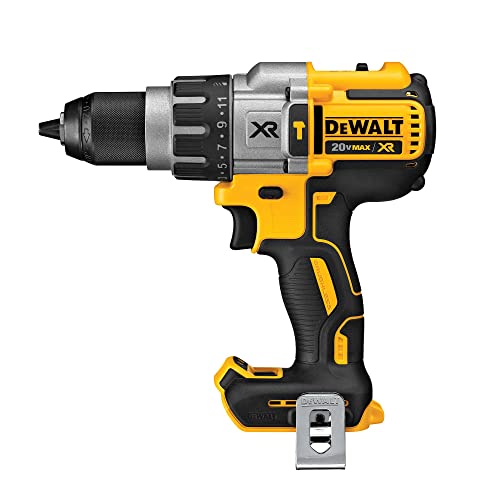
DeWalt DCD777 vs DeWalt DCD996 at a Glance
| Attribute | DeWalt DCD777 | DeWalt DCD996 |
|---|---|---|
| Tool Category | Basic Drill Driver | Hammer Drill Driver |
| Motor Type | Brushless Motor | Brushless Motor (High Power) |
| Speed Settings | 2-Speed Transmission | 3-Speed Transmission |
| Maximum Rotational Speed | 1500 RPM | 2000 RPM (2800 RPM listing spec) |
| Chuck Design | 1/2-Inch Single-Sleeve Ratcheting | 1/2-Inch Nitro-Carburized Metal with Carbide Inserts |
| Tool Length | 7.6 Inches Front-to-Back | Not listed |
| Work Lighting | LED with 20-Second Delay | 3-Mode LED with 20-Minute Spotlight |
| Included Equipment | 2.0 Ah Battery, Charger | 360° Side Handle, Belt Hook |
| Maximum Power Output | 300 Watts (340 UWO) | 300 Watts |
| Best For | Light Construction, DIY, Tight Spaces | Masonry, Heavy Timber, Job Site Production |
Drilling Capabilities and Hammer Mechanism
The operational divide between these tools centers on whether your workload requires concussive impact. The DCD996 is an XR hammer drill equipped with an internal percussion mechanism that pulses the rotating bit forward against stone, concrete block, and mortar. When evaluating dewalt dcd777 vs dcd796 or larger hammer units, this physical striking motion makes the difference between boring cleanly through foundation walls or burning out standard twist bits. The DCD996 listing rates the tool for drilling up to 16 millimeters in wood and 15 millimeters in metal, while providing the dedicated impact mode essential for brick and masonry anchors.
The DCD777 operates strictly as a rotary drill and electric screwdriver. Without a hammer mechanism, it relies entirely on steady rotational torque to push bits through timber and sheet metal. The specification sheets state a drilling capacity of 0.5 inches in wood and 0.5 inches in metal. While this capacity easily handles typical household mounting brackets, framing studs, and assembling furniture, asking whether to choose the dcd777 or dcd996 for masonry reveals the clear boundary of the DCD777. Forcing a standard rotary tool into cured concrete with masonry bits creates friction rather than pulverized dust, leading to overheated bits and premature tool fatigue.
If you regularly set Tapcon screws, run conduit through cinder block, or build outdoor structures anchored to stone slabs, the dedicated hammer mechanism on the DCD996 is mandatory. Homeowners handling routine cabinetry repairs, wood bored up to a half inch, or drywall hanging do not need the heavy percussion components of the hammer drill. Deciding on the dcd777 vs dcd996 hammer drill debate depends entirely on how often your projects encounter concrete and masonry.
Edge: DeWalt DCD996, because its dedicated hammer mode tackles masonry, brick, and block that the non-hammer DCD777 cannot penetrate effectively.
Transmission and Speed Settings
Gearing determines how efficiently a drill balances rotational velocity against turning effort. The DCD996 incorporates a 3-speed transmission, giving the operator three distinct mechanical gear ranges to match specific bit diameters. The listing records rotational speeds reaching 2000 RPM, with a separate high-speed specification of 2800 RPM. This wide velocity spectrum allows users to drop into low gear for high-resistance driving or switch into top gear for rapid drilling through framing materials. Reviewing the dewalt dcd800 vs dcd996 shows how critical that third high-velocity gear is for production speed on job sites.
The DCD777 utilizes a conventional 2-speed transmission that reaches a maximum rotational speed of 1500 RPM. Low gear provides the necessary rotational force for driving long fasteners without stripping drive heads, while high gear tops out at 1500 RPM for boring through softwood and light steel. For typical DIY maintenance, this two-range gearbox covers standard hardware needs, but it lacks the blistering velocity found on premium 3-speed gearboxes. In any comparison of a dewalt 3 speed vs 2 speed drill, the two-speed setup requires you to sacrifice high-end boring pace to maintain low-speed torque control.
Examining the dcd777 vs dcd996 specs shows that the additional mechanical range on the DCD996 offers superior flexibility under varying loads. The extra gear prevents the motor from bogging down when transitioning from modest pilot holes to broader spade bits. The DCD777 delivers consistent output for mid-tier tasks, but the 3-speed architecture gives the heavier tool a distinct productivity advantage during extended drilling runs.
Edge: DeWalt DCD996, because its 3-speed gearbox delivers up to 2000 RPM (and 2800 RPM in top specifications), offering wider application flexibility than a 2-speed 1500 RPM setup.
Chuck Construction and Bit Retention
Bit retention is critical when working under high resistance or repetitive impact. The DCD996 features a heavy-duty 1/2-inch (13-millimeter) ratcheting nitro-carburized metal chuck equipped with carbide inserts. The nitro-carburizing treatment hardens the exterior against scratches, drops, and abrasive masonry dust, while the internal carbide inserts bite into bit shanks to prevent slipping under heavy torque loads. When driving large augers or enduring the continuous vibration of hammer mode, these carbide teeth maintain clamping force without requiring manual re-tightening during work.
The DCD777 utilizes a 1/2-inch single-sleeve ratcheting chuck. This assembly allows for rapid one-handed bit changes and provides adequate gripping strength for cylindrical and hex-shank drill bits used in general woodworking. However, the outer sleeve construction does not feature the carbide insert teeth or hardened nitro-carburized finish found on the heavy-duty model. For basic shop chores and drywall screws, the single-sleeve ratcheting mechanism holds bits securely, but intense drilling cycles can occasionally lead to bit slippage compared to carbide-reinforced jaws.
The structural difference between these chucks directly reflects their intended environments. The rugged metal hardware of the DCD996 handles harsh job site abuse and severe torsional strain, whereas the single-sleeve mechanism of the DCD777 prioritizes smooth hand adjustments for fast household bit swaps. The metal chuck adds durability where it matters most, making it the superior mechanical assembly.
Edge: DeWalt DCD996, due to its heavy-duty nitro-carburized all-metal chuck fitted with carbide inserts that resist bit slipping under load.
Size, Weight, and Maneuverability
Ergonomics and spatial clearance dictate how comfortable a drill feels over hours of continuous use. The DCD777 excels in this category with an ultra-compact chassis measuring just 7.6 inches from front to back. This reduced footprint allows the tool to slip between closely spaced wall studs, inside assembled cabinet frames, and underneath plumbing fixtures where full-sized drills bind up. Paired with an ergonomic comfort grip handle that optimizes balance, it reduces operator wrist strain during overhead drilling or repetitive screw driving.
In contrast, the DCD996 is engineered as a heavy-duty platform. While its exact front-to-back length is not specified in the listing details, the housing must accommodate a 3-speed gearbox, a hammer mechanism, and reinforced internal gearing. As explored in discussions like dewalt dcd777 vs dcd800, heavy-duty hammer drills possess substantial mass and a forward-heavy center of gravity. To offset this leverage and protect the user, DeWalt includes a 360-degree vibration control side handle that clamps behind the chuck collar, ensuring stable two-handed control during violent torque spikes.
For confined workspaces and light household utility, the maneuverable frame of the DCD777 provides a clear physical advantage. Operating the larger DCD996 with its extended snout and auxiliary side handle inside a cramped crawl space or between joists can be frustrating. When evaluating dewalt dcd777 or dcd996 for home use, the compact 7.6-inch profile makes the DCD777 significantly more practical for everyday maneuvering.
Edge: DeWalt DCD777, because its 7.6-inch front-to-back profile and compact balance fit comfortably inside tight cabinets and confined framing cavities.
Work Lighting and Visibility Modes
Visibility in dim workspaces affects both fastener placement accuracy and user safety. The DCD996 includes an advanced 3-mode LED system designed to adapt to varying lighting requirements. Beyond low and medium settings, it features an LED Spotlight Mode with a 20-minute shutoff function. According to the listing specifications, this lighting array shines up to 20 times brighter than the previous generation model, effectively transforming the drill into a freestanding job site work light for inspecting dark electrical panels or working after power cutoffs.
The DCD777 uses a standard foot-mounted LED light with a 20-second trigger release delay. When you pull the trigger, the light illuminates your contact mark and remains lit for 20 seconds after the trigger is released before shutting down to conserve power. This standard setup is sufficient for illuminating the immediate area around a screw head or checking pilot hole alignment in an under-sink cabinet, but it cannot function as a continuous area light.
The 20-minute spotlight feature on the DCD996 eliminates the need to carry an auxiliary flashlight into crawl spaces, attics, or unpowered construction zones. The flexibility of switching between three output modes gives users complete control over illumination and battery consumption, providing an operational perk missing on the standard drill driver.
Edge: DeWalt DCD996, because its 3-mode LED offers an extended 20-minute spotlight mode that is up to 20 times brighter than prior models.
Kit Configuration and Out-of-the-Box Value
The components packaged inside the box heavily influence total setup convenience. The DCD777 referenced in this comparison (model DCD777D1) arrives as an operational kit, containing the drill driver, one 20V MAX 2.0 Ah lithium-ion battery, and a dedicated charger. For someone starting without existing 20V cordless gear, this package provides everything required to begin drilling immediately. Both the tool and battery communicate seamlessly across the broader DeWalt 20V MAX platform.
The DCD996 (model DCD996B) is listed as a bare tool configuration, meaning the battery and charger are sold separately. While it includes valuable accessories such as a heavy-duty 360-degree side handle and a belt hook, a buyer who does not already own compatible DeWalt 20V MAX batteries cannot operate the tool out of the package. In comparisons like dewalt dcd771 vs dcd996, factoring in the requirement for separate high-draw batteries alters the initial purchasing calculation.
If you are looking for an all-in-one solution without sourcing supplementary components, the DCD777 kit provides unmatched convenience. It supplies a verified 2.0 Ah power pack and charger in a single purchase, making it accessible for immediate home projects.
Edge: DeWalt DCD777, because it ships as a complete kit including a 2.0 Ah battery and charger rather than a bare tool.
Pros and Cons
DeWalt DCD777

Pros
- Compact 7.6-inch front-to-back length
- Includes 2.0 Ah battery and charger
- Ergonomic handle for balanced handling
- Brushless motor producing 340 UWO
- Three-year limited warranty coverage
Cons
- Lacks integrated hammer drilling mechanism
- Two gear ranges instead of three
DeWalt DCD996

Pros
- Dedicated masonry hammer drill functionality
- High-performance 3-speed all-metal transmission
- Nitro-carburized metal chuck with carbide inserts
- 3-mode LED with 20-minute spotlight setting
- Includes 360-degree vibration control side handle
Cons
- Sold as bare tool without battery
- Larger footprint for tight spots
Who Should Buy Each One
Choose the DeWalt DCD777 If
- You need a complete starter kit that includes a 2.0 Ah lithium-ion battery and charger right out of the box.
- Your projects involve tight spaces like kitchen cabinets, vanities, or closet organizers where a 7.6-inch tool length is critical.
- You primarily work with softwoods, plywood, drywall, and sheet metal requiring drilling capacities up to 0.5 inches.
- You prioritize a lightweight, balanced drill that reduces hand and arm fatigue during prolonged overhead fastening.
Choose the DeWalt DCD996 If
- You frequently drill into brick, mortar, poured concrete, or foundation walls that demand an active hammer mechanism.
- You require the versatility of a 3-speed transmission reaching up to 2000 RPM (or 2800 RPM) for high-speed production work.
- You need the heavy clamping power of a nitro-carburized metal chuck with carbide inserts to prevent bits from slipping.
- You already own DeWalt 20V MAX batteries and want a rugged tool with a 20-minute LED spotlight and auxiliary side handle.
Final Verdict
For most homeowners, hobbyists, and light remodelers, the DeWalt DCD777 is the more sensible and practical purchase. Its compact 7.6-inch profile allows you to maneuver between plumbing pipes and cabinet corners with ease, while its brushless motor outputs 340 UWO-plenty of muscle for assembling furniture, driving deck screws, and boring half-inch holes. Because it ships complete with a 2.0 Ah battery and charging station, it delivers immediate utility without requiring separate component purchases, answering whether the tool is worth it for everyday residential upkeep.
However, when your workload expands to structural building, extensive hole-sawing, or drilling into concrete and masonry, the DeWalt DCD996 easily justifies its place in your toolbox. The addition of a true hammer mechanism, a 3-speed transmission, a carbide-reinforced metal chuck, and a 360-degree side handle gives this tool the rugged durability needed for severe job site conditions. If you demand maximum drilling speed and hammer functionality, reading our dewalt dcd796 vs dcd996 analysis will confirm why the heavy-duty DCD996 remains the premier choice for serious masonry and construction tasks.
FAQ
Can the DCD777 drill into concrete or brick?
The DCD777 is a rotary drill driver and does not feature a hammer mechanism. While it can technically drill small pilot holes in softer materials with specialized masonry bits, it lacks the concussive percussion needed to penetrate cured concrete, hard brick, or stone efficiently. Using it on masonry risks binding the motor and wearing out the cutting edges of your drill bits.
Does the DCD996 come with a battery and charger?
The DCD996B model covered here is sold as a bare tool (tool only). It includes a 360-degree side handle and a belt hook, but the 20V MAX lithium-ion battery and charger must be purchased separately or supplied from your existing DeWalt cordless tool collection.
What is the benefit of the 3-speed transmission on the DCD996?
The 3-speed transmission provides three distinct gear ranges (reaching up to 2000 RPM or 2800 RPM depending on specification rating). This allows the operator to select the exact balance of torque and speed required for a task: low gear for high-resistance fasteners, medium gear for general drilling, and high gear for rapid hole boring in wood and masonry.
How does the chuck on the DCD996 differ from the DCD777?
The DCD996 features a heavy-duty nitro-carburized metal ratcheting chuck fitted with internal carbide inserts that bite into bit shanks to eliminate slipping under heavy torque loads. The DCD777 uses a standard single-sleeve 1/2-inch ratcheting chuck designed for quick, convenient bit changes during standard drilling and fastening tasks.
How do the LED work lights compare between these two models?
The DCD777 has a standard foot-mounted LED that remains lit for 20 seconds after the trigger is released. The DCD996 features an upgraded 3-mode LED system that is up to 20 times brighter than prior models and includes a dedicated 20-minute spotlight mode, allowing the drill to serve as an area light in unlit workspaces.
Can I use the same batteries on both the DCD777 and DCD996?
Yes. Both tools belong to the DeWalt 20V MAX system and accept any 20V MAX lithium-ion battery pack. The 2.0 Ah battery supplied with the DCD777 kit can be attached to the DCD996, and larger capacity XR packs will work seamlessly on either tool.