The critical difference that decides the choice between the DeWalt DCD801 and the DeWalt DCD805 is whether you need integrated hammer percussion for drilling masonry or electronic bind-up detection to protect your wrists during heavy rotary boring. Both tools belong to the high-performance 20V MAX XR cordless family, share identical two-speed 2,000 RPM gearboxes, and feature heavy-duty all-metal half-inch ratcheting chucks. However, the DCD805 is a dedicated hammer drill engineered to punch holes into concrete, brick, and block, while the DCD801 is a pure drill-driver equipped with an electronic anti-rotation system that instantly cuts power if a hole saw or auger bit jams in wood or steel.
Choose the DCD801 if your daily workflow focuses on carpentry, cabinet installation, structural framing, or electrical rough-ins where sudden bit stalls can wrench your arms. Choose the DCD805 if your trade routinely demands setting masonry anchors, drilling brick veneers, or fastening into cinder block walls alongside standard drilling tasks.
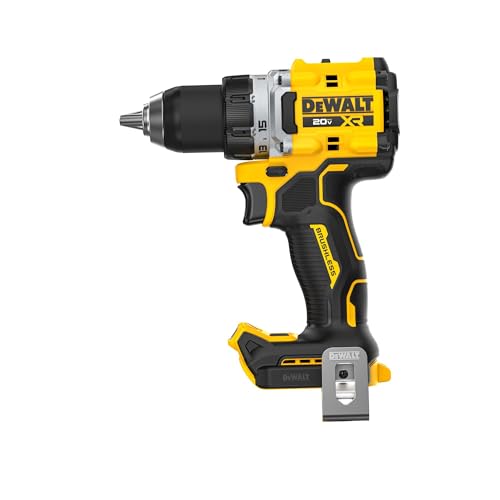

DeWalt DCD801 vs DeWalt DCD805 at a Glance
| Attribute | DeWalt DCD801 | DeWalt DCD805 |
|---|---|---|
| Drill Classification | Basic Drill / Driver | Hammer Drill / Driver |
| Motor Type | Brushless | Brushless |
| Operating Speeds | 2-Speed (0-650 / 0-2,000 RPM) | 2-Speed (0-650 / 0-2,000 RPM) |
| Hammer Blows Per Minute | Not listed (None) | Up to 34,000 BPM |
| Anti-Rotation Protection | Yes (Sensor shutoff with red LED) | Not listed |
| Chuck Size and Construction | 1/2 in. Metal Ratcheting | 1/2 in. Metal Ratcheting |
| Worklight System | 3-Position LED (70 Lumens) | 3-Position LED (70 Lumens, 20-min spotlight) |
| Smart Tool Tracking | Tool Connect Chip Ready | Not listed |
| Reported Tool Length | 9 inches | 7 inches (tool head only) |
| Best For | High-torque wood and metal boring with kickback safety | Mixed-material contractors needing masonry hammering |
Hammer Drilling and Masonry Capability
When selecting a core cordless tool for demanding jobsite tasks, the presence or absence of a percussive hammer mechanism directly governs the materials you can penetrate. Rotary drilling alone relies strictly on the sharp cutting edges of a bit slicing through fibers or shaving away metal. In hard masonry such as poured concrete, hard brick, and dense block, a standard rotary action simply creates excessive frictional heat, rapidly dulling carbide tips and burning out the motor. Percussive hammering, by contrast, delivers tens of thousands of rapid mechanical impacts along the drill axis every minute, pulverizing brittle aggregate so the rotating flutes can evacuate the dust.
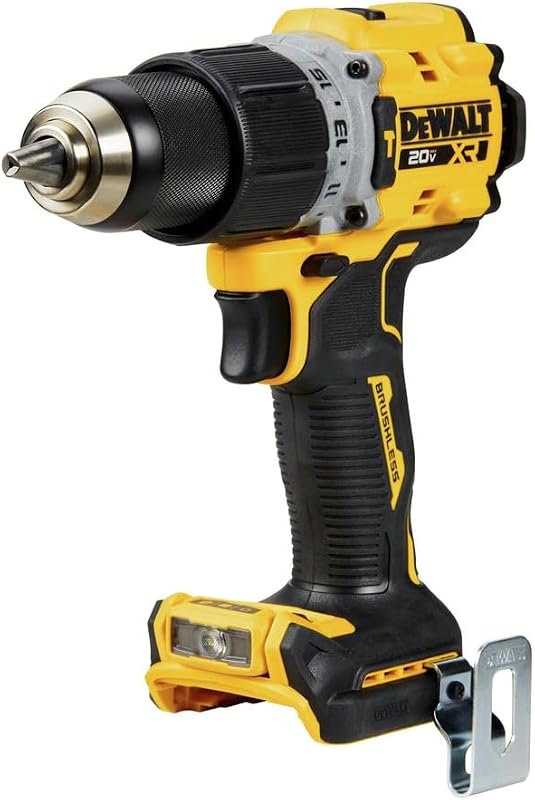
The integrated hammer mechanism on the DCD805 delivers up to 34,000 blows per minute (BPM), making it a true dual-purpose workhorse for commercial jobsites and residential remodeling. When installing concrete screws, sleeve anchors, or conduit brackets, shifting the DCD805 collar into hammer mode allows the tool to power through mortar joints and poured foundations effortlessly. By contrast, in any assessment of the dewalt dcd801 vs dcd996, you will find that the DCD801 lacks a percussion hammer assembly entirely. The listing explicitly categorizes it as a basic drill with designated capacities limited to wood and metal. Attempting to force the DCD801 through concrete using standard rotary rotation yields sluggish progress and risks binding the bit.
This fundamental mechanical division means the DCD805 eliminates the need to haul a secondary tool to the jobsite for light to medium masonry chores. For professionals who frequently set Tapcons or run utility lines through brick facades, the DCD805 provides self-contained versatility. Woodworkers, cabinetmakers, and finish carpenters who never touch masonry gain nothing from a hammer mechanism, but anyone facing mixed-material construction will find the percussive action of the DCD805 indispensable.
Edge: DeWalt DCD805 delivers up to 34,000 blows per minute for fast, efficient masonry drilling, a capability completely absent on the rotary-only DCD801.
Anti-Rotation Safety and Bind-Up Control
Drilling large-diameter holes with hole saws, augers, self-feed wood bits, or heavy metal cutters carries an inherent physical danger known as tool bind-up. When a large bit snags on a concealed framing nail, a dense grain knot, or a sheet metal edge, the rotational resistance at the bit exceeds the resistance of the user holding the handle. In an instant, the high-torque motor transfers all of its rotational force into the drill body, violently twisting the tool in the operator’s hands. This sudden kickback can sprain wrists, strain forearms, or throw an operator off balance when working on ladders or staging.
This is where the specialized engineering of the DeWalt DCD801 anti-rotation system becomes paramount. Built into the DCD801 is an active electronic sensor array that monitors the rotational acceleration of the drill housing. The moment the tool detects excessive reactive twist caused by a bit seizing, the onboard circuitry cuts electrical power to the brushless motor in a fraction of a second. An integrated red LED indicator illuminates on the base of the tool to alert the user that the safety intervention has triggered. When examining the dewalt dcd801 vs dcd800 lineage, this active kickback management represents an essential evolution for tradespeople working at maximum torque capacity.
In contrast, the product listing for the DCD805 does not specify an electronic anti-rotation safety system. While the DCD805 includes an adjustable mechanical clutch collar for controlling fastener depth, drilling modes bypass the clutch to deliver maximum continuous torque. If a high-diameter bit jams while operating the DCD805 in full drill or hammer mode, the motor continues delivering power until the operator manually releases the variable speed trigger or the drill stalls against the operator’s physical resistance. For plumbers roughing in waste lines or electricians coring through structural joists, the automatic bind-up protection of the DCD801 provides an invaluable safety margin.
Edge: DeWalt DCD801 features an active electronic anti-rotation system with visual LED feedback that shuts down the motor during dangerous bit bind-ups, whereas the DCD805 listing lists no such electronic kickback protection.
Speed, Power, and Motor Performance
Motor efficiency and gearing dictate how quickly a tool completes repetitive fastening cycles and whether it can sustain high rotational momentum under sustained load. Both of these 20V MAX XR models employ advanced brushless motors, which eliminate the friction, brush wear, and internal heat generation common in older brushed tools. For contractors evaluating upgrades from foundational equipment such as the dewalt dcd771 vs dcd801 or the brushless dewalt dcd777 vs dcd801, both the DCD801 and DCD805 represent significant leaps forward in drivetrain engineering.
The DCD801 is billed as the manufacturer’s most powerful 2-speed drill/driver in the 20V MAX tier, offering up to 109% more power than baseline configurations and up to 25% more power compared to rival Milwaukee tools. Its high-speed two-speed transmission pairs with a sensitive variable-speed trigger to deliver 0-650 RPM in low gear for high-torque driving, and 0-2,000 RPM in high gear for fast boring. The listing specifies endurance ratings capable of producing up to 175 holes per charge, backed by a rugged half-inch metal ratcheting chuck that firmly clamps onto both smooth and hex-shank bits without slippage.
The DCD805 matches this mechanical speed profile identically, outputting 0-650 RPM in speed setting 1 and 0-2,000 RPM in speed setting 2 through its heavy-duty two-speed gearbox. On the power side, the listing specifies a robust 300-watt motor output drawing 2 amps, claiming up to 40% more Unit Watts Out (UWO) versus the previous DCD796 generation when paired with premium DCB205 or DCBP034 Powerstack battery packs. It utilizes the same grade of half-inch all-metal ratcheting chuck to secure accessories during rigorous tasks. In pure rotational speed and motor resilience, neither tool gives up ground to the other.
Edge: Tie, as both drills share identical 0-650/0-2,000 RPM two-speed brushless drivetrains and heavy-duty 1/2-inch metal ratcheting chucks with comparable high-output performance.
Size, Ergonomics, and Confined-Space Handling
Modern jobsite tasks frequently take place in awkward, restricted quarters where tool dimensions directly affect productivity. Driving fasteners between wall studs spaced 16 inches on center, drilling inside cramped cabinet carcasses, or working overhead in ceiling plenums quickly exposes the drawbacks of oversized power tools. An excessively long drill head forces operators to insert bits at awkward angles, increasing the risk of stripped screw heads and wandering pilot holes.
The DCD805 makes compact architecture a primary selling point. The listing emphasizes a compact 7-inch tool head length, which measures a half-inch shorter than the previous-generation DCD796 hammer drill. With listed overall product dimensions of 7.32 by 3.74 by 9.25 inches, the DCD805 packs an entire mechanical hammer mechanism into a remarkably stubby chassis. This short profile allows users to drive fasteners perpendicular to framing studs without requiring flexible shaft extensions or specialized right-angle adapters.
The DCD801 listing indicates dimensions of 9 inches in length, 3.5 inches in width, and 7.1 inches in height, alongside a listed weight of 13.76 ounces for the bare tool. While well-balanced and lightweight enough to minimize shoulder strain during prolonged overhead fastening, its 9-inch overall span is noticeably longer than the compact 7-inch head of the DCD805. Both tools include a sturdy metal belt hook that mounts to either side of the tool base, keeping the tool securely holstered when ascending ladders or shifting between work zones.
Edge: DeWalt DCD805 wins on maneuverability thanks to its dedicated 7-inch compact tool head length, fitting more cleanly between narrow wall studs and tight mechanical spaces.
Jobsite Lighting and Tool Management Technology
Jobsite visibility and asset security have evolved from secondary conveniences into major operational concerns. Dimly lit basements, dark utility chases, and early-morning construction shifts require dependable illumination that does not rely on holding an auxiliary flashlight. Simultaneously, commercial contractors managing extensive tool inventories require methods to catalog equipment, track tool assignments, and mitigate jobsite loss.
Both drills feature an integrated 3-position, pivoting LED worklight mounted on the tool foot, directing up to 70 lumens of brightness upward toward the chuck and fastener tip. However, the DCD805 incorporates advanced worklight functionality with three discrete output modes, including a dedicated 20-minute spotlight mode with auto-shutoff. This feature transforms the drill into an independent, hands-free worklight that can remain illuminated on a job box or floor for twenty minutes without requiring continuous trigger depression.
The DCD801 approaches jobsite efficiency through smart connectivity rather than lighting runtimes. The DCD801 listing highlights Tool Connect Chip Ready functionality. By installing an optional Tool Connect chip (sold separately) into the integrated internal pocket, the drill pairs directly with the DeWalt Site Manager mobile application. This system transmits asset management data, tracks tool location across jobsites, and helps commercial crews prevent misplaced tools. For contractors who follow enterprise tracking comparisons like the dewalt dcd801 vs dcd998 guide, integrated asset tracking provides tangible organizational control.
Edge: Tie, because the DCD805 offers a highly practical 20-minute spotlight mode for extended low-light work, while the DCD801 delivers Tool Connect Chip Ready capability for commercial asset tracking.
Pros and Cons
DeWalt DCD801

Pros
- Active anti-rotation bind-up control system
- High-speed 2,000 RPM transmission
- Up to 175 holes per charge
- Tool Connect Chip Ready functionality
- Durable 1/2-inch metal ratcheting chuck
Cons
- Lacks integrated hammer drilling mechanism
- Longer 9-inch body dimension
DeWalt DCD805
Pros
- Integrated 34,000 BPM masonry hammer mode
- Compact 7-inch tool head length
- 3-position 70-lumen LED with spotlight mode
- Efficient 300-watt brushless motor output
- Heavy-duty 1/2-inch metal ratcheting chuck
Cons
- No anti-rotation sensor listed
- No Tool Connect tracking specified
Who Should Buy Each One
Choose the DeWalt DCD801 If
- You regularly drill large-diameter holes in framing lumber, timber, or sheet metal using hole saws and auger bits, making active anti-rotation bind-up protection an essential safety feature.
- Your primary trade centers on woodworking, cabinetry, furniture building, or residential electrical work where masonry hammering is completely unnecessary.
- You manage a commercial tool inventory and want the ability to add a Tool Connect chip for tracking tool assignments and location through the Site Manager app.
- You prioritize having a dedicated, high-output drill/driver that avoids the internal weight and mechanical complexity of an unused percussion hammer mechanism.
Choose the DeWalt DCD805 If
- You are a general contractor, plumber, HVAC technician, or remodeler who regularly drills into concrete, brick, mortar joints, and cinder block using a 34,000 BPM hammer mode.
- You want a single, versatile primary drill that handles both fine woodworking assembly and light masonry anchoring without switching tools.
- You frequently work in dark enclosures, crawlspaces, or unpowered job areas where the 3-position 70-lumen LED with a 20-minute continuous spotlight mode serves as temporary task lighting.
- You need the shortest possible tool head profile, capitalizing on the 7-inch compact front-to-back length to navigate tight framing bays and narrow stud spaces.
Final Verdict
For the broad majority of general contractors, remodelers, and active tradespeople, the DeWalt DCD805 is the more complete and versatile investment. Its integrated hammer mechanism delivers up to 34,000 blows per minute, allowing you to set concrete anchors and bore masonry holes on demand without having to pull a heavy rotary hammer out of the truck. Packaged into a remarkably compact 7-inch tool head with a high-output 300-watt brushless motor and an extended 20-minute LED spotlight mode, the DCD805 excels across nearly every common construction material.
The DeWalt DCD801, however, holds a distinct operational advantage for woodworkers, carpenters, and commercial electricians whose work involves aggressive torque in timber and structural metal. By eliminating the hammer mechanism in favor of an active electronic anti-rotation safety system, the DCD801 protects the operator’s hands and wrists from violent kickback when large bits bind up. If you never need to drill into brick or concrete, the kickback protection, 175-hole-per-charge endurance, and Tool Connect readiness make the DCD801 the smarter, safer dedicated drill-driver.
FAQ
Can the DeWalt DCD801 drill into concrete or brick?
The DCD801 is a basic rotary drill-driver without a percussive hammer mechanism. While it can technically drill small holes into very soft brick or mortar joints using specialized rotary-only masonry bits, it is not engineered for concrete. Attempting to drill hard masonry without percussive hammer blows will result in extremely slow drilling speeds, excessive friction, and rapidly ruined drill bits.
How does the anti-rotation system on the DeWalt DCD801 work?
The DCD801 features an integrated motion-sensing system that detects sudden, rapid rotational acceleration of the tool housing. If a hole saw, spade bit, or auger catches in the material and causes the drill to twist aggressively in the user’s hand, the electronic controller cuts power to the motor instantly. A red LED illuminates on the base of the tool to indicate that the anti-rotation system has engaged to prevent wrist injury.
Can the hammer mode on the DeWalt DCD805 be turned off for standard drilling?
Yes. The DCD805 features a multi-mode collar that allows the user to switch seamlessly between hammer drilling, standard rotary drilling, and adjustable clutch driving modes. When switched to standard drilling mode, the percussive hammer mechanism disengages completely, allowing clean, smooth drilling in wood, plastic, and metal.
What is the benefit of the Tool Connect Chip Ready feature on the DCD801?
The Tool Connect Chip Ready feature on the DCD801 means the tool body has a dedicated internal slot designed to house a DeWalt Tool Connect chip (sold separately). When installed, the chip communicates with the DeWalt Site Manager mobile app to provide asset tracking, inventory management, and location monitoring across commercial jobsites.
Are both drills compatible with standard DeWalt 20V MAX lithium-ion batteries?
Yes. Both the DCD801 and DCD805 are part of the DeWalt 20V MAX XR lineup and operate on standard 20V MAX lithium-ion battery packs, including standard cylindrical cell packs and compact Powerstack pouch-cell batteries.
Do either of these tools include batteries and a charger in the box?
The standard model designations DCD801B and DCD805B are sold as bare tools. Both packages include the bare tool body and an attachable metal belt hook, requiring batteries and chargers to be purchased separately or shared from an existing 20V MAX tool collection.


