Choosing between Coway and Blueair comes down to whether your living space demands heavy-duty True HEPA filtration with automated air-quality sensors or an ultra-compact, whisper-quiet system built for bedside operation. Coway utilizes multi-stage physical filtration designed to circulate air through spacious open-concept rooms, while Blueair relies on a specialized electrostatic and mechanical hybrid system that emphasizes silent running and a remarkably small physical footprint.
Homeowners seeking automated cleaning routines and verified capture of microscopic particles across living rooms up to 1,800 square feet should choose Coway, while light sleepers looking for a featherweight, whisper-quiet appliance for a nightstand, nursery, or compact home office should choose Blueair.



Coway vs Blueair at a Glance
| Feature | Coway | Blueair |
|---|---|---|
| Filtration Technology | Multi-stage True HEPA and Activated Carbon | HEPASilent mechanical and electrostatic filtration |
| Maximum Room Coverage | 1,748 to 1,800 sq ft | 907 to 1,138 sq ft |
| Particle Capture Testing | Down to 0.01 microns (KCL test standards) | 99.97% down to PM 2.5 / 0.1 microns |
| Air Quality Monitoring | Built-in real-time sensor with Auto and Eco modes | Smart connectivity on 511i Max; base 511 not listed |
| Acoustic Output | The listing does not specify decibel levels | Around 30 dB whisper-quiet on low speed |
| Unit Weight | 12.5 to 15.2 lbs | 2.84 to 5.24 lbs |
| Timer and Indicators | Integrated timer and filter replacement indicators | Plug-and-play simplicity; smart app on Max |
| Manufacturer Warranty | 3-year limited warranty | The listing does not specify |
| Best For | Large living areas, family rooms, and hands-off automation | Bedrooms, dorm rooms, nurseries, and personal desks |
Room Coverage and Air Cleaning Speed
Room coverage dictates how effectively an air purifier can cycle the air in an enclosed room before airborne contaminants settle onto furniture and flooring. In this Coway vs Blueair comparison, the two brands approach square footage with noticeably different targets. The Coway Mighty AP-1512HH is rated to purify spaces up to 1,748 square feet, while the newer Coway Airmega Mighty2 AP-1512N expands that operational envelope slightly to 1,800 square feet. These ratings allow the Coway units to handle large open-concept floor plans, finished basements, and joined dining and living areas where high air exchange volumes are required to keep haze and odors at bay.
Blueair directs its engineering toward smaller, high-occupancy zones where air cycling speed in tight spaces takes priority over vast volumetric reach. The Blueair Blue Pure 511i Max states a maximum cleaning capacity of up to 1,138 square feet in one hour. Meanwhile, the compact Blueair Blue Pure 511 covers up to 907 square feet, with specific ratings showing it cleans a 432-square-foot space in 30 minutes and a 180-square-foot room in just 12.5 minutes on its highest fan speed. Those figures follow Clean Air Delivery Rate (CADR) standards based on AHAM AC-1, emphasizing rapid turnover in compact quarters rather than sprawling coverage across an entire level of a house. Shoppers evaluating broad room performance can review our coway airmega 200m vs 400 comparison to see how brand coverage scales up further.
If your priority is scrubbing the air in a single bedroom, dorm, or enclosed office, the swift 12.5-minute turnover of Blueair is more than adequate. However, for expansive primary suites, connected dining-living rooms, or high-ceiling layouts, Coway moves significantly more air volume per cycle, making it far more capable of handling open architecture without leaving dead zones.
Edge: Coway, because its verified coverage thresholds of 1,748 and 1,800 square feet comfortably outpace Blueair for whole-floor cleaning demands.
Filtration Technology: HEPA vs HEPASilent
Understanding the difference between traditional HEPA vs HEPASilent mechanics is essential when weighing Coway or Blueair for allergies. Coway relies on an uncompromising multi-stage mechanical setup. The Coway Airmega models feature a True HEPA filter compliant with IEST-RP-CC007 standards at speed level 1, as tested by SGS. Independent testing by Korea Conformity Laboratories (KCL) under standard SPS-KACA 002-132:2022 demonstrated effective capture of ultra-fine particles and allergens down to 0.01 micrometers. Backing this up is a dedicated activated carbon filter tested under JEM 1467:2015 conditions, demonstrating acetic acid and harmful gas reduction within 30 to 60 minutes. This multi-layered defense creates an impenetrable physical barrier that traps soot, pet dander, mold spores, and volatile organic compounds.
Blueair approaches particle capture differently by combining mechanical filtration with electrostatic charging inside its proprietary HEPASilent system. In the Blue Pure 511 and 511i Max, incoming particles pass through an electrical charge before hitting the physical filter matrix. This charge makes airborne particles cling more readily to the fibers, allowing Blueair to use less dense filter media while capturing 99.97% of airborne particles such as dust, pollen, pet dander, and smoke down to PM 2.5 (0.1 to 2.5 microns). Because the filter fibers are less dense, the internal fan encounters less resistance, which directly lowers energy draw-rated comparable to a 40-watt light bulb on the Blue 511-and maintains air movement with minimal motor strain. For an expanded look at how physical barrier purifiers match up against alternative designs, see our levoit vs coway analysis.
When selecting Coway or Blueair for allergies, particle size thresholds matter. While Blueair provides exceptional everyday allergen removal for pet hair, pollen, and common dust, Coway has documented laboratory validation down to 0.01 microns. Furthermore, Coway includes a separate granular activated carbon stage tested for specific chemical and gas abatement, whereas the compact Blueair units focus primarily on particulate matter.
Edge: Coway, due to its documented 0.01-micron capture testing and dedicated laboratory-tested activated carbon stage for chemical gas reduction.
Noise Levels and Bedroom Suitability
Acoustic performance often makes or breaks the decision when deciding between Coway or Blueair for bedroom placement. Light sleepers need an air purifier that can operate continuously through the night without motor hum, high-pitch wind turbulence, or distracting mechanical vibration. This is where the engineering behind Blueair shines. Because the HEPASilent technology relies on electrostatic attraction, air passes through a less restrictive filter weave. The Blue Pure 511 registers sound pressure levels on low around 30 decibels, which the manufacturer notes is equivalent to a quiet whisper. This makes the Blueair Blue Pure series an unobtrusive companion for nurseries, dorm rooms, and bedside nightstands.
Coway designs its Mighty lineup with balanced, multi-speed blower fans, but the product listings do not specify exact low-speed decibel ratings. The Mighty AP-1512HH and Mighty2 AP-1512N do incorporate an intelligent Eco Mode, which halts fan rotation when the internal air quality sensor detects that room air has remained pristine for 30 consecutive minutes. This creates silent gaps in operation, but when the fan kicks back on into higher stages to process sudden spikes in airborne dust or pet dander, the substantial airflow required to service up to 1,800 square feet inevitably generates noticeable air movement sound. Similar trade-offs between fan size and background noise are examined in our levoit core 400s vs coway airmega 200m review.
For buyers asking is Blueair worth it purely for undisturbed sleep, the acoustic data confirms its advantages. Its dedicated low-speed sound profile produces a faint, steady white noise that blends into the background, whereas Coway operates with greater mechanical presence to satisfy its higher airflow capacity.
Edge: Blueair, which documents whisper-level sound pressure around 30 decibels on low speed for sensitive sleep spaces.
Air Quality Monitoring and Automation
Real-time automation separates set-and-forget appliances from manual gadgets. In the realm of Coway vs Blueair air quality management, Coway provides a comprehensive onboard sensing suite. Both the Mighty AP-1512HH and Mighty2 AP-1512N feature an integrated Air Quality Monitor that actively samples the room environment and communicates particulate conditions through an illuminated color indicator. More importantly, this sensor directs the machine’s Auto Mode, dynamically ramping fan speeds up during cooking or cleaning episodes and throttling them back down once the air is clean. Coupled with a built-in timer, an energy-saving Eco Mode, and an electronic filter replacement indicator, Coway provides complete autonomy without requiring external devices or smartphones.
Blueair splits its product line when it comes to automation and telemetry. The standard Blue Pure 511 is engineered for plug-and-play simplicity, omitting onboard air quality indicators or automated fan throttling in favor of direct, manual speed control. For users who prefer smart integration, the Blue Pure 511i Max introduces smart air purifier capabilities engineered for bedrooms and connected spaces. However, the listing specifications for the base 511 do not include onboard sensor suites or auto-throttling modes, requiring the user to manually assess when to switch fan tiers based on visible dust or seasonal pollen loads.
For those conducting a practical Coway review versus a Blueair review, automation is a major differentiator. The ability of Coway to autonomously detect changes in indoor particulate levels and respond instantly without user intervention provides peace of mind, particularly in homes with shedding pets or active kitchens. To explore how automated controls differ across similar room-cleaning models, see our levoit vital 200s vs coway airmega 200m guide.
Edge: Coway, because its integrated particulate sensor, dynamic Auto Mode, Eco Mode, and built-in timer come standard on its core platforms.
Form Factor, Weight, and Placement Flexibility
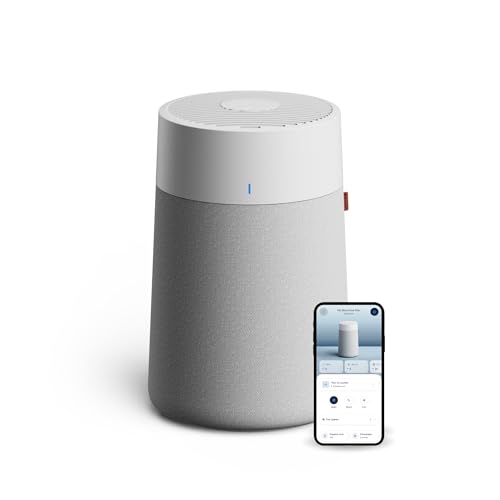
The physical footprint of an air purifier dictates where it can realistically live inside your home. Blueair engineered the Blue Pure series to maximize placement versatility in tight quarters. The Blue Pure 511i Max measures 10.6 by 10.6 by 18.9 inches and weighs an extraordinarily light 2.84 pounds. The standard Blue Pure 511 is even more compact at 7.9 by 7.9 by 13.9 inches, weighing 5.24 pounds. These dimensions and negligible weights allow Blueair units to sit safely on floating shelves, nightstands, dressers, or compact work desks without dominating the room or overloading delicate furniture.
Coway constructs its purifiers with substantial internal motor assemblies and broad intake surfaces. The Mighty AP-1512HH measures 9.6 by 16.8 by 18.3 inches and weighs 12.5 pounds, while the Mighty2 AP-1512N comes in at 9.3 by 16.9 by 17.9 inches and weighs 15.2 pounds. These are floor-standing appliances that require designated floor real estate and adequate clearance from walls to ensure unobstructed intake. Relocating a Coway from a living room to an upstairs bedroom requires two hands and intentional effort, whereas a Blueair can be carried from room to room with a single hand. Readers balancing room footprint against output power will find relevant context in our levoit core 400s vs coway airmega 400 comparison.
For renters, university students in dorms, or homeowners seeking discreet desktop air sanitation, Blueair provides unmatched physical convenience. Coway delivers the necessary mass for commercial-grade residential moving power, but it sacrifices shelf and tabletop placement flexibility in the process.
Edge: Blueair, owing to its compact cylindrical form factor and featherweight construction starting under 3 pounds.
Pros and Cons
Blueair

Pros
- Ultra-lightweight design starting at 2.84 pounds
- Quiet low setting rated around 30 decibels
- Fast 12.5-minute air turn in small rooms
- Dual mechanical and electrostatic HEPASilent filtration
Cons
- Base model lacks onboard air quality sensors
- Lower total square footage coverage capacity
View BLUEAIR Air Purifiers Home Bedroom on Amazon
Who Should Buy Each One
Choose the Coway If

- You need to purify expansive spaces up to 1,800 square feet, such as open living rooms, shared family areas, or full apartment floors.
- You want complete set-and-forget automation via a built-in Air Quality Monitor that shifts fan speeds automatically.
- You require certified 0.01-micron particulate capture and laboratory-tested activated carbon filtration for heavy odors and smoke.
- You prefer a manufacturer backed by a dedicated 3-year warranty for your primary home investment.
Choose the Blueair If
- You need a quiet air purifier for a bedroom, nursery, or dorm room that maintains whisper-quiet sound around 30 decibels.
- You want a lightweight, compact unit weighing under 6 pounds that fits comfortably on a desk, bookshelf, or small nightstand.
- You desire rapid air cycling in small rooms, achieving a complete clean in a 180-square-foot space in approximately 12.5 minutes.
- You prefer energy-efficient HEPASilent electrostatic filtration that uses minimal power during continuous daily operation.
Final Verdict
When assessing Blueair vs Coway, Coway emerges as the superior choice for overall residential air cleaning. With coverage ratings spanning up to 1,800 square feet, third-party laboratory verification for capturing ultra-fine particles down to 0.01 microns, and dedicated activated carbon testing for odor reduction, Coway delivers the robust performance needed for demanding households. The addition of standard onboard air quality sensors, automatic fan modulation, and energy-conserving Eco Mode makes models like the Mighty AP-1512HH and Mighty2 AP-1512N exceptionally capable main-floor workhorses that justify the investment for allergy sufferers and pet owners alike.
Conversely, Blueair claims a decisive victory when the primary requirement is quiet, localized air circulation in personal spaces. The Blue Pure 511 and 511i Max offer a level of portability, whisper-quiet 30-decibel operation, and rapid small-room cycling that larger cabinet units cannot match. If you are shopping strictly for a compact bedroom, nursery, or office where floor space is scarce and low noise is critical, Blueair provides the exact balance of convenience and streamlined performance you need.
FAQ
Which is better for allergies, Coway or Blueair?
Coway holds an advantage for severe allergy sufferers due to its laboratory-verified capture of ultra-fine particles down to 0.01 microns (tested by KCL) and its True HEPA filter compliant with IEST-RP-CC007 standards. Blueair also performs admirably against common allergens like dust, pollen, and pet dander by capturing 99.97% of airborne particles down to PM 2.5 using its HEPASilent electrostatic-mechanical system. However, Coway offers a denser physical barrier and larger activated carbon stage to capture volatile organic compounds alongside allergens.
Is Blueair worth it for small bedrooms?
Yes, Blueair is exceptionally well suited for small bedrooms. Its Blue Pure 511 model can clean a 180-square-foot room in roughly 12.5 minutes on high speed, while maintaining sound levels around 30 decibels on its lowest setting. Its lightweight build, starting at under 3 pounds for the 511i Max, allows it to rest safely on nightstands or dressers where space is at a premium.
What is the real difference between HEPA and HEPASilent?
Standard True HEPA, as used by Coway, uses dense fiber mats that physically trap airborne particles down to microscopic levels as air is forced through. Blueair’s proprietary HEPASilent technology combines a less dense mechanical filter with an electrostatic charge that ionizes incoming particles, causing them to cling to the filter fibers. This hybrid approach allows higher airflow and lower acoustic noise, whereas True HEPA provides pure mechanical particle trapping without relying on electrostatic attraction.
Is Coway worth it for open-concept floor plans?
Coway is worth it for open floor plans because its models cover between 1,748 and 1,800 square feet. Smaller bedroom purifiers struggle to circulate air across large, continuous areas, but Coway utilizes heavy-duty internal blowers and dynamic Auto Mode sensors to keep vast volumes of air moving and filtered across combined living and dining spaces.
How do Coway and Blueair compare on energy consumption?
Both brands prioritize energy conservation, but they achieve it through different features. Coway incorporates an automated Eco Mode that completely powers down the fan if air remains clean for 30 consecutive minutes, eliminating unnecessary power draw. Blueair utilizes HEPASilent technology with less dense filter media, allowing the fan motor to operate on minimal electricity-rated comparable to a 40-watt light bulb on the Blue 511.
Does the Coway air purifier include a warranty?
Yes, the Coway Mighty AP-1512HH listing explicitly includes a 3-year manufacturer warranty covering the appliance. The Blueair product listings provided do not specify the exact length of their warranty coverage.