The core distinction between the Blueair Blue 511 and the Winix 5500-2 centers on physical scale and air-processing capacity versus compact, tabletop simplicity. The full-sized Winix console utilizes a four-stage system with active sensors designed to circulate air through expansive living areas up to 1,881 square feet in one hour, while the miniature Blueair cylinder focuses on quiet, personal purification for compact zones up to 432 square feet in 30 minutes.
Choose the Blueair Blue 511 if you need a featherweight, small-footprint air purifier designed for nightstands, desks, or modest bedrooms where simple plug-and-play operation is preferred. Choose the Winix 5500-2 if you require an autonomous floor console equipped with real-time air quality monitoring, automatic fan adjustments, and specialized odor reduction for large, shared household spaces.


Blueair Blue 511 vs Winix 5500-2 at a Glance
| Feature | Blueair Blue 511 | Winix 5500-2 |
|---|---|---|
| Maximum Room Coverage | Up to 907 sq ft (432 sq ft in 30 min) | Up to 1,881 sq ft in 1 hr |
| Filtration Technology | HEPASilent Technology | 4-Stage System with True HEPA |
| Particle Capture Threshold | PM 2.5 (0.1 to 2.5 microns) | 99.99% down to 0.01 microns |
| Odor Control Component | Not listed | High Deodorization Carbon Filter |
| Air Quality Sensors | Not listed | Built-in Smart Sensors with visual display |
| Automated Modes | Not listed | Auto Mode and Light-Sensing Sleep Mode |
| Auxiliary Technology | Not listed | PlasmaWave Technology |
| Dimensions | 7.9 x 7.9 x 13.9 inches | 11.0 x 15.9 x 25.2 inches |
| Weight | 5.24 pounds | 13.3 pounds |
| Best For | Small bedrooms, offices, and dorms | Open living rooms and shared family spaces |
Room Coverage and Airflow Capacity
Airflow volume determines how rapidly an air purifier cycles the entire volume of a room, preventing stale air and particulate buildup. The Blue 511 listing specifies that it cleans a 180-square-foot room in roughly 12.5 minutes and a 432-square-foot space in 30 minutes on its highest fan setting, with overall capacity reaching up to 907 square feet over extended runtimes. Clean Air Delivery Rate (CADR) metrics for the Blueair are tested under the AHAM AC-1 standard, prioritizing rapid air turnover in concentrated footprints. Comparing levoit core 400s vs blueair blue 511 reveals similar trade-offs between compact bedroom units and expansive whole-house floor consoles.
In contrast, the 5500-2 operates as a high-capacity floor machine built to handle massive living spaces, rated to cover up to 1,881 square feet within a single hour. When evaluating Blueair 511 vs Winix 5500-2 coverage, the discrepancy in mechanical output is substantial. The 5500-2 draws air across a much wider surface area, moving larger volumes through its intake vents to cycle expansive open-concept dining rooms, basements, or high-ceiling suites where smaller personal units lose effectiveness.
Placing a purifier in a room larger than its rated volume forces the motor to run continuously at maximum speed, generating unnecessary noise and strain. The Blue 511 excels in enclosed areas under 400 square feet, providing swift air exchanges without taking over the room. The 5500-2 provides the airflow required to circulate open layouts, ensuring that distant corners receive adequate air changes throughout the day.
Edge: Winix 5500-2. Its high-volume blower cleans up to 1,881 square feet in an hour, significantly outpacing the smaller unit in raw capacity.
Filtration Stages and Particle Capture Efficiency
The internal filtration stages dictate which airborne irritants each unit removes from circulation. Blueair equips the Blue 511 with proprietary HEPASilent technology, an approach combining mechanical filtration with electrostatic charge. The product data verifies testing against PM 2.5 airborne particles, spanning sizes from 0.1 to 2.5 microns over runtimes up to 90 minutes. However, the Blueair listing does not specify a separate activated carbon pellet stage or supplemental gas-phase treatment. Readers exploring mid-tier filtration alternatives often cross-reference the coway airmega 200m vs blueair blue 511 to contrast proprietary filtration against traditional True HEPA stacks.
The 5500-2 relies on a comprehensive 4-stage air purification system engineered for broader pollutant defense. According to manufacturer data, this system captures 99.99% of airborne particles down to 0.01 microns in diameter, which encompasses ultra-fine dust, smoke, and fine pet allergens. Winix complements this True HEPA filter with a dedicated High Deodorization Carbon Filter designed specifically to target pet odors and smoke, alongside proprietary PlasmaWave technology that actively neutralizes airborne impurities without requiring mechanical contact.
This structural difference creates divergent strengths in everyday home environments. Any thorough Winix 5500-2 air purifier review notes that its multi-layer array is optimized for households dealing with cooking grease, heavier pet shedding, and volatile odors. The Blue 511 provides dependable everyday particulate reduction for basic dust, pollen, and common dander, but it lacks the secondary chemical and odor barrier built into the Winix machine.
Edge: Winix 5500-2. Its four-stage setup removes particles down to 0.01 microns and integrates specialized carbon and PlasmaWave technology.
Sensors, Automation, and Operational Controls
Operational automation separates set-and-forget appliances from devices requiring constant manual intervention. The Blue 511 is engineered around straightforward plug-and-play simplicity. The manufacturer listing notes no built-in air quality sensors, onboard particle monitors, or automated speed modes. Operating the Blueair requires manual adjustment: you select the fan speed, leaving it to run steadily at that pace until you intervene to switch it off or reduce output for the night.
The 5500-2 integrates advanced automated monitoring systems. Built-in Smart Sensors continuously sample surrounding air quality and display real-time feedback through a visual representation on the console. When set to Auto Mode, the internal controller automatically adjusts fan speed according to detected particle levels, increasing airflow during sudden pollutant spikes and throttling down when the room clears. A similar level of automated control is examined in our levoit vital 200s vs blueair blue 511 evaluation.
Additionally, the Winix listing outlines an automated Sleep Mode triggered by ambient lighting. When the room darkens, light sensors automatically transition the device into low-speed, darkened operation to prevent sleep disruption. The Blueair requires the user to manually lower the fan speed before turning out the lights. For users asking is Winix 5500-2 worth it, this hands-off autonomous operation represents a clear quality-of-life advantage.
Edge: Winix 5500-2. Integrated smart sensors regulate fan speed dynamically and trigger sleep mode automatically when lights are extinguished.
Size, Weight, and Placement Flexibility
Physical proportions determine where an air purifier can realistically function inside a home. The Blue 511 features an ultra-compact footprint measuring 7.9 inches wide, 7.9 inches deep, and 13.9 inches tall, with an overall weight of just 5.24 pounds. Its cylindrical shape and minimal mass allow it to rest comfortably on a crowded work desk, a compact nightstand, an open bookshelf, or a dorm room dresser without monopolizing usable surface area.
The 5500-2 demands significantly more real estate. Measuring 11.0 inches deep, 15.9 inches wide, and 25.2 inches tall, it weighs 13.3 pounds. This is a floor-standing tower that requires dedicated floor clearance and cannot sit on bedside tables or desktop workstations. In a direct Winix 5500-2 vs Blueair Blue 511 placement check, the Winix unit consumes more than double the floor area and stands nearly a foot taller, acting as a permanent room fixture rather than a versatile accent piece.
For small-space living, floor clutter is often a primary concern. The Blueair can be moved effortlessly from room to room using one hand, making it ideal for renters, college students, or home workers who shift between locations. The Winix, while stable and grounded, is meant to remain anchored in a designated floor space where intake and exhaust pathways remain unobstructed.
Edge: Blueair Blue 511. Measuring under eight inches across and weighing just 5.24 pounds, it fits onto desktops and nightstands that cannot accommodate a floor tower.
Noise Levels and Bedroom Suitability
Acoustic performance is critical for any air cleaner deployed in resting areas. The Blue 511 is positioned specifically as a bedroom and office companion due to its quiet motor architecture. The listing highlights low noise levels, noting that sound pressure on the low setting operates in the range of a whisper, defined at roughly 30 dB. Because it moves air through a tight 360-degree cylinder at lower overall CFM, it avoids the motor hum common in large floor equipment. Shoppers evaluating bedside purifiers often weigh these sound profiles against traditional box designs, as seen in the blueair blue 511 vs honeywell hpa304 analysis.
The 5500-2 manages bedroom operation through its dedicated Sleep Mode, which throttles motor RPM down to its lowest setting for whisper-quiet running when the room is dark. However, because the Winix houses a heavy-duty industrial fan assembly, operation on medium and high settings during active air spikes produces a noticeable rush of air. In compact sleeping quarters, unexpected automated fan accelerations can disturb light sleepers.
When deciding between the Blueair Blue 511 or Winix 5500-2 for bedroom placement, room volume determines the winner. In master suites where the unit sits twelve feet away from the bed, the Winix works well on low. But for children’s bedrooms, studio apartments, or bedside nightstands where the device sits within arm’s reach of your pillow, the continuous, gentle whisper profile of the Blueair provides a less intrusive environment.
Edge: Blueair Blue 511. Its continuous low-decibel whisper profile and non-disruptive footprint make it exceptionally well-suited for close-proximity bedside use.
Energy Consumption and Upkeep Simplicity
Sustained operation requires considering long-term power draw and day-to-day filter maintenance. The Blue 511 listing describes an ultra-efficient operational profile, noting power consumption comparable to a standard 40-watt LED light bulb. Its cylindrical chassis uses an all-in-one replacement filter format that drops into the housing without tools or complex alignment tabs, keeping daily upkeep virtually effortless. Similar compact power profiles are evaluated in our coway airmega 400 vs blueair blue 511 review.
The 5500-2 features a multi-tiered maintenance structure. The 4-stage purification stack includes separate physical layers: a pre-filter, the High Deodorization carbon frame, and the True HEPA element, alongside the internal electronic PlasmaWave emitter. While the Winix utilizes its Auto Mode to spin down into energy-saving states when the air is clean, maintaining multiple internal filtration stages requires periodic checking, vacuuming of outer elements, and staggered cartridge replacement cycles.
For users who want zero maintenance friction, the Blueair offers basic, mistake-proof operation: you change a single cartridge and let the low-draw motor run. For users willing to manage a multi-layer filter frame in exchange for deeper chemical and allergen filtration, the Winix design provides greater overall filtration depth at the expense of a slightly more involved upkeep routine.
Edge: Blueair Blue 511. A simple single-piece filter drop-in and low power draw make everyday upkeep simpler than managing a multi-stage tray.
Pros and Cons
Blueair Blue 511

Pros
- Compact 7.9-inch desktop footprint
- Lightweight 5.24-pound cylindrical frame
- Whisper-quiet 30 dB low setting
- Low 40W light bulb energy draw
- Simple plug-and-play operation
Cons
- No built-in smart air sensors
- Lower total room coverage
- Lacks dedicated carbon deodorization filter
View Blueair Blue 511 on Amazon
Winix 5500-2
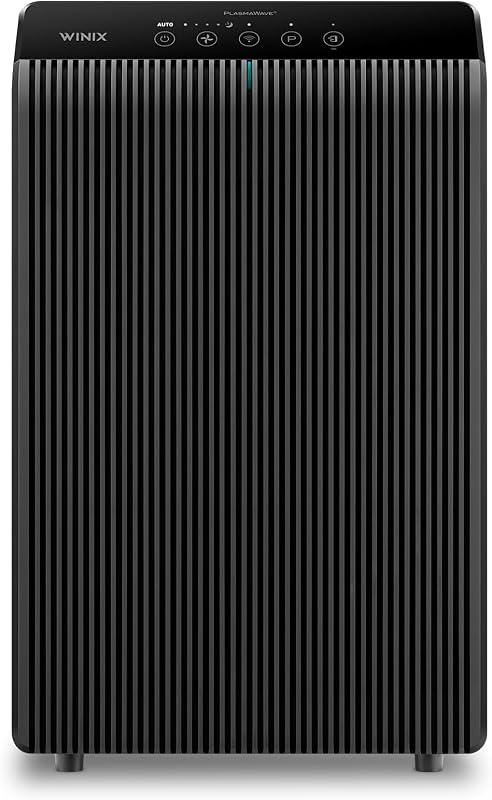
Pros
- High coverage up to 1881 sq ft
- True HEPA captures 0.01-micron particles
- High Deodorization Carbon Filter included
- Smart sensors with automated fan mode
- Light-sensing automatic sleep mode
Cons
- Large 25-inch tall floor profile
- Heavier 13.3-pound cabinet
- Too large for nightstand placement
Who Should Buy Each One
Choose the Blueair Blue 511 If
- You need an air purifier for a compact bedroom, nursery, or office under 400 square feet.
- You plan to position the machine on an elevated nightstand, end table, or desk surface.
- You want a lightweight device under six pounds that can easily be transported between rooms.
- You prefer simple manual controls without worrying about sensor calibrations or app setups.
Choose the Winix 5500-2 If
- You are treating large open living areas, finished basements, or combined kitchen-living layouts up to 1,881 square feet.
- You want automated air sensors that detect particulate spikes and adjust fan speed on their own.
- Your household deals with active cooking smells, pet odors, or smoke requiring dedicated carbon and PlasmaWave treatment.
- You prefer a dedicated floor unit that automatically transitions into sleep mode when ambient room lights turn off.
Final Verdict
The choice between these two purifiers comes down to matching air handling volume to your room dimensions. The Winix 5500-2 is the superior performing machine for the vast majority of shared home environments. Its high-volume airflow cleans massive areas up to 1,881 square feet per hour, while its True HEPA filter, High Deodorization carbon stage, and PlasmaWave emitter capture 99.99% of impurities down to 0.01 microns. With built-in air quality sensors driving fully automated speed adjustments, it delivers comprehensive, hands-off climate control for family living spaces.
However, the Blueair Blue 511 remains the clear choice for smaller, personal sanctuaries. Where the Winix is an imposing 13-pound floor console, the Blue 511 is a whisper-quiet, 5.2-pound cylinder that perches seamlessly on a bedside nightstand or office desk. If your purification needs are confined to an enclosed bedroom, dorm, or workspace under 432 square feet, the Blueair provides efficient, compact air cleaning without demanding floor space or complicated upkeep.
FAQ
How does Blueair Blue 511 CADR compare to the Winix 5500-2?
The Blueair Blue 511 CADR is tested under the AHAM AC-1 protocol and is optimized for spaces between 180 square feet (cleaned in 12.5 minutes) and 432 square feet (cleaned in 30 minutes), reaching up to 907 square feet over longer durations. The Winix 5500-2 delivers a substantially higher volumetric flow rate, rated to cycle through rooms up to 1,881 square feet within a single hour.
Is Winix 5500-2 worth it for a small bedroom?
The 5500-2 provides effective air cleaning and a light-activated sleep mode that lowers fan noise in the dark. However, its physical height of over 25 inches and 13.3-pound weight make it bulky for tighter bedrooms. If floor space is at a premium, the smaller Blue 511 is typically the more practical choice for compact rooms.
Can the Blueair Blue 511 run on automatic mode?
The Blue 511 listing does not specify any built-in air quality sensors or automated mode features. It is built as a plug-and-play manual device where the user selects the desired operating speed directly on the unit.
What is the difference between Blueair HEPASilent and Winix True HEPA?
Blueair uses HEPASilent technology tested on PM 2.5 airborne particles down to 0.1 microns, utilizing electrostatic charging alongside mechanical filter media to achieve quiet operation. The Winix uses a 4-stage system featuring a certified True HEPA filter rated to capture 99.99% of airborne particles down to 0.01 microns, paired with a separate carbon filter and PlasmaWave technology.
How do the dimensions and weight compare between the two units?
The Blue 511 measures 7.9 x 7.9 x 13.9 inches and weighs 5.24 pounds, making it suitable for desktop or nightstand placement. The 5500-2 measures 11.0 x 15.9 x 25.2 inches and weighs 13.3 pounds, requiring dedicated floor placement.
Does the Blueair Blue 511 have an odor filter?
The Blue 511 listing highlights particle filtration for PM 2.5 contaminants but does not list a dedicated activated carbon or odor-deodorization stage. The Winix 5500-2 includes a dedicated High Deodorization Carbon Filter specifically designed to neutralize pet odors and smoke.
Does the Winix 5500-2 support remote or app management?
The Amazon listing for model 5510 notes app support alongside its automated mode and visual sensor readouts, allowing for modernized operation compared to traditional non-connected consoles.


