The deciding factor between natural gas and electric tankless water heaters comes down to incoming utility infrastructure and peak hot water delivery. Choosing between the Rinnai RE180iN and the Rheem 18kW Tankless Water Heater hinges entirely on whether your home has an active natural gas line capable of handling 180,000 BTU for multi-bathroom volume, or if you require a vent-free 240-volt electric system designed for compact spaces and moderate hot water demand.
Choose the Rinnai RE180iN if you have a busy multi-person household with natural gas hookups that demands simultaneous shower and appliance use. Choose the Rheem 18kW Tankless Water Heater if you need a vent-free, compact electric unit to supply hot water for an apartment, smaller home, or single-shower configuration.

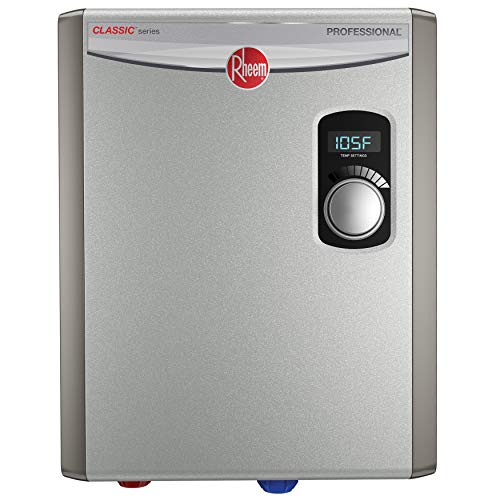
Rinnai RE180iN vs Rheem 18kW Tankless Water Heater at a Glance
| Feature | Rinnai RE180iN | Rheem 18kW Tankless Water Heater |
|---|---|---|
| Power Source | Natural Gas (120V ignition) | Electric (240V AC) |
| Heating Capacity | 180,000 BTU (18 kW listed) | 18,000 Watts (18 kW) |
| Maximum Flow Rate | 8.5 GPM (up to 6.9 GPM across 5 fixtures) | 4.4 GPM |
| Thermal Efficiency | Not listed | 99.8% |
| Maximum Water Temperature | 140 °F | 140 °F |
| Venting Requirements | Indoor non-condensing venting required | Vent-free (no exhaust venting required) |
| Casing Dimensions (W x H) | 14.05″W x 27.28″H | 14.5″W x 18.25″H |
| Unit Weight | 24.49 kg | 14.8 pounds |
| Internal Heating Elements | Stainless steel heat exchanger | Two field-serviceable copper immersion elements |
| Residential Warranty | 15-year heat exchanger, 5-year parts, 5-year labor (with registration) | Not listed |
| Best For | Multi-bath homes with natural gas access | Smaller homes, apartments, or point-of-use electric setups |
Flow Rate and Multi-Fixture Performance
Flow rate determines how many fixtures can draw hot water simultaneously without anyone experiencing a sudden drop in water temperature or pressure. When evaluating flow capacity, the Rinnai RE180iN flow rate reaches a ceiling of 8.5 GPM according to its specification sheet, with product highlights noting real-world delivery of up to 6.9 GPM capable of running up to five fixtures at once. This volume allows multiple showers, a washing machine, and a kitchen faucet to operate at the same time in moderate inlet water conditions. For buyers evaluating larger gas units, looking at a rinnai ru199in vs re180in comparison highlights how Rinnai structures its capacity tiers across standard residential footprints.
In contrast, the Rheem 18kW provides a maximum delivery of up to 4.4 GPM. Rheem specifies that this 18,000-watt heating capacity makes the RTEX-18 ideal for mid-range whole-home applications or a single shower setup in regions like the Midwest where groundwater temperatures drop during colder months. Because it produces 4.4 GPM at peak output, running a second major fixture-such as a secondary shower or a dishwasher-while someone is bathing can cause a reduction in flow or delivery temperature if incoming water is cold.
The gap between 4.4 GPM and 8.5 GPM represents the functional divide between single-point or small-household coverage and full, simultaneous multi-room utility. If your household frequently runs two showers concurrently while washing dishes, the gas-fired Rinnai provides the throughput necessary to prevent fixture competition. The Rheem model excels in tighter applications where plumbing runs are short and demand is sequential rather than simultaneous.
Edge: Rinnai RE180iN delivers nearly double the maximum gallon-per-minute throughput to support multiple simultaneous fixtures.
Power Source, Heating Output, and Energy Utility
Fuel type fundamentally dictates how these two systems generate heat and what utility demands they place on your home. The RE180iN is a gas-powered tankless water heater that burns natural gas to generate 180,000 British Thermal Units (BTU) of thermal energy, utilizing a standard 120-volt electrical connection to operate its internal computer, sensors, and electronic ignition. This massive instantaneous heat output lets the unit handle steep temperature rises when frigid groundwater enters the heat exchanger during winter months. Buyers exploring gas capacity options often cross-reference the rinnai re180in vs rheem rtgh series to gauge how non-condensing gas systems compare against condensing alternatives.
The Rheem 18kW operates entirely on AC electricity, drawing 18,000 watts across a 240-volt electrical connection. Because electric immersion elements transfer heat directly into the water stream, the Rheem lists an exceptional 99.8% thermal efficiency rating. It draws zero standby energy and activates its dual copper immersion elements strictly when a hot water tap opens. However, pulling 18 kW requires substantial electrical panel capacity, typically demanding dedicated high-amperage double-pole circuit breakers and heavy-gauge wiring.
Deciding between these power methods in the classic gas vs electric tankless water heater debate comes down to existing home utilities. Homes equipped with existing natural gas supply lines can support the 180,000 BTU burner of the RE180iN with minimal electrical load. Conversely, homes without gas service or properties aiming to avoid fossil fuels can take advantage of the Rheem unit’s near-perfect 99.8% energy conversion, provided the main electrical panel can absorb the 18 kW draw.
Edge: Tie. The RE180iN offers superior raw heating output via natural gas, while the Rheem 18kW delivers 99.8% thermal efficiency on an all-electric configuration.
Venting Requirements and Installation Space
Physical footprint and exhaust routing heavily influence where a tankless water heater can live within a property. The Rheem RTEX-18 holds a massive logistical advantage in installation flexibility because electric resistance heating generates no combustion gases. It requires zero venting. With dimensions of 14.5 inches wide by 18.25 inches high, an 18.25-inch depth profile, and an ultralight weight of only 14.8 pounds, the unit is 90 percent smaller than a conventional storage tank. The manufacturer notes it can mount virtually anywhere indoors, including directly under a sink, inside a small hallway closet, or on a laundry room wall using bottom 3/4-inch NPT water connections.
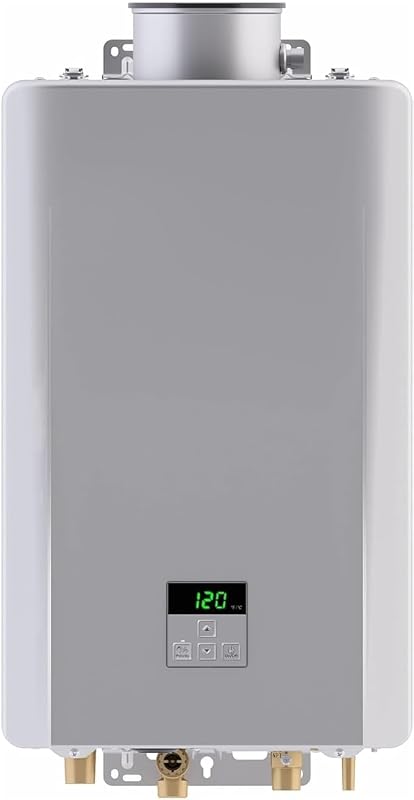
The RE180iN, while described by Rinnai as occupying the space of a small suitcase, represents a more complex mechanical installation. Measuring 14.05 inches wide by 27.28 inches high with a 27.28-inch depth profile, it weighs 24.49 kg (roughly 54 pounds). Because it burns natural gas inside an indoor casing, it requires dedicated non-condensing exhaust venting routed to the outside of the building. It also requires an adequate gas line diameter to feed 180,000 BTU safely. Rinnai includes a sliding bracket to assist with wall alignment and explicitly recommends professional installation via a qualified technician.
For installations where punching an exhaust flue through an exterior wall or roof is impossible-such as interior apartments, basements without direct exterior access, or condominiums-the vent-free Rheem is often the only workable solution. When examining the Rheem RTEX-18 vs Rinnai RE180iN for retrofit ease, the electric unit requires far less architectural modification. Comparing larger systems like the rinnai ru199in vs rheem 18kw shows that gas venting logistics remain a central hurdle for any high-BTU appliance.
Edge: Rheem 18kW Tankless Water Heater wins for its vent-free operation, compact 14.8-pound chassis, and under-sink mounting capability.
Temperature Regulation and Modulation Technology
Precise temperature delivery prevents scalding and eliminates uncomfortable temperature fluctuations when flow rates change. The Rheem 18kW utilizes advanced self-modulation technology paired with an external digital thermostatic control and an LED display. This system continuously measures incoming water temperature and water flow rate, adjusting power across its two heating elements to maintain the user’s target temperature with plus-or-minus 1-degree accuracy up to its 140 °F maximum. Homeowners looking into whether is Rheem 18kW worth it often highlight this precise single-degree adjustment as a key benefit for sensitive shower setups.
The Rinnai RE180iN also incorporates smart on-demand heating that only activates when water flow is detected, reaching an identical maximum water temperature of 140 °F. Its integrated LED display focuses heavily on diagnostic functionality, presenting service reminders and specific error codes to simplify operational troubleshooting. For remote management, the RE180iN can connect to local networks, though this requires purchasing a separate Rinnai Controlr Wi-Fi module that is not included in the standard package.
While both units prevent continuous standby energy loss and offer clear digital interfaces, Rheem’s thermostatic regulation provides direct single-degree precision right on the front cover. Rinnai’s LED screen emphasizes equipment maintenance reminders and diagnostic codes, backed by optional add-on network connectivity. If you want self-modulating power scaling right out of the box with zero optional modules required, the Rheem platform keeps operation simple and transparent.
Edge: Rheem 18kW Tankless Water Heater provides built-in self-modulation with plus-or-minus 1-degree digital precision on its control interface.
Durability, Serviceability, and Residential Warranty Coverage
Water heaters operate under harsh thermal conditions, making internal materials and warranty terms vital for long-term ownership. Rinnai builds the RE180iN with a durable stainless steel material construction and an updated internal layout intended to enhance long-term serviceability. The standout feature in any Rinnai RE180iN review is the manufacturer’s residential warranty: a limited 15-year warranty on the heat exchanger, 5 years on parts, and 5 years on labor, provided the owner registers the product within 90 days of installation (defaulting to 1 year of labor if unregistered).
The Rheem 18kW features a gray protective exterior housing two durable copper immersion heating elements. Rheem designed these elements to be field-serviceable and threaded for straightforward replacement when minerals or scale build up over years of use. The unit is rated for water systems with a maximum pressure of up to 150 PSI. However, the manufacturer’s Amazon listing data does not specify the exact residential warranty terms for the RTEX-18, leaving buyers to rely on standard component replacement practices. To see how electric alternatives stack up on internal durability, checking a rheem 18kw tankless vs ecosmart ecos 27 breakdown offers valuable context on copper element longevity.
While the Rheem offers easily serviceable threaded copper heating elements that a homeowner or plumber can replace directly, Rinnai’s 15-year heat exchanger and 5-year labor guarantee offers substantially greater institutional backing. For buyers considering long-term investments across competing brands, such as in a rinnai re180in vs ecosmart ecos 27 matchup, Rinnai’s extensive warranty schedule provides peace of mind that electric alternatives rarely match in listed product specifications.
Edge: Rinnai RE180iN stands out with its robust stainless steel build and up to 15 years of factory heat exchanger warranty coverage.
Pros and Cons
Rinnai RE180iN
Pros
- High 8.5 GPM maximum flow rate
- Powers up to 5 fixtures simultaneously
- 15-year heat exchanger warranty
- Durable stainless steel construction
Cons
- Requires dedicated gas exhaust venting
- Heavy 24.49 kg suitcase-sized frame
Rheem 18kW Tankless Water Heater

Pros
- Vent-free installation requires no ductwork
- Near-perfect 99.8% thermal efficiency
- Compact 14.8-pound under-sink design
- Field-serviceable dual copper elements
Cons
- Flow rate limited to 4.4 GPM
- Requires heavy 240V electrical capacity
View Rheem 18kW Tankless Water Heater on Amazon
Who Should Buy Each One
Choose the Rinnai RE180iN If
- You live in a multi-bathroom home where occupants regularly use multiple showers, sinks, or washing machines at the same time.
- Your property already has a dedicated natural gas line ready to support a 180,000 BTU appliance.
- You want the backing of a 15-year residential heat exchanger warranty and professional service support.
- You plan to vent the appliance directly through an exterior wall or roof and prefer indoor stainless steel construction.
Choose the Rheem 18kW Tankless Water Heater If
- Your home or apartment does not have natural gas service and operates strictly on a 240-volt electrical panel.
- You need a vent-free water heater that can mount inside tight closets, utility rooms, or directly under a sink.
- Your hot water demand centers around a single shower or sequential fixture use in small-to-midsize living spaces.
- You prefer field-serviceable threaded copper heating elements that can be replaced individually without replacing the entire chassis.
Final Verdict
For most whole-home residential applications with natural gas access, the Rinnai RE180iN is the clear winner. Delivering up to 8.5 GPM (and rated for up to 6.9 GPM across five simultaneous fixtures), its 180,000 BTU heating capacity prevents the cold-water interruptions common when multiple taps run at once. Supported by a 15-year heat exchanger warranty and a commercial-grade stainless steel build, the RE180iN is built to handle the rigorous everyday demands of family living.
However, the Rheem 18kW Tankless Water Heater is the superior selection when gas infrastructure is absent or venting is impossible. Its compact 14.8-pound frame, 99.8% thermal efficiency, and vent-free design allow it to fit where gas appliances cannot go. If you are outfitting an all-electric apartment, a detached suite, or a single-bath home with manageable peak flow needs, the Rheem 18kW delivers reliable, self-modulating hot water with minimal installation footprint.
FAQ
Can the Rheem 18kW support two showers running at the same time?
The Rheem 18kW provides a maximum flow rate of 4.4 GPM, which is generally sufficient for one standard shower and a low-flow sink running concurrently under mild inlet water temperatures. In colder northern climates where incoming groundwater is chilled, running two showers simultaneously will likely exceed the 18 kW heating capacity, leading to a drop in water temperature.
Does the Rinnai RE180iN require venting to the outdoors?
Yes. The RE180iN is an indoor natural gas water heater that produces combustion exhaust. It requires dedicated non-condensing venting routed through a roof or exterior wall to safely expel exhaust gases outside the home. It cannot be installed without proper venting.
What electrical supply is required to power the Rheem 18kW?
The Rheem 18kW runs on a 240-volt AC power supply and draws 18,000 watts. This requires sufficient capacity in your home’s main electrical breaker panel, typically utilizing dedicated double-pole circuit breakers sized to handle the continuous electrical load of the two heating elements.
Does the Rinnai RE180iN come with Wi-Fi built in?
No, Wi-Fi connectivity is not built into the base unit. While the RE180iN supports wireless monitoring and digital control, you must purchase the optional Rinnai Controlr module separately to enable Wi-Fi functionality.
What is the maximum water temperature on both models?
Both the Rinnai RE180iN and the Rheem 18kW feature a maximum water temperature setting of 140 °F. Each unit allows you to adjust the temperature below this maximum using their respective digital LED interfaces.
Can the heating elements in the Rheem 18kW be replaced?
Yes. The Rheem 18kW uses two copper immersion heating elements that are field-serviceable and threaded. If an element fails or suffers from mineral buildup over time, it can be unscrewed and replaced without having to discard the entire water heater.
