Deciding between the Rinnai RE180iN and the Rinnai RXP160iN comes down to whether your home needs an ultra-efficient condensing system with an integrated recirculation pump or a high-heat non-condensing appliance engineered for simple mechanical retrofits. The RXP160iN relies on high-efficiency condensing heat exchangers, smart fuel selection, and intelligent recirculation schedules to reduce wait times at the tap, whereas the RE180iN delivers a robust 180,000 BTU burner inside a slender non-condensing framework that drops neatly into standard indoor plumbing layouts.
Choose the RE180iN if you want a powerful non-condensing replacement that mounts cleanly in a narrow indoor space without requiring condensate drainage lines. Choose the RXP160iN if you want maximum fuel efficiency, instant hot water convenience via a factory-installed pump, and the freedom to mount the heater indoors or outdoors using natural gas or propane.


Rinnai RE180iN vs RXP160iN at a Glance
| Feature | Rinnai RE180iN | Rinnai RXP160iN |
|---|---|---|
| Technology Type | Non-Condensing | Condensing |
| Maximum Heat Output | 180,000 BTU | 160,000 BTU |
| Maximum Flow Rate | 8.5 GPM (up to 6.9 GPM / 5 fixtures) | 9.0 GPM (up to 6 fixtures) |
| Energy Efficiency (UEF) | Not listed | 0.97 UEF |
| Recirculation Pump | None built-in | Built-in Smart-Circ Intelligent Recirculation |
| Fuel Compatibility | Natural Gas | Natural Gas or Propane (Smart Sense) |
| Installation Placement | Indoor only | Indoor or Outdoor (Versa Vent) |
| Cabinet Dimensions | 14.05″W x 27.28″H | 19″W x 31″H |
| Unit Weight | 24.49 kg | 57 lbs |
| Descaling Maintenance | Standard flush valves | Quick Flush feature |
| Best For | Direct non-condensing indoor natural gas swaps | High-demand homes seeking efficiency and instant hot water |
Efficiency and Condensing Technology
The primary engineering distinction between these two units is how they handle combustion exhaust. The RXP160iN is a condensing water heater, which means it contains a secondary heat exchanger that captures latent heat from flue gases before they escape the home. By cooling those combustion gases down to the point where water vapor condenses into liquid, the RXP160iN achieves an exceptional 0.97 Uniform Energy Factor (UEF). In contrast, the RE180iN is a non-condensing water heater. It vents hot exhaust directly through high-temperature metal piping without a secondary heat recovery cycle, and its product listing does not specify a numerical UEF rating.
Understanding Rinnai condensing vs non condensing equipment reveals how these designs change daily utility operation. The condensing design of the RXP160iN wastes far less heat through the chimney pipe, converting almost all incoming fuel directly into usable thermal energy for your domestic water supply. This process lowers venting temperatures dramatically, permitting venting through materials like polypropylene or PVC rather than specialized metal venting, though it does produce mildly acidic condensate water that must be routed to a dedicated drain or neutralizer. The non-condensing RE180iN runs hotter flue exhaust, which eliminates the need to manage acidic drainage lines entirely, but sends more ambient combustion heat straight outside.
If minimizing long-term utility consumption is your top priority, the RXP160iN efficiency rating delivers a clear operational advantage. The condensing architecture squeezes performance from every unit of fuel burned, making it especially advantageous in homes with persistent daily hot water demands such as multiple morning showers and back-to-back laundry cycles.
Edge: Rinnai RXP160iN because its 0.97 UEF condensing design recovers waste heat from exhaust gases to maximize thermal efficiency.
Recirculation and Hot Water Delivery Speed
Waiting for hot water to reach a distant master bathroom or kitchen sink is one of the most frequent complaints with standard tankless installations. The RXP160iN addresses this issue directly with an integrated RXP160iN recirculation pump powered by Smart-Circ Intelligent Recirculation technology. This internal mechanism continuously learns your household water usage patterns over time. Once the system identifies typical morning or evening routines, it automatically circulates hot water through your supply plumbing right before you turn on a faucet, dramatically shortening wait times and preventing clean water from running down the drain.
The RE180iN, on the other hand, does not include an internal recirculation pump. When a tap opens downstream, the heater must wait for cold water to purge from the intervening pipes before heated water arrives at the fixture. If you want instant hot water at distant taps with the RE180iN, you would have to install an external third-party pump, additional electrical wiring, and potentially an external check valve or crossover system, all of which add complexity to the mechanical room layout.
For homes where faucets sit dozens of feet away from the mechanical closet, having the pump factory-installed inside the cabinet makes a significant functional difference. The RXP160iN combines intelligent scheduling with internal hardware, saving homeowners the headache of wiring and mounting separate circulation components on the wall.
Edge: Rinnai RXP160iN due to its built-in Smart-Circ pump that automates hot water recirculation according to learned family routines.
Heating Capacity and Maximum Flow Rate
Total hot water delivery depends on a balance between thermal burner power (BTU output) and fluid volume delivery (GPM). The RE180iN features a 180,000 BTU burner and lists an overall maximum flow rate of 8.5 GPM, with product descriptions noting support for up to 6.9 GPM across 5 simultaneous fixtures. The RXP160iN operates on a slightly lower 160,000 BTU burner, yet achieves a peak flow rate of 9.0 GPM capable of running up to 6 fixtures at once under favorable conditions.
When selecting a Rinnai RE180iN or RXP160iN for large home properties, your regional groundwater temperature plays a critical role in how these numbers translate into actual performance. The RE180iN flow rate of 8.5 GPM and its 180,000 BTU input provide superior heating muscle when incoming winter groundwater is extremely cold. Raising water temperature from 40 degrees Fahrenheit up to a comfortable 120 or 140 degrees requires pure heating power, and the extra 20,000 BTUs on the RE180iN help keep water hot even when incoming water is near freezing.
Conversely, in regions where groundwater remains moderate year-round, the RXP160iN leverages its 9.0 GPM rating and advanced fluid modulation to serve up to six fixtures concurrently. If your home has multiple bathrooms running during simultaneous morning routines, both units provide ample volume, but the higher BTU ceiling of the RE180iN protects against flow throttling in freezing northern climates.
Edge: Tie because the RE180iN provides higher raw thermal heat input (180,000 BTU) for cold groundwater, while the RXP160iN provides higher peak fixture throughput (9.0 GPM serving 6 fixtures).
Installation Flexibility and Venting Options
Mechanical installation requirements dictate where and how a tankless water heater can be placed. The RXP160iN offers industry-leading versatility through its Versa Vent setup and Smart Sense gas control system. The Versa Vent design permits the RXP160iN to be mounted either indoors or outdoors (with the outdoor installation requiring the RX-OVC vent cap). Furthermore, its Smart Sense system allows the heater to run on either natural gas or liquid propane, providing essential adaptability for rural properties or homes without municipal gas service.
The RE180iN is engineered strictly as an indoor natural gas appliance. It does not include dual-fuel conversion electronics in the box, meaning it cannot be deployed on propane without separate non-listed components, nor is it designed for outdoor mounting. However, for indoor installations, the RE180iN incorporates an updated sliding mounting bracket that allows the installer to align the unit effortlessly against existing wall studs and pipe centerlines.
When planning a mechanical room overhaul, comparing the installation footprint against units like those in the Rinnai RE180iN vs Rheem RTGH series shows that adaptability often saves substantial labor. If you want the option to move the heater outside to free up closet space, or if your property uses propane, the RXP160iN is the only unit between these two that handles those requirements out of the box.
Edge: Rinnai RXP160iN because of its Versa Vent indoor/outdoor placement options and dual-fuel Smart Sense natural gas and propane compatibility.
Maintenance and Digital Interface
All tankless water heaters require periodic flushing to eliminate limescale buildup from heat exchanger coils. The RXP160iN simplifies this regular upkeep by including a specialized Quick Flush feature. This built-in mode streamlines routine descaling cycles, allowing technicians or proactive homeowners to circulate cleaning solution through the heat exchanger with fewer complex bypass steps. It also features a modern interface and pairs with the Rinnai Central App to assist with initial setup, operational monitoring, and field diagnostics.
The RE180iN focuses its maintenance design on a cleaner internal component layout and an integrated LED display. This screen provides clear service reminders, operational statuses, and numeric error codes to assist in diagnosing issues quickly. However, it lacks the dedicated Quick Flush valve pathway found on its condensing sibling, requiring standard isolation valve procedures for descaling flushes. Both models support mobile control and smart home monitoring, but each requires the separate purchase of the Rinnai Controlr WiFi module to enable wireless functionality.
Considering routine maintenance over a 15-year service life, comparing options like the Rinnai RU199iN vs RXP160iN demonstrates how dedicated maintenance features like Quick Flush protect the heat exchanger from premature mineral fouling. The RXP160iN gives homeowners and technicians an easier path to keeping the unit in peak running condition.
Edge: Rinnai RXP160iN due to its integrated Quick Flush feature and companion support via the Rinnai Central App.
Cabinet Footprint and Space Requirements
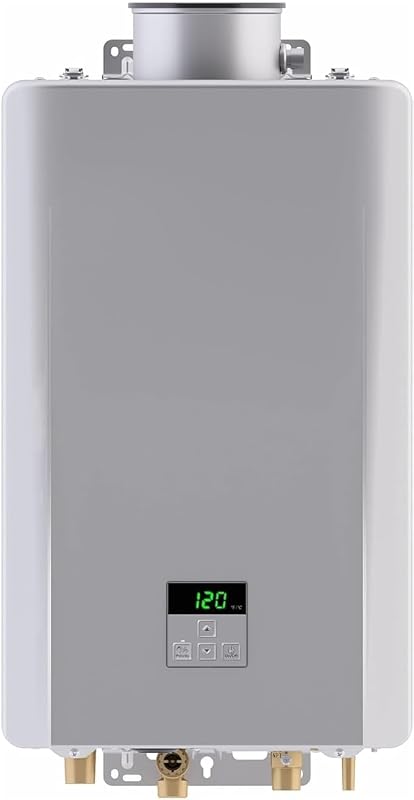
Reclaiming interior square footage is one of the primary motivations for upgrading to an on-demand system. The RE180iN features a compact, suitcase-sized footprint measuring 14.05 inches wide and 27.28 inches high, with an item depth listed at 27.28 inches. Weighing 24.49 kilograms (approximately 54 pounds), it offers a relatively narrow profile that fits comfortably into compact mechanical spaces, laundry closets, or between structural framing elements.
The RXP160iN is a slightly larger, heavier unit, measuring 19 inches wide by 31 inches high and weighing 57 pounds. The extra cabinet width and height accommodate the internal secondary condensing heat exchanger and the built-in Smart-Circ pump assembly. While both heaters mount securely to wall studs, the narrower profile of the RE180iN makes it easier to fit into cramped mechanical chases where horizontal wall width is constrained.
If you have tight interior walls where every inch of horizontal clearance matters, the RE180iN is easier to position. However, because the RXP160iN can be installed outdoors with an optional cap, it can bypass indoor space constraints entirely by moving the entire footprint outside the living envelope.
Edge: Rinnai RE180iN because its narrower 14.05-inch wide cabinet fits into tighter indoor wall spaces.
Pros and Cons
Rinnai RE180iN
Pros
- 180,000 BTU high thermal heat output
- Sliding bracket simplifies wall alignment
- Narrow 14-inch suitcase-sized cabinet
- Straightforward non-condensing swap design
- Up to 8.5 GPM flow capacity
Cons
- Lacks built-in recirculation pump
- Indoor-only installation configuration
- Restricted to natural gas operation
Rinnai RXP160iN

Pros
- Super-high 0.97 UEF condensing efficiency
- Built-in Smart-Circ recirculation pump
- Dual-fuel Smart Sense natural gas or propane
- Versa Vent supports indoor or outdoor setup
- Provides 9.0 GPM serving six fixtures
Cons
- Lower 160,000 BTU maximum heat output
- Wider 19-inch cabinet requiring more space
- Heavier 57-pound overall unit weight
View Rinnai RXP160iN on Amazon
Who Should Buy Each One
Choose the Rinnai RE180iN If
- You are replacing an older non-condensing indoor natural gas heater and want to utilize existing metal exhaust vents.
- You live in a northern region with very cold groundwater that demands a heavy 180,000 BTU thermal burner to prevent flow throttling.
- You have limited horizontal wall space and need a compact 14.05-inch wide unit with a sliding bracket for easy stud alignment.
- You do not need built-in hot water recirculation or already have an external recirculation line installed.
Choose the Rinnai RXP160iN If
- You want top-tier efficiency with a 0.97 UEF rating to reduce long-term gas consumption.
- You want immediate hot water at distant fixtures without waiting, managed automatically by an internal Smart-Circ pump.
- You need the versatility to install the water heater outdoors or run it on liquid propane using Smart Sense controls.
- You want simplified maintenance via the built-in Quick Flush feature and diagnostic help from the Rinnai Central App.
Final Verdict
For most homeowners seeking a comprehensive modernization of their domestic hot water supply, the Rinnai RXP160iN is the superior choice. Evaluating whether the is Rinnai RXP160iN worth it comes down to its rich feature set: a class-leading 0.97 UEF condensing rating, the ability to operate on natural gas or propane, indoor or outdoor installation capability, and a built-in Smart-Circ pump that virtually eliminates the wait for hot water. This thorough feature set makes the RXP160iN a standout solution for modern homes demanding multi-fixture capability and instant delivery.
Nevertheless, a balanced Rinnai RE180iN review reveals that this non-condensing workhorse still fills a critical role. When retrofitting an existing indoor natural gas tankless heater that already has dedicated metal venting, installing the RE180iN avoids the need to drill new drainage lines for acidic condensation or run new vent pipes through the roof. Combined with a higher 180,000 BTU burner to tackle freezing winter groundwater and a narrow 14.05-inch frame, the RE180iN remains an outstanding, reliable heating solution for standard indoor utility closets.
FAQ
Can the Rinnai RE180iN be installed outdoors?
No. The Rinnai RE180iN is designed exclusively for indoor wall-mounted installation. If you require an outdoor installation to save interior living space, the Rinnai RXP160iN supports outdoor placement when paired with the optional RX-OVC outdoor vent cap.
How does the Smart-Circ recirculation pump on the RXP160iN operate?
The RXP160iN includes an internal circulation pump and Smart-Circ technology that tracks and learns your household hot water usage habits over a multi-day period. Once it identifies your routine, it automatically activates the pump before peak usage times to push hot water through the supply lines, ensuring fast hot water delivery while saving energy when no demand is expected.
Can the Rinnai RXP160iN run on propane?
Yes. The RXP160iN features Rinnai Smart Sense gas control technology, which enables the appliance to operate using either natural gas or liquid propane. In contrast, the RE180iN is engineered specifically for natural gas service.
What is the warranty coverage on the RE180iN and RXP160iN?
Both models feature Rinnai limited residential warranty providing 15-year coverage on the heat exchanger, 5 years on parts, and 5 years on labor. To qualify for the full 5-year labor warranty, the unit must be registered within 90 days of installation; otherwise, the labor coverage defaults to 1 year.
Do both water heaters include built-in WiFi connectivity?
Neither unit includes built-in wireless hardware right out of the box. Both the RE180iN and the RXP160iN are WiFi-ready, but requiring the separate purchase and connection of the Rinnai Controlr WiFi module to enable remote app control and monitoring.
What is the benefit of the Quick Flush feature on the RXP160iN?
The Quick Flush feature on the RXP160iN is a maintenance function that streamlines the periodic descaling process required to clear mineral deposits from the heat exchanger. It simplifies flushing connections and procedures compared to traditional setups, making routine maintenance faster and easier.

