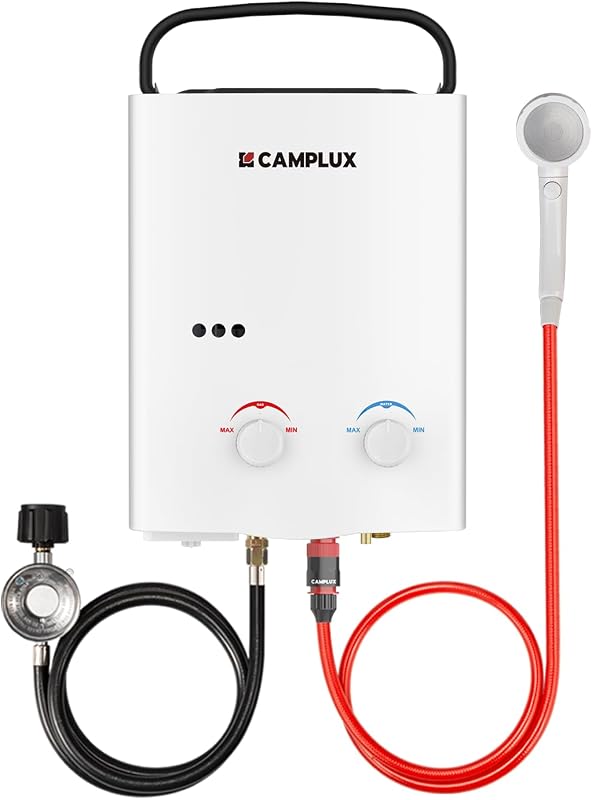
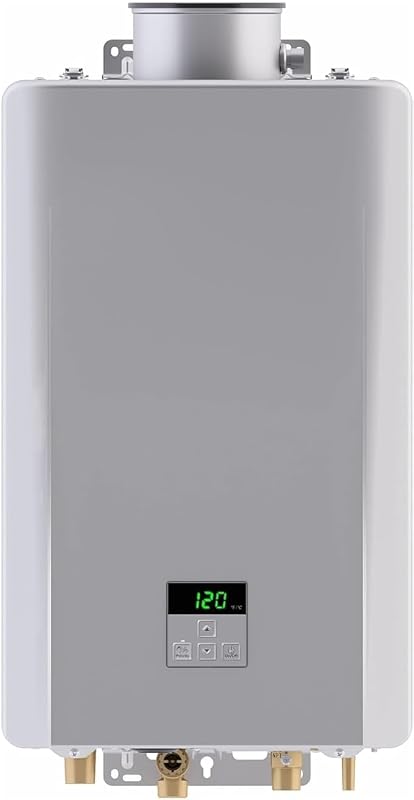
Choosing between the Rinnai RXP160iN and the Rheem 18kW Tankless comes down to fuel supply and hot water volume: the Rinnai is a high-output 160,000 BTU gas condensing unit capable of delivering up to 9 gallons per minute with built-in recirculation, while the Rheem is an all-electric 240-volt system providing up to 4.4 gallons per minute without any exhaust venting.
Choose the Rinnai RXP160iN if your home has natural gas or propane access and requires enough sustained hot water to run multiple showers and appliances at once. Choose the Rheem 18kW Tankless if you want a compact, vent-free electric water heater engineered for smaller households, point-of-use fixtures, or moderate climate demands.

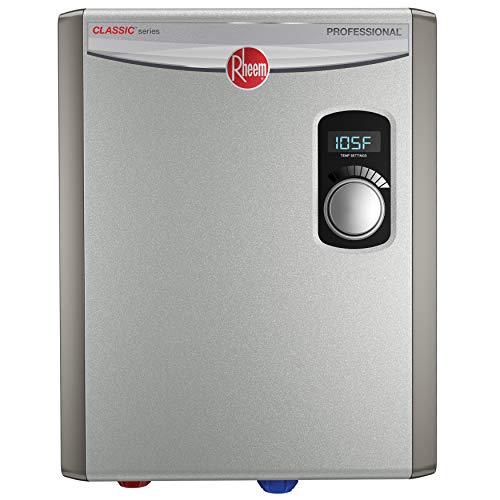
Rinnai RXP160iN vs Rheem 18kW Tankless at a Glance
| Feature | Rinnai RXP160iN | Rheem 18kW Tankless |
|---|---|---|
| Power Source | Natural Gas or Propane (Smart Sense) | 240V AC Electric |
| Maximum Flow Rate | Up to 9.0 GPM | Up to 4.4 GPM |
| Heating Output | 160,000 BTU | 18 kW |
| Energy Efficiency | 0.97 UEF | 99.8% |
| Recirculation Pump | Built-in Smart-Circ pump | None |
| Venting Requirements | Versa Vent (indoor or outdoor) | None (ventless) |
| Maximum Water Temperature | 140 °F | 140 °F |
| Unit Dimensions (W x H) | 19″W x 31″H | 14.5″W x 18.25″H |
| Product Weight | 57 lbs | 14.8 lbs |
| Best For | Whole-house multi-bath gas setups | Apartments, cabins, and compact electric setups |
Flow Rate and Fixture Capacity
Flow rate determines how many fixtures can draw hot water simultaneously without dropping pressure or temperature. The Rinnai RXP160iN flow rate reaches up to 9 gallons per minute (GPM), allowing it to supply up to six plumbing fixtures at once under favorable inlet water conditions. This massive throughput makes it a true whole-home workhorse capable of running a shower, laundry, and dishwasher at the same time without thermal interruption. When evaluating the rinnai rxp160in vs rheem rtgh series, the RXP160iN demonstrates superior delivery capacity tailored for busy residential settings.
In contrast, the Rheem RTEX-18 flow rate caps out at 4.4 GPM under optimal ground temperatures. In real-world applications, especially in cooler climates such as the Midwest, the Rheem listing explicitly notes that this 18kW unit is geared toward single-shower applications. Running a washing machine or kitchen sink while someone is showering can cause the electric elements to hit their maximum heating threshold, throttling either the water temperature or the available volume. While evaluating rheem 18kw tankless vs rinnai rxp160in capacity, the difference between 4.4 GPM and 9.0 GPM represents two entirely different tiers of simultaneous usage.
For homes with multiple bathrooms, the high delivery rate of the Rinnai ensures uninterrupted water service across the entire property. The Rheem unit can function admirably for single-point or small-home duties, but it cannot match the raw fluid output of a 160,000 BTU condensing gas burner during peak household morning routines.
Edge: Rinnai RXP160iN because its 9.0 GPM capacity easily supports multiple simultaneous fixtures where the Rheem maxes out at 4.4 GPM.
Fuel Type and Utility Infrastructure Requirements
Utility connections often dictate which water heater is practical to install. The Rinnai RXP160iN relies on gas combustion, utilizing a Smart Sense gas control system that can operate on either natural gas or liquid propane. It requires a dedicated gas supply line capable of delivering 160,000 BTUs, alongside a standard 120-volt electrical outlet to power its 73-watt internal blower, pump, and electronic controls. Homes without existing gas plumbing would face significant utility additions to support this unit.
The Rheem 18kW operates entirely on 240-volt alternating current. It requires a robust electrical infrastructure capable of handling an 18,000-watt load, which typically demands dual 40-amp double-pole circuit breakers and heavy-gauge copper wiring from your electrical panel. However, it requires no gas lines, no fuel pressure adjustments, and zero combustible fuel storage, making it much simpler to accommodate in all-electric homes or rural buildings. Examining a broader rinnai ru199in vs rheem 18kw matchup highlights this exact divide between high-capacity gas infrastructure and all-electric utility configurations.
When weighing a gas vs electric tankless water heater, gas offers tremendous thermal transfer speed without consuming breaker space, but electric bypasses flammable gas lines entirely. If your property already features a capable 200-amp electrical service, the Rheem avoids fuel line plumbing, while the Rinnai requires gas piping sized for its 160k BTU burner.
Edge: Rheem 18kW Tankless because it runs on standard residential electrical service without requiring gas plumbing or fuel conversion.
Water Recirculation and Delivery Speed
A primary complaint with traditional on-demand units is the delay while cold water clears the plumbing lines between the heater and the tap. The Rinnai RXP160iN solves this through its integrated Smart-Circ Intelligent Recirculation system. Equipped with a built-in internal pump, the RXP160iN monitors and learns your household’s daily hot water patterns. It then automatically schedules recirculation cycles to keep hot water looping through the lines during peak hours, significantly cutting down on wait times and reducing wasted tap water.
The Rheem 18kW does not have an internal recirculation pump or automated learning software. It relies solely on instantaneous, on-demand activation triggered by incoming water flow across its two copper immersion elements. Users must wait for the cold water sitting in the intermediate plumbing run to clear before warm water arrives at the fixture. Homeowners considering the rinnai re180in vs rheem 18kw tankless water heater will note that integrated recirculation is a premium operational feature rarely seen on mid-sized electric heaters.
For large floor plans where bathrooms sit far from the utility space, the Smart-Circ pump on the Rinnai provides an immediate comfort benefit. The Rheem unit provides steady water once heated, but its lack of active line circulation means standard wait times apply at distant taps.
Edge: Rinnai RXP160iN because its built-in Smart-Circ pump proactively cycles heated water based on usage patterns to reduce tap wait times.
Venting and Physical Installation Flexibility
Physical placement options differ substantially between these two units due to exhaust and cabinet sizing. The Rinnai RXP160iN measures 19 inches wide by 31 inches high and weighs 57 pounds. Because it burns gas, it requires venting. However, Rinnai includes its Versa Vent system, which allows the heater to be installed either indoors with proper flue piping or outdoors using an optional RX-OVC vent cap. This dual-location capability helps homes without chimney or sidewall vent paths locate the equipment outside on an exterior wall.
The Rheem 18kW requires absolutely no venting because it produces no combustion byproducts. Measuring 14.5 inches wide, 18.25 inches high, and weighing only 14.8 pounds, the unit is roughly 90 percent smaller than traditional storage water heaters. Its compact profile and bottom 3/4-inch NPT water connections allow it to mount inside closets, utility alcoves, or directly under sinks close to the point of use. Those browsing comparisons like the rinnai rxp160in vs ecosmart ecos 27 recognize that ventless installation eliminates one of the most labor-intensive parts of tankless setup.
While the Rinnai Versa Vent offers impressive adaptability for a gas unit, the Rheem 18kW completely eliminates exterior wall penetrations, roof vents, and condensation drain lines, making physical placement inside tight living areas effortless.
Edge: Rheem 18kW Tankless because its ventless design and compact 14.8-pound chassis allow installation virtually anywhere indoors.
Energy Efficiency and Thermal Modulation
Efficiency ratings between gas and electric systems follow different technical metrics. The Rinnai RXP160iN is a condensing gas water heater that captures latent heat from exhaust gases, yielding an ultra-high Uniform Energy Factor (UEF) of 0.97. It features a Quick Flush function to simplify lime and scale maintenance, keeping its stainless steel heat exchanger working at peak efficiency over its lifespan. The unit modulates its 160,000 BTU burner dynamically to maintain temperatures up to 140 °F based on incoming flow.
The Rheem 18kW boasts an electric energy efficiency rating of 99.8%. Because electric immersion elements sit directly in the water stream inside durable copper chambers, virtually zero heat energy escapes. Rheem pairs this with advanced self-modulating technology and an external digital thermostatic control featuring an LED display accurate to within plus or minus 1 degree. Readers exploring rinnai re180in vs rheem rtgh series guides know that electric resistance heating consistently outperforms gas combustion in pure thermal transfer percentages.
Both models provide precise thermal control up to 140 °F and only draw significant power when hot water is active. However, the Rheem achieves near-perfect 99.8% thermal efficiency with self-modulating power steps that draw only the exact wattage required to meet the immediate temperature setpoint.
Edge: Rheem 18kW Tankless due to its 99.8% thermal transfer efficiency and precise plus-or-minus 1-degree digital thermostatic control.
Pros and Cons
Rinnai RXP160iN

Pros
- High 9.0 GPM maximum flow rate
- Built-in Smart-Circ recirculation pump
- Dual fuel natural gas or propane
- Versa Vent indoor or outdoor installation
- High 0.97 UEF condensing efficiency
Cons
- Heavy 57-pound cabinet requires sturdy mounting
- Requires dedicated gas supply and exhaust venting
View Rinnai RXP160iN on Amazon
Rheem 18kW Tankless

Pros
- Ventless design requires no flue piping
- Near-perfect 99.8% electrical thermal efficiency
- Compact 14.8-pound chassis fits under sinks
- Field-serviceable copper immersion elements
Cons
- Limited to 4.4 GPM maximum output
- Lacks integrated hot water recirculation
View Rheem 18kW Tankless on Amazon
Who Should Buy Each One
Choose the Rinnai RXP160iN If
- You need whole-house capacity capable of supporting up to six fixtures simultaneously.
- Your home has access to natural gas or propane and can accommodate a 160,000 BTU demand.
- You want hot water delivered quickly without waiting, courtesy of an integrated Smart-Circ recirculation pump.
- You prefer the flexibility of choosing between indoor wall mounting or outdoor installation.
Choose the Rheem 18kW Tankless If
- Your property is strictly all-electric and has adequate 240V breaker panel capacity.
- You live in an apartment, condo, or smaller home running one shower at a time.
- You want an appliance that requires no venting pipes, roof penetrations, or outdoor vent caps.
- You need a compact, 14.8-pound unit that fits under a counter or inside a small utility closet.
Final Verdict
When matching the Rinnai RXP160iN vs Rheem 18kW for whole house performance, the Rinnai RXP160iN stands out as the superior overall water heater for standard and large family residences. Its 160,000 BTU output, 9.0 GPM maximum flow rate, and built-in Smart-Circ recirculation pump provide uninterrupted hot water across multiple bathrooms simultaneously. If your home has gas lines and high hot water demands, any comprehensive Rinnai RXP160iN review shows that its high-volume output and automated recirculation make it the clear victor for daily comfort.
The Rheem 18kW Tankless remains an excellent, targeted heating solution for specific living arrangements. For buyers asking is Rheem 18kW Tankless worth it, the answer is yes when deployed in smaller footprints, moderate climates, or single-bath setups. With a 99.8% thermal efficiency rating, compact 14.8-pound enclosure, and zero venting requirements, it delivers reliable on-demand hot water where running gas piping and exhaust flues is impossible or impractical.
FAQ
Can the Rheem 18kW Tankless support a whole house in cold climates?
The Rheem 18kW provides up to 4.4 GPM, but in colder regions where groundwater drops significantly, its output decreases to handle the steep temperature rise. The listing highlights it as ideal for single-shower applications in regions like the Midwest, meaning it may struggle to run multiple hot water fixtures at the same time in cold climates.
How does the Rinnai Smart-Circ recirculation system work?
The Smart-Circ feature uses an internal pump and intelligent programming to track your home’s hot water usage patterns over time. It anticipates when you need hot water and pre-circulates warm water through your pipes before you turn on the faucet, reducing wait times and water waste.
Does the Rinnai RXP160iN require venting if installed outdoors?
If you choose an outdoor installation, the Rinnai RXP160iN does not need long runs of indoor exhaust pipe, but the listing specifies that the RX-OVC outdoor vent cap is required to protect the unit and direct exhaust properly.
Can the Rinnai RXP160iN run on liquid propane?
Yes. The Rinnai RXP160iN features a Smart Sense gas control system that operates using either natural gas or propane, giving you flexibility depending on the fuel sources available at your home.
What are the electrical requirements for the Rheem 18kW?
The Rheem 18kW is an AC-powered electric unit that operates at 240 volts and draws 18,000 watts. It requires adequate space in your breaker panel to handle this heavy electrical load using dedicated double-pole breakers and heavy-gauge wiring.
Which unit is easier to maintain over time?
Both units feature service-friendly designs. The Rinnai RXP160iN includes an easy-to-use digital interface and a Quick Flush function to simplify routine system descaling. The Rheem 18kW utilizes field-serviceable, threaded copper immersion heating elements that can be replaced directly without removing the entire water heater from the wall.