The primary factor separating the AMD RX 6800 XT from the AMD RX 6950 XT comes down to core clock frequencies, memory throughput, and electrical requirements designed for distinct performance tiers. While both graphics cards share AMD RDNA 2 architecture and a 16GB GDDR6 memory pool, the flagship variant delivers heightened compute clocks and bandwidth to power through dense rendering pipelines.
Gamers prioritizing fluid high-refresh 1440p gaming with manageable system power demands should choose the RX 6800 XT. Enthusiasts seeking maximum frame rates at 4K resolution who possess an enthusiast-tier power supply should select the RX 6950 XT.
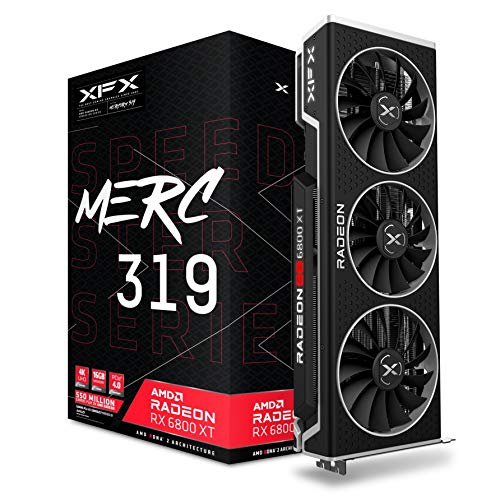
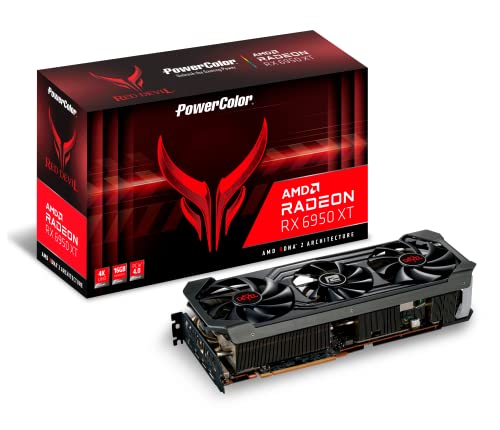
AMD RX 6800 XT vs AMD RX 6950 XT at a Glance
| Feature | AMD RX 6800 XT | AMD RX 6950 XT |
|---|---|---|
| Graphics Processor | AMD Radeon RX 6800 XT | AMD Radeon RX 6950 XT |
| Stream Processors | Not listed | 5120 |
| Game Clock | Not listed | 2226 MHz (OC) / 2116 MHz (Silent) |
| Boost Clock | Not listed | 2435 MHz (OC) / 2324 MHz (Silent) |
| Video Memory | 16 GB GDDR6 | 16 GB GDDR6 |
| Memory Clock Speed | 16 Gbps (16 GHz) | 18 Gbps (18000 MHz) |
| Memory Interface | Not listed | 256-bit |
| Power Connectors | Not listed | 3x 8-pin PCI Express |
| Minimum System Power | Not listed | 950W |
| Cooling Fan Count | 1 | 3 |
| Physical Dimensions | 13.39″L x 5.43″W | 13.07″L x 6.42″W |
| Maximum Resolution | 7680 x 4320 | 7680 x 4320 |
| Best For | High-refresh 1440p gaming | Demanding 4K gaming and high-spec rigs |
Clock Speeds and Processing Performance
Raw compute performance on modern graphics cards is shaped heavily by core operating clocks and stream processor configurations. In evaluating the 6800 XT vs 6950 XT specs, the PowerColor RX 6950 XT provides detailed factory-tuned operational profiles right out of the box. It features 5120 stream processors operating across two hardware BIOS profiles: an OC Mode featuring a 2226 MHz Game Clock and a 2435 MHz Boost Clock, and a Silent Mode featuring a 2116 MHz Game Clock and a 2324 MHz Boost Clock. These elevated operational speeds allow the GPU to process geometry, compute shaders, and rasterization tasks at exceptional velocity.
The XFX RX 6800 XT CORE utilizes the same underlying AMD RDNA 2 architecture equipped with hardware Ray Accelerators for raytracing calculations, but the listing does not specify its exact stream processor count or factory clock speeds. While the core architecture unifies gaming visuals across desktop PCs and consoles, lower factory clock thresholds compared to the refreshed flagship silicon produce a noticeable delta in compute output. Those analyzing an amd rx 6700 xt vs 6950 xt upgrade will observe that the 6950 XT sits at the absolute ceiling of RDNA 2 clock performance.
In high-load titles, these extra clock cycles allow the RX 6950 XT to sustain frame pacing during scene transitions and heavy particle effects. The RX 6800 XT remains capable across modern rendering engines, but the aggressive factory boost tuning on the RX 6950 XT provides an undeniable raw performance advantage during intensive compute workloads.
Edge: AMD RX 6950 XT because its 5120 stream processors and documented 2435 MHz boost clock provide superior processing throughput.
Memory Bandwidth and Throughput
Memory bandwidth dictates how rapidly a graphics processing unit can transfer high-resolution textures, geometry tables, and frame buffers between video memory and the rendering compute units. Both cards provide 16GB of GDDR6 dedicated memory, giving both units sufficient capacity to load modern high-detail game assets without spilling over into system RAM. However, their physical transmission speeds diverge substantially.
The RX 6800 XT features a 16 Gbps (16 GHz) memory clock speed. By comparison, the RX 6950 XT features an upgraded 18.0 Gbps (18000 MHz) memory clock working across a 256-bit memory interface. This extra 2 Gbps per memory pin equates to a noticeable increase in overall theoretical bandwidth. Anyone reading an in-depth AMD RX 6950 XT review will note that AMD engineered this late-generation refresh card specifically around faster memory chips to alleviate data bottlenecks in high-resolution pipelines.
When deciding between the RX 6800 XT or 6950 XT for 4K gaming, this memory bandwidth disparity becomes critical. At 3840×2160 resolution, frame buffers consume immense bandwidth per refresh cycle. While the 16 Gbps speed on the RX 6800 XT keeps high-refresh 1440p gaming fluid, the 18 Gbps throughput on the RX 6950 XT feeds data to the shader arrays far more rapidly, yielding superior stability in texture-heavy games.
Edge: AMD RX 6950 XT due to its faster 18.0 Gbps GDDR6 memory clock across a 256-bit interface.
Power Requirements and System Demands
System stability depends entirely on pairing modern graphics hardware with a clean, adequate power delivery network. The PowerColor RX 6950 XT establishes substantial demands on your power supply unit, requiring a minimum system power rating of 950W. To feed its elevated silicon clocks, this card features three 8-pin PCI Express power connectors. This configuration requires three discrete PCIe power cables running directly from your power supply to safely handle transient electrical spikes.
Conversely, the listing for the XFX RX 6800 XT does not specify a minimum power supply wattage or its power connector configuration. However, standard RDNA 2 platform profiles for this class historically operate with lower power envelopes than top-tier refresh cards. Builders moving up from mid-range cards-as detailed in our look at the amd rx 6750 xt vs 6800 xt-often find the electrical demands of the 6800 XT far easier to accommodate without replacing their existing chassis power supply.
When examining RX 6800 XT vs 6950 XT power consumption, the trade-off is clear. The RX 6950 XT requires substantial infrastructure: an enthusiast-grade 950W power supply, three dedicated 8-pin power cables, and the cooling capability inside your room to offset substantial thermal output. The RX 6800 XT provides a much more accessible installation profile for standard desktop configurations.
Edge: AMD RX 6800 XT because it avoids the massive 950W power requirement and triple 8-pin power connector arrangement of the flagship card.
Cooling Hardware and Physical Card Dimensions
Thermal management directly impacts a card’s ability to maintain boost clocks over extended gaming sessions without thermal throttling. The PowerColor Red Devil RX 6950 XT utilizes a heavy triple-fan cooling array engineered to dissipate heat from the heavily driven silicon. This card measures 13.07 inches long by 6.42 inches wide. Its 6.42-inch width means it extends noticeably outward from the motherboard PCIe slot toward the chassis side panel, demanding generous clearance in your PC case.
The XFX Speedster MERC319 RX 6800 XT features an aerodynamic styling layout designed to maximize airflow across its internal heatsink. The product listing specifies a fan count of 1 for this unit, and it measures 13.39 inches long by 5.43 inches wide. This makes the 6800 XT slightly longer than the 6950 XT by roughly a third of an inch, but nearly an inch narrower across its face. Readers comparing form factors across the product stack, such as in our amd rx 6700 xt vs 6800 xt breakdown, know that card length can cause drive cage conflicts, while card width can pinch auxiliary power cables against tempered glass side panels.
While the XFX model offers a narrower profile that fits comfortably within cases where vertical clearance is limited, the PowerColor RX 6950 XT provides three full cooling fans to manage heat dissipation across extensive copper and aluminum fin arrays. For high-thermal workloads, the multi-fan solution offers robust active heat dispersal.
Edge: AMD RX 6950 XT for its triple-fan thermal solution designed to dissipate intense component heat.
Display Connectivity and High-Resolution Output
Both graphics cards are engineered to drive ultra-high-definition gaming monitors and multi-panel productivity setups. The XFX RX 6800 XT and PowerColor RX 6950 XT both support a maximum digital resolution of 7680×4320 (8K). They connect to your desktop motherboard via a standard PCI-Express x16 connection, with the RX 6950 XT explicitly listing PCIE 4.0×16 compliance.
In terms of physical port layouts, the XFX RX 6800 XT listing specifies HDMI and DisplayPort outputs, with its model title detailing HDMI and three DisplayPort outputs. The PowerColor RX 6950 XT similarly features DisplayPort and HDMI outputs. Both cards run on Microsoft Windows 10 with DirectX 12 support, ensuring full compatibility with modern gaming APIs and high-refresh display standards.
Because both units support identical maximum display resolutions of 7680×4320 and offer the same modern DisplayPort and HDMI connectivity options, neither card holds an inherent functional advantage in monitor connectivity. Users running high-refresh gaming displays or dual-monitor setups will find identical interface flexibility on both models.
Edge: Tie because both graphics cards offer HDMI and DisplayPort connectivity supporting resolutions up to 7680×4320.
Overall Gaming Performance and Value Considerations
Understanding RX 6800 XT vs 6950 XT gaming performance requires weighing clock ceilings and memory throughput against system-level trade-offs. The RX 6950 XT sits at the absolute peak of the RDNA 2 generation, offering faster memory speeds (18 Gbps vs 16 Gbps) and verified factory overclocking up to 2435 MHz. In demanding titles at 4K resolution, those specs translate directly into higher baseline frame rates and reduced frame drops during compute-heavy sequences.
However, an AMD RX 6800 XT review will emphasize how capable the standard high-tier RDNA 2 silicon remains for the vast majority of PC gamers. For players operating on 1440p displays or high-refresh esports setups, the RX 6800 XT delivers generous performance backed by 16GB of GDDR6 memory. Those stepping up from upper-midrange units-such as users evaluating an amd rx 6750 xt vs 6950 xt transition-will recognize that the 6800 XT provides a very well-rounded hardware foundation without the extreme power supply and thermal demands of the top card.
When asking is RX 6950 XT worth it, the answer depends on your performance target. If you are building a no-compromise 4K rig with an existing high-wattage power supply, the RX 6950 XT justifies its place. If your goal is high-framerate 1440p gaming within a standard system envelope, the RX 6800 XT delivers the ideal architectural balance.
Edge: AMD RX 6950 XT for top-tier raw frame generation in high-resolution gaming environments.
Pros and Cons
AMD RX 6800 XT

Pros
- 16GB GDDR6 dedicated video memory
- AMD RDNA 2 architecture with Ray Accelerators
- High 7680×4320 maximum digital resolution
- Narrower 5.43-inch width fits standard case depths
Cons
- 16 Gbps memory is slower than 6950 XT
- Long 13.39-inch card profile
- Listing omits stream processor and clock specs
AMD RX 6950 XT

Pros
- 5120 high-performance stream processors
- Up to 2435 MHz boost clock in OC mode
- Fast 18.0 Gbps memory throughput
- Triple-fan thermal cooling layout
Cons
- Demands massive 950W minimum power supply
- Requires three 8-pin PCIe power cables
- Broad 6.42-inch card width
Who Should Buy Each One
Choose the AMD RX 6800 XT If
- You primarily target high-refresh 1440p gaming and want 16GB of GDDR6 memory without overwhelming your power supply.
- Your PC case has restricted lateral clearance and cannot comfortably accommodate a card that is 6.42 inches wide.
- Your power supply does not feature three individual 8-pin PCIe power cables.
- You want RDNA 2 architecture and hardware Ray Accelerators for modern titles in a streamlined system build.
Choose the AMD RX 6950 XT If
- You demand uncompromised 4K visual fidelity and need 18 Gbps memory clock throughput to drive high-resolution textures.
- Your rig is equipped with a high-capacity 950W or higher power supply featuring three dedicated 8-pin PCIe power leads.
- You want factory-guaranteed clock speeds up to 2435 MHz backed by 5120 stream processors and dual BIOS operating modes.
- Your desktop chassis offers ample width to house a 6.42-inch wide triple-fan cooling assembly.
Final Verdict
For most PC gamers building or upgrading an enthusiast system, the PowerColor RX 6950 XT represents the definitive performance choice between these two cards. With its 5120 stream processors, factory boost clock reaching 2435 MHz, and faster 18.0 Gbps GDDR6 memory subsystem, it holds clear edges in core compute power and bandwidth. When pushing demanding visual settings at 4K resolution, these upgraded specifications ensure maximum frame rate stability and visual fidelity.
However, the XFX RX 6800 XT remains the smarter, more practical option for gamers running high-refresh 1440p monitors who want to avoid upgrading their existing power infrastructure. By providing 16GB of VRAM and RDNA 2 raytracing capabilities without demanding a massive 950W power supply or three 8-pin power leads, the RX 6800 XT fits effortlessly into standard desktop configurations while delivering outstanding visual performance.
FAQ
What power supply is required for the AMD RX 6950 XT?
The PowerColor RX 6950 XT product specifications mandate a minimum system power supply of 950W. Additionally, it requires three 8-pin PCI Express power connectors to deliver adequate current under heavy gaming loads.
How does memory speed differ between the RX 6800 XT and RX 6950 XT?
The RX 6800 XT features a 16 Gbps (16 GHz) memory clock speed. The RX 6950 XT features an upgraded 18.0 Gbps (18000 MHz) memory clock speed across a 256-bit interface, providing higher total data throughput for high-resolution gaming.
Will the AMD RX 6800 XT fit in standard desktop cases?
The XFX RX 6800 XT CORE measures 13.39 inches in length and 5.43 inches in width. Because of its 13.39-inch length, you must verify that your chassis has sufficient front-to-back clearance, particularly if you have front-mounted fans or liquid cooling radiators.
Can both graphics cards output to an 8K display?
Yes. Both the RX 6800 XT and the RX 6950 XT list a maximum digital display resolution of 7680×4320, allowing both units to drive ultra-high-definition 8K panels through their DisplayPort and HDMI interfaces.
How many cooling fans do these specific models use?
The PowerColor Red Devil RX 6950 XT is equipped with 3 cooling fans across its wide shroud. The XFX Speedster MERC319 RX 6800 XT listing specifies a fan count of 1 in its technical details.
Does the AMD RX 6950 XT feature dual BIOS support?
Yes. The PowerColor RX 6950 XT specifications outline two operating modes: an OC mode featuring a 2226 MHz Game Clock and 2435 MHz Boost Clock, and a Silent mode featuring a 2116 MHz Game Clock and 2324 MHz Boost Clock.


