The core divide between the Blue Yeti and the Shure SM7B comes down to interface infrastructure and acoustic capsule mechanics: the Yeti operates as a multi-pattern USB condenser unit built for instantaneous desktop integration, whereas the SM7B is an analog, unidirectional dynamic broadcast microphone that relies strictly on an external XLR audio interface. Selecting between them requires choosing between an all-in-one computer-direct audio tool and an industry-standard studio transducer configured for targeted vocal isolation.
Creators prioritizing rapid software-integrated setup, multi-directional recording flexibility, and simple USB connectivity should choose the Yeti, while dedicated broadcasters, voiceover artists, and audio purists demanding uncompromised vocal clarity and acoustic off-axis rejection should invest in the SM7B.

Blue Yeti vs Shure SM7B at a Glance
| Feature | Blue Yeti | Shure SM7B |
|---|---|---|
| Transducer Architecture | Tri-capsule condenser array | Large-diaphragm dynamic |
| Connectivity Interface | USB | XLR |
| Polar Patterns | Multipattern (Cardioid, Omni, Bidirectional, Stereo) | Unidirectional (Cardioid) |
| Onboard Controls | Headphone volume, pattern select, mute, gain | Two rear acoustic tailoring settings |
| Signal-to-Noise Ratio | 100 dB | 75 dB |
| Frequency Response | 20 Hz – 20,000 Hz | Not listed |
| Enclosure Construction | Not listed (Blackout finish) | Stainless steel |
| Hardware Bundle | Adjustable desktop stand | Boom stand, SRH440A headphones, XLR cable |
| Software Integration | Blue VO!CE vocal effects and presets | Not listed |
| Best For | Desktop streaming and multi-voice recording | Dedicated vocal broadcasting and studio tracking |
Connectivity and Signal Path Infrastructure
The operational workflow of any studio microphone begins at the connection terminal. Evaluating the Blue Yeti USB vs Shure SM7B XLR signal chain reveals two fundamentally distinct audio architectures. The Blue Yeti contains its own onboard analog-to-digital converter, headphone amplifier, and digital signal processor within its chassis. By utilizing a single USB cable connected to a personal computer running PC or Mac platforms, the Yeti transmits digital audio immediately without requiring supplementary hardware. This architecture provides immediate audio connectivity for digital work environments like Twitch streaming, Zoom conferences, and YouTube video narration.
In contrast, the Shure SM7B relies strictly on a standard 3-pin XLR male connector that outputs a balanced, low-level analog signal. Because dynamic broadcast microphones feature lower output voltage than condensers, the SM7B cannot communicate directly with a computer. Operating the SM7B demands an external audio interface or standalone preamplifier capable of converting balanced analog audio into a digital stream. While this requires a multi-piece desktop setup, analog XLR architecture allows creators to swap hardware, alter analog preamp coloring, and integrate downstream signal processors as their studio develops. Those exploring bridge designs often examine the hybrid connectivity found in the blue yeti vs shure mv7 comparison, but the standard SM7B strictly preserves an analog-only signal path.
The choice here governs day-to-day usability. The Yeti operates effortlessly across multiple laptops or mobile workstations without specialized drivers, delivering genuine plug-and-play functionality. The SM7B demands an external interface footprint on your desk, yet avoids any risk of internal digital conversion obsolescence or USB port communication conflicts.
Edge: Blue Yeti for straightforward, plug-and-play desktop connectivity that requires no auxiliary audio gear.
Capsule Design and Acoustic Isolation
How a microphone handles incoming acoustic energy dictates how clean your final recording sounds, particularly in untreated spaces. Choosing between a dynamic vs condenser mic for streaming highlights the physical differences between the Yeti tri-capsule condenser array and the SM7B large-diaphragm dynamic element. The Yeti condenser design utilizes thin, highly sensitive diaphragms capable of capturing subtle transients, room acoustics, and high-frequency nuance across an audible range of 20 Hz to 20,000 Hz. However, this high audio sensitivity (listed at 120 dB) also means the Yeti readily picks up mechanical keyboard clicks, desk thumps, HVAC airflow, and room reflections unless your space has extensive acoustic paneling.
The Shure SM7B takes the inverse engineering approach. Built around a heavy large-diaphragm dynamic motor with a unidirectional pickup pattern, the SM7B exhibits a much lower native output and a tighter pickup zone. The capsule relies on physical acoustic dampening and an internal air-suspension shock isolation mechanism that prevents mechanical vibrations from entering the audio stream. Off-axis sounds-such as ambient fan hum or wall echoes-are rejected naturally at the capsule level before the signal ever leaves the microphone. Readers weighing studio-grade dynamic capsules against condenser units frequently reference the shure sm7b vs rode nt-usb+ to understand how dynamic isolation behaves compared to sensitive studio condensers.
In everyday use, the SM7B produces a dry, focused vocal track that sounds polished even when operated inside an untreated bedroom or busy office. Achieving clean audio on the Yeti requires careful physical positioning, dialed-back analog gain, and vocal placement within inches of the front grille to maximize direct vocal pickup over ambient room noise.
Edge: Shure SM7B for superior mechanical isolation and passive ambient noise rejection in typical rooms.
Vocal Character and Audio Profiling
Vocal articulation varies sharply between these two designs. Evaluating Blue Yeti vs Shure SM7B vocals shows that the Yeti delivers a bright, modern, and open condenser profile. Its high-frequency response yields sharp consonant clarity and immediate presence, making spoken words pop against background game audio or music tracks. Logitech integrates Blue VO!CE software directly into the platform, providing creators with real-time broadcast vocal presets, equalization profiles, de-essers, noise reduction algorithms, and HD audio sampling. This software engine allows creators to reshape their sound profile directly on PC, tailoring the condenser capsule to simulate traditional broadcast warmth or crisp dialogue.
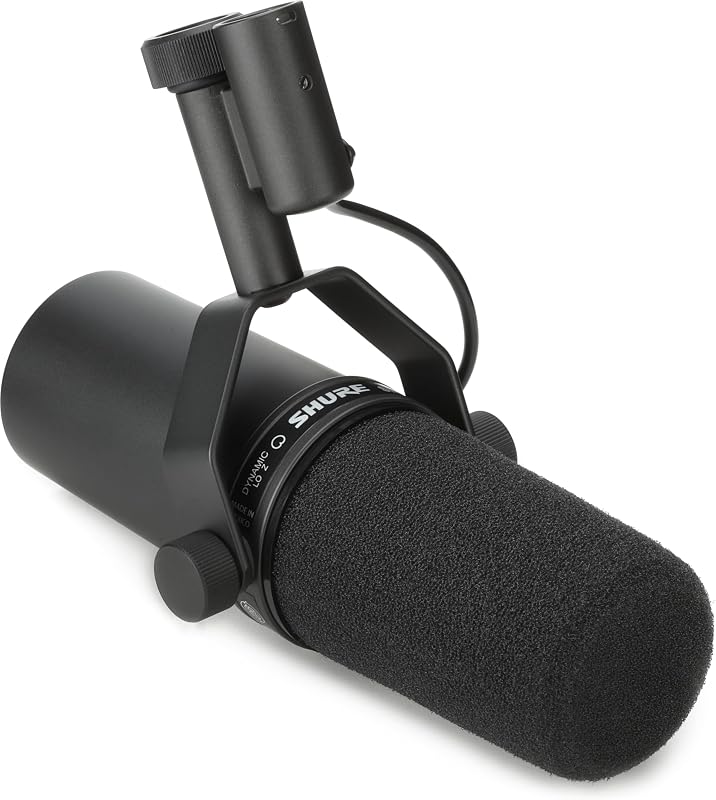
The Shure SM7B is engineered specifically for spoken-word authority, voiceover work, and radio broadcast standards. Renowned for its smooth, flat, wide-range frequency delivery, the SM7B prevents harsh sibilance and plosive distortion without relying on external digital plugins. The microphone body features two integrated hardware switches on the rear plate that allow users to tailor the frequency response mechanically: a low-cut bass rolloff switch to eliminate rumble and a mid-range presence boost to enhance vocal intelligibility. When assessing Shure SM7B vs Blue Yeti sound quality, the SM7B yields a deep, authoritative low-end response with natural proximity effect that podcasters and vocalists rely on for broadcast fidelity.
The fundamental trade-off lies in whether you prefer digital versatility or analog hardware voicing. The Yeti lets you experiment through software processing profiles, whereas the SM7B provides a time-tested, analog vocal contour that requires minimal post-processing to sit perfectly inside a finished podcast mix.
Edge: Shure SM7B for radio-ready vocal warmth, natural plosive control, and smooth frequency response.
Recording Versatility and Polar Patterns
Microphone utility expands when a device can accommodate multiple speakers or varying recording geometries. This is where a comprehensive Blue Yeti review underscores the immense flexibility of its proprietary tri-capsule array. The Yeti provides four distinct pickup patterns switchable via an onboard rotary dial: cardioid, omnidirectional, bidirectional, and stereo. Cardioid mode isolates a single speaker directly in front of the capsule; omnidirectional captures sound equally from all directions for group meetings; bidirectional records front and rear sound while nulling the sides for face-to-face interviews; and stereo delivers spatial width ideal for ASMR and acoustic instruments.
Conversely, a Shure SM7B review emphasizes a strictly focused, single-purpose design. The SM7B is exclusively a unidirectional cardioid instrument with 1-channel operation. It records only what is placed directly in front of its barrel grille. If you intend to seat two interview subjects across from one another or record a small roundtable discussion, a single SM7B cannot accommodate both speakers simultaneously. Attempting to record multiple people on an SM7B requires purchasing separate units, separate stands, and a multi-channel audio interface, a dynamic explored in our shure mv7 vs sm7b breakdown.
For budget-conscious creators producing varied content formats, the Yeti functions as several microphones in one enclosure. A solo creator can switch from a Twitch streaming cardioid pattern to a bidirectional interview setup in two seconds without altering hardware configurations, giving the Yeti unmatched versatility for diverse content creation.
Edge: Blue Yeti for its four switchable polar patterns that support multi-person and multi-directional recording.
Included Accessories and Hardware Integration
The physical mounting hardware included in each box changes the out-of-the-box user experience. The Blue Yeti arrives equipped with an integrated metal desktop stand featuring side-mounted tension knobs. Users can pivot the microphone in relation to their mouth position, tighten the thumb screws, and begin streaming immediately. The base features rubber padding that decouples the assembly slightly from the desk surface, though it lacks an active boom mount. The chassis includes threading at the base to accommodate aftermarket boom arms, but everything required for standard desktop use is self-contained.
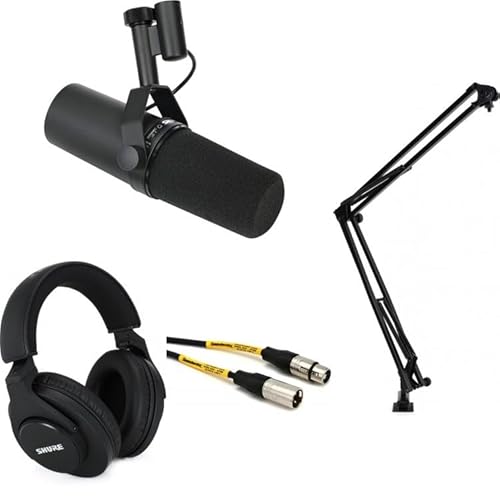
The Shure SM7B package featured here is a comprehensive production kit. It includes the SH-BROADCAST1 deluxe articulating desktop mic boom stand, which features an internal cable management channel, a 32.25-inch arm extension, a 2.17-inch desk clamp range, and full 360-degree rotation. In addition, the kit includes Shure SRH440A closed-back studio monitoring headphones equipped with 40mm neodymium drivers and a gold-plated adapter, alongside a 10-foot Cableworks Composer Series balanced XLR cable. The SM7B chassis itself incorporates a classic integrated swivel bracket that allows 360-degree rotation and secure boom articulation.
While the Yeti provides instant standalone desktop stability, the SM7B kit equips a studio space with professional-grade articulation and dedicated reference monitoring hardware out of the box, eliminating the search for compatible mounting gear and monitoring accessories.
Edge: Shure SM7B for including a professional articulating boom arm, studio headphones, and a balanced XLR cable.
Onboard Controls and Real-Time Monitoring
Direct physical control over an audio signal allows creators to adapt to sudden volume shifts during live broadcasts. The Blue Yeti features a comprehensive suite of tactile physical controls directly on its front and rear housings. The front panel features an instant hardware mute button with an illuminated indicator alongside a dedicated rotary dial for zero-latency headphone monitoring volume. The rear panel provides a smooth analog microphone gain adjustment knob and the four-position polar pattern rotary selector. These onboard audio controls empower streamers to eliminate distortion or silence audio instantaneously without opening operating system menus.
The Shure SM7B takes an entirely minimalist approach to surface controls. As an analog dynamic microphone, it features zero knobs, volume pots, or mute buttons on its exterior barrel. Its only physical adjustments are two recessed acoustic tailoring switches on the back plate, which are designed to be set using a small tool and left in position. All gain adjustments, headphone monitoring volume, and muting duties must be handled through your connected external audio interface or mixing software. Creators seeking modernized hardware control on dynamic designs often compare newer releases, such as in the shure mv7+ vs sm7b guide, but the original SM7B keeps its exterior completely free of active operational controls.
For live streamers who demand physical access to an instant mute switch and quick gain compensation during gameplay or live interviews, the Yeti provides immediate manual authority without relying on external control surfaces.
Edge: Blue Yeti for onboard gain, instant hardware mute, pattern switching, and headphone volume dials.
Pros and Cons
Blue Yeti

Pros
- Plug-and-play USB connection
- Four selectable polar patterns
- Onboard gain and mute controls
- Blue VO!CE vocal effects software
Cons
- High sensitivity captures room noise
- Lacks included boom arm hardware
Shure SM7B
Pros
- Durable stainless steel enclosure
- Includes boom arm and headphones kit
- Superior dynamic vocal isolation
- Acoustic frequency shaping switches
Cons
- Requires external XLR audio interface
- Strictly single-direction cardioid recording
Who Should Buy Each One
Choose the Blue Yeti If
- You need immediate plug-and-play USB connectivity directly to a PC or Mac without purchasing an audio interface.
- You host two-person interviews, roundtables, or ASMR content requiring bidirectional, omni, or stereo pickup patterns.
- You want quick physical access to an instant mute button, microphone gain dial, and real-time headphone volume control.
- You stream games or create videos at a desktop workstation where an all-in-one stand saves setup complexity.
Choose the Shure SM7B If
- You record spoken vocals or podcasts in untreated acoustic environments that require exceptional background noise rejection.
- You operate or plan to build a dedicated studio signal chain utilizing an external analog XLR interface.
- You prefer a warm, smooth broadcast vocal contour that naturally manages sibilance, plosives, and boominess.
- You want a complete studio bundle featuring an articulating boom arm, balanced XLR cabling, and closed-back monitoring headphones.
Final Verdict
Deciding between the Blue Yeti or Shure SM7B for streaming hinges on your tolerance for hardware complexity versus your demand for acoustic isolation. The Blue Yeti remains the most versatile, user-friendly desktop microphone for creators seeking reliable broadcast-quality sound without technical friction. Its custom tri-capsule array, switchable polar patterns, integrated desktop stand, and Blue VO!CE software deliver unmatched flexibility across solo streaming, collaborative podcasting, and general communication. It provides immediate functionality right out of the box, making it the practical choice for most general desktop creators.
However, when asking is Shure SM7B worth it for dedicated broadcast setups, the answer is unequivocally yes for vocal purists. The SM7B eliminates room reflections, ignores mechanical keyboard rattle, and produces a velvety, radio-ready vocal tone that sensitive condensers cannot replicate in untreated spaces. Paired with its heavy-duty stainless steel enclosure, integrated boom stand, and reference headphones kit, the SM7B stands as the premier broadcast standard for podcasters, voice artists, and streamers willing to invest in an external XLR workflow. If you want simplicity and multi-pattern utility, choose the Yeti; if you prioritize ultimate vocal isolation and studio permanence, choose the SM7B.
FAQ
Can the Shure SM7B plug directly into a computer using USB?
No, the Shure SM7B is an analog XLR microphone that requires a 3-pin XLR cable and an external audio interface or preamplifier to convert its analog signal into digital audio for a computer. Those interested in direct USB capability often look at alternative dynamic units, as detailed in our shure sm7b vs rode podmic comparison, but the standard SM7B features no USB connectivity.
Does the Blue Yeti pick up more background room noise than the Shure SM7B?
Yes, the Blue Yeti uses sensitive condenser capsules with a wide frequency response and high sensitivity rating, meaning it easily detects room echo, air conditioning, and PC fan noise. The Shure SM7B dynamic capsule requires sound to enter directly on-axis at close range, naturally rejecting ambient background noise.
Which microphone is better for multi-person interviews in the same room?
The Blue Yeti is significantly better for multi-person recording on a single microphone because its bidirectional and omnidirectional polar patterns capture audio from both sides or all around the table. The Shure SM7B features a strict unidirectional cardioid pattern designed to isolate only one speaker at a time.
What extra equipment is needed to run the Shure SM7B?
While the bundle listed provides the boom arm, studio headphones, and a 10-foot XLR cable, you will still need a compatible audio interface or mixer with an XLR microphone preamp that supplies sufficient gain to power the dynamic element.
Is the Blue VO!CE software required for the Blue Yeti to work?
No, the Blue Yeti is a standard plug-and-play USB microphone that works automatically across compatible operating systems without special drivers. However, installing the Blue VO!CE software provides access to advanced vocal modeling, custom EQ curves, noise reduction, and studio audio effects.
Can you mount the Blue Yeti on an aftermarket boom arm?
Yes, while the Blue Yeti comes pre-installed on an adjustable metal desktop stand, the microphone chassis can be removed from the stand via side thumb screws and mounted to standard boom arms using its bottom threaded mount.