The single deciding factor between these two smartwatches comes down to specialized physiological sensors: the Fitbit Sense 2 features dedicated galvanic skin response hardware for continuous stress tracking and an onboard ECG app to assess heart rhythms for atrial fibrillation, whereas the Fitbit Versa 4 strips away those medical-grade components to focus entirely on daily activity, workout tracking, and standard optical biometric metrics. Choosing between the Fitbit Versa 4 vs Sense 2 depends on whether you view a wearable as a clinical health sentinel or an everyday exercise companion.
Select the Versa 4 if your priority centers on routine gym sessions, run tracking with built-in GPS, and standard activity accountability without paying for cardiac assessment sensors you will not use. Opt for the Sense 2 if you require real-time stress reaction alerts, continuous electrodermal tracking, and periodic electrocardiogram scans to keep close tabs on heart rhythm patterns.
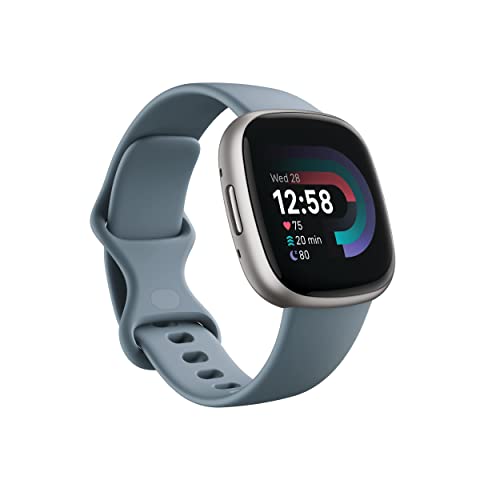

Fitbit Versa 4 vs Sense 2 at a Glance
| Feature | Fitbit Versa 4 | Fitbit Sense 2 |
|---|---|---|
| Heart Rhythm Assessment | Standard optical heart rate tracking only | Compatible ECG app for AFib assessment and irregular rhythm alerts |
| Stress Tracking Sensors | Daily Stress Management Score and manual reflection logging | Galvanic skin response sensors with all-day body-response tracking |
| Case Material | Stainless Steel | Aluminum |
| Operating System | Fitbit OS | Wear OS (Customized) |
| Exercise Modes | 40+ exercise modes with automatic tracking | 40+ exercise modes |
| Satellite Navigation | Built-in GPS | Built-in GPS |
| Water Resistance | 50 meters | 50 meters |
| Battery Life | 6+ days | Not listed |
| Included Kit Accessories | Watch and band | Charger dock, wall adapter, 2 screen protectors, cleaning cloth, small and large bands |
| Best For | Fitness enthusiasts focused on training and activity goals | Users monitoring cardiac rhythm trends and chronic stress reactions |
ECG Heart Rhythm Tracking and Cardiac Metrics
The primary technical divide in the Fitbit Versa 4 vs Sense 2 ECG conversation lies in how each device analyzes cardiac signals. The Sense 2 integrates specialized electrical sensors capable of recording a single-lead electrocardiogram. Using its compatible ECG app, users place their fingers on the watch bezel to complete an electrical circuit through the body, letting the device evaluate the rhythm for signs of atrial fibrillation. It also supports automated irregular heart rhythm notifications that periodically analyze pulse rate patterns in the background through its optical heart rate sensor. This medical-oriented feature gives health-conscious individuals actionable data to share with healthcare professionals regarding unusual palpitations or rhythm irregularities.
The Versa 4 relies strictly on a traditional optical photoplethysmography sensor for standard 24/7 heart rate monitoring. It measures your beats per minute during workouts, logs resting heart rate trends, and calculates Active Zone Minutes based on cardiovascular intensity. However, any thorough Fitbit Versa 4 review will point out that the hardware completely lacks the electrical biosensors necessary to take an on-demand electrocardiogram. Shoppers evaluating fitbit versa 4 vs apple watch series 10 often note a similar trade-off, where entry-level fitness trackers omit dedicated electrical cardiac sensors.
For individuals managing heart rhythm concerns or seeking an early detection safeguard, the ECG capability makes the Sense 2 a meaningfully different tool. Athletes who merely need target heart rate zone alerts while running or lifting weights will find the Versa 4 sensor suite sufficient, as optical tracking handles exercise intensity monitoring reliably. If you need clinical-style rhythm recording, the Versa 4 cannot deliver it at all.
Edge: Fitbit Sense 2, due to its integrated electrical sensors that enable on-demand ECG testing for atrial fibrillation.
Continuous Stress Management and Electrodermal Response
Stress management represents the second major hardware split in the Fitbit Versa 4 vs Sense 2 stress tracking showdown. The Sense 2 features continuous electrodermal activity tracking driven by dedicated galvanic skin response sensors. These sensors detect microscopic changes in sweat production across the surface of the skin. When the hardware observes physical manifestations of emotional or environmental tension, it triggers body-response notifications in real time. The watch prompts you to log your emotional state via reflections or run a guided EDA Scan session, helping you build an awareness of what induces anxiety or physical arousal throughout the day.
The Versa 4 tracks stress from a software-driven perspective rather than a dedicated electrodermal hardware pipeline. It generates a daily Stress Management Score calculated from physiological indicators like resting heart rate, heart rate variability, and sleep quality, alongside manual reflection logging. While you can initiate guided breathing sessions and review mindfulness content on the device, the Versa 4 lacks the physical galvanic skin response sensors required to detect sudden spikes in perspiration. Readers examining the fitbit charge 5 vs versa 4 will find that even some band-style trackers carry EDA hardware that the Versa 4 omits.
This sensor difference fundamentally alters how you interact with the watch. On the Versa 4, stress management is retrospective: you look at a calculated score in the morning based on nocturnal trends and decide whether to log a feeling. On the Sense 2, the device actively alerts you during an intense moment, nudging you to pause and practice breathing exercises. For buyers prioritizing mental wellness and biological stress mitigation, the Sense 2 provides a continuous feedback loop that the Versa 4 cannot replicate.
Edge: Fitbit Sense 2, because its onboard galvanic skin response sensors enable real-time body-response alerts and physical EDA scans.
Workout Tracking and Fitness Performance Tools
When looking at the Fitbit Versa 4 or Sense 2 for fitness, both smartwatches deliver a nearly identical suite of athletic software tools. Each wearable comes loaded with over 40 distinct exercise modes, allowing you to log everything from outdoor cycling and treadmill running to strength training and yoga. Both devices feature built-in GPS, which records outdoor distance and pace directly on the watch without requiring you to carry a connected phone. After each workout, both models sync a workout intensity map to the companion app, illustrating the specific sections of your route where your cardiovascular output reached peak cardio zones.
Workout planning on both smartwatches centers around the Daily Readiness Score, an analytical metric that requires a Fitbit Premium subscription. The score evaluates your recent sleep quality, heart rate variability, and previous activity levels to tell you whether your body is primed for high-intensity exertion or needs an active recovery day. Both models track Active Zone Minutes to ensure you accumulate adequate moderate and vigorous exercise throughout the week. If you are also researching hybrid sports watches like the fitbit versa 4 vs garmin venu 3, you will appreciate that Fitbit keeps exercise guidance straightforward and accessible.
Because the workout profiles, built-in GPS functionality, 50-meter water resistance, and Daily Readiness calculations are functionally identical, neither model pulls ahead purely as an athletic companion. The Versa 4 is built specifically as a fitness smartwatch, and the Sense 2 matches its workout specifications step for step. Choosing between them for training comes down to whether you care about the extra health sensors rather than gym performance.
Edge: Tie, as both devices feature built-in GPS, 40+ exercise modes, 50-meter water resistance, and the Daily Readiness Score.
Sleep Architecture and Nighttime Recovery Metrics
Evaluating the Fitbit Versa 4 or Sense 2 for sleep reveals deep sleep-tracking functionality across both models, with slight advantages for the Sense 2 in broader recovery context. Both smartwatches track daily sleep stages, segmenting your night into light, deep, and REM sleep phases. In the morning, both present a consolidated Sleep Score to quantify sleep quality and offer a smart wake alarm that vibrates during your lightest sleep phase within an adjustable window before your target wake-up time. Both also support a personalized monthly Sleep Profile through Fitbit Premium, analyzing ten distinct sleep habits to categorize your sleep style.
The core biometric difference in sleep tracking lies in the expanded sensor set that feeds into nocturnal recovery. The Sense 2 monitors skin temperature variation along with heart rate variability and SpO2 blood oxygen saturation, aggregating these readings in the Health Metrics dashboard alongside 90-day historical trends. The Versa 4 listing also notes SpO2 tracking, a temperature sensor, and the Health Metrics dashboard, allowing it to record vital nighttime baselines. Those considering basic step and sleep trackers in the fitbit versa 4 vs inspire 3 comparison will find that both smartwatches offer far more detailed nocturnal diagnostics than entry-level bands.
While their sleep staging algorithms and profile assignments perform identically, the Sense 2 captures a wider picture of overall recovery. Because stress directly degrades sleep quality, the Sense 2 ability to correlate electrodermal stress spikes during the evening with restless sleep cycles gives it a slight advantage for comprehensive recovery monitoring. For pure sleep staging, however, both smartwatches deliver an equivalent tracking experience.
Edge: Fitbit Sense 2, due to deeper wellness trend integration linking continuous stress data with nocturnal recovery metrics.
Smartwatch Capabilities and Operating System Software
Day-to-day smart convenience on both devices is anchored by Google integration. Both the Versa 4 and Sense 2 support Google Maps for on-wrist turn-by-turn navigation (with Android supported at launch and iOS noted for later release) and Google Wallet for contactless transactions. The Versa 4 also lists legacy Fitbit Pay support. Both models display smartphone notifications, handle text alerts, and feature built-in microphones and speakers to support on-wrist Bluetooth calls when paired with a compatible smartphone nearby.
A notable distinction appears in the underlying operating system and voice assistant support. The Versa 4 listing specifies Fitbit OS with Amazon Alexa built-in, while the Sense 2 listing cites a customized Wear OS environment and specifies controller compatibility with both Amazon Alexa and Google Assistant. Both units feature customizable clock faces and touchscreen navigation, though neither watch offers a deep third-party application store comparable to standalone options seen in a fitbit versa 4 vs apple watch se matchup.
In terms of stamina, the Versa 4 officially claims 6+ days of battery life, allowing users to track workouts and sleep for nearly a week between charges. The Sense 2 listing does not specify its battery runtime, though the heavy processing demands of continuous electrodermal and cardiac monitoring generally impact wearable endurance. For users who prioritize extended battery life alongside essential call handling and Google navigation, the Versa 4 provides clear operational specifications.
Edge: Fitbit Versa 4, thanks to its verified 6+ day battery life rating while delivering identical calling, text, and Google navigation tools.
Chassis Materials and Included Hardware Accessories
The structural build and out-of-the-box contents provide another tangible point of comparison. According to the listing specifications, the Versa 4 utilizes a stainless steel case material paired with a silicone band, shaped in a modern square layout with Waterfall Blue and Platinum color accents. In contrast, the Sense 2 utilizes an aluminum case with a round modern design in Shadow Grey and Graphite. Aluminum offers a lightweight feel on the wrist, whereas stainless steel provides substantial rigidity and scratch resistance against gym equipment and daily wear.
Where the Sense 2 creates immediate separation in this specific head-to-head comparison is its extensive bundle package. The Sense 2 comes packaged with small and large bands, a dedicated charger dock stand with a 3.3-foot cable, a wall adapter, two screen protectors, and a microfiber cleaning cloth. The Versa 4 listing provides the standalone smartwatch with standard wristwear components. Those looking at compact alternatives like the fitbit charge 6 vs sense 2 rarely see this level of charging and protective accessories bundled together.
If you prefer a stainless steel construction that stands up to rugged fitness routines, the Versa 4 case offers a durable build. However, for sheer out-of-the-box utility, the Sense 2 bundle eliminates the need to source auxiliary wall plugs, charging stands, or protective films separately, giving it a distinct practical advantage upon unboxing.
Edge: Fitbit Sense 2, for its comprehensive bundle including a charging dock, wall adapter, screen protectors, and extra bands.
Pros and Cons
Fitbit Versa 4

Pros
- Stainless steel case construction
- Verified 6+ day battery life
- Built-in GPS and 40+ workout modes
- Water resistant to 50 meters
Cons
- Lacks ECG heart rhythm app
- No continuous galvanic skin response tracking
Fitbit Sense 2

Pros
- ECG app for AFib rhythm assessment
- Galvanic skin response continuous stress tracking
- Extensive bundle with charging dock and adapter
- Lightweight aluminum case design
Cons
- Battery life rating not specified in listing
- More complex sensor suite than standard fitness needs
Who Should Buy Each One
Choose the Fitbit Versa 4 If
- You want a durable fitness tracker with a stainless steel case for gym workouts and everyday activity.
- You rely on a verified 6+ day battery life so you can log workouts and sleep without daily recharging.
- You want built-in GPS, 40+ exercise modes, and Active Zone Minutes without paying for cardiac sensors you will not use.
- Your primary interest is general wellness, step counts, and basic sleep staging rather than clinical heart rhythm screening.
Choose the Fitbit Sense 2 If
- You need an onboard ECG app to check for atrial fibrillation and want irregular heart rhythm alerts.
- You experience frequent tension and want continuous galvanic skin response tracking with all-day stress notifications.
- You prefer an aluminum watch body bundled with a charging dock, wall adapter, and screen protectors.
- You want a complete holistic health tracker that monitors skin temperature variations, SpO2, and electrodermal responses simultaneously.
Final Verdict
For the vast majority of people shopping for a capable daily tracker, the Fitbit Versa 4 emerges as the more practical choice. It delivers the core fitness features that define the brand: 40+ sports modes, automatic exercise recognition, built-in GPS for phone-free running, 50-meter water resistance, and an impressive 6+ day battery life. Unless you have a specific requirement for advanced biometric screening, the Versa 4 provides all the workout and sleep guidance you need to hit your physical fitness milestones.
However, the Fitbit Sense 2 completely justifies its existence for health-conscious users who want continuous stress awareness and cardiac screening. If you need an on-demand ECG app to monitor heart rhythm patterns for atrial fibrillation, or if you want galvanic skin response sensors to actively track physical stress manifestations throughout the day, the Sense 2 is the clear winner. The inclusion of a comprehensive bundle with a charging dock and screen protectors makes it an attractive total package for proactive wellness monitoring.
FAQ
Does the Fitbit Versa 4 feature an ECG app?
No, the Fitbit Versa 4 does not feature an ECG app. It relies on a standard optical heart rate sensor to measure beats per minute, resting heart rate, and Active Zone Minutes, but it lacks the electrical biosensors required to take an electrocardiogram.
How does the Sense 2 track stress compared to the Versa 4?
The Sense 2 uses physical galvanic skin response sensors to detect continuous electrodermal activity, providing all-day body-response notifications when physical signs of stress occur. The Versa 4 does not have galvanic sensors; it calculates a daily Stress Management Score from baseline metrics and relies on manual reflection logging.
Can both smartwatches track workouts with built-in GPS?
Yes, both the Versa 4 and Sense 2 have built-in GPS. You can track pace, distance, and routes during outdoor walks, runs, and bike rides directly from your wrist without carrying your phone.
What accessories come bundled with the Fitbit Sense 2?
The Sense 2 bundle includes the smartwatch, small and large wristbands, a charging dock stand with a 3.3-foot cable, a wall adapter, two screen protectors, and a microfiber cleaning cloth.
Are phone calls and notifications supported on both watches?
Yes, both models support on-wrist Bluetooth phone calls, text messages, and smartphone app notifications when connected to a compatible smartphone via Bluetooth.
Do both devices require a Fitbit Premium subscription for all features?
Both models come with a 6-month Fitbit Premium membership. While baseline tracking functions operate without a subscription, advanced insights such as the Daily Readiness Score, personalized Sleep Profile, and long-term 90-day health trends require an active Premium membership.
Ultimately, everyday runners will find the Versa 4 more than adequate, while those managing recovery or cardiac health should invest in the Sense 2.


