Deciding between the iRobot Roomba i3+ and the iRobot Roomba s9+ comes down to a choice between standard everyday floor maintenance and dedicated heavy-duty extraction. While both automated systems include self-emptying Clean Base docks that hold up to 60 days of debris, the Roomba s9+ delivers four times the air power of the i-Series platform, a squared front edge designed for deep corner cleaning, and detailed virtual boundaries that the round Roomba i3+ leaves out.
Select the Roomba i3+ if your home primarily features hard surfaces or low-pile rugs and you prioritize extended 180-minute battery endurance with straightforward room-by-room scheduling. Choose the Roomba s9+ if you need maximum suction for thick carpets, live in a high-shedding multi-pet household, and want precise Keep Out Zones to block delicate areas without moving furniture.
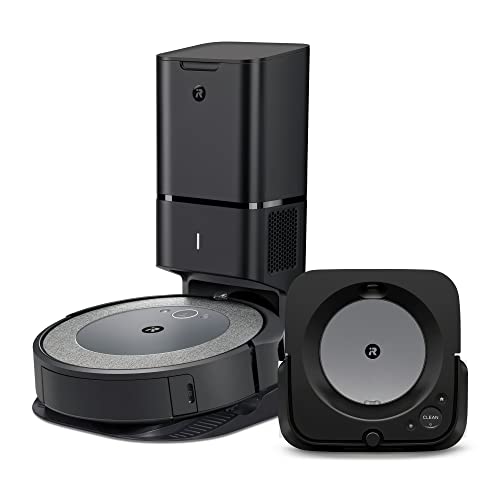
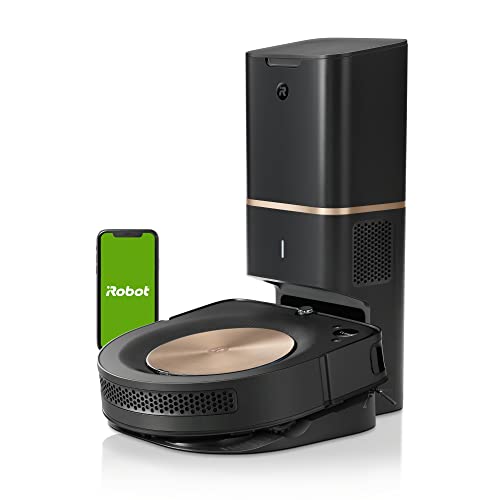
iRobot Roomba i3+ vs iRobot Roomba s9+ at a Glance
| Feature | iRobot Roomba i3+ | iRobot Roomba s9+ |
|---|---|---|
| Suction Power Rating | 10x Power-Lifting Suction (vs 600 series) | 40x Power-Lifting Suction (vs 600 series) |
| Brush Roller Design | Dual Multi-Surface Rubber Brushes | 40% Larger Dual Rubber Brushes |
| Edge and Corner System | Standard edge brush on round chassis | PerfectEdge Technology with Corner Brush |
| Navigation & Mapping | Imprint Smart Mapping (Room-by-Room) | Imprint Smart Mapping with Multi-Floor Storage |
| Boundary Customization | Not listed | Keep Out Zones and Clean Zones |
| Obstacle Management | Straight lines with bump sensors | Careful Drive Mode (objects over 2.5 cm) |
| Battery Runtime | Up to 180 minutes | Up to 120 minutes |
| Clean Base Filtration | Enclosed bag captures 99% down to 0.7 microns | Enclosed bag holding 60 days of debris |
| Voice Platform Support | Google Home, Amazon Echo / Alexa | Amazon Alexa, Google Home, Siri, Vera |
| Best For | Everyday multi-room maintenance on hard floors | Deep carpet extraction and heavy pet hair pickup |
Suction Power and Carpet Extraction
Suction performance defines how thoroughly a robotic vacuum pulls deeply embedded silt, fine dust, and dander out of dense carpet fibers rather than merely sweeping loose dirt off the surface. The dynamic airflow generated by the vacuum motor dictates whether heavy particles hidden at the base of the carpet backing get dislodged or left behind. In busy living spaces, higher vacuum force also ensures that heavier debris like scattered cat litter, tracked-in gravel, and dried mud are pulled into the dust channel on the very first pass.
When comparing irobot roomba i3+ vs i7+ platforms against flagship hardware, the mechanical divide becomes clear. The Roomba i3+ relies on iRobot’s 10x Power-Lifting Suction system, which provides ample airflow for tile, laminate, finished hardwood, and moderate floor mats. In contrast, the irobot roomba s9+ suction power is rated at 40x the suction of the baseline 600 series platform. This quadruple leap over the i-Series architecture gives the s9+ immense mechanical lift, pulling packed debris out of high-pile rugs and dense plush carpeting where standard robot vacuums stall.
This substantial difference in the roomba i3+ suction vs s9+ calculation alters your regular cleaning results. The Roomba i3+ easily lifts surface crumb spills and lightweight hair, but it can leave fine grit embedded deep inside carpet underlayment. The s9+ acts as a true deep-cleaning replacement for an upright vacuum on carpets, pulling out micro-particles and ground-in soil. If your floor plan contains dense wall-to-wall carpeting, the s9+ provides an unmistakable advantage in air movement and particulate extraction.
Edge: iRobot Roomba s9+, delivering four times the air power of the i3+ to extract deep-seated grit from dense carpeting.
Edge Cleaning and Brush Roller Architecture
A robot’s cleaning ability depends heavily on the physical contact area of its bottom rollers and how effectively its side brushes sweep baseboards. Round robotic vacuums typically mount a single spinning side brush that flings debris toward a central roller module situated between two drive wheels. Because round frames cannot make flush contact with square room intersections, standard robots often leave a small triangle of untouched dust in every 90-degree corner.
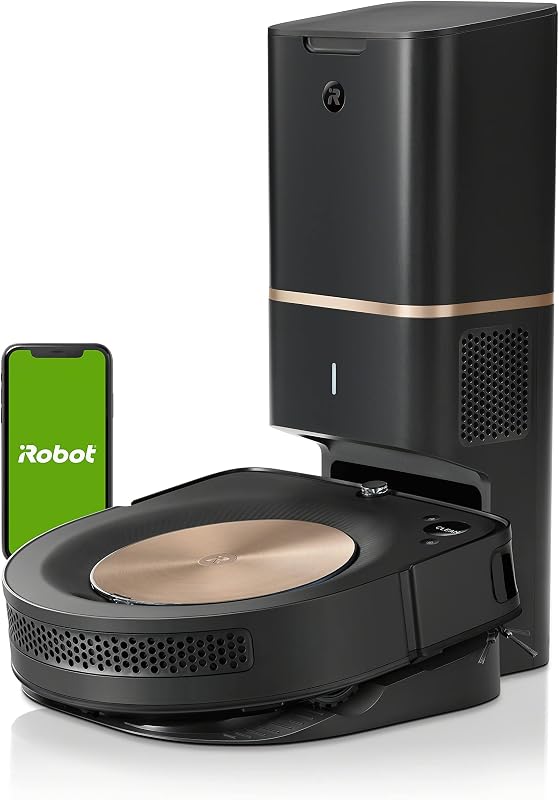
The Roomba s9+ solves this structural limit using PerfectEdge Technology. Instead of the round chassis seen on the Roomba i3+, the s9+ features a flat-front D-shaped body that places the primary cleaning head at the very front of the machine. The listing specifies that the s9+ uses 40% larger Multi-Surface Dual Rubber Brushes compared to Roomba i-Series vacuums. Paired with a specialized corner brush running at an optimized angle, the s9+ cleans directly against wall moldings and reaches deep into tight room corners where circular robots cannot physically roll.
When considering the irobot roomba i7+ vs s9+ or evaluating the roomba s9+ edge cleaning vs i3+, the hardware difference translates to less manual touch-up work. The Roomba i3+ uses standard dual multi-surface rubber rollers that resist hair wraps better than traditional bristle bars, but its narrower roller width requires more passes to cover an equivalent room width. Furthermore, when evaluating the roomba i3+ or s9+ for pet hair, the wider rollers and edge-hugging profile of the s9+ capture tumbling pet fur along hallways and baseboards far more completely.
Edge: iRobot Roomba s9+, thanks to its specialized D-shape chassis, dedicated corner brush, and 40% wider rubber rollers.
Mapping Control and Obstacle Management
Smart mapping dictates how effectively you can control where a robot cleans, which areas it avoids, and how carefully it navigates around household items. Without customizable boundary lines, a robot vacuum will enter pet feeding areas, roll over delicate power cords, or bump into unstable decor. Advanced navigation also dictates whether a vacuum navigates in organized rows or wanders haphazardly across open living spaces.
Both machines clean intelligently in straight, neat rows rather than using random bounce patterns, returning to their Clean Base to recharge and resuming cleaning right where they stopped. However, their navigation software packages differ substantially. The Roomba i3+ includes Imprint Smart Mapping to generate floor layouts and allow room-by-room cleaning dispatch via the app or voice commands. Yet the listing does not specify keep-out boundary customization for the i3+, meaning you cannot easily draw off-limit zones on its digital map to prevent it from entering specific floor areas.
The Roomba s9+ provides advanced map control through customizable Keep Out Zones and Clean Zones, enabling you to target high-traffic zones like kitchen islands or block off pet bowls entirely. When exploring the irobot roomba i3+ vs j7 dynamic, boundary controls are vital for hands-off automation. Additionally, the s9+ includes Careful Drive Mode, which detects objects taller than 2.5 cm in its forward path and navigates around them without forceful nudging or jostling. In the roomba i3+ vs s9+ navigation matchup, the s9+ offers substantially higher layout customization and gentler furniture interaction.
Edge: iRobot Roomba s9+, providing Keep Out Zones, targeted Clean Zones, and Careful Drive Mode for object avoidance.
Battery Runtime and Floor Coverage Dynamics
Battery endurance determines how much floor area a robot vacuum covers before needing to pause, dock, and recharge. While recharge-and-resume capabilities allow modern vacuums to finish large floor plans eventually, long runtimes prevent broken cleaning schedules and keep your living areas free of motorized noise during family hours. A robot that completes its job in a single run cleans your home much faster than one requiring multiple multi-hour charging intervals.
In this operational metric, the Roomba i3+ holds a notable advantage over the flagship s9+. The Roomba i3+ listing specifies an impressive battery life of up to 180 minutes powered by its 3.7V lithium-ion battery. This three-hour operating window allows the i3+ to cover expansive, multi-room floor plans on a single battery charge, especially across continuous hard floors where motor strain remains low. For open-concept layouts, the i3+ operates efficiently without frequent charging interruptions.
By contrast, the Roomba s9+ lists a runtime of up to 120 minutes. The immense power draw required to spin its high-torque motor and generate 40x suction cuts an hour off its operational window compared to the i3+. While the s9+ will automatically return to its base and resume cleaning once recharged, its shorter continuous runtime means large homes with dense carpeting will often experience two cleaning sessions separated by a charging break. The endurance advantage clearly belongs to the i3+.
Edge: iRobot Roomba i3+, offering up to 180 minutes of continuous runtime compared to the 120 minutes of the s9+.
Smart Home Integration and Automated Scheduling
Smart platform versatility and automated routines determine how seamlessly a robot vacuum integrates into your daily life. Modern cleaning appliances rely on intelligent software backbones to predict when cleaning should occur, whether through voice assistant commands, mobile applications, or location-based geofencing that starts the machine the moment you leave your house.
Both models leverage iRobot OS to deliver personalized suggestions based on seasonal shedding and pollen cycles. Both vacuums can be set to clean automatically when you leave and stop when you return home, ensuring cleaning occurs when rooms are empty. When analyzing the irobot roomba i3+ vs j7+ ecosystem, scheduling conveniences remain consistent across the connected lineup. Both vacuums can also coordinate with the Braava jet m6 robot mop via Imprint Link Technology to vacuum first and mop immediately afterward.
Where the two sides diverge is in their broader smart home assistant support. The Roomba i3+ listing specifies control via mobile app, physical buttons, and voice commands through Google Home and Amazon Alexa devices. The Roomba s9+ extends that connectivity to include Amazon Alexa, Google Home, Siri, and Vera systems. For users invested in diverse smart-home automation hubs beyond standard smart speakers, the s9+ provides broader integration hooks.
Edge: iRobot Roomba s9+, offering broader voice and platform compatibility including Siri and Vera support alongside Alexa and Google Assistant.
Pros and Cons
Irobot Roomba i3+

Pros
- 180-minute extended battery runtime
- Neat straight-line navigation rows
- Clean Base holds 60 days of debris
- Imprint Smart Mapping for room-by-room control
Cons
- Lower 10x power-lifting suction
- Lacks Keep Out Zones customization
View iRobot Roomba i3+ on Amazon
Irobot Roomba s9+
Pros
- Massive 40x Power-Lifting Suction
- 40% wider dual rubber brush rollers
- PerfectEdge Technology with corner brush
- Customizable Keep Out and Clean Zones
Cons
- Shorter 120-minute battery runtime
- Larger power draw during cleaning
View iRobot Roomba s9+ on Amazon
Who Should Buy Each One
Choose the Roomba i3+ If
- Your living space consists mostly of hardwood, tile, stone, or low-pile rugs that do not require heavy industrial carpet suction.
- You live in a sprawling, single-level open floor plan that benefits from the 180-minute runtime to finish cleaning in a single pass.
- You want simple, dependable room-by-room dispatching and automated Clean Base emptying without needing complex digital boundary zones.
- You prefer a clean white appliance finish that blends quietly into bright, modern home decor.
Choose the Roomba s9+ If
- You have medium to high-pile carpeting where 40x Power-Lifting Suction is necessary to pull out embedded dirt, dander, and grit.
- You manage heavy shedding from multiple pets and need 40% wider rubber rollers that resist hair tangling along baseboards.
- You require customizable Keep Out Zones to shield pet feeding bowls, cables, or fragile decor without placing physical barriers.
- You want PerfectEdge Technology and a specialized corner brush to clean tight 90-degree room corners and wall perimeters thoroughly.
Final Verdict
When weighing the roomba s9+ vs i3+, the decision centers on your floor surfaces and your need for detailed boundary control. The Roomba s9+ stands as the performance leader between these two models. With 40x suction power, a 40% wider dual rubber brush module, PerfectEdge corner-cleaning technology, and Keep Out Zone mapping, it handles challenging cleaning environments that leave standard robots struggling. For pet owners dealing with shedding fur on carpeted floors, the s9+ delivers the extraction power and corner agility needed for true hands-off vacuuming.
Nevertheless, the Roomba i3+ remains an exceptional and practical choice for many households. If your home features predominantly hard flooring and minimal high-pile carpet, the 40x suction of the s9+ provides diminishing returns compared to the reliable 10x suction of the i3+. Furthermore, the i3+ delivers an extra hour of battery life-running up to 180 minutes-and provides straight-line navigation, self-emptying disposal, and room-by-room cleaning. If you want a dependable daily maintenance vacuum and do not need complex no-go mapping zones, the Roomba i3+ handles the job with minimal fuss.
FAQ
Can both the Roomba i3+ and s9+ empty their own dustbins?
Yes. Both models include the Clean Base Automatic Dirt Disposal dock. Each system uses an enclosed disposal bag that holds up to 60 days of debris, allowing you to go two full months without handling dust or emptying the robot bin manually.
Is the Roomba s9+ worth it over the i3+ for pet hair?
The Roomba s9+ is substantially better suited for heavy shedding. It features 40x suction power compared to the 10x suction of the i3+, utilizes 40% wider dual rubber rollers that do not get tangled with pet hair, and includes PerfectEdge Technology to sweep pet fur out of baseboards and tight corners.
Can the Roomba i3+ use Keep Out Zones to avoid pet bowls?
No. While the Roomba i3+ supports Imprint Smart Mapping for room-by-room scheduling, its listing does not specify digital Keep Out Zones or Clean Zones. If you need to block specific corners or pet dish areas directly in the app, the s9+ provides that functionality.
Which robot vacuum has a longer battery life?
The Roomba i3+ has the longer battery life, offering up to 180 minutes of runtime on a single charge. The high-powered motor of the Roomba s9+ reduces its runtime to roughly 120 minutes before it must return to its dock to recharge.
Do both vacuums work with the Braava jet m6 robot mop?
Yes. Both the Roomba i3+ and Roomba s9+ feature Imprint Link Technology, allowing them to communicate directly with the Braava jet m6 robot mop so your floors are automatically mopped immediately after the vacuum completes its cycle.
How does the shape of the s9+ improve corner cleaning compared to the i3+?
The Roomba i3+ uses a traditional round frame with a side brush that reaches outward. The Roomba s9+ uses a flat-front D-shaped chassis with PerfectEdge Technology, positioning its wider brush rollers right at the front and using a specialized corner brush to sweep flush against walls and deep into 90-degree corners.


