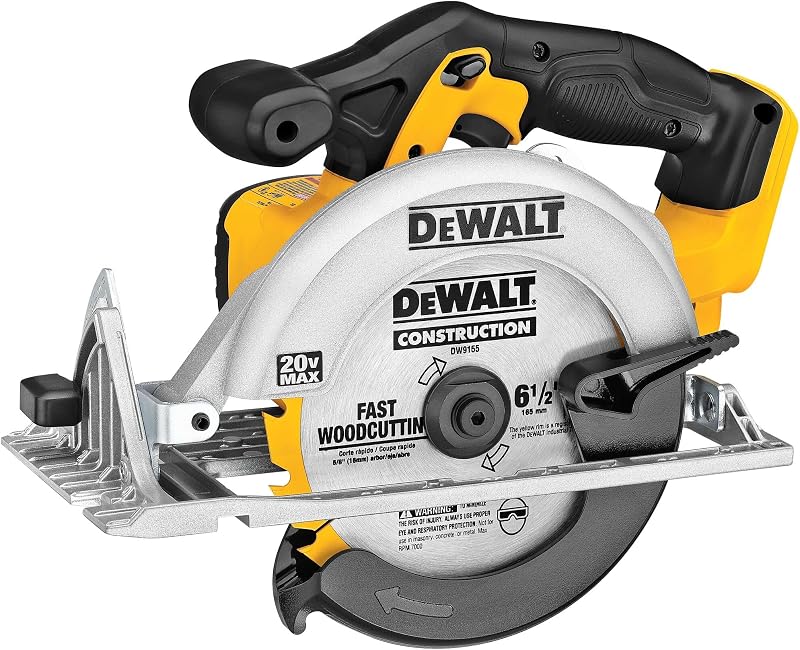
Choosing between the Milwaukee 2730-20 and the Makita XSH04Z comes down to a fundamental choice between a traditional blade-left framing layout and an ultra-compact blade-right format engineered for maximum maneuverability in tight quarters.
Carpenters who want clear line-of-sight visibility on their cut line and a durable magnesium shoe should pick the Milwaukee 2730-20, while remodelers who prioritize lightweight overhead operation, integrated dust collection, and an electric brake should choose the Makita XSH04Z.
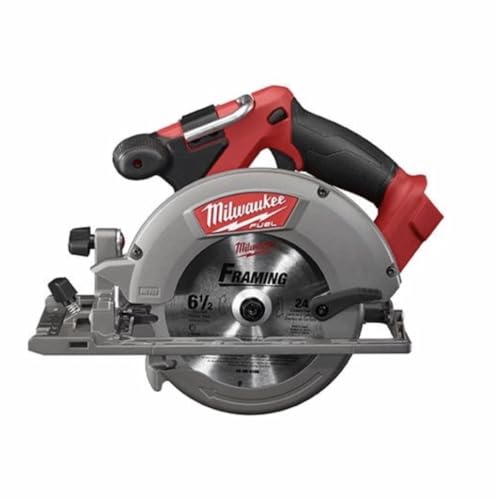

Milwaukee 2730-20 vs Makita XSH04Z at a Glance
| Attribute | Milwaukee 2730-20 | Makita XSH04Z |
|---|---|---|
| Blade Diameter | 6-1/2 In. | 6-1/2 In. |
| Blade Orientation | Blade Left | Blade Right |
| No-Load Speed | 5000 RPM | 5000 RPM |
| Cutting Depth at 90 Degrees | 2-3/16 In. | 2-1/4 In. |
| Cutting Depth at 45 Degrees | 1-5/8 In. | Not listed |
| Bevel Capacity | 0 Degrees to 50 Degrees | 0 Degrees to 50 Degrees |
| Tool Length | 16 In. | 10-5/8 In. |
| Bare Tool Weight | 6.3 lb. | 4 pounds |
| Electric Brake | Not listed | Yes |
| Dust Collection Port | Not listed | Dust Extracting Attachment included |
| Best For | Framing cuts and direct blade visibility | Overhead cutting, tight spaces, and dust extraction |
Blade Orientation and Cutline Visibility
Blade position determines how comfortably a carpenter tracks a marked line across sheet goods or framing lumber. For right-handed woodworkers, a blade-left circular saw provides an unobstructed view of the blade contacting the timber, allowing natural alignment without leaning awkwardly over the motor housing. Conversely, a blade-right configuration directs wood chips away from the operator while placing the wider section of the saw base on the supported side of the stock during typical crosscuts.
The Milwaukee 2730-20 blade side is mounted on the left, echoing the layout of traditional worm-drive construction saws. This format gives right-handed operators direct sightlines when ripping plywood or slicing through dimensional studs on sawhorses. In contrast, the Makita XSH04Z positions its blade on the right side of the main motor housing. For right-handed users, this requires looking over the top of the chassis to watch the cut indicator, though left-handed woodworkers gain the exact direct line-of-sight advantages that righties enjoy on the Milwaukee. Evaluating milwaukee vs makita circular saw ergonomics frequently starts with this single fundamental geometry difference.
When running repetitive breakdown cuts all day, having the blade on the open side of your dominant hand reduces neck strain and speeds up alignment. While the Makita offers distinct advantages in tight spaces, the Milwaukee layout remains the established standard for production framing where rapid visual confirmation on pencil marks is essential.
Edge: Milwaukee 2730-20 delivers clear cutline visibility for right-handed carpenters without requiring awkward leaning.
Cutting Depth and Bevel Capabilities
A circular saw must clear standard two-by material in a single pass, even when tilting the base plate for compound angles and roof valley cuts. Both models accept 6-1/2-inch blades, but minor differences in motor placement, gear housing design, and shoe mounting influence the exact depth of cut available to the user.
The Makita XSH04Z cutting depth reaches 2-1/4 inches at a 90-degree angle, providing generous clearance when trimming nominal two-inch dimensional lumber, subflooring, or stacked sheet goods. The manufacturer specifications do not state the exact depth capacity at 45 degrees, though the bevel mechanism tilts smoothly from 0 to 50 degrees. Comparing this to broader framing saws such as the dewalt dcs570 vs milwaukee 2730-20 shows how well compact units hold their ground in cut capacity.
The 2730-20 provides a cutting depth of 2-3/16 inches at 90 degrees and clearly lists a maximum cutting depth of 1-5/8 inches at 45 degrees, along with a full 0 to 50 degree bevel range. The 1/16-inch depth advantage at 90 degrees goes to the Makita, but the Milwaukee provides documented 45-degree clearance that guarantees complete one-pass bevel cuts through 1-1/2-inch dimensional stock. For carpenters evaluating whether the Milwaukee 2730-20 or Makita XSH04Z for framing suits their layout work, verified bevel capacities provide necessary peace of mind.
Edge: Tie because the Makita offers a slightly deeper 90-degree cut, while the Milwaukee provides verified 45-degree dimensional clearance.
Tool Dimensions, Weight, and Maneuverability
Tool footprint heavily influences operator fatigue, balance on narrow framing plates, and the ability to squeeze between roof rafters or floor joists. Compact cordless circular saws allow tradespeople to make cuts in positions that would bind or obstruct a full-sized framing saw.
The XSH04Z belongs to Makita’s Sub-Compact lineup, engineered specifically to pack 18V power into a package with 12V handling. The tool body measures just 10-5/8 inches in overall length, and the bare unit weighs only 4 pounds. Even when equipped with a compact 2.0Ah battery, the total weight reaches just 6.4 pounds. This minimal footprint makes the saw exceptionally agile for overhead soffit work, tight remodeling cutouts, and climbing ladders where bulky tools create physical strain.
By comparison, the 2730-20 features a more substantial chassis. The listing specifies an overall tool length of 16 inches, with package dimensions of 12.97 inches by 6.48 inches by 7.46 inches. The bare tool weighs 6.3 pounds (with an item weight listed at 6.8 pounds), which means that once an 18V battery pack is attached, the operating weight increases further. When weighing a dewalt dcs391 vs milwaukee 2730-20 or the Makita sub-compact, the physical difference in hand is immediately noticeable. The Milwaukee 6 1/2 circular saw vs Makita sub compact comparison shows that the Makita cuts down tool length by more than five inches.
Edge: Makita XSH04Z wins decisively with its 10-5/8-inch overall length and featherweight 4-pound bare tool chassis.
Motor Performance, Speed, and Electronic Controls
Cordless circular saws rely on advanced brushless motors and intelligent electronics to sustain blade speed under load without stalling or draining batteries prematurely. Brushless technology eliminates carbon brushes, allowing the motor to run cooler and deliver higher mechanical efficiency over an extended operational life.
Both saws feature high-performance brushless powerplants that deliver a maximum no-load speed of 5000 RPM. In this Makita XSH04Z review, the motor integration stands out due to Makita’s Automatic Speed Change technology. This electronic system actively senses resistance during the cut, adjusting rotational speed and torque delivery in real time to prevent bogging down during demanding rips. The XSH04Z listing also specifies an integrated electric brake, which brings the spinning blade to a rapid stop once the trigger is released, significantly improving jobsite pace and safety.
The 2730-20 features Milwaukee’s M18 Fuel brushless motor platform, rated for an 18-amp current draw. The motor delivers robust, constant torque suited for heavy cutting, and the saw base is built from durable magnesium rather than stamped sheet metal. However, the listing specifications do not mention an electric brake or dynamic load-sensing torque adjustment for the 2730-20. For contractors weighing the dewalt dcs573 vs milwaukee 2730-20, electronic blade braking remains a valuable consideration on modern jobsites.
Edge: Makita XSH04Z takes the lead by pairing 5000 RPM with Automatic Speed Change technology and an electric brake.
Dust Management and Included Box Contents
Purchasing bare tools often requires sourcing crucial accessories separately before making the first cut. Packaging choices, blade inclusions, and integrated dust management ports affect the out-of-the-box utility of each saw, particularly for indoor remodeling where airborne sawdust must be captured immediately.
The Makita XSH04Z comes generously equipped for a bare tool package. Inside the box, buyers receive the saw, a hex wrench for blade changes, an authentic 6-1/2-inch 24-tooth carbide-tipped saw blade, and a dedicated dust extracting attachment. This extraction adapter mounts directly to the saw housing, enabling direct connection to a shop vacuum or dust extractor to keep cutlines clean and indoor workspaces compliant with dust mitigation standards.
The Milwaukee 2730-20 includes only the bare circular saw unit and an instruction guide. The listing does not specify an included blade, wrench, or dust vacuum extraction port. Users investing in the 2730-20 will need to supply their own 6-1/2-inch blade with a 5/8-inch arbor hole. Comparing these tool-only packages alongside other comparisons like the milwaukee 2720-20 vs makita xrj05z highlights how accessory inclusions add immediate functional value.
Edge: Makita XSH04Z wins easily by including a carbide-tipped blade, hex wrench, and dedicated dust extraction attachment in the box.
Pros and Cons
Milwaukee 2730-20

Pros
- Blade-left design optimizes sightlines for right-handers
- Durable magnesium shoe construction
- Fast 5000 RPM brushless motor
- Clear 1-5/8-inch depth at 45-degree bevel
Cons
- Heavier 6.3-pound bare tool weight
- No dust collection port included
- Electric brake not listed
View Milwaukee 2730-20 on Amazon
Makita XSH04Z

Pros
- Ultra-compact 10-5/8-inch chassis length
- Lightweight 4-pound bare tool weight
- Integrated electric brake for rapid stops
- Includes blade and dust extracting attachment
- Automatic Speed Change adjusts torque under load
Cons
- Blade-right orientation requires leaning for right-handers
- Cutting depth at 45 degrees not specified
Who Should Buy Each One
Choose the Milwaukee 2730-20 If
- You are a right-handed carpenter who requires direct line-of-sight visibility over the cutline on framing stock.
- You already own high-capacity M18 lithium-ion batteries and want a durable saw built with a magnesium shoe.
- You need verified cut capacities of 1-5/8 inches at a 45-degree bevel angle for compound lumber cuts.
- You prefer a full-sized 16-inch chassis that provides substantial tracking stability across long plywood sheets.
Choose the Makita XSH04Z If
- You perform overhead cutting, trim work, or punch-list carpentry in confined spaces that demand an ultra-compact 10-5/8-inch tool body.
- You want a lightweight 4-pound bare tool to reduce arm fatigue throughout long work shifts.
- You work indoors or in finished living spaces where the included dust extraction attachment connects directly to a vacuum.
- You value the rapid-stopping safety feature of an integrated electric motor brake.
Final Verdict
The choice between the Makita XSH04Z vs Milwaukee 2730-20 centers on whether your workload demands classic framing ergonomics or modern sub-compact maneuverability. The 2730-20 represents a durable, dependable option for tradespeople who prioritize blade-left visibility, robust magnesium shoe construction, and a proven M18 Fuel brushless motor capable of 5000 RPM. For standard carpentry benches and jobsite framing where operators want an unobstructed view of their pencil line, the Milwaukee remains a tried-and-true workhorse.
For most remodelers, finish carpenters, and general tradespeople, the XSH04Z is the superior all-around option. By shaving overall length down to 10-5/8 inches and bare weight down to just 4 pounds, it unlocks unmatched agility without sacrificing cutting capacity. With a deeper 2-1/4-inch 90-degree cut capacity, Automatic Speed Change torque regulation, an integrated electric brake, and an included dust extraction adapter and blade, the Makita XSH04Z delivers modern functionality that makes every overhead cut and confined workspace easier to tackle.
FAQ
What is the primary difference between the Milwaukee 2730-20 and the Makita XSH04Z?
The primary difference is blade orientation and physical size. The Milwaukee 2730-20 features a traditional blade-left configuration on a full-length 16-inch chassis weighing 6.3 pounds bare. The Makita XSH04Z utilizes a blade-right configuration on a sub-compact 10-5/8-inch chassis weighing only 4 pounds bare.
What cutting depth does each circular saw achieve at 90 degrees?
The Makita XSH04Z reaches a maximum cutting depth of 2-1/4 inches at 90 degrees, while the Milwaukee 2730-20 delivers a maximum cutting depth of 2-3/16 inches at 90 degrees. Both provide ample depth to slice through standard two-by dimensional lumber in a single pass.
Is Makita XSH04Z worth it for remodeling and tight spaces?
Yes, the Makita XSH04Z is exceptionally well suited for remodeling because its sub-compact 10-5/8-inch length allows it to fit between joists, wall studs, and rafters where full-sized saws cannot maneuver. Its light 4-pound bare weight also minimizes fatigue during overhead work.
Does either saw feature an electric brake?
The Makita XSH04Z lists an integrated electric brake as a key special feature, which rapidly halts blade rotation when the user lets go of the trigger. The Milwaukee 2730-20 product specifications do not list an electric brake.
What accessories are included in the box with each bare tool?
The Milwaukee 2730-20 includes the bare circular saw and an instruction guide. The Makita XSH04Z includes the bare tool, a 6-1/2-inch 24-tooth carbide-tipped saw blade, a dust extracting vacuum attachment, and a hex wrench for blade changes.
What is the arbor hole size and bevel capacity on these saws?
The Milwaukee 2730-20 specifies an arbor hole size of 5/8 inch and a bevel range from 0 degrees to 50 degrees. The Makita XSH04Z also offers a 0 to 50 degree bevel capacity and accepts standard 6-1/2-inch circular saw blades.