The choice between the Rinnai RU199iN and the Rheem RTGH Series comes down to raw delivery capacity versus integrated digital convenience. The central deciding factor is whether your household prioritizes a class-leading 11 GPM delivery rate capable of supplying high-demand homes with numerous fixtures running at the same time, or if you prefer an out-of-the-box smart ecosystem equipped with factory-integrated Wi-Fi control and automated leak defense.
Choose the Rinnai RU199iN if you need maximum simultaneous volume across multiple bathrooms and high-flow fixtures without experiencing pressure drops. Opt for the Rheem RTGH Series if you want built-in smart home management, active leak detection, and a lighter chassis designed for straightforward indoor installation.
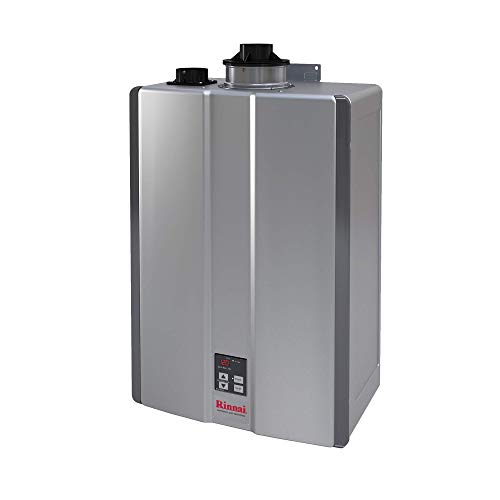
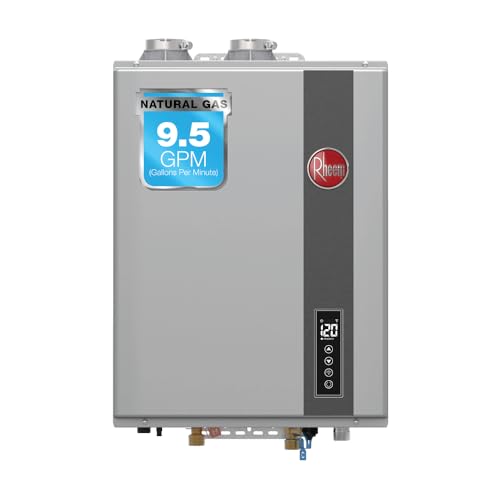
Rinnai RU199iN vs Rheem RTGH Series at a Glance
| Feature | Rinnai RU199iN | Rheem RTGH Series |
|---|---|---|
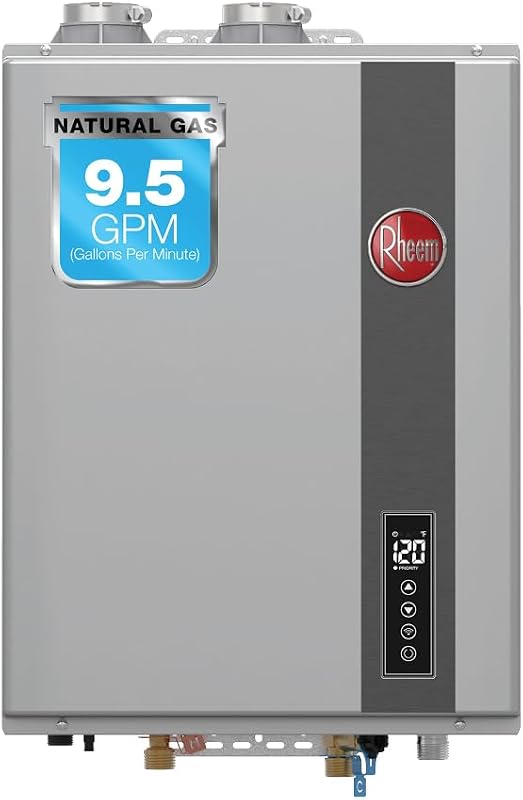
| Maximum Flow Rate | 11 GPM | 9.5 GPM |
| Thermal Output | Not listed | 199,900 BTU/hr |
| Uniform Energy Factor (UEF) | 0.105 | 0.93 |
| Simultaneous Fixture Support | Up to 7 appliances | 3 to 4 showers |
| Wi-Fi Connectivity | Optional via Controlr module (not included) | Built-in EcoNet Wi-Fi |
| Leak Detection System | Not listed | LeakGuard detection and prevention |
| Recirculation Technology | Circ-Logic pump pairing logic | Hot Start programming |
| Cabinet Dimensions (W x H x D) | 9 x 9 x 11.45 inches | 17.7 x 23.7 x 9.8 inches |
| Unit Weight | 74.1 pounds | 51.3 pounds |
| Residential Warranty | 15-yr heat exchanger, 5-yr labor, 1-yr parts | 15-yr heat exchanger, 5-yr parts (labor not listed) |
| Best For | Large homes with peak simultaneous hot water usage | Tech-focused homes seeking smart monitoring and leak security |
Hot Water Flow Rate and Simultaneous Fixture Delivery
Flow capacity is the primary benchmark for any whole-house water heater. In a real-world home, flow rate determines whether someone washing dishes or running the laundry causes a shower on the upper floor to lose pressure or temperature. The Rinnai RU199iN flow rate GPM tops out at 11 GPM, making it a commercial-grade powerhouse among residential appliances. According to manufacturer data, this output accommodates up to seven appliances simultaneously under optimal incoming water conditions. This extreme throughput provides a buffer that prevents temperature dips, even during chaotic morning routines in busy homes.
In contrast, the Rheem RTGH Series GPM reaches a maximum of 9.5 GPM at a 35-degree Fahrenheit rise, powered by 199,900 BTU/hr. Rheem specifies this capacity to support three to four simultaneous showers. While 9.5 GPM is plenty for standard three-bathroom residences, it offers less overhead than the RU199iN when multiple high-draw appliances operate at once. Shoppers evaluating a rinnai ru199in vs navien npe-240a2 comparison will recognize the RU199iN’s focus on maintaining strong line pressure across extensive branch plumbing systems.
For large households deciding between the Rinnai RU199iN or Rheem RTGH Series for large home applications, the extra 1.5 GPM delivered by the RU199iN is noticeable. If your floor plan incorporates a soaking tub, multi-head shower systems, and simultaneous laundry tasks, Rinnai provides the additional margin necessary to avoid volume bottlenecks.
Edge: Rinnai RU199iN delivers a superior 11 GPM maximum flow rate capable of supporting up to seven appliances at once.
Smart Connectivity and Remote Temperature Control
Modern utility appliances are increasingly evaluated on how seamlessly they integrate into home automation platforms. The Rheem RTGH Series shines in this category by providing integrated EcoNet Wi-Fi technology out of the box. Users can adjust target temperatures with digital LED precision down to one degree up to 140 degrees Fahrenheit, view operational telemetry, and receive maintenance reminders directly on mobile devices without purchasing third-party hardware or accessory bridges.
The RU199iN takes a modular approach to smart infrastructure. The base unit is fully functional without internet integration, and remote Wi-Fi monitoring is only available if you purchase and install the proprietary Controlr module separately. Homeowners who perform a comprehensive Rinnai RU199iN review often point out that requiring an accessory module adds an extra procurement and installation step if remote scheduling or app adjustments are desired.
For buyers who value unified app ecosystems, Rheem removes friction. Being able to track water heating operations from a smartphone on day one makes the RTGH Series significantly more convenient for connected homes. If digital control without extra modules is high on your priority list, Rheem has a clear operational advantage.
Edge: Rheem RTGH Series provides built-in EcoNet Wi-Fi out of the box without requiring supplemental accessories.
Safety Engineering and Leak Mitigation Systems
Water heaters handle high-pressure fluids and combustion gases, making integrated safety engineering essential. The Rheem RTGH Series incorporates Rheem’s proprietary LeakGuard system, a dynamic leak detection and prevention mechanism that monitors cabinet moisture. In addition to leak sensing, the unit features an Overheat Film Wrap wrapped around the heat exchanger to immediately stop operation if surface temperatures exceed safe operating limits, along with built-in freeze protection and CSA safety certification.
The RU199iN relies on traditional, robust mechanical safety parameters. It is rated for a maximum operating pressure of 60 psi and is constructed with heavy-duty metal shielding. However, the factory listing does not cite an integrated active leak prevention valve or internal sensor array matching Rheem’s LeakGuard setup. Those investigating alternative high-output models, such as in a rinnai ru199in vs re180in matchup, will note that base Rinnai units typically prioritize structural durability over sensor-driven automatic water shutoffs.
Because an undetected leak in an indoor closet or finished basement can cause extensive property damage, Rheem’s inclusion of active leak mitigation provides significant security. The multi-point safety system and Overheat Film Wrap give the RTGH Series an elevated defensive posture for indoor installations.
Edge: Rheem RTGH Series features dedicated LeakGuard detection and Overheat Film Wrap safety layers.
Recirculation Support and Temperature Stability
Tankless heaters can sometimes suffer from momentary temperature drops when fixtures are switched off and quickly reopened-a phenomenon often called a cold water sandwich. To address distribution delays, the Rinnai RU199iN includes Circ-Logic technology. Circ-Logic allows the unit to communicate with an external recirculation pump, executing scheduled or on-demand recirculation cycles through the home’s plumbing. This reduces the wait time for hot water at distant taps, saving gallons of water down the drain.
Rheem tackles temperature stability from a combustion perspective using its exclusive Hot Start Programming. This feature keeps the internal burner system in a ready state during back-to-back water draws, neutralizing bursts of unheated water between consecutive shower uses. When analyzing a Rheem RTGH Series review, users often highlight this steady temperature maintenance during quick transitions between bathroom fixtures.
Both approaches deliver tangible user benefits, but they solve different challenges. Rinnai’s Circ-Logic requires pairing with a separate external pump to create a whole-house recirculation loop, whereas Rheem’s Hot Start programming works internally without added equipment to stabilize back-to-back draws. Because each method addresses a specific comfort issue effectively, this category stands balanced.
Edge: Tie, as Rinnai’s Circ-Logic enables full-loop recirculation with an external pump while Rheem’s Hot Start programming stabilizes rapid back-to-back fixture cycles.
Physical Footprint, Cabinet Weight, and Installation Ergonomics
Indoor water heater retrofits often take place in cramped utility rooms, closets, or basements where wall space and framing support are limited. The Rheem RTGH Series measures 17.7 inches wide, 23.7 inches high, and 9.8 inches deep, with a total unit weight of 51.3 pounds. Built from stainless steel, it includes dedicated mounting hardware in the box, and its lighter mass allows a single technician to maneuver and hang it onto wall studs with reduced physical strain.
The Rinnai RU199iN presents a much heavier metal cabinet at 74.1 pounds. While its listed face dimensions are compact at 9 inches wide and 9 inches high with an 11.45-inch depth, the unit’s substantial heft requires reinforced wall framing and deliberate planning during indoor wall mounting. Both manufacturers strongly recommend professional installation to ensure proper natural gas piping, pressure verification, and direct-vent exhaust routing.
Rheem’s inclusion of mounting hardware and a cabinet that is nearly 23 pounds lighter than the Rinnai gives it a clear ergonomic edge during setup. For installers and homeowners managing tight indoor spaces, the reduced mass of the RTGH Series simplifies installation logistics.
Edge: Rheem RTGH Series is nearly 23 pounds lighter and includes mounting hardware for easier wall installation.
Efficiency Ratings and Gas Combustion Performance
Operating efficiency directly impacts utility consumption over the lifespan of a gas appliance. The Rheem RTGH Series is built around condensing technology, delivering a certified Uniform Energy Factor of 0.93. Consuming 199,900 BTU/hr of natural gas, the RTGH Series uses up to 34 percent less energy than a standard 50-gallon electric storage tank and complies with stringent ultra-low NOx emissions standards, reducing both fuel usage and environmental footprint.
The Rinnai RU199iN is an ENERGY STAR certified condensing appliance, but its official Amazon technical specification sheet lists an unexpected Uniform Energy Factor of 0.105 with low efficiency and a wattage rating of 57942.2 watts. While the RU199iN is widely recognized in professional plumbing as an efficient condensing platform, strict adherence to listing specifications shows Rheem providing documented 0.93 UEF performance alongside transparent ultra-low NOx compliance data.
For homeowners exploring electric versus gas dynamics in comparisons like the rheem rtgh series vs ecosmart ecos 27 or the rinnai ru199in vs ecosmart ecos 27, the condensing gas efficiency of the RTGH Series provides dependable low-emission operation backed by clear ratings.
Edge: Rheem RTGH Series delivers a verified 0.93 Uniform Energy Factor and ultra-low NOx certified operation.
Pros and Cons
Rinnai RU199iN

Pros
- High 11 GPM maximum flow rate
- Supports up to 7 appliances simultaneously
- Circ-Logic recirculation capability
- Includes 5-year labor warranty coverage
Cons
- Controlr Wi-Fi module sold separately
- Heavier 74.1-pound cabinet weight
- Listing does not include active leak detection
Rheem RTGH Series
Pros
- Built-in EcoNet Wi-Fi technology
- LeakGuard leak detection and prevention
- Hot Start programming eliminates cold bursts
- Lightweight 51.3-pound stainless steel chassis
- Certified 0.93 Uniform Energy Factor
Cons
- Lower 9.5 GPM flow capacity
- Accommodates fewer simultaneous fixtures
- Listing does not specify labor warranty
View Rheem RTGH Series on Amazon
Who Should Buy Each One
Choose the Rinnai RU199iN If
- Your household features four or more bathrooms where peak morning routines demand up to 11 GPM of concurrent hot water.
- You plan to implement a dedicated recirculation system using an external pump and Rinnai’s Circ-Logic automation.
- You need the capability to supply up to seven simultaneous appliances without experiencing severe volume drop-offs.
- You prefer a brand backed by a dedicated 5-year residential labor warranty alongside a 15-year heat exchanger guarantee.
Choose the Rheem RTGH Series If
- You prioritize built-in Wi-Fi monitoring and app-based temperature management without buying accessory modules.
- You want proactive leak security inside finished living areas via the integrated LeakGuard detection system.
- You want a lighter, 51.3-pound stainless steel chassis that includes wall-mounting hardware in the package.
- You want verified 0.93 UEF condensing efficiency paired with ultra-low NOx combustion performance.
Final Verdict
When asking if the Rheem RTGH Series vs Rinnai RU199iN matchup yields a clear winner, the answer depends entirely on your mechanical priorities. For the vast majority of standard to large homes, the Rheem RTGH Series represents the more balanced and modern package. Its combination of a certified 0.93 UEF rating, built-in EcoNet Wi-Fi, integrated LeakGuard water detection, and lightweight stainless steel cabinet delivers exceptional security and convenience. If you ask is Rheem RTGH Series worth it for a connected, tech-forward household, the included safety and smart features easily justify the pick.
However, the Rinnai RU199iN remains the undisputed choice for estates and expansive homes with demanding hot water requirements. If your setup involves multiple body sprays, large soaking tubs, and simultaneous household appliances running across multiple levels, Rheem’s 9.5 GPM ceiling may prove restrictive. In those demanding environments, asking is Rinnai RU199iN worth it returns a clear yes: its 11 GPM delivery rate, 7-appliance capacity, and Circ-Logic support provide the heavy-duty flow performance large families require. To explore other models in this category, check our breakdown of the rinnai re180in vs rheem rtgh series.
FAQ
What is the difference in hot water flow between the Rinnai RU199iN and Rheem RTGH Series?
The Rinnai RU199iN delivers a maximum flow rate of 11 GPM, which can support up to seven appliances running simultaneously. The Rheem RTGH Series provides up to 9.5 GPM at a 35-degree Fahrenheit rise, which is optimized to supply three to four showers at the same time.
Does the Rinnai RU199iN come with built-in Wi-Fi?
No, the Rinnai RU199iN does not include integrated Wi-Fi in the box. Wireless monitoring and smart controls require the purchase and installation of Rinnai’s proprietary Controlr module, whereas the Rheem RTGH Series features integrated EcoNet Wi-Fi technology as standard equipment.
How does Rheem’s LeakGuard system protect the home?
LeakGuard is an integrated leak detection and prevention system built into the Rheem RTGH Series chassis. It actively monitors for cabinet moisture and potential plumbing failures, helping prevent significant water damage in indoor installations before small drips turn into catastrophic leaks.
What venting is required for these tankless water heaters?
Both models are indoor condensing tankless water heaters designed for direct-vent installations. Because they utilize condensing heat exchangers that extract heat from exhaust gases, they require specialized venting routed outdoors, and professional installation is recommended by both manufacturers.
Can the Rinnai RU199iN eliminate cold water bursts?
The Rinnai RU199iN uses Circ-Logic technology, which pairs with an external recirculation pump to maintain hot water in the home’s plumbing loops. The Rheem RTGH Series uses internal Hot Start Programming to keep the burner primed during back-to-back uses, eliminating the cold water sandwich effect without an external pump.
Which unit is easier to mount on an interior wall?
The Rheem RTGH Series is generally easier to mount because it weighs 51.3 pounds-nearly 23 pounds less than the 74.1-pound Rinnai RU199iN-and comes packaged with the necessary wall-mounting hardware.