The single deciding factor between the Rode NT-USB+ and the Rode PodMic USB comes down to acoustic environment and connectivity architecture: the NT-USB+ employs a highly sensitive 1/2-inch studio condenser capsule wired strictly for direct USB-C recording, whereas the PodMic USB utilizes an ambient-rejecting dynamic capsule equipped with simultaneous USB-C and professional XLR outputs.
Voice-over narrators and acoustic musicians working inside treated, quiet spaces should choose the NT-USB+ for delicate vocal nuance, while streamers and creators recording in standard, untreated rooms should pick the PodMic USB for tight background noise suppression and long-term interface flexibility.
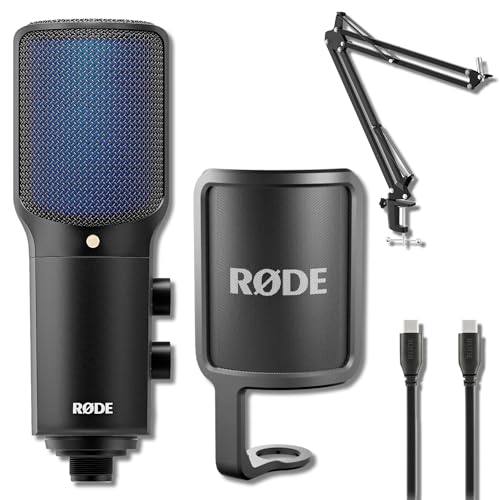

Rode NT-USB+ vs Rode PodMic USB at a Glance
| Feature | Rode NT-USB+ | Rode PodMic USB |
|---|---|---|
| Capsule Type | 1/2-inch studio condenser | Neodymium dynamic |
| Polar Pattern | Tight cardioid | Cardioid |
| Output Ports | USB Type-C | Simultaneous USB-C and balanced XLR |
| Digital Audio Resolution | 24-bit / 48 kHz | 24-bit / 48 kHz |
| Internal Preamp | High-gain Revolution Preamp | Ultra-low-noise Revolution Preamp |
| Onboard DSP | APHEX (Gate, Compressor, Exciter, Big Bottom) | APHEX (Noise Gate, Compressor, Exciter, Big Bottom) |
| Headphone Monitoring | 3.5 mm zero-latency with volume and mix controls | 3.5 mm zero-latency with level control |
| Plosive and Shock Protection | Tight cardioid focus, external pop screen compatible | Internal pop filter, internal shockmount, external pop filter |
| Included Hardware | 27-inch aluminum desktop boom arm | 27-inch desktop boom arm, 10-foot XLR cable, USB cable |
| Best For | Acoustically treated voice-over and solo studio streaming | Podcasting, noisy rooms, and studio hardware expansion |
Acoustic Sensitivity and Room Noise Rejection
Microphone transducer design defines how much of your surrounding environment makes its way onto an audio track. The NT-USB+ houses an externally biased 1/2-inch studio condenser capsule designed to register microscopic air pressure variations. This design provides an open, airy vocal profile that captures breath detail, soft articulation, and subtle vocal inflections across a 20 Hz to 20 kHz spectrum. However, that sensitivity means the condenser capsule registers computer fan hum, mechanical keyboard clatter, outside street traffic, and wall reflections just as eagerly as it captures speech.
Evaluating the PodMic USB vs Rode NT-USB+ reveals a fundamentally different acoustic approach. The PodMic USB relies on a rugged neodymium dynamic capsule. Dynamic elements require considerably more acoustic energy to move their heavier diaphragms, inherently ignoring low-energy background noises that plague home studios. When speaking right up against the grille, the dynamic element isolates the vocal tract while ignoring desktop reflections and room echo, functioning with the dependable isolation discussed in our rode nt-usb+ vs podmic guide.
When comparing the Rode PodMic USB vs NT-USB+ voice over potential, recording in an untreated bedroom or shared living area makes the dynamic capsule far more forgiving. The NT-USB+ demands sound absorption blankets, acoustic panels, or an isolated closet to achieve professional clarity without background distractions, whereas the PodMic USB produces clean vocal isolation right at an everyday computer desk.
Edge: Rode PodMic USB because its dynamic capsule rejects ambient desktop reverberation far more effectively in standard rooms.
Connectivity and Hardware Expansion
Output connectivity dictates how your studio evolves as your audio production demands expand. The NT-USB+ features a single USB Type-C connector on its base, routing a 24-bit / 48 kHz digital signal straight into a computer, laptop, or smartphone. This setup delivers rapid, single-cable deployment for solo desktop users who never plan to route audio through analog hardware mixers, multi-channel studio interfaces, or outboard vocal compressors.
Connectivity is where the Rode NT-USB+ vs PodMic USB xlr comparison diverges dramatically. The PodMic USB incorporates both a USB Type-C port and a balanced 3-pin XLR output directly on the rear of its chassis. The Rode PodMic USB dual output capability allows creators to plug into a laptop via USB for daily video calls while simultaneously sending a balanced analog signal into a hardware mixer, production console, or backup field recorder without splitters.
Investing in the PodMic USB bundle also includes a 10-foot balanced XLR cable alongside standard USB wiring, ensuring zero hidden costs when stepping up to dedicated audio interfaces, as detailed in our look at the rode podmic vs podmic usb ecosystem. The NT-USB+ remains permanently tethered to digital USB hosts, limiting hardware growth if you ever transition to an analog broadcast console.
Edge: Rode PodMic USB because it features both USB-C and balanced XLR connections for studio gear expansion.
Vocal Articulation and Capsule Performance
Audio character differences between condenser and dynamic capsules substantially affect final vocal presence. In any standard Rode NT-USB+ review, the standout characteristic is high-frequency shimmer and transient response. Because the 1/2-inch condenser diaphragm is thin and lightweight, it responds instantly to quick consonant sounds, crisp speech patterns, and subtle changes in vocal dynamics. It introduces an intimate, modern studio presence that sits on top of a music bed or podcast intro without heavy equalization.
Conversely, examining a Rode PodMic USB review highlights the classic radio broadcast signature. Its dynamic capsule emphasizes low-end warmth and punchy midrange projection while rolling off extreme high frequencies naturally. Speech sounds authoritative, full-bodied, and cohesive, mimicking the classic vocal balance creators seek when weighing the shure mv7 vs rode podmic for spoken-word tracks. While the PodMic USB delivers substantial presence, it lacks the airy top-end detail and extended treble reproduction native to the NT-USB+ condenser capsule.
Both units feature the ultra-low-noise Revolution Preamp and onboard 24-bit / 48 kHz analog-to-digital conversion, ensuring clean gain structure without digital fizz. For pure acoustic fidelity, subtle vocal timbre, and intricate acoustic instrument tracking, the condenser capsule inside the NT-USB+ produces a wider, more open frequency presentation.
Edge: Rode NT-USB+ because its 1/2-inch studio condenser captures greater transient air and delicate high-frequency vocal texture.
Headphone Monitoring and Onboard Hardware Controls
Direct vocal monitoring prevents fatigue and allows vocalists to govern their speaking volume naturally during long recording sessions. The NT-USB+ includes a 3.5 mm zero-latency headphone output wired before the internal digital pipeline, completely removing distracting software delay. What sets the NT-USB+ apart is its dual rotary wheel interface mounted on the side of the metal chassis: one wheel governs headphone output volume, while the second controls the direct monitor blend between live microphone input and computer playback audio.
The PodMic USB also carries a 3.5 mm zero-latency headphone jack on its base plate, pairing direct monitoring with an onboard volume level control. However, it lacks a dedicated analog blend dial directly on the microphone chassis. Adjusting the balance between your voice and host computer audio requires accessing software utilities like RØDE Central or RØDE Connect rather than turning a physical knob midway through a live stream.
Having physical control over both overall listening volume and monitor balance on the microphone itself gives the NT-USB+ an operational advantage during live broadcasts. Content creators can adjust incoming game audio or communication feeds against their own vocal volume on the fly without minimizing full-screen applications.
Edge: Rode NT-USB+ because it provides independent dials for both headphone monitoring volume and playback mix balance directly on the hardware.
Plosive Management and Mechanical Shock Isolation
Spoken-word recordings are prone to plosive pops from burst consonants like P and B sounds, alongside low-frequency vibrations transferred through desks and mounting arms. The PodMic USB is engineered specifically to eliminate these mechanical issues inside busy environments. It features an integrated internal pop filter, an internal rubber shockmount surrounding the neodymium capsule, and an additional custom-molded external pop filter bundled directly in the package.
The NT-USB+ features an internal mesh structure surrounding its 1/2-inch condenser capsule, but its tight cardioid pickup remains inherently sensitive to air bursts. Condenser capsules exhibit a pronounced reaction to plosive air displacement, frequently demanding an external pop filter or careful off-axis speaking technique to avoid low-end digital clipping. Furthermore, the sensitive capsule readily picks up mechanical desk thumps if the mounting arm is bumped.
Both microphone kits include the StreamEye BOOMARM1, a 27-inch aluminum desktop boom arm with silent external tension springs that eliminate mechanical creaking when repositioned. However, because the PodMic USB backs up the arm with heavy internal capsule shockmounting and double pop filtration, it tolerates physical handling and close-quarters speaking with far less distortion.
Edge: Rode PodMic USB because it incorporates internal shock isolation alongside dual internal and external pop filters.
Desktop Streaming and Multi-Host Podcasting Workflows
Deciding between the Rode NT-USB+ or PodMic USB for streaming depends on your desk arrangement and input habits. Streamers who type vigorously on clicky keyboards while gaming will find that the NT-USB+ condenser capsule captures key clicks and mouse clatter unless severe noise gating is applied. By contrast, the PodMic USB dynamic capsule provides natural off-axis rejection, keeping keyboard strikes subdued even during intense live broadcasts.
When selecting the Rode NT-USB+ or PodMic USB for podcasting, studio expansion plays a massive role. In a solo podcast setup, both microphones excel by leveraging their onboard APHEX DSP suites-featuring a noise gate, compressor, Aural Exciter, and Big Bottom effects processed right on internal chips through RØDE software. Yet when bringing in multiple co-hosts around a single table, dynamic capsules like the PodMic USB prevent cross-talk bleed between microphones, matching the workflow advantages discussed in comparisons like the shure mv7+ vs rode podmic usb and shure sm7b vs rode podmic usb.
Furthermore, running multiple USB microphones into a single operating system can cause software routing conflicts. Because the PodMic USB supports balanced XLR, multi-host interview setups can transition directly into dedicated multi-channel hardware recorders without retiring the microphones.
Edge: Rode PodMic USB because its directional rejection and hardware flexibility align seamlessly with streaming rigs and multi-track podcast desks.
Pros and Cons
Rode NT-USB+

Pros
- 1/2-inch condenser captures nuanced vocal detail
- Physical dials for headphone volume and mix balance
- Internal APHEX DSP with Revolution Preamp
- Includes 27-inch aluminum desktop boom arm
Cons
- USB-C only with no XLR connection
- Easily registers untreated room echo and background noise
- Requires careful placement to manage vocal plosives
Rode PodMic USB

Pros
- Simultaneous USB-C and balanced XLR outputs
- Dynamic capsule excels at room noise rejection
- Dual internal and external pop filtration
- Internal capsule shockmount reduces mechanical bumps
- Includes boom arm and 10-foot XLR cable
Cons
- Heavier dynamic diaphragm lacks condenser high-end air
- No physical blend knob for direct monitor balance
View Rode PodMic USB on Amazon
Who Should Buy Each One
Choose the Rode NT-USB+ If
- You record voice-over narrations, audiobooks, or acoustic vocals in a treated, quiet space.
- You demand instant, physical access to separate headphone volume and playback blend controls on the microphone body.
- You want open, airy high-frequency condenser sparkle straight into a laptop without buying external equipment.
- Your studio workflow is exclusively digital and operates over a single USB-C interface.
Choose the Rode PodMic USB If
- You broadcast or stream in an untreated home office with keyboard noise, computer fans, or room echo.
- You want a hybrid microphone that runs over USB today but plugs into analog XLR mixers and studio interfaces tomorrow.
- You host multi-person podcasts where tight vocal isolation prevents microphone bleed between speakers.
- You want comprehensive plosive control straight out of the box with internal shockmounting and dual pop filters.
Final Verdict
For the vast majority of modern content creators, streamers, and podcasters working in everyday home environments, the PodMic USB is the superior investment. Its rugged dynamic capsule tames background noise and room reverberation naturally, preventing unwanted acoustic artifacts from muddying your vocal track. Combined with onboard APHEX DSP, comprehensive internal shockmounting, and dual USB-C and XLR outputs, it adapts seamlessly whether plugged into a laptop on the road or anchored to a studio broadcast console. If you wonder is Rode PodMic USB worth it, its hardware versatility and noise rejection justify choosing it as your primary desktop voice anchor.
However, the NT-USB+ remains an outstanding studio instrument for dedicated voice artists, vocalists, and educators who operate in acoustically controlled environments. If you are questioning is Rode NT-USB+ worth it, the answer is yes whenever transparent high-end detail, natural vocal breath, and convenient on-mic monitor blend knobs take precedence over XLR expansion. When vocal nuance is paramount and your room is quiet, the NT-USB+ delivers true condenser richness that dynamic capsules simply cannot match.
FAQ
Can the PodMic USB send audio over USB and XLR at the same time?
Yes. The PodMic USB features simultaneous output processing, meaning you can record a digital 24-bit / 48 kHz track into computer software via USB-C while simultaneously sending a balanced analog signal through the XLR jack into a backup hardware recorder, mixer, or live broadcast desk.
Does the Rode NT-USB+ work with an analog audio mixer?
No. The NT-USB+ relies entirely on a digital USB Type-C connection. It does not carry an XLR port and cannot interface with standard analog audio mixers, preamps, or analog audio interfaces.
Which microphone is better suited for voice-over recording?
The choice depends strictly on your recording room. If you have an acoustically treated recording space with sound dampening, the NT-USB+ is better suited because its 1/2-inch studio condenser captures greater articulation and vocal air. If your recording room has bare walls, street noise, or computer hum, the PodMic USB is preferred because its dynamic capsule rejects ambient interference.
How do the onboard APHEX DSP features operate on these microphones?
Both microphones contain internal digital signal processing hardware powered by APHEX. Through RØDE software applications like RØDE Central, RØDE Connect, or RØDE Reporter, you can activate an onboard noise gate, compressor, high-pass filter, and audio enhancers like the Aural Exciter and Big Bottom. These effects are calculated directly on internal chips without draining computer processing power.
Do both packages come with desktop boom arms?
Yes. Both bundles include the StreamEye BOOMARM1, a 27-inch aluminum desktop boom arm featuring silent external tension springs and a desk clamp mount designed to suspend the microphone silently over your workspace.
Which microphone does a better job rejecting mechanical keyboard noise?
The PodMic USB does a significantly better job suppressing keyboard clicks. Because it uses a dynamic capsule with tight cardioid directionality, it ignores sound coming from the rear and sides of the microphone far better than the highly sensitive condenser capsule inside the NT-USB+.


