External solid state drives have become indispensable tools for creatives, working professionals, and tech enthusiasts who need immediate access to massive files. When comparing the Samsung T7 against the SanDisk Extreme Pro Portable, the primary factor that dictates the better choice is whether your daily workflow demands ultra-high-speed file transfers in demanding outdoor conditions or consistent everyday performance in an ultralight shell. The SanDisk drive delivers up to 2,000 MB/s transfer speeds alongside certified IP65 water and dust resistance, whereas the Samsung option offers balanced 1,050 MB/s speeds inside an ultra-slim aluminum body.
Choose the Samsung T7 if you want a featherweight, reliable storage companion for general backups, office work, console game storage, and direct smartphone recording. Choose the SanDisk Extreme Pro Portable if you operate compatible USB 3.2 Gen 2×2 hardware and need heavy-duty weather protection for fast data offloading on location.

Samsung T7 vs SanDisk Extreme Pro Portable at a Glance
| Attribute | Samsung T7 | SanDisk Extreme Pro Portable |
|---|---|---|
| Maximum Read Speed | Up to 1,050 MB/s | Up to 2,000 MB/s |
| Maximum Write Speed | Up to 1,000 MB/s | Up to 2,000 MB/s |
| USB Interface Standard | USB 3.2 Gen 2 (10 Gbps) | USB 3.2 Gen 2×2 (20 Gbps) |
| Drop Protection Rating | Up to 6 feet | Up to 3 meters (approx. 9.8 feet) |
| Ingress Protection (IP) | Not listed | IP65 water and dust resistance |
| Chassis Materials | Solid aluminum unibody | Forged aluminum chassis with silicone shell |
| Weight | 2.08 ounces | Not listed |
| Included Cables | USB Type C-to-C and Type C-to-A | Not listed |
| Manufacturer Warranty | Not listed | 5-year limited warranty |
| Best For | Everyday productivity, gaming consoles, and mobile backups | High-bitrate video workflows and rugged field production |
Transfer Speed and Interface Bandwidth
The headline metric distinguishing these two drives is data throughput. The SanDisk Extreme Pro Portable leverages the USB 3.2 Gen 2×2 interface protocol, allowing it to push potential read and write rates up to 2,000 MB/s. That doubles the bandwidth ceiling of standard external drives, allowing multi-gigabyte files to move in seconds. In high-pressure digital environments where technicians offload multiple memory cards full of RAW footage every day, this performance difference can shave significant waiting time off the daily schedule.
In contrast, the Samsung T7 operates across a standard USB 3.2 Gen 2 interface with a 10 Gbps maximum bandwidth cap. It claims maximum sequential read speeds of up to 1,050 MB/s and write speeds of up to 1,000 MB/s via internal PCIe NVMe technology. While that is roughly half the theoretical ceiling of the SanDisk drive, real-world utility depends on host hardware compatibility. Many laptops, Apple computers, and gaming machines lack native USB 3.2 Gen 2×2 ports. On machines limited to 10 Gbps USB ports, both drives perform at similar speeds. Readers exploring the samsung t9 vs sandisk extreme pro portable matchup will discover a similar technical dynamic regarding interface compatibility.
When connected to dedicated PC motherboards or expansion cards supporting Gen 2×2 channels, the SanDisk drive runs circles around the Samsung. However, if your daily machine only features standard 10 Gbps USB-C ports, the SanDisk Extreme Pro vs Samsung T7 transfer speed delta disappears in practice, locking both drives around the 1,000 MB/s mark.
Edge: SanDisk Extreme Pro Portable delivers twice the maximum theoretical bandwidth when paired with a compatible USB 3.2 Gen 2×2 host system.
Durability and Environmental Protection
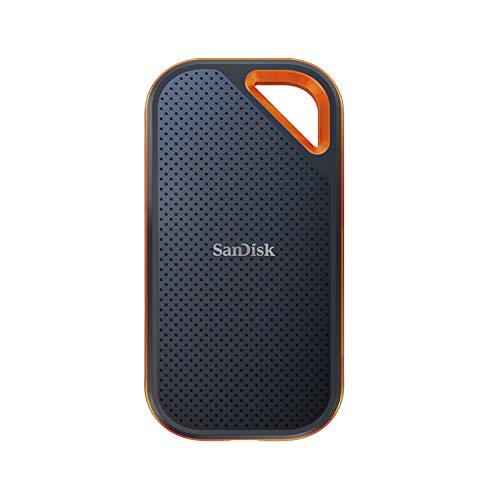
Field use demands equipment that survives unpredictable weather, accidental drops, and backpack clutter. The SanDisk Extreme Pro Portable was built specifically with harsh outdoor handling in mind. It boasts an official SanDisk Extreme Pro IP65 rating, certifying that the enclosure protects internal components against dust ingress and low-pressure water spray from any direction. Combined with a rugged silicone exterior shell and drop protection rated up to 3 meters (nearly 10 feet), it gives outdoor shooters confidence when operating near dirt, mist, or rain.
The Samsung T7 takes a sleeker, minimalist design approach that emphasizes clean lines and pocketability over heavy armoring. Samsung constructed the drive from a solid aluminum unibody, providing drop resistance rated up to 6 feet. However, the listing does not specify any official water or dust ingress rating. Subjecting the T7 to driving rain or desert dust storms introduces potential risks that its casing was not certified to handle. Buyers looking for ruggedized Samsung options often study the samsung t7 shield vs sandisk extreme pro portable to find weather-sealed alternatives.
For office desks, home studios, and casual travel, the Samsung T7 durability is plenty robust to survive common falls from desks or kitchen counters. For unpredictable outdoor shoots, the SanDisk chassis offers far superior impact damping and total environmental sealing.
Edge: SanDisk Extreme Pro Portable provides certified IP65 water and dust resistance alongside superior 3-meter drop survival.
Video Production and Direct Camera Recording
Video creators have increasingly shifted to external solid state drives for active timelines and direct camera capture. When choosing between the Samsung T7 or SanDisk Extreme Pro Portable for video editing, sustained write capability is a decisive factor. The SanDisk Extreme Pro Portable utilizes a forged aluminum chassis engineered to act as a heatsink. By radiating heat away from the internal NVMe drive, it sustains high data rates during extended rendering sessions, export exports, and scratch-disk scrubbing without hitting thermal choke points as quickly.
The Samsung T7 holds its own unique advantages in mobile production workflows. Samsung explicitly notes that the T7 supports direct Ultra High Resolution 4K 60fps recording, including ProRes 4K 60fps video capture directly from compatible devices like the iPhone 15 Pro. This capability allows mobile filmmakers to plug the drive straight into the phone’s port and capture uncompressed footage without exhausting internal phone storage. Those researching pro-tier drives often examine the sandisk extreme pro portable vs crucial x10 pro to see how competitors handle similar continuous write tasks.
If your editing relies on high-resolution multi-stream scrub workflows on high-end desktop workstations, the SanDisk drive offers superior headroom. However, for run-and-gun smartphone video production, the Samsung drive delivers certified performance in a much smaller footprint.
Edge: SanDisk Extreme Pro Portable provides higher sustained thermal headroom for heavy workstation editing, while the Samsung T7 excels at direct mobile camera capture.
Gaming Console and Everyday Platform Compatibility
Modern gaming consoles eat through internal storage rapidly, forcing users to lean on external drives for game archives. Selecting the Samsung T7 or SanDisk Extreme Pro Portable for gaming highlights the realities of console hardware limitations. The Samsung T7 explicitly states compatibility with Microsoft Xbox Series X, Xbox Series S, and Sony PlayStation 5 consoles. It provides rapid load times for backwards-compatible titles and swift file transfers when archiving modern titles off internal NVMe drives.
Because the external USB ports on current-generation consoles top out at 10 Gbps (USB 3.2 Gen 2), plugging in a 20 Gbps drive yields no speed advantage over a 10 Gbps drive. The extra performance capacity of the SanDisk Extreme Pro Portable sits idle when connected to a console. Users exploring storage options often review comparisons like the sandisk extreme pro portable vs wd my passport ssd to determine whether investing in top-tier performance yields any tangible benefit on locked-down console architectures.
Furthermore, Samsung includes both USB Type C-to-C and Type C-to-A cables in the retail box. This dual-cable inclusion ensures immediate plug-and-play capability across legacy USB-A console ports, older PC desktop towers, and modern USB-C laptops alike without hunting for aftermarket adapters.
Edge: Samsung T7 matches console USB bandwidth limits perfectly and includes both Type-C and Type-A cables in the box.
Thermal Management and Form Factor Portability
Heavy data movement generates substantial thermal energy inside compact drive enclosures. The SanDisk Extreme Pro Portable tackles thermal buildup through its industrial construction. Its forged aluminum core serves as an internal heatsink, drawing heat away from the flash memory controller and outward into the frame. This structure keeps operations stable under heavy load, though the exterior chassis can warm up noticeably during sustained multi-hundred-gigabyte file transfers. It also incorporates a rugged carabiner loop built into the frame, allowing users to clip the drive directly to camera rigs or outdoor pack straps.
The Samsung T7 focuses squarely on pocket convenience and compact elegance. Weighing just 2.08 ounces with an aluminum unibody build, the drive is so light that it practically disappears into a pocket, laptop sleeve, or camera pouch. Samsung controls the entire internal hardware pipeline, producing its own DRAM, NAND flash memory, and firmware in-house for tight component integration. Shoppers evaluating comparative compact drives often check the samsung t9 vs crucial x10 pro to see how newer generations compare on weight and size.
While the SanDisk drive handles punishing continuous write cycles with better heat dissipation, the Samsung T7 remains the more portable and unobtrusive unit for everyday carry.
Edge: Tie. SanDisk Extreme Pro Portable wins on thermal heatsink engineering, while the Samsung T7 wins on featherweight pocket portability.
Pros and Cons
Samsung T7

Pros
- Up to 1,050 MB/s read speed
- Lightweight 2.08-ounce aluminum unibody
- Supports iPhone 15 ProRes 4K video recording
- Includes both USB C-to-C and C-to-A cables
Cons
- No certified IP ingress protection rating
- Lower maximum bandwidth than Gen 2×2 drives
SanDisk Extreme Pro Portable

Pros
- Blazing 2,000 MB/s read and write speeds
- Rugged IP65 dust and water resistance
- Forged aluminum chassis serves as integrated heatsink
- Drop protection tested up to 3 meters
Cons
- Requires USB 3.2 Gen 2×2 host for maximum speed
- Bulkier chassis with integrated silicone loop
View SanDisk Extreme Pro Portable on Amazon
Who Should Buy Each One
Choose the Samsung T7 If
- You use standard 10 Gbps USB ports on standard laptops, Mac computers, or Android devices.
- You need external storage to back up and archive games on a PlayStation 5 or Xbox Series console.
- You record 4K 60fps ProRes video directly from an iPhone 15 Pro and need a slim, lightweight drive that will not weigh down your mobile rig.
- You want a complete out-of-the-box setup that includes both USB Type C-to-C and Type C-to-A cables.
Choose the SanDisk Extreme Pro Portable If
- Your computer hardware features a dedicated USB 3.2 Gen 2×2 port capable of delivering full 2,000 MB/s read and write speeds.
- You work on location in dusty, wet, or rugged environments that demand IP65 weather sealing and 3-meter drop resistance.
- You run continuous, heavy data rendering or high-bandwidth video editing offloads that require a forged aluminum heatsink chassis.
- You prefer attaching your storage to camera cages, belts, or backpacks using an integrated carabiner loop.
Final Verdict
For the vast majority of everyday users, students, office professionals, and console gamers, the Samsung T7 represents the most practical and logical drive. It achieves read speeds up to 1,050 MB/s, matches the practical bandwidth limits of almost all modern laptops and gaming systems, and weighs a mere 2.08 ounces in a clean aluminum housing. Because typical workflows rarely push beyond 10 Gbps speeds, the Samsung T7 fulfills everyday storage needs without requiring specialized host ports.
On the other hand, the SanDisk Extreme Pro Portable is built for demanding production specialists who know their hardware can exploit its capabilities. If you possess a compatible USB 3.2 Gen 2×2 system and frequently transfer massive media libraries in challenging field environments, the SanDisk drive offers double the speed, superior thermal management, and an IP65 ingress rating that keeps critical data safe from the elements.
FAQ
Can the Samsung T7 record 4K 60fps video directly from an iPhone 15?
Yes. The Samsung T7 listing confirms direct support for high-resolution video recording, including iPhone 15 ProRes 4K video capture at 60 frames per second when connected via USB-C.
Does the SanDisk Extreme Pro Portable reach 2000 MB/s on every computer?
No. To achieve the maximum sequential read and write speeds of up to 2,000 MB/s, your computer must feature a USB 3.2 Gen 2×2 (20 Gbps) port. On systems with standard USB 3.2 Gen 2 (10 Gbps) ports, the drive will automatically operate around 1,050 MB/s.
Is the Samsung T7 waterproof?
The Samsung T7 listing does not specify an official IP water or dust resistance rating. While its aluminum unibody protects against drops up to 6 feet, it is not certified against water immersion or dust penetration.
What is the difference in drop protection between these drives?
The Samsung T7 features shock resistance and drop protection rated up to 6 feet through its solid aluminum unibody. The SanDisk Extreme Pro Portable offers drop resistance rated up to 3 meters (approximately 9.8 feet), bolstered by a protective silicone outer shell.
Can I use either drive on a PlayStation 5 or Xbox Series console?
Yes, both drives connect to modern gaming consoles via USB. However, the Samsung T7 explicitly advertises compatibility with the PS5 and Xbox Series X/S. Because gaming console external ports operate at 10 Gbps, both drives perform at comparable speeds when loading or archiving console games.
What cables are included in the box with the Samsung T7?
The Samsung T7 comes supplied with two cables: a USB Type C-to-C cable and a USB Type C-to-A cable, allowing direct connection to both modern USB-C ports and standard legacy USB-A ports.