Choosing between the SanDisk Extreme Pro Portable and the Crucial X10 Pro comes down to a direct trade-off between physical field protection and raw read throughput. While both external solid state drives target high-bandwidth creative workflows using modern USB 3.2 Gen 2×2 connectivity, SanDisk equips its flagship drive with an IP65 weather resistance rating and three-meter drop protection, whereas Crucial delivers a slightly higher 2,100 MB/s maximum read speed alongside an integrated activity light and dedicated hardware password protection inside a lighter anodized aluminum shell.
Outdoor photographers, travel cinematographers, and off-grid production crews working in harsh weather should choose the SanDisk Extreme Pro Portable for its superior dust and moisture barrier. Studio editors, gaming enthusiasts, and desktop operators should pick the Crucial X10 Pro to maximize sequential read efficiency and drive monitoring without carrying excess bulk.
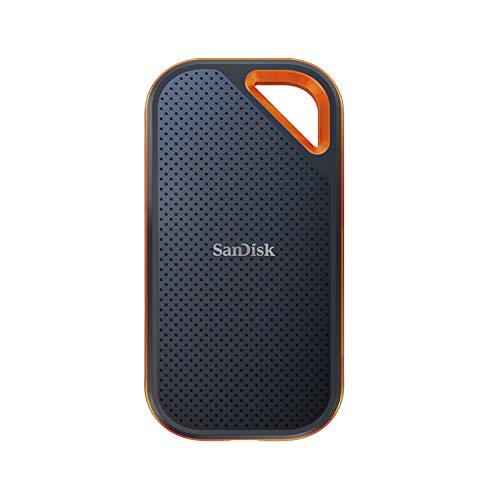
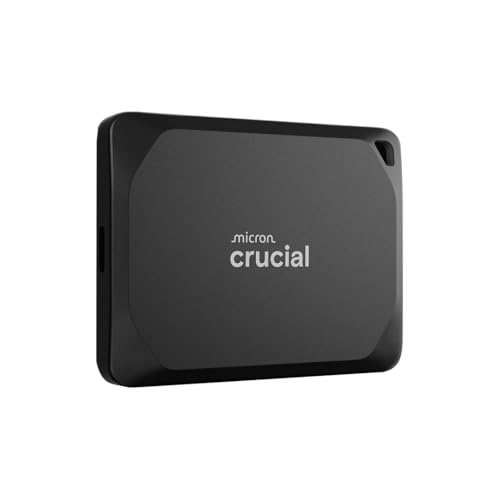
SanDisk Extreme Pro Portable vs Crucial X10 Pro at a Glance
| Feature | SanDisk Extreme Pro Portable | Crucial X10 Pro |
|---|---|---|
| Maximum Read Speed | Up to 2000 MB/s | Up to 2100 MB/s |
| Maximum Write Speed | Up to 2000 MB/s | Up to 2000 MB/s |
| Ingress Protection (IP Rating) | IP65 (Dust-tight, water jet resistant) | IP55 (Dust-protected, water jet resistant) |
| Drop Resistance | Up to 3 meters (approx. 9.8 feet) | Up to 2 meters (7.5 feet) |
| Enclosure Construction | Forged aluminum chassis with silicone shell | Anodized aluminum enclosure |
| Integrated Attachment Point | Carabiner loop | Lanyard loop |
| Hardware Activity Light | Not listed | Integrated activity LED |
| Security and Access Protection | SanDisk Memory Zone app | SSD password protection |
| Bundled Software | SanDisk Memory Zone app | Acronis True Image, Mylio Photos+ (3 months) |
| Best For | Challenging outdoor shoots and rugged field storage | Studio post-production, fast file offloading, and console gaming |
Rugged Durability and Environmental Protection
External drives assigned to location production inevitably encounter dirt, sudden weather shifts, and accidental drops from media carts or camera rigs. When examining the sandisk extreme pro vs crucial x10 pro durability, the fundamental difference lies in their laboratory-certified ingress protection ratings. The sandisk extreme pro ip rating reaches IP65, which denotes total protection against microscopic dust ingress alongside proven resistance to direct water jets projected from any angle. In contrast, the Crucial drive achieves an IP55 rating. While an IP55 barrier successfully guards against general water spray, it permits limited dust entry that, while not immediately interfering with normal operation, does not offer the absolute seal of an IP65 enclosure. If you frequently compare weatherized options, you can see how this compares with other rugged models in our samsung t7 shield vs sandisk extreme pro portable breakdown.
Impact tolerance shows an equally pronounced separation between the two designs. SanDisk engineers the Extreme Pro with a two-part protective system consisting of an internal forged aluminum core wrapped in an outer silicone rubber bumper. This heavy-duty rubber perimeter absorbs severe kinetic energy, enabling the unit to withstand impacts and drops from heights up to 3 meters. Crucial relies on a precision-milled anodized aluminum shell without an elastomeric outer sleeve, achieving a drop resistance rating of 7.5 feet (2 meters). The Crucial chassis is rigid and resists cosmetic flexing, but its lack of an impact-dispersing rubber bumper makes terminal drops onto solid rock or concrete far more jarring for internal solder points.
Portability hardware also reflects their differing environmental intentions. SanDisk integrates a wide, reinforced carabiner loop into the top corner of its housing, letting camera assistants clip the drive straight to harness rings, backpack webbing, or utility belts without secondary cages. Crucial integrates a smaller, flush lanyard loop into its squared corner. While functional for tethering wrist straps, the Crucial loop will not accept standard load-rated climbing clips or thick utility carabiners. For extreme environments, wet coastal settings, and active outdoor film sets, SanDisk delivers superior all-around physical resilience.
Edge: SanDisk Extreme Pro Portable, offering higher IP65 dust-tight sealing, a full additional meter of certified drop protection, and a shock-absorbing silicone skin.
Transfer Speeds and Real-Time Editing Throughput
Peak interface throughput determines how rapidly high-resolution footage transfers from capture media to working storage. When evaluating sandisk extreme pro vs crucial x10 pro speed, both models take advantage of the USB 3.2 Gen 2×2 interface, which runs across two high-speed lanes to deliver up to 20 Gbps of theoretical bus bandwidth. However, their internal solid state drive controllers leverage this channel differently. Crucial advertises a maximum sequential read performance of up to 2,100 MB/s alongside a write ceiling of 2,000 MB/s. SanDisk lists its sequential throughput at up to 2,000 MB/s for both reading and writing tasks.
In practice, that additional 100 MB/s crucial x10 pro transfer speed edge gives Crucial a marginal mathematical advantage when reading large continuous files, such as pulling multi-gigabyte ProRes video assets into a desktop timeline. For users deciding between the sandisk extreme pro or crucial x10 pro for video editing, sequential burst performance is only half the battle; sustained throughput without interface throttling matters significantly more. Both drives utilize high-speed NVMe internal solid state media capable of pushing the 20 Gbps USB bus to its realistic boundary. Those interested in comparing alternative USB 3.2 Gen 2×2 drives can explore our samsung t9 vs sandisk extreme pro portable analysis.
Write operations between the two drives are listed identically at up to 2,000 MB/s. When dumping an entire day of raw footage from high-speed camera cards, the intake speed will be governed primarily by the host system port implementation. If your workstation motherboard or laptop lacks native USB 3.2 Gen 2×2 controller hardware and operates on standard USB 3.2 Gen 2 (10 Gbps), both drives will fall back to roughly 1,050 MB/s. When paired with native 20 Gbps hardware, however, Crucial holds the fractional edge on raw read bandwidth.
Edge: Crucial X10 Pro, delivering a slightly higher 2,100 MB/s read specification over SanDisk’s 2,000 MB/s ceiling.
Chassis Construction and Thermal Management
Sustained transfer performance over hundreds of gigabytes depends entirely on thermal dissipation. Solid state drive controllers automatically throttle down interface speeds to protect internal flash memory when internal temperatures climb past operational safety boundaries. A thorough sandisk extreme pro portable review reveals that SanDisk addresses heat build-up by using its central forged aluminum chassis as an active heatsink. As heavy write workloads generate internal thermal loads, heat radiates outward through the metallic core and vents into the air, keeping the internal NVMe controller cooler during extensive file offloads.
Crucial approaches thermal control through a dense, unibody anodized aluminum exterior. A detailed crucial x10 pro review highlights how its miniature footprint acts as a comprehensive passive heat radiator. Because the Crucial drive lacks a thick exterior silicone coating, internal heat migrates directly into the aluminum outer frame and sheds quickly into the surrounding ambient air. The trade-off is that the exterior metal casing of the Crucial drive can become noticeably hot to the touch during non-stop multi-hundred-gigabyte file transfers. To see how Crucial handles thermal efficiency compared to other aluminum-clad drives, read our samsung t9 vs crucial x10 pro guide.
SanDisk uses its silicone outer jacket as a dual-purpose protective layer: while the internal forged aluminum core carries thermal energy away from the controller, the silicone perimeter ensures you can handle the drive comfortably immediately after transferring a massive project folder. Crucial retains the physical size advantage, occupying minimal desktop space and resting flat on editing consoles. However, for continuous heavy writes where drive handling is frequent, SanDisk balances thermal routing with tactile insulation more effectively.
Edge: Tie. SanDisk manages thermal dissipation with safer exterior handling via its heatsink and silicone shell combo, while Crucial cools efficiently through an ultra-compact, all-aluminum unibody.
Security, Monitoring, and Bundled Software
Data security and operational visibility are essential considerations for editors and corporate media teams. Crucial equips the X10 Pro with integrated SSD password protection, allowing users to secure sensitive business documents, confidential client projects, and proprietary media files against unauthorized access if the physical drive is lost or misplaced in transit. Furthermore, Crucial includes a physical activity light directly on the chassis. This LED indicator provides an immediate visual confirmation when data packets are actively writing, preventing users from prematurely unplugging the USB-C cable and corrupting active files.
SanDisk does not include a physical activity light on the Extreme Pro casing, requiring editors to rely entirely on host operating system eject dialogs and software progress indicators before disconnecting the drive. For file management, SanDisk provides access to the SanDisk Memory Zone app, which simplifies mobile device backups and automates storage cleanup on compatible mobile platforms. Crucial counters with a creator-focused software package that includes three-month subscriptions to Mylio Photos+ for automated visual cataloging and Acronis True Image for complete system drive cloning and scheduled backups.
When asking is crucial x10 pro worth it based on workflow utilities, the hardware activity indicator and direct SSD password security make it exceptionally friendly for desktop operators. SanDisk offers long-term reliability backed by an explicit 5-year limited warranty stated directly in its listing, giving professionals peace of mind regarding sustained drive lifespan. Even so, the immediate day-to-day utility of an operational LED and built-in password security gives Crucial a distinct practical edge for data integrity on busy desks. You can contrast these software packages in our crucial x10 pro vs wd my passport ssd comparison.
Edge: Crucial X10 Pro, courtesy of integrated hardware password security, a physical activity light, and creative utility software.
Device Compatibility and Hardware Connectivity
Broad hardware interoperability ensures that an external solid state drive fits seamlessly into existing studio gear and mobile capture rigs. Crucial specifies comprehensive out-of-the-box compatibility across Windows, Mac, iPad Pro, Chromebooks, Android, and Linux platforms. Crucial also highlights support for gaming consoles including the PlayStation 5, PlayStation 4, Xbox systems, and the Sony PlayStation Vita, noting direct connectivity across both USB-C and USB-A connections via included cabling configurations. This broad cross-platform scope makes Crucial an adaptable asset across gaming setups and multimedia workstations alike.
SanDisk lists direct hardware support across desktops, laptops, smartphones, and tablets, catering specifically to computing and mobile creative setups. The listing specifies USB 3.0 and USB-C connectivity, ensuring that older host ports can still communicate with the drive via backwards compatibility, albeit at reduced interface speeds. Field crews using USB-C smartphones or modern tablets to offload field photography will find that both drives initialize cleanly on standard USB mass storage protocols without proprietary driver hurdles.
The difference between them in this area lies primarily in Crucial’s explicit gaming console optimizations and documented dual USB-C/USB-A setup. If you plan to switch your drive between an editing rig and a gaming console, Crucial outlines verified support for those systems right in its specifications. To evaluate how SanDisk behaves against other consumer drives across multiple host devices, see our sandisk extreme pro portable vs wd my passport ssd reference.
Edge: Crucial X10 Pro, providing explicitly documented multi-console gaming compatibility alongside full Windows, Mac, Linux, and Android support.
Pros and Cons
SanDisk Extreme Pro Portable

Pros
- Superior IP65 dust-tight and water-resistant rating
- Rugged 3-meter drop protection
- Shock-absorbing silicone shell with forged aluminum heatsink
- Integrated heavy-duty carabiner attachment loop
- Covered by 5-year limited warranty
Cons
- No hardware activity light listed
- Slightly lower 2000 MB/s peak read speed
View SanDisk Extreme Pro Portable on Amazon
Crucial X10 Pro

Pros
- Faster 2100 MB/s maximum read speed
- Integrated hardware activity LED indicator
- On-drive SSD password protection
- Compact anodized aluminum enclosure
- Bundled Acronis and Mylio Photos software
Cons
- Lower IP55 rating allows minor dust ingress
- Reduced 2-meter drop tolerance without rubber bumper
View Crucial X10 Pro on Amazon
Who Should Buy Each One
Choose the SanDisk Extreme Pro Portable If
- You film or photograph in challenging outdoor environments where exposure to blowing sand, heavy rain, or wet coastal air is routine.
- You need maximum impact survivability, benefiting from a certified 3-meter drop rating and an energy-absorbing silicone shell.
- You carry gear on external carabiners, utility belts, or camera harness webbing using a dedicated integrated loop.
- You want a field-tested external drive backed by a manufacturer 5-year limited warranty and an internal forged aluminum heatsink.
Choose the Crucial X10 Pro If
- You prioritize peak read speeds, wanting up to 2,100 MB/s performance to scrub footage and offload media on native 20 Gbps ports.
- You need an integrated activity LED to visually confirm data write cycles before disconnecting cables.
- You require onboard hardware password protection to safeguard proprietary media and sensitive client files.
- You work across mixed environments including gaming consoles like PS5, Xbox, or PS Vita alongside standard Mac and PC workstations.
Final Verdict
For the vast majority of mobile creators and studio-based editors, the Crucial X10 Pro stands out as the superior overall drive. Its up to 2,100 MB/s read speed squeaks past its rival, but its real triumphs are the practical features that improve daily studio life: an integrated hardware activity light that prevents premature cable disconnects, hardware password encryption to keep client media safe, and an ultra-compact anodized aluminum unibody that slips effortlessly into any workspace or tech pouch.
However, when field conditions turn harsh, the SanDisk Extreme Pro Portable decisively takes the crown. Crucial’s IP55 rating and exposed aluminum corners cannot match SanDisk’s certified IP65 dust-tight barrier, heavy-duty silicone impact armor, and 3-meter drop tolerance. If your shoots take you into wet forests, dusty trails, or high-angle locations where drops and elements are constant hazards, SanDisk remains the undisputed tool for the job.
FAQ
Does the SanDisk Extreme Pro Portable have an activity light?
The product listing for the SanDisk Extreme Pro does not specify an integrated activity light. Users must rely on operating system drive indicators and software progress bars to determine when file transfers are complete before disconnecting the cable.
Is the Crucial X10 Pro safe from water damage?
The Crucial X10 Pro carries an IP55 rating for water and dust resistance. This means it can withstand moderate water sprays and standard outdoor dust exposure, but it is not completely dust-tight and should not be submerged under water.
What is the difference between IP65 and IP55 ratings on these drives?
The first digit represents solid particle protection: the SanDisk’s 6 indicates a completely dust-tight seal, whereas Crucial’s 5 allows limited dust ingress that will not harm operation. The second digit represents liquid protection: both drives feature a 5 rating, certifying protection against low-pressure water jets from any direction.
Can I use the Crucial X10 Pro with video game consoles?
Yes, the Crucial X10 Pro explicitly lists compatibility with modern and legacy gaming consoles including the PlayStation 5, PlayStation 4, Xbox consoles, and the Sony PlayStation Vita for external storage and high-speed data playback.
Which drive offers higher drop protection?
The SanDisk Extreme Pro Portable offers higher drop protection, rated to withstand falls from up to 3 meters (nearly 10 feet) due to its forged aluminum chassis and silicone bumper. The Crucial X10 Pro is rated for drops up to 2 meters (7.5 feet).
Does either drive include backup software?
Crucial bundles three months of Mylio Photos+ and Acronis True Image with product registration for managing images and system backups. SanDisk provides access to the SanDisk Memory Zone app to manage files and automate backups on compatible devices.


