The core difference between these two portable solid-state drives comes down to sustained transfer bandwidth versus environmental protection: the Samsung T9 pushes sequential speeds up to 2,000 MB/s over a USB 3.2 Gen 2×2 connection, while the Crucial X9 Pro caps at 1,050 MB/s over a standard 10 Gbps interface but provides certified IP55 water and dust resistance.
Content creators working with uncompressed 4K video streams or large-capacity local project libraries should choose the Samsung T9 for its superior pipeline speed and hardware-level encryption. Outdoor shooters, frequent travelers, and everyday backup users should opt for the Crucial X9 Pro to gain weatherproofing and a more compact polycarbonate chassis.
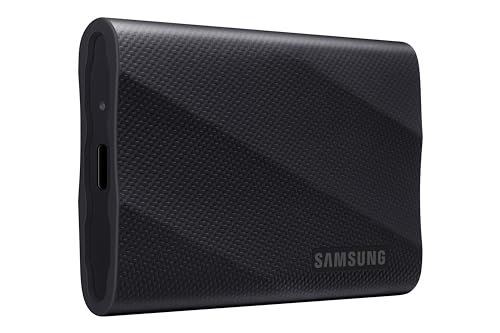

Samsung T9 vs Crucial X9 Pro at a Glance
| Feature | Samsung T9 | Crucial X9 Pro |
|---|---|---|
| Maximum Read Speed | Up to 2,000 MB/s | Up to 1,050 MB/s |
| Maximum Write Speed | Up to 2,000 MB/s | Not listed |
| Interface Protocol | USB 3.2 Gen 2×2 (20 Gbps) | USB 3.2 (10 Gbps) |
| Physical Drop Resistance | Up to 9.8 feet | Up to 7.5 feet (2 meters) |
| Ingress Protection (Water/Dust) | Not listed | IP55 rated |
| Hardware Encryption | AES 256-bit hardware encryption | Not listed |
| Thermal Control | Dynamic Thermal Guard (IEC 62368-1) | Not listed |
| Chassis Material | Information Not Available | Polycarbonate |
| Supported Storage Capacities | 4 TB (up to 4TB listed) | 1 TB |
| Best For | High-bandwidth video editing and heavy file transfers | Outdoor fieldwork, weather resistance, and daily travel |
Data Transfer Speed and Protocol Performance
Peak sequential throughput determines how rapidly massive multimedia files move between your host workstation and external storage. The Samsung T9 read write speed reaches up to 2,000 MB/s for both sequential reads and writes by utilizing a dual-lane USB 3.2 Gen 2×2 interface. Reaching that full ceiling requires a host machine with native Gen 2×2 ports operating with UASP enabled. When connected to standard 10 Gbps USB ports, the drive steps down its operational ceiling accordingly. For users investigating a broader samsung t9 vs crucial x10 pro matchup, native 20 Gbps support remains the defining factor for achieving peak data throughput on modern motherboards.
The Crucial X9 Pro transfer speed tops out at 1,050 MB/s across a single-lane 10 Gbps USB 3.2 connection. While half the bandwidth of a Gen 2×2 bus, 1,050 MB/s saturates standard USB 3.2 Gen 2 ports found across modern MacBooks, ultrabooks, and general-purpose PC desktops. Real-world file management for compressed archives, photo libraries, and administrative system images moves fluidly at these rates, easily surpassing mechanical drives. However, moving multi-hundred-gigabyte file directories takes roughly twice as long on the Crucial unit compared to the T9 running on a fully supported 20 Gbps connection. When evaluating whether the Crucial X9 Pro transfer speed handles high-demand workflows, the single-lane interface acts as an unyielding boundary.
For demanding creative setups, selecting the Samsung T9 or Crucial X9 Pro for video editing hinges directly on real-time scrubbing demands. Editing multi-cam raw sequences or dumping hundreds of gigabytes of footage from memory cards places severe demands on external storage channels. The 2,000 MB/s capability of the T9 eliminates the transfer bottleneck during daily ingestion passes, giving media professionals an operational headroom that the 10 Gbps limit of the Crucial model cannot provide.
Edge: Samsung T9, delivering double the maximum sequential throughput over its USB 3.2 Gen 2×2 interface.
Durability and Environmental Protection
Field storage requires structural resilience against impacts, environmental moisture, and abrasive particles. The Crucial X9 Pro is engineered with a polycarbonate enclosure built to survive harsh external conditions. Crucial certifies the drive with an IP55 rating, signifying protection against dust deposits and low-pressure water jets from any angle. In addition, the drive is rated for drops up to 7.5 feet (2 meters). These verified weatherproofing measures ensure that unexpected rain showers, field splashes, or dusty outdoor shoots do not compromise internal solid-state components.
The Samsung T9 approaches physical durability from an impact-resistance perspective rather than environmental sealing. Samsung rates the drive to withstand drops of up to 9.8 feet, providing superior shock absorption against falls onto hard surfaces from desk height or elevated equipment rigs. However, the manufacturer listing does not specify an IP ingress rating for water or fine particulates. Users examining field alternatives like the samsung t7 shield vs crucial x9 pro will note that Samsung omitted formal environmental sealing on the T9 series in favor of specialized drop buffering.
If your daily workflow involves unpredictable outdoor locations, coastal humidity, or dirty utility environments, the certified IP55 chassis of the Crucial unit provides verified peace of mind. The T9 handles greater raw impact drops, but without documented moisture seals, it belongs strictly in dry production spaces or inside sealed gear bags.
Edge: Crucial X9 Pro, backed by certified IP55 dust and water resistance for unpredictable physical environments.
Thermal Dissipation and Sustained Workloads
Sustained write operations generate considerable thermal loads inside compact SSD enclosures. Without adequate heat management, controllers throttle transfer rates aggressively to prevent physical silicon degradation. Samsung addresses thermal load through its proprietary Dynamic Thermal Guard technology. This internal mechanism actively controls surface and component temperatures, maintaining exterior skin heat below 140 degrees Fahrenheit (60 degrees Celsius) under controlled testing compliant with the IEC 62368-1 safety standard. This active regulation keeps high-capacity writes running smoothly during multi-terabyte data transfers.
The Crucial X9 Pro listing highlights reliable storage operation for games, media editing, and backups, but it does not specify a proprietary dynamic thermal throttling architecture or exterior surface temperature standard. The polycarbonate enclosure provides structural protection, though plastic composites generally disperse thermal energy differently than aluminum cooling arrays. For continuous write cycles that saturate the cache, unmanaged heat buildup can trigger controller throttling more rapidly than active heat-moderated platforms.
Media professionals dumping multi-terabyte project bins require continuous throughput without steep drop-offs midway through an offload. The Samsung T9 specs specifically emphasize stable write performance during lengthy file operations. The hardware-managed thermal profile ensures that long exports do not drop to erratic transfer floors, making it the safer choice for high-volume continuous writing.
Edge: Samsung T9, featuring integrated Dynamic Thermal Guard cooling compliant with IEC 62368-1 standards.
Security and Drive Management Software
Data security protocols protect proprietary client assets, business records, and sensitive system images. The Samsung T9 integrates hardware-based AES 256-bit encryption directly onto the storage controller. This cryptographic tier secures data without siphoning processing cycles from the host operating system. To manage maintenance tasks, Samsung supplies its Magician Software suite, which delivers firmware updates, drive health diagnostic monitoring, and encryption configuration from a centralized utility.
The Crucial X9 Pro listing does not specify hardware-level AES 256-bit encryption capabilities. Instead, Crucial focuses its software package on workflow utilities, bundling three-month access to Mylio Photos+ alongside Acronis True Image for local and cloud system backups. While these software bundles provide immediate utility for automated drive imaging and photo catalog organization, they do not replace hardware-encrypted data lockouts at the controller level. Those evaluating portable options across brands such as the sandisk extreme pro portable vs crucial x9 pro often face this exact trade-off between bundled applications and underlying hardware encryption.
For corporate enterprise, client-contracted video delivery, and secure archival pipelines, hardware encryption is a non-negotiable compliance requirement. Samsung Magician gives the T9 robust lifecycle management, whereas the Crucial utility bundle leans toward general consumer photo organization and disk imaging trials.
Edge: Samsung T9, offering onboard AES 256-bit hardware encryption and the comprehensive Samsung Magician software suite.
Device Compatibility and Console Gaming
Modern external storage drives must interface seamlessly across diverse computing ecosystems, mobile capture devices, and modern entertainment hardware. The Samsung T9 explicitly details broad host compatibility, supporting PC, Mac, tablets, and direct integration with iPhone 15 and 16 devices. The listing notes explicit compatibility for recording iPhone 15 ProRes 4K video directly to the external drive at 60 frames per second using the included cable. For gaming environments, the T9 is certified for operation with Microsoft Xbox Series S, Xbox Series X, and Sony PlayStation 5 consoles.
The Crucial X9 Pro advertises broad cross-platform versatility, supporting Windows, Mac, iPad Pro, Chromebooks, Android, Linux, PS4, PS5, and Xbox through USB-C and USB-A connectivity. Crucial includes the Sony PlayStation 4 within its primary hardware compatibility matrix alongside modern systems. Casual gamers seeking to store expansive libraries across previous-generation and modern consoles will find the plug-and-play flexibility advantageous. For users checking options like the sandisk extreme pro portable vs crucial x10 pro, broad console integration across multiple hardware generations remains a major selling point.
When choosing between the Samsung T9 or Crucial X9 Pro for gaming, both drives provide rapid load times and expansive storage expansion for modern consoles. However, the Samsung T9 holds a distinct advantage for video creators due to its verified ProRes 4K 60fps recording capability over USB-C, matching the specific data ingestion rates required by mobile cinematography setups.
Edge: Samsung T9, due to validated iPhone ProRes 4K 60fps external recording alongside full current-gen console support.
Pros and Cons
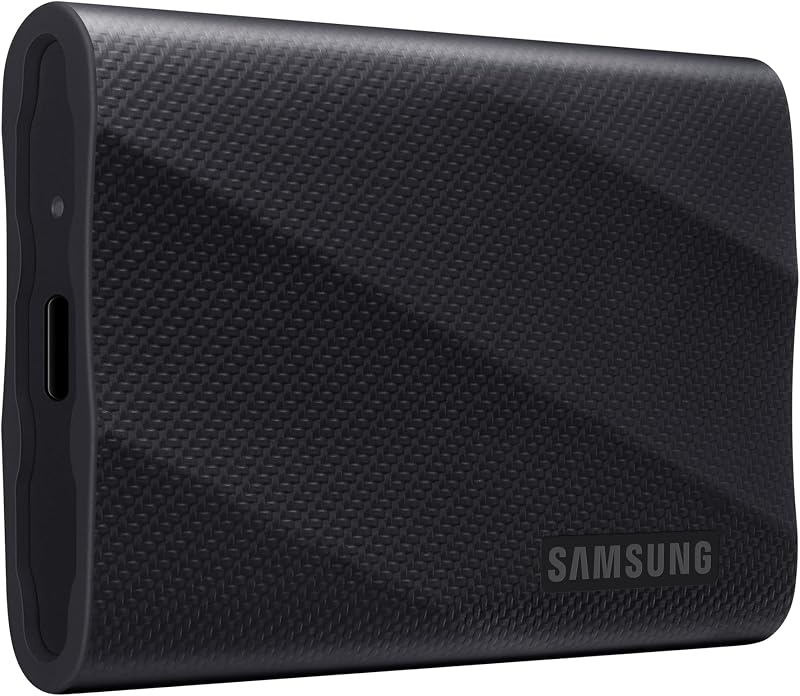
Samsung T9
Pros
- Up to 2,000 MB/s read and write speeds
- USB 3.2 Gen 2×2 dual-lane interface
- Drop resistance up to 9.8 feet
- AES 256-bit hardware data encryption
- Dynamic Thermal Guard active heat management
Cons
- No IP water or dust ingress rating
- Requires Gen 2×2 ports for full speed
Crucial X9 Pro

Pros
- Certified IP55 water and dust resistance
- Durable polycarbonate drop-resistant chassis
- 5-foot drop resistance protection
- Included Acronis backup and Mylio software
Cons
- Read speeds capped at 1,050 MB/s
- Hardware encryption not specified in listing
Who Should Buy Each One
Choose the Samsung T9 If
- You operate a host computer with USB 3.2 Gen 2×2 ports capable of utilizing 2,000 MB/s speeds.
- You record ProRes 4K video at 60fps directly from an iPhone 15 or 16 workstation setup.
- You require onboard AES 256-bit hardware encryption to protect sensitive commercial client data.
- You perform multi-terabyte sustained write operations requiring active Dynamic Thermal Guard cooling.
Choose the Crucial X9 Pro If
- You shoot outdoors or travel through wet, dusty, and demanding field environments requiring IP55 protection.
- Your computing hardware utilizes standard 10 Gbps USB-C or USB-A ports without Gen 2×2 support.
- You prioritize a compact, lightweight polycarbonate drive shell for everyday travel bags.
- You want bundled workflow utilities for photo organization and automated Acronis drive backups.
Final Verdict
When completing an objective Samsung T9 review against the Crucial X9 Pro review criteria, the Samsung T9 emerges as the clear performance victor for demanding multimedia environments. Its 2,000 MB/s sequential transfer capability, robust 9.8-foot drop protection, hardware-based AES 256-bit encryption, and active Dynamic Thermal Guard system establish it as a heavy-duty production tool. Creators working with direct ProRes capture or managing multi-terabyte video databases will find that the superior data transfer rate directly accelerates turnaround times on supported hardware.
The Crucial X9 Pro remains the smarter option for outdoor professionals, field photographers, and mobile users whose primary hazards involve moisture, dirt, and rough transport. With verified IP55 ingress protection, a tough polycarbonate shell, reliable 1,050 MB/s speeds, and broad cross-platform support covering Android through legacy consoles, it handles travel conditions where an unsealed drive would risk failure. Select the Crucial X9 Pro for field durability, or invest in the Samsung T9 for maximum throughput and hardware data security.
FAQ
Can the Crucial X9 Pro achieve 2,000 MB/s transfer speeds?
No. The Crucial X9 Pro interface operates on a 10 Gbps USB bus, capping its maximum read performance at 1,050 MB/s. It does not support the dual-lane USB 3.2 Gen 2×2 protocol necessary to reach 2,000 MB/s.
Does the Samsung T9 feature water and dust resistance?
The Samsung T9 listing highlights drop protection up to 9.8 feet, but it does not specify an official IP rating for water or dust resistance. If certified weather protection is required, the IP55-rated Crucial X9 Pro is built for those conditions.
Is the Samsung T9 worth it if my computer lacks USB 3.2 Gen 2×2 ports?
The Samsung T9 will operate on standard 10 Gbps USB ports, but its transfer speeds will step down to roughly 1,000 MB/s to match the host port limit. If your hardware lacks 20 Gbps support and you do not plan to upgrade, the primary speed advantage of the T9 remains dormant.
Can I record 4K 60fps video directly to the Samsung T9 from a smartphone?
Yes. The Samsung T9 explicitly supports direct recording of iPhone 15 ProRes 4K video at 60 frames per second when connected with the manufacturer-recommended cable.
Does the Crucial X9 Pro work on legacy gaming consoles?
Yes. The Crucial X9 Pro listing confirms broad gaming console support, covering the Sony PlayStation 4 alongside current-generation hardware like the PS5 and Xbox.
Which drive provides better security for sensitive client files?
The Samsung T9 provides stronger hardware protection due to its onboard AES 256-bit hardware encryption managed through Samsung Magician Software. The Crucial X9 Pro listing does not specify hardware-level encryption.


