The core deciding difference between the Shark Navigator RV2110 and the Shark Matrix Plus is the degree of automated hands-off maintenance. Matrix Plus combines active sonic floor mopping with a bagless self-emptying docking station that holds up to 30 days of dirt, while Navigator RV2110 functions as a dedicated dry vacuum with a large onboard dustbin and single-pass row navigation.
Choose Navigator RV2110 if you want a straightforward dry vacuum with a larger onboard collector that requires no floor space for a bulky auto-empty dock. Choose Matrix Plus if you want an automated floor cleaner that scrubs hard surfaces and empties its own dustbin after every run.

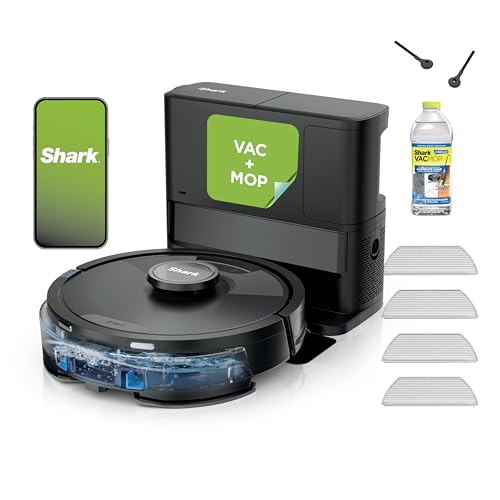
Shark Navigator RV2110 vs Shark Matrix Plus at a Glance
| Feature | Shark Navigator RV2110 | Shark Matrix Plus |
|---|---|---|
| Cleaning Type | Dry vacuum only | Vacuuming and sonic mopping |
| Docking System | Standard charging dock | Bagless self-emptying base (up to 30 days) |
| Robot Dustbin Capacity | 0.52 quarts | 0.22 quarts |
| Navigation Method | SmartPath spot LiDAR (row-by-row) | 360 LiDAR vision (Matrix Clean grid) |
| Edge Cleaning Tech | Standard side brush engagement | CleanEdge Detect with air blasts |
| Filtration Level | Pre-motor filter | Cloth robot filter and True HEPA base seal |
| Battery Runtime | Up to 120 minutes | Up to 110 minutes |
| Brushroll Style | Self-cleaning anti-hair wrap | Multi-surface roller |
| Operating Voltage | 19 volts | 14.4 volts |
| Best For | Carpet-heavy homes seeking a simple vacuum | Mixed-surface homes needing automated mopping and emptying |
Dustbin Capacity and Self-Empty Docking
Debris disposal dictates how much personal attention your robot cleaner demands throughout the week. A machine without a self-emptying dock requires you to stop after every cleaning run or two, pull the internal bin from the chassis, and dump it into a wastebasket. When a robot includes an automated base, it returns to the dock at the end of a run and transfers the collected debris through a suction port into a sealed holding chamber. This difference changes the appliance from an everyday chore into a hands-off utility that runs on a schedule without user oversight.
The shark matrix plus vs iq robot discussion frequently highlights docking systems, and the Shark Matrix Plus self emptying base is a major differentiator here. It holds up to 30 days of dirt and debris in a bagless container, completely eliminating the need to purchase disposal bags. However, the robot itself houses a smaller 0.22-quart onboard dustbin. If your home has heavy debris accumulation, the robot must return to its dock more frequently to evacuate that internal bin before continuing. In contrast, Navigator RV2110 carries an onboard capacity of 0.52 quarts, which is more than double the volume of the Matrix Plus robot bin. Because it ships with a compact standard charging dock instead of an evacuation tower, you must manually empty that 0.52-quart tray yourself.
For homes with limited floor clearance, the compact footprint of the Navigator RV2110 charging pad slides under low tables or tucks into narrow hallways where an upright self-emptying tower cannot fit. Yet for owners who dislike dumping dust collection bins multiple times per week, the automated base of Matrix Plus removes the most tedious part of robot vacuum ownership. The trade-off is clear: Navigator RV2110 gives you more onboard storage per run without taking up wall space, while Matrix Plus automates the disposal process for a month at a time.
Edge: Shark Matrix Plus because its bagless self-emptying dock eliminates manual dustbin maintenance for up to 30 days.
Mopping and Wet Floor Cleaning
Wet cleaning capability transforms an automated cleaner from a simple carpet sweeper into an all-in-one floor maintenance tool. Dry vacuums lift surface dust and grit from hard flooring, but they leave behind muddy footprints, dried kitchen spills, and stuck-on residue that only physical scrubbing can lift. When evaluating a Shark Matrix Plus review, mopping functionality stands out as the primary functional upgrade over traditional dry-only machines.
Matrix Plus operates as a true wet-and-dry system featuring sonic mopping technology. The mopping module vibrates back and forth 100 times per minute against the floor surface, agitating dried messes rather than dragging a passive damp cloth across the room. Within the companion app, users can activate Matrix Mop mode, directing the robot to perform a concentrated cross-hatch scrubbing pattern over specific zones to achieve up to 50 percent better stain cleaning compared to standard passes. The package includes four washable antimicrobial mopping pads, specialized cleaning solution, and an integrated fluid reservoir. Navigator RV2110 contains no water tanks, fluid pumps, or pad attachments, operating solely as a dry vacuum cleaner.
When deciding between Shark Navigator RV2110 or Shark Matrix Plus for hard floors, the presence of active scrubbing makes a dramatic difference. Homes with extensive tile, vinyl, or sealed hardwood benefit from the daily buffing and spill management provided by Matrix Plus. Navigator RV2110 can sweep hard floors clean of dry dust and loose crumbs, but it will never replace your manual mop. For households that want automated damp cleaning alongside dry sweeping, Navigator RV2110 cannot compete in this category.
Edge: Shark Matrix Plus due to its vibrating sonic mopping mechanism, dedicated cleaning fluid, and multi-pass stain targeting.
Navigation, Mapping, and Edge Cleaning
A robot cleaner is only as effective as its ability to navigate around obstacles and cover an entire floor plan without getting stuck. Basic robotic sweepers rely on random bounce patterns that hit baseboards and change direction unpredictably, often leaving missed patches across large living spaces. Modern LiDAR systems actively scan the room, construct detailed floor maps, and direct the robot along structured routes to guarantee complete coverage.
Navigator RV2110 utilizes SmartPath Navigation powered by spot LiDAR technology. It maps the layout of the home and cleans in methodical, row-by-row lines to achieve up to 1.5 times more coverage than older bounce-based units. It features object detection to steer around obstacles like toys, pet bowls, and stray furniture legs without requiring you to clear the floor beforehand. In similar comparisons like the shark navigator rv2110 vs shark ai ultra, row-by-row cleaning proves reliable for standard open rooms, but it remains a single-pass system on each cleaning mission.
Matrix Plus takes navigation further by integrating full 360-degree LiDAR vision that operates accurately in both bright daylight and pitch darkness. This sensor array powers Matrix Clean, a system that drives the vacuum in a precise two-dimensional grid pattern, making multiple overlapping passes over high-traffic carpet and tile. For perimeter cleaning, Matrix Plus employs CleanEdge Detect, an active system that fires targeted blasts of air into corners and against baseboards to dislodge trapped debris, pulling it into the direct cleaning path for up to 50 percent better edge pickup. Navigator RV2110 relies on a standard spinning edge brush that can flick heavier particles away rather than dislodging them with air currents.
Edge: Shark Matrix Plus because its 360-degree LiDAR, dual-axis Matrix Clean grid passes, and CleanEdge air-blast system deliver superior coverage and corner cleaning.
Suction Power, Brushroll Architecture, and Pet Hair
Lifting stubborn dirt, embedded sand, and animal fur from carpet fibers requires a combination of motor suction power and mechanical brushroll agitation. A strong motor pulls airflow through dense weaves, but without an engineered roller, long hair quickly wraps around the brush core, stalling the motor and forcing you to cut tangles free by hand. In any Shark Navigator RV2110 review, the roller design is a focal point for carpet owners.
Navigator RV2110 operates on a 19-volt power system engineered to deliver up to 50 percent more suction than standard competitor models. Central to its carpet performance is a dedicated self-cleaning brushroll. The roller features an anti-hair wrap design that actively pulls pet hair, human hair, and carpet lint down into the collection throat while spinning, preventing fibers from winding tight around the roller core. Comparing the shark navigator rv2110 vs shark iq robot shows that this anti-wrap design significantly lowers weekly maintenance for pet owners whose animals shed constantly on thick rugs.
Matrix Plus operates on a 14.4-volt electrical platform and approaches deep carpet cleaning through repetition rather than single-pass raw suction. Its Matrix Clean mode guides the machine across carpets in intersecting lines, providing 30 percent deeper sand and debris extraction through repeated passes over the same patch of rug. When deciding between the Shark Navigator RV2110 or Shark Matrix Plus for pet hair, the self-cleaning brushroll on Navigator RV2110 provides an edge against roller clogs. While Matrix Plus picks up hair efficiently, its multi-pass routine demands more time to clean the same carpet square footage that the high-voltage Navigator RV2110 handles in a single methodical run.
Edge: Shark Navigator RV2110 for its higher 19-volt system and dedicated self-cleaning brushroll that prevents hair wraps on carpeted floors.
Filtration and Allergen Containment
Filtration efficiency determines whether a robot vacuum actually purifies your living space or simply recirculates microscopic allergens into the air you breathe. When an automated cleaner pulls dust, pollen, and pet dander off the floor, high-velocity exhaust air must pass through a fine filter medium. If that filter lacks fine micron retention or airtight perimeter seals, fine particulate escapes straight back into the room environment.
Navigator RV2110 relies on a standard pre-motor filter housed directly above its onboard dust cup. While effective at stopping visible fluff, hair, and coarse grit from entering the internal motor housing, it lacks certified micro-particle containment ratings. Furthermore, because Navigator RV2110 lacks an auto-empty base, you must open the dustbin over a household trash can, which releases a visible puff of dust and dander into your ambient air during manual disposal.
Matrix Plus incorporates a multi-tier filtration structure that addresses both the mobile unit and the docking base. On the robot itself, a washable cloth filter collects incoming dry matter. The real filtration power resides inside the self-emptying base station, which features True HEPA filtration and an Anti-Allergen Complete Seal. This sealed system captures and traps 99.97 percent of dust, mold spores, and pet allergens down to 0.3 microns. Because the robot transfers debris into the sealed base automatically, allergy sufferers avoid exposure to airborne dust clouds during routine cleaning cycles, as discussed in the shark ai ultra vs matrix plus overview.
Edge: Shark Matrix Plus due to its True HEPA Anti-Allergen Complete Seal dock that traps microscopic particles down to 0.3 microns.
Battery Runtime and Cleaning Coverage
Battery capacity dictates how much square footage a robotic vacuum can finish before it must pause its cleaning cycle to seek out the charging dock. When a robot runs out of power midway through a task, a smart recharge feature prevents it from abandoning the job, allowing it to top off its battery cells and return to the exact spot where it paused.
Navigator RV2110 is equipped with a lithium-ion battery pack rated for up to 120 minutes of continuous runtime on its single operating speed. Because the machine navigates in straight, single-pass rows without powering wet mopping motors or air-blast nozzles, that two-hour runtime covers substantial square footage on a single charge. If the battery runs low before the entire floor map is completed, its Recharge & Resume feature sends the robot back to the base to recharge before finishing the remaining rows. This efficiency is a familiar strength across Navigator models, including comparisons like the shark ai robot xl vs matrix plus.
Matrix Plus provides up to 110 minutes of runtime from its 14.4-volt lithium-ion battery. While 110 minutes is sufficient for medium-to-large floor plans, the power demands of Matrix Plus are higher during active cleaning. Running the sonic mopping motor to vibrate the pad 100 times per minute, operating the CleanEdge air blowers, and executing overlapping cross-hatch Matrix Clean passes drains the battery faster per square foot cleaned. It also includes Recharge & Resume to handle oversized homes, but its raw operating duration on a single charge is ten minutes shorter than Navigator RV2110.
Edge: Shark Navigator RV2110 because of its longer 120-minute battery life and lower accessory power draw per cleaning run.
Pros and Cons
Shark Navigator RV2110

Pros
- Large 0.52-quart onboard dustbin capacity
- Higher 19-volt motor architecture
- Dedicated self-cleaning anti-hair wrap brushroll
- Longer 120-minute maximum runtime
Cons
- Lacks wet mopping capabilities
- Requires manual dustbin emptying after runs
- Standard pre-motor filter without base HEPA
View Shark Navigator RV2110 on Amazon
Shark Matrix Plus

Pros
- Bagless self-emptying base holds 30 days
- Active sonic mopping scrubs 100 times per minute
- True HEPA anti-allergen seal dock filtration
- CleanEdge Detect blasts air into corners
- Matrix Clean dual-axis grid coverage
Cons
- Smaller 0.22-quart onboard dustbin
- Lower 110-minute battery runtime
- Base station requires dedicated floor footprint
View Shark Matrix Plus on Amazon
Who Should Buy Each One
Choose the Shark Navigator RV2110 If
- Your home consists primarily of wall-to-wall carpets or large area rugs that require dry suction rather than damp mopping.
- You want a generous 0.52-quart onboard collection bin and do not have space for a bulky upright self-emptying dock.
- Shedding pets leave long hair across your floors, making the self-cleaning anti-hair wrap brushroll essential.
- You prefer a simple, single-pass row cleaner with a 120-minute battery runtime and 19-volt suction architecture.
Choose the Shark Matrix Plus If
- You have extensive tile, hardwood, or laminate flooring that requires regular wet mopping alongside dry vacuuming.
- You want hands-free dust management with an automated bagless dock that holds up to 30 days of debris.
- Family members suffer from seasonal allergies or pet sensitivities, requiring True HEPA filtration down to 0.3 microns in the base.
- Your layout features tricky corners and baseboards that benefit from CleanEdge air blasts and multi-pass matrix grid mapping.
Final Verdict
For most households looking for modern home automation, Matrix Plus is the superior overall cleaner. Its 2-in-1 sonic mopping system scrubs away stuck-on hard floor stains, while the bagless self-emptying base spares you from touching dusty collection bins for up to a month. Combined with 360-degree LiDAR navigation, precision grid passes, and True HEPA allergen filtration, it delivers an automated floor care experience that eliminates daily floor maintenance across mixed-surface homes. Anyone asking is Shark Matrix Plus worth it will find that its time-saving dock and mopping features justify selecting it over a basic dry vacuum.
However, Navigator RV2110 remains the smarter choice for carpet-heavy households that do not need mopping. If you live in a multi-room apartment or house dominated by rugs, the higher 19-volt motor, self-cleaning anti-hair wrap roller, and 120-minute runtime provide strong carpet performance without paying for mopping hardware you will never touch. If you prefer a compact charging dock and want to avoid the physical footprint of an auto-empty tower, asking is Shark Navigator RV2110 worth it yields a clear answer: it delivers dependable, focused vacuuming power where dry carpet cleaning is your sole priority.
FAQ
Can the Shark Navigator RV2110 mop hard floors?
No, Navigator RV2110 is strictly a dry vacuum cleaner. It does not include a fluid reservoir, mopping pads, or scrubbing motors. If you require wet mopping alongside vacuuming, Matrix Plus is the model equipped with sonic mopping hardware.
How does the self-emptying base on the Shark Matrix Plus work?
When Matrix Plus finishes cleaning or its battery runs low, it docks at the base station. The dock activates a powerful internal suction motor that pulls dirt out of the robot’s onboard bin into an external holding chamber. This base holds up to 30 days of debris and uses a bagless design that you empty directly into a trash can.
Which robot is better for homes with shedding pet hair?
Both robots handle pet hair well, but they excel in different areas. Navigator RV2110 features a dedicated self-cleaning brushroll engineered with anti-hair wrap technology, preventing long hair from tangling around the roller. Matrix Plus picks up pet hair effectively and isolates dander inside a True HEPA sealed base, but its roller requires more manual inspection for hair wraps.
Do I need to buy replacement bags for the Shark Matrix Plus base?
No, the self-emptying dock on Matrix Plus is completely bagless. Collected debris empties into a clear plastic canister on the side of the dock. When the chamber fills after several weeks, you detach the canister, press a release button over your garbage bin, and snap it back onto the base.
How do the navigation systems compare on these two robots?
Navigator RV2110 uses SmartPath Navigation with spot LiDAR, moving in neat row-by-row lines and steering around detected obstacles. Matrix Plus uses full 360-degree LiDAR vision to map rooms in daylight or darkness, enabling Matrix Clean to clean in an intersecting grid pattern with multiple passes over dirty areas.
Can both models resume cleaning after recharging?
Yes, both Navigator RV2110 and Matrix Plus feature Recharge & Resume. If either robot runs low on battery power before completing its cleaning map, it returns to the dock, recharges its lithium-ion battery, and resumes cleaning at the exact spot where it stopped.


