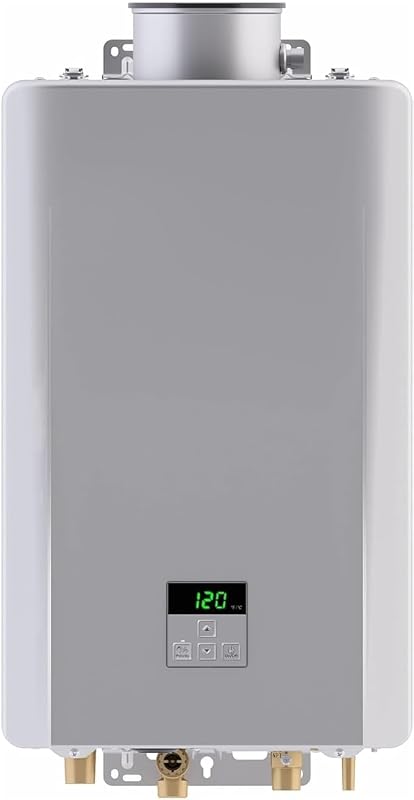
The core difference between a tankless water heater and a tank water heater comes down to how water is heated: on-demand instant heating through a high-powered exchanger versus continuous reservoir storage within an insulated cylinder. A tankless unit generates an endless stream of hot water exclusively when a tap opens, whereas a traditional tank design holds a predetermined volume of water at target temperature around the clock.
Choose a tankless water heater if you prioritize non-stop continuous hot water, minimal wall-mounted dimensions, and zero standby thermal loss. Choose a tank water heater if your location has standard 120-volt wiring, needs a dependable stored reserve, and cannot accommodate the heavy electrical amperage demands of an instantaneous heating array.


Tankless Water Heater vs Tank Water Heater at a Glance
| Feature | Tankless Water Heater | Tank Water Heater |
|---|---|---|
| Heating Approach | Instant on-demand through heating elements or burner | Continuous thermal storage inside an insulated cylinder |
| Flow Output Rate | 1.32 to 4.4 GPM continuous | 4.0 GPM restricted to stored volume |
| Reservoir Capacity | 0 to 5 liters internal fluid volume | 18 gallons stored water |
| Mounting Configuration | Wall mounted | Floor or reinforced shelf mounted |
| Electrical Profile | 240V AC (18,000W) or 3V DC battery ignition | 120V AC (1500W, 15A breaker) |
| Thermal Efficiency | Up to 99.8 percent without standby loss | Not listed |
| Appliance Weight | 10 to 14.8 pounds empty | 56 pounds empty |
| Operating Pressure Range | 3.0 to 150 PSI | Up to 150 PSI |
| Best For | Endless sequential use, tight utility closets, and off-grid mobile setups | Standard household electrical circuits, utility sinks, and point-of-use buffers |
Continuous Delivery and Flow Rate Output
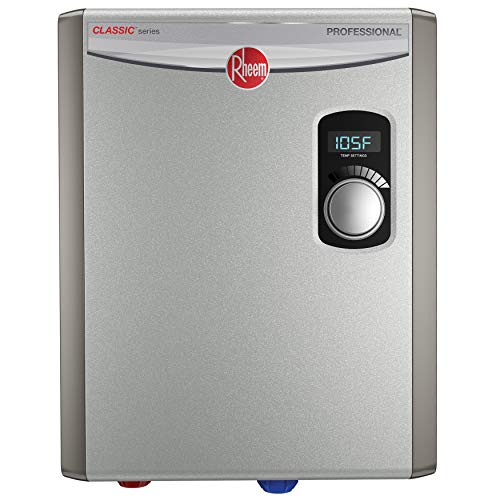
The daily experience of your domestic hot water supply depends entirely on how each appliance manages delivery volume. In a direct tank vs tankless water heater comparison, delivery mechanics represent fundamentally opposite engineering philosophies. A tankless system, such as the Rheem 18kW Tankless Electric Water Heater, relies on dual copper immersion elements and advanced self-modulation to heat water dynamically as it moves through the pipe. Delivering up to 4.4 GPM, it maintains a continuous stream at up to 140 degrees Fahrenheit without ever running out of warm water during back-to-back showers.
In contrast, an electric storage unit like the ThermoMate 18 Gallon Tank Water Heater discharges water from an internal reservoir at a steady 4 GPM rate. While that volume provides robust water pressure for kitchen sinks or a 20-to-25-minute shower, the available hot supply is strictly capped by its 18-gallon capacity. Once the stored hot volume is depleted, the incoming cold water lowers the internal temperature, forcing users to wait through a complete reheating cycle. Examining a rinnai vs navien matchup highlights how premium gas tankless models similarly solve this supply ceiling through rapid burner modulation.
Evaluating tankless vs tank flow rate metrics also involves incoming water temperature. The Rheem unit can service a single high-flow shower in colder northern climates or multiple fixtures simultaneously in warmer southern regions where less heating lift is needed. A tank water heater delivers identical outlet performance regardless of inlet water chilling until its 18 gallons exhaust, making it predictable for short single tasks but unsuitable for lengthy multi-fixture routines.
Edge: Tankless water heater provides an uninterrupted hot water flow that never exhausts during prolonged or sequential usage cycles.
Installation Space and Mounting Footprint
Usable square footage inside modern living areas makes tank vs tankless installation space a decisive factor for homeowners, apartment dwellers, and mobile builders. Tankless systems abandon storage tanks entirely, shrinking their mechanical housings down to a fraction of traditional water vessels. The 18kW Rheem model occupies a modest 14.5-inch width and 18.25-inch height, sitting roughly 90 percent smaller than standard tank equipment. It anchors directly to standard wall framing, freeing up the entirety of the floor underneath for utility shelving, storage bins, or under-sink plumbing.
Storage units impose a much heavier footprint due to structural water retention. The ThermoMate tank unit stands 25.75 inches tall with a 19.25-inch width, weighing 56 pounds when empty and well over 200 pounds once filled to its 18-gallon capacity. Because of this massive operating weight, it demands floor positioning or reinforced shelf mounting with sufficient clearance for an ASME-approved temperature and pressure relief valve. Deciding between a tankless or tank for small home installations frequently hinges on whether your mechanical closet has the dedicated floor space to spare.
When looking at hardware comparisons like the navien npe-240a2 vs npe-180a2, compact wall hanging remains a standard benefit across modern on-demand hardware. Even specialized tankless solutions designed for portable field use retain this minimalist physical envelope. By mounting flush against an exterior wall or inside a modest recess, tankless equipment eliminates the obstructive presence of a bulky water cylinder in tight living spaces.
Edge: Tankless water heater takes up 90 percent less volume and mounts cleanly onto vertical walls without consuming valuable floor area.
Energy Efficiency and Operating Thermal Losses
Energy management represents one of the strongest arguments explored in any modern tankless water heater review. Storage tanks must constantly reheat their standing water to compensate for natural heat radiation escaping through the steel jacket, an operational expense known as standby loss. The ThermoMate unit utilizes a porcelain enamel glass-lined tank and an INCOLOY-800 heating element to maximize durability, yet it still draws electrical power periodically throughout the day to keep its 18 gallons at the factory-set 125 degrees Fahrenheit or adjusted up to 150 degrees Fahrenheit.
Tankless electric systems avoid standby loss entirely because they pull zero heating power when water taps remain closed. When demand begins, the Rheem 18kW unit engages its self-modulating electronic controller, drawing only the exact wattage necessary to satisfy current flow rate and temperature rise settings. Rheem specifies a 99.8 percent operational efficiency rating for this process, meaning nearly all electrical current converts straight into fluid heat transfer. This dynamic performance leads many homeowners to ask if a tankless water heater is worth it over the long term.
For builders assessing tankless vs tank energy efficiency, the absence of continuous thermal maintenance delivers measurable power conservation in vacation cabins, guest suites, and secondary bathrooms where hot water is needed only intermittently. While advanced tank designs employ denser foam insulation, they inherently burn energy during prolonged periods of non-use. A review of performance metrics in comparisons like rinnai ru199in vs navien npe-180a2 proves how on-demand heat transfer stops unnecessary standby energy consumption.
Edge: Tankless water heater achieves 99.8 percent thermal efficiency by drawing energy exclusively during active fluid draw and eliminating standby jacket losses.
Electrical Panel Demands and Infrastructure Compatibility
While on-demand heating excels in thermal efficiency, it introduces strict utility constraints that alter standard electrical planning. Instantaneous water heating requires massive power spikes to heat incoming fluid in real time. The Rheem 18kW unit requires a 240-volt AC power supply, drawing up to 18,000 watts of electricity. Running an appliance of this size necessitates a robust main breaker box, heavy-gauge wiring, and multiple dedicated high-amperage double-pole circuits that older homes or basic cabins often lack.
The electrical accessibility highlighted in an 18-gallon point-of-use tank water heater review reveals a much simpler installation reality. The ThermoMate unit draws just 1500 watts over a standard 120-volt connection, operating safely on a common 15-amp circuit breaker. Because it reheats its 18-gallon reserve gradually over time, it avoids shocking the electrical system with massive sudden loads. This modest current requirement makes tank installations accessible in garages, workshops, barns, basements, and modular cabins without triggering thousand-dollar service panel upgrades.
Evaluating commercial-grade heating infrastructure in breakdowns like the rinnai ru199in vs navien npe-240a2 shows how gas lines often offset high electrical requirements in full-sized tankless configurations. However, when choosing between purely electric models, the modest 120V draw of a storage tank represents a clear practical benefit. For properties with a 100-amp main service panel, retrofitting a large electric tankless unit is often physically impossible without comprehensive utility remodeling.
Edge: Tank water heater connects directly into standard 120-volt circuits using a common 15-amp breaker, bypassing costly electrical panel replacements.
Off-Grid Flexibility and Remote Cabin Suitability
Selecting between a tankless or tank for cabin setups requires analyzing fuel availability, startup water pressure, and off-grid versatility. Dedicated storage tanks require steady line voltage to maintain their elements, limiting their placement to grid-tied structures or large generator setups. The ThermoMate 18-gallon tank requires a stable 120-volt source and hardwired connections, making it stationary and strictly tied to existing infrastructure.
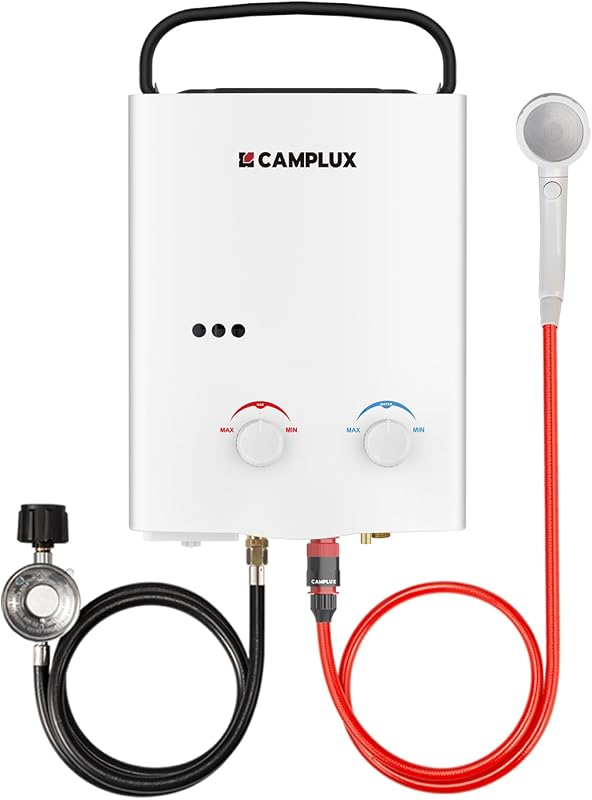
Tankless technology offers specialized portable configurations designed specifically for off-grid recreation. The CAMPLUX 5L Portable Tankless Water Heater illustrates this versatility by running entirely on liquid propane and two D-size batteries for electronic ignition, requiring zero grid electricity. Generating 34,000 BTUs of heat with a 1.32 GPM flow rate, it ignites under water pressure as low as 3.0 PSI. This low-pressure threshold allows the unit to run off small 12-volt RV pumps, gravity-fed water barrels, or elevated camp reservoirs while delivering outlet temperatures up to 114 degrees Fahrenheit.
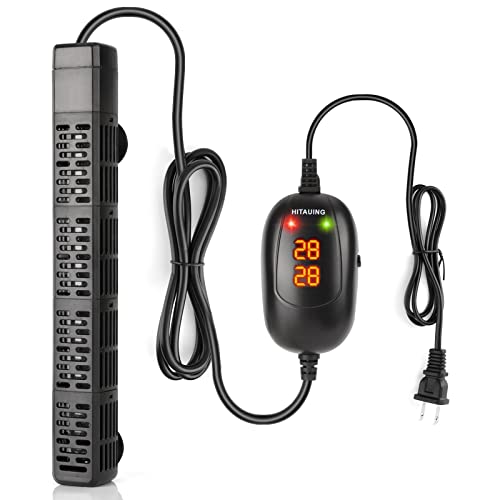
Specialized immersion heaters also appear within fluid storage applications, such as the HiTauing Aquarium Heater, which uses an explosion-proof quartz glass tube and nickel-chromium heating wire to regulate small water enclosures between 40 and 75 gallons. However, for mobile domestic bathing, animal washing, or off-grid remote living, portable tankless propane heaters stand alone. Weighing just 10 pounds and including a 5-foot gas regulator and shower head, the Camplux design enables instant hot water wherever a propane canister can travel.
Edge: Tankless water heater provides lightweight battery-ignited propane models that operate off-grid without electrical utility connections.
Pros and Cons
Tankless Water Heater
Pros
- Continuous on-demand hot water delivery
- Compact wall-mount footprint under 15 pounds
- High 99.8 percent operating thermal efficiency
- Off-grid battery and propane ignition options
Cons
- Demands substantial 240V 18kW electrical service
- Flow rate limited by incoming groundwater temperature
View CAMPLUX 5L Portable Tankless Water Heater on Amazon
Tank Water Heater

Pros
- Operates on standard 120V 15A circuits
- Independent 18-gallon preheated water reserve
- Corrosion-resistant porcelain enamel glass tank lining
- Durable INCOLOY 800 stainless steel heating element
Cons
- Subject to continuous standby heat radiation
- Heavy 56-pound empty footprint occupies floor space
View HiTauing Aquarium Heater 50W 100W 200W on Amazon
Who Should Buy Each One
Choose the Tankless Water Heater If
- You live in a home with multiple residents who frequently take back-to-back showers and require an endless flow of hot water.
- You need to maximize floor space in a small home, apartment, or utility room by hanging an appliance that is 90 percent smaller than a tank.
- You manage an off-grid hunting cabin, campsite, or RV where you rely on battery ignition and liquid propane rather than grid electricity.
- You want to eliminate continuous standby energy loss and optimize power consumption with a 99.8 percent thermally efficient modulating appliance.
Choose the Tank Water Heater If
- Your building operates on a standard 120-volt electrical panel and you cannot install dedicated 240-volt high-amperage breakers.
- You need an affordable, straightforward point-of-use hot water source for a workshop, garage utility sink, salon station, or laundry room.
- You want a dependable 18-gallon reserve of hot water that supplies up to a 25-minute shower without relying on advanced computer modulation boards.
- You are looking for heavy-duty construction with a porcelain enamel glass-lined vessel and an INCOLOY-800 stainless steel heating element.
Final Verdict
For most modern homeowners seeking to upgrade their domestic plumbing, the tankless water heater represents the superior long-term design. By generating hot water on demand and maintaining up to 99.8 percent thermal efficiency, models like the Rheem 18kW unit eliminate standby heat waste while delivering a continuous 4.4 GPM stream. Its compact, wall-hung casing reclaims nearly all the floor area consumed by traditional storage tanks, making it an exceptional fit for space-conscious construction and multi-user households.
Nevertheless, a tank water heater remains the practical, reliable choice when infrastructure limitations prevent high-amperage electrical service. Units like the ThermoMate 18-gallon water heater deliver dependable point-of-use hot water on a simple 120-volt, 15-amp circuit without requiring service line renovations. If your electrical panel cannot support massive instantaneous power draws, or if you simply need a dedicated buffer for a workshop sink or guest suite, a tank water heater delivers dependable performance at a fraction of the installation complexity.
FAQ
Can an electric tankless water heater run out of hot water?
No, an electric tankless water heater does not run out of hot water because it does not rely on a finite stored reserve. As long as water flows through the unit within its rated flow rate capacity, the self-modulating heating elements heat the fluid continuously. The only limitation is the maximum flow rate the unit can support based on incoming groundwater temperature.
Is a tankless water heater worth it for an off-grid cabin?
Yes, a portable tankless water heater is particularly well-suited for off-grid cabins when paired with liquid propane. Models like the Camplux AY132 require no grid electrical connection, using two D-cell batteries to ignite a 34,000 BTU burner. Because it activates with water pressure as low as 3.0 PSI, it operates smoothly using gravity bags or modest 12-volt pumps.
Is a tank water heater worth it if I have standard 120-volt wiring?
Yes, a compact tank water heater is often the best choice for locations wired with standard 120-volt power. An 18-gallon model such as the ThermoMate draws only 1500 watts and runs on a standard 15-amp breaker, providing enough preheated water for washing dishes or taking a 20-to-25-minute shower without demanding panel retrofits.
How much space do you save with a tankless water heater?
A tankless water heater saves approximately 90 percent of the physical space required by an equivalent storage tank. Tankless models hang directly on the wall and weigh between 10 and 15 pounds, completely clearing the floor. By comparison, an 18-gallon storage tank occupies floor or reinforced shelf space with dimensions exceeding 19 inches wide by 25 inches tall and weighs 56 pounds empty.
Does a tank water heater waste energy when no one is using water?
Yes, a tank water heater naturally experiences standby heat loss. Because it holds a standing volume of water at temperatures between 90 and 150 degrees Fahrenheit, heat slowly dissipates through the tank walls. The internal thermostat monitors this temperature drop and periodically energizes the heating element to maintain the target temperature, even when no faucets are open.
What happens if my water pressure is very low?
Tankless water heaters require a minimum water pressure threshold to trigger their heating mechanisms. Portable models like the Camplux AY132 feature low-pressure activation starting at 3.0 PSI, making them functional with light pumps. In contrast, standard storage tank units operate under existing system pressure up to 150 PSI, releasing stored water as soon as an outlet valve opens.