When comparing high-performance solid-state storage for a modern PC build or storage upgrade, the primary decision factor between the WD Black SN850X and the WD Blue SN580 is whether your system demands top-tier PCIe Gen 4.0 data throughput or power-efficient everyday execution. The WD Black SN850X operates as an enthusiast gaming drive reaching blazing read transfer rates up to 7,300 MB/s with rapid write capabilities designed to eliminate gaming latency and texture pop-ins. In contrast, the WD Blue SN580 offers an efficient balance of mainstream PCIe Gen 4.0 speeds up to 4,150 MB/s, targeting content creators, mobile laptops, and general productivity workflows where energy consumption matters.
Choose the WD Black SN850X if you are building an elite gaming PC, configuring a high-speed workstation, or seeking expansive capacities up to 8TB that maximize the full bandwidth of the PCIe 4.0 standard. Choose the WD Blue SN580 if you want a reliable, low-power drive that preserves laptop battery life while handling business tasks, creative applications, and daily computing without thermal penalties.
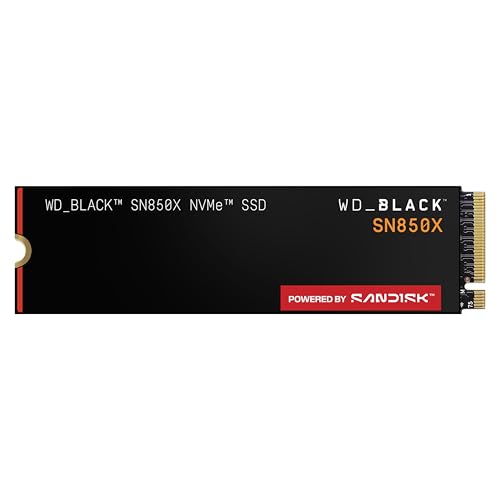

WD Black SN850X vs WD Blue SN580 at a Glance
| Feature | WD Black SN850X | WD Blue SN580 |
|---|---|---|
| Peak Sequential Read Speed | Up to 7,300 MB/s | Up to 4,150 MB/s |
| Peak Sequential Write Speed | Up to 6,300 MB/s | Not listed |
| PCIe Interface | PCIe Gen 4.0 NVMe | PCIe Gen 4.0 x4 (16Gb/s) NVMe |
| Form Factor | M.2 2280 | M.2 2280 |
| NAND Flash Memory | SANDISK TLC 3D NAND | Not listed |
| Caching Technology | Game Mode 2.0 / Cache Size 1 | nCache 4.0 / Cache Size 1000 |
| Maximum Capacity Listed | Up to 8TB | Up to 2TB |
| Endurance Rating | Not listed | Up to 900 TBW (2TB model) |
| Manufacturer Warranty | Not listed | 5-year limited warranty |
| Bundled Software | WD_BLACK Dashboard (Windows only) | Acronis migration software |
| Primary Intended Use | High-Performance Gaming and Workstations | Business, Multimedia, and Personal Computing |
| Best For | Gamers demanding maximum bandwidth and large game storage | Laptop users and creators focused on power-efficient storage |
Sequential Read and Write Performance
Sequential data transfer rates dictate how quickly an internal drive can open massive project files, install multi-gigabyte software packages, and stream high-resolution video streams. In any detailed WD Black SN850X review, the headlining feature is its raw throughput. Engineered to approach the structural limits of the PCIe Gen 4.0 interface, the SN850X generates sequential read speeds of up to 7,300 MB/s on capacities ranging from 1TB to 4TB, accompanied by sequential write speeds reaching up to 6,300 MB/s. These metrics translate to near-instantaneous file transfers and minimal load delays when processing heavy media pipelines or loading detailed game assets.
When looking at the WD Blue SN580 review data, this drive occupies the mainstream tier of PCIe Gen 4.0 solid-state drives. It delivers sequential read speeds of up to 4,150 MB/s on both 1TB and 2TB capacities over its PCIe Gen 4.0 x4 connection. While the official listing does not specify a maximum write speed figure for the SN580, its read speed sits roughly 43 percent below the peak velocity offered by the Black series drive. In daily productivity work, copying documents, opening design software, or booting an operating system, the difference feels subtle. However, when streaming massive video catalogs or managing continuous writes, the throughput gap becomes evident, a contrast often examined when comparing the wd black sn850x vs sn7100.
The practical consequence of this SN850X vs SN580 speed divergence is task-dependent. For routine desktop duties, the 4,150 MB/s output of the SN580 provides ample bandwidth that easily outpaces older drive standards. Yet, if you routinely move uncompressed video footage, transfer 100GB game directories, or operate in high-bandwidth development environments, the 7,300 MB/s read and 6,300 MB/s write capability of the SN850X eliminates pipeline bottlenecks that mid-tier hardware cannot bypass.
Edge: WD Black SN850X, delivering substantially higher peak read speeds of 7,300 MB/s and specified 6,300 MB/s write speeds.
Gaming Responsiveness and Console Optimization
Modern gaming demands aggressive drive access to feed graphics processors with high-resolution textures without hitching or frame pacing stutters. When choosing the WD Black SN850X or Blue SN580 for gaming, the architecture of each drive dictates its real-time behavior. The SN850X is explicitly designed as a gaming drive, incorporating features engineered to slash throttling, lagging, and texture pop-ins. Powered by SANDISK TLC 3D NAND, the drive sustains performance during prolonged gaming sessions and provides a dedicated Game Mode 2.0 inside its software environment to optimize background operations during intensive play.
Console compatibility is another critical consideration for builders deciding between the WD Black SN850X or Blue SN580 for PS5 upgrades. The SN850X listing confirms direct compatibility with the Sony PlayStation 5 console, where its 7,300 MB/s read speed comfortably exceeds Sony’s recommended baseline read speed specification. Furthermore, the listing highlights a heatsink option to maintain operational stability inside enclosed console bays. Readers comparing generational options in the wd black sn770 vs sn850x bracket will note how the flagship thermal options safeguard performance during sustained gaming sessions.
The WD Blue SN580 features extensive console compatibility in its technical attributes, listing support for the Sony PlayStation 5, Microsoft Xbox Series S, Microsoft Xbox Series X, and Nintendo Switch hardware ecosystems. However, with its read speeds capped at 4,150 MB/s, it falls below the performance baseline typically recommended for seamless internal PS5 M.2 expansion. While it functions across personal computing environments and general gaming libraries, it lacks the low-latency optimizations, texture pop-in mitigation, and sustained burst speeds found on the Black series drive.
Edge: WD Black SN850X, offering top-tier 7,300 MB/s speeds, Game Mode 2.0 optimizations, and a heatsink option suitable for demanding gaming platforms.
Power Consumption and Laptop Thermal Management
Drive efficiency and heat dissipation are critical factors when selecting storage for compact form factors, particularly thin laptops and portable computing setups. The WD Blue SN580 vs Black SN850X comparison reveals entirely different engineering priorities in this arena. The SN580 is purpose-built as a low-power internal drive designed to extend your laptop’s battery life while creating uninterrupted on the go. Its streamlined controller design and single-sided M.2 2280 footprint, weighing only 4.54 grams, generate minimal heat under moderate creative workloads.
Because the Blue SN580 maintains modest power draw, it requires less cooling infrastructure to avoid thermal throttling. It fits cleanly into thin-and-light notebooks where airflow is constrained, preventing hot spots on the chassis while sustaining steady productivity across business, multimedia, and personal applications. Buyers reviewing mid-tier upgrades like the wd black sn770 vs blue sn580 often prioritize this exact balance of thermal restraint and portable efficiency.
The WD Black SN850X, by comparison, pushes PCIe Gen 4.0 silicon to its upper boundary. Driving data at 7,300 MB/s demands significantly higher active power draw, which naturally translates into elevated heat production. While the listing notes an optional heatsink designed to maintain thermal equilibrium, installing a bare SN850X in an ultra-thin laptop without substantial motherboard heat spreaders can lead to throttling during sustained transfers. For battery-dependent mobile workstations, the higher power draw can decrease untethered runtimes compared to low-power storage alternatives.
Edge: WD Blue SN580, featuring targeted low-power engineering that maximizes laptop battery life with reduced thermal overhead.
Storage Capacity, Endurance, and NAND Architecture
Long-term reliability and capacity flexibility determine whether a solid-state drive can serve your system over multiple upgrade cycles. The WD Black SN850X leads dramatically on overall capacity scaling. The listing specifies that the SN850X is available in capacities ranging from 1TB all the way up to 8TB. By leveraging SANDISK TLC 3D NAND flash, the SN850X provides dense, high-grade flash cells designed to hold vast game installations, raw media archives, and intensive workstation projects on a single M.2 2280 card.
The WD Blue SN580 caps its maximum capacity at 2TB, offering models in 1TB and 2TB options. While 2TB accommodates standard business tasks, personal files, photos, 4K videos, and music libraries, power users with expanding project files may find the 2TB ceiling limiting. Similar architectural boundaries are discussed when reviewing alternatives in our wd blue sn580 vs crucial p310 coverage. Where the SN580 listing stands out, however, is clear transparency regarding endurance: the 2TB model is officially rated for up to 900 TBW (terabytes written) and supported by Western Digital’s 5-year limited warranty.
When analyzing caching mechanisms, the two drives deploy distinct approaches. The SN580 utilizes Western Digital’s proprietary nCache 4.0 technology to accelerate file copies and media asset movements, pairing it with an installed cache memory size specification of 1000. The SN850X listing details an installed cache memory size of 1, utilizing its TLC NAND array to absorb intense burst writes. Although the SN850X listing does not explicitly state its TBW rating or warranty duration, its massive 8TB ceiling and TLC NAND flash give it the upper hand for extensive, data-dense computing builds.
Edge: WD Black SN850X, providing a vast 8TB capacity ceiling and confirmed TLC 3D NAND architecture.
Software Utilities and Ecosystem Integration
Operating system integration and firmware support tools significantly affect drive maintenance, diagnostic tracking, and disk upgrades. The WD Black SN850X comes paired with the downloadable WD_BLACK Dashboard (Windows only). This dedicated software utility gives users direct control over drive diagnostics, firmware updates, and operational parameters. Crucially, the dashboard allows users to enable Game Mode 2.0, an automated feature designed to tune SSD performance specifically for PC gaming environments by optimizing queue depths and background disk activity.
The WD Blue SN580 takes a different utility approach by bundling Acronis migration software, as detailed in its listing attributes. While the SN850X software focuses on real-time performance optimization and game tuning, Acronis migration software addresses setup convenience. For buyers replacing an aging boot drive or upgrading a desktop motherboard, Acronis simplifies the process of cloning an existing operating system, partition layouts, and personal files directly onto the new SN580 without requiring fresh software installations.
Determining which utility bundle provides more utility depends on your setup requirements, a practical factor explored across comparisons like the wd black sn7100 vs blue sn580. Gamers and enthusiasts fine-tuning system responsiveness gain ongoing utility from the WD_BLACK Dashboard and its Game Mode 2.0 features. Conversely, home builders, IT professionals, and general users benefit immensely during the initial system configuration phase thanks to the Acronis migration package.
Edge: Tie, as the WD_BLACK Dashboard delivers gaming optimization while the SN580 provides practical Acronis system migration software.
Pros and Cons
WD Black SN850X

Pros
- Up to 7,300 MB/s read speeds
- Up to 6,300 MB/s write speeds
- High capacity options up to 8TB
- Dedicated Game Mode 2.0 features
- Built with SANDISK TLC 3D NAND
Cons
- Listing does not state TBW endurance
- Requires heatsink to maintain peak thermal performance
View WD Black SN850X on Amazon
WD Blue SN580

Pros
- Low-power storage maximizes laptop battery life
- Bundled with Acronis migration software
- Rated up to 900 TBW on 2TB model
- Features proprietary nCache 4.0 technology
- Five-year limited manufacturer warranty
Cons
- Read speed peaks at 4,150 MB/s
- Capacity capped at 2TB
- Sequential write speeds not specified in listing
Who Should Buy Each One
Choose the WD Black SN850X If
- You demand absolute peak PCIe 4.0 performance with sequential read speeds up to 7,300 MB/s and write speeds up to 6,300 MB/s.
- You need expansive internal storage capacities reaching up to 8TB for massive PC game libraries or creative file archives.
- You are upgrading internal storage on a Sony PlayStation 5 and want a drive with an optional heatsink designed to minimize load delays.
- You prioritize low-latency gaming features, including Game Mode 2.0 support and texture pop-in reduction via the WD_BLACK Dashboard.
Choose the WD Blue SN580 If
- You are upgrading a slim laptop and require low-power storage engineered to conserve and maximize battery runtime.
- Your daily computing consists of business productivity, general multitasking, and basic multimedia creation where 4,150 MB/s read speeds are more than sufficient.
- You want bundled Acronis migration software to seamlessly clone an existing operating system drive onto your new M.2 card.
- You value stated endurance specifications, such as the 900 TBW endurance rating and 5-year limited warranty found on the 2TB model.
Final Verdict
Evaluating the WD Black vs Blue NVMe SSD hierarchy requires matching storage throughput against real-world workload requirements. When asking whether the WD Black SN850X is worth it, the answer is a resounding yes for high-end gaming enthusiasts, console owners, and workstation creators moving hundreds of gigabytes daily. With transfer speeds reaching up to 7,300 MB/s, rapid 6,300 MB/s writes, capacities scaling up to 8TB, and dedicated Game Mode 2.0 features, the SN850X represents top-tier PCIe Gen 4.0 engineering that prevents storage bottlenecks across intensive computing platforms.
On the other hand, the WD Blue SN580 represents a smart, dependable solution for mainstream computing, office work, and mobile productivity. While its 4,150 MB/s peak read rate trails the Black series in benchmark numbers, it delivers plenty of speed for routine computing, media editing, and software loading. When asking if the WD Blue SN580 is worth it, laptop users, students, and everyday desktop builders will appreciate its low power consumption, bundled Acronis disk cloning software, and 900 TBW endurance rating on the 2TB version.
FAQ
Can the WD Blue SN580 work inside a PlayStation 5 console?
The WD Blue SN580 listing includes the Sony PlayStation 5 among its compatible video game console models. However, its sequential read speed tops out at 4,150 MB/s, which sits below Sony’s recommended baseline speed of 5,500 MB/s for internal expansion drives. While the console will format and recognize the drive, games demanding high-throughput DirectStorage or rapid asset streaming may run sub-optimally compared to high-speed alternatives like the 7,300 MB/s SN850X.
What makes the WD Black SN850X better suited for PC gaming rigs?
The WD Black SN850X is explicitly engineered for gaming performance. It delivers sequential read speeds up to 7,300 MB/s and write speeds up to 6,300 MB/s to eliminate loading bottlenecks. It is constructed with SANDISK TLC 3D NAND and integrates with the Windows-only WD_BLACK Dashboard to provide Game Mode 2.0, a utility that optimizes drive responsiveness during gaming sessions to reduce lag and texture pop-ins.
Does the WD Blue SN580 drain laptop battery faster than the SN850X?
No, the WD Blue SN580 is specifically engineered with low-power storage architecture designed to maximize your laptop’s battery life. Because it targets 4,150 MB/s rather than extreme throughput, it generates less heat and consumes less active energy than flagship drives like the SN850X, making it an ideal choice for portable notebooks and mobile computing environments where battery longevity is a priority.
What software utilities are included with the WD Blue SN580 compared to the SN850X?
The WD Blue SN580 includes Acronis migration software, which simplifies disk cloning, partition copying, and operating system transfers from an old drive to your new M.2 storage. The WD Black SN850X includes the WD_BLACK Dashboard (available for Windows), which focuses on real-time drive diagnostics, firmware updates, and Game Mode 2.0 feature toggles to enhance gaming responsiveness.
Which drive offers higher maximum storage capacity?
The WD Black SN850X offers significantly higher storage ceilings, with listed capacities scaling from 1TB up to 8TB built with SANDISK TLC 3D NAND. In contrast, the WD Blue SN580 listing specifies capacities up to 2TB, making the Black drive the superior choice for users managing vast game installations, massive raw video archives, or expansive professional project libraries on a single physical drive.
How do the data transfer rates compare between the SN850X and SN580?
The WD Black SN850X achieves maximum sequential read transfer rates of up to 7,300 MB/s and sequential write speeds of up to 6,300 MB/s on 1TB through 4TB models. The WD Blue SN580 achieves sequential read speeds of up to 4,150 MB/s on its 1TB and 2TB models, while its listing does not provide a specific maximum sequential write figure.


