When evaluating the WD Black SN850X against the newer WD Black SN7100, the decisive difference centers on sustained heavy workload endurance versus modern power-optimized efficiency. While the SN850X relies on dedicated onboard cache memory and proven sustained performance for demanding desktop and console setups, the SN7100 utilizes next-generation TLC 3D NAND to push faster burst write speeds and drastically reduced energy consumption.
Choose the SN850X if you require an ultra-high-capacity PCIe Gen4 drive with dedicated cache memory and optional heatsink thermal control for your PlayStation 5 or heavy-duty desktop workstation. Choose the SN7100 if you want an energy-efficient drive with higher sequential write speeds designed specifically for extended battery life in modern laptops and handheld gaming consoles.
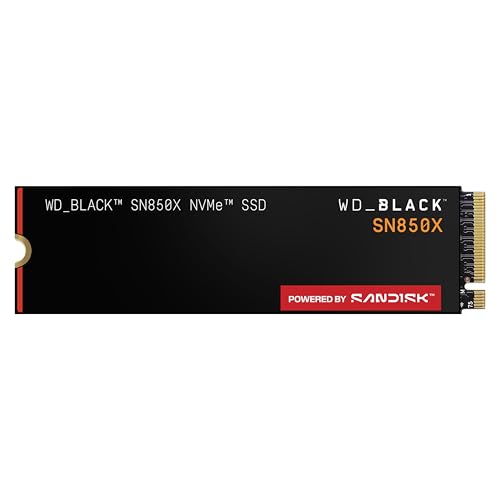

WD Black SN850X vs WD Black SN7100 at a Glance
| Feature | WD Black SN850X | WD Black SN7100 |
|---|---|---|
| Interface | PCIe Gen4 NVMe | PCIe Gen4 NVMe |
| Form Factor | M.2 2280 | M.2 2280 |
| Sequential Read Speed | Up to 7,300 MB/s | Up to 7,250 MB/s |
| Sequential Write Speed | Up to 6,300 MB/s | Up to 6,900 MB/s |
| Cache Memory | Installed Size: 1 | Not listed |
| NAND Flash Type | SANDISK TLC 3D NAND | Next Gen SANDISK TLC 3D NAND |
| Capacities Available | 1TB up to 8TB | 1TB up to 4TB |
| Officially Listed Compatibility | Laptop, Motherboards, PC, Sony PlayStation 5 | Desktop, Handheld Gaming Console, Laptop, Xbox Series X |
| Management Software | WD_BLACK Dashboard with Game Mode 2.0 | WD_BLACK Dashboard |
| Best For | Sustained desktop gaming and PS5 storage expansion | Laptops, handheld consoles, and power-conscious rigs |
Read and Write Sequential Performance
Sequential throughput defines how rapidly an internal solid-state drive transfers expansive contiguous files, such as multi-gigabyte game patches, uncompressed video assets, and 4K media libraries. In this head-to-head comparison of the WD Black SN7100 vs SN850X, maximum sequential read speeds are remarkably close on paper. The SN850X advertises maximum read speeds reaching up to 7,300 MB/s on 1TB through 4TB models, representing the upper threshold of what PCIe Gen4 motherboards can physically facilitate. The newer SN7100 follows right behind with an exceptional read capability of up to 7,250 MB/s, yielding a tiny 50 MB/s difference that remains imperceptible during real-world file browsing or gaming boot sequences.
Where the two drives diverge significantly is on write throughput. The SN850X delivers sequential write speeds up to 6,300 MB/s, which was flagship caliber during its initial launch period. However, the newer SN7100 advances write capability up to 6,900 MB/s on 1TB and 2TB models, representing up to a 35% performance boost over its prior generation counterparts. When comparing SN850X vs SN7100 write speed metrics, this 600 MB/s throughput leap gives the SN7100 a measurable advantage whenever you are transferring immense creative project files or dumping hundreds of gigabytes of new game installations onto the drive.
For readers who have tracked mid-range storage evolutions like the WD Black SN770 vs SN7100, this aggressive write performance confirms how rapidly flash memory manufacturing continues to evolve. While both drives saturated sequential reads on PCIe Gen4 lanes, the updated architecture of the SN7100 delivers raw file ingestion at a faster clip.
Edge: WD Black SN7100 offers a clear 600 MB/s advantage in maximum sequential write speeds while matching the SN850X in everyday sequential read speed.
Cache Architecture and Sustained Workloads
Pure sequential benchmark speeds do not tell the entire story for heavy users because sustained drive performance relies heavily on memory management. A detailed WD Black SN850X review highlights that the flagship drive includes dedicated cache memory with an installed cache size designation of 1. Having a dedicated physical memory cache allows an SSD to track translation tables instantaneously without taking away memory channels from active read and write commands. This architecture prevents severe performance drop-offs during grueling sustained write sessions, such as transferring an entire gaming library or rendering heavy video timelines.
Conversely, the SN7100 specification sheet does not list an installed physical cache memory size, relying instead on SANDISK next-generation TLC 3D NAND flash to hit its burst speeds. While this newer flash memory allows rapid burst operations, drives without listed dedicated DRAM caches often face performance throttling once their internal SLC write buffers fill up under massive multi-hundred-gigabyte file transfers. The SN850X also integrates automated Game Mode 2.0 features within the downloadable WD_BLACK Dashboard (Windows only), actively reducing asset load times, eliminating texture pop-ins, and smoothing frame pacing during intensive gaming sessions.
When assessing the trade-offs in storage architectures similar to comparisons like the WD Black SN770 vs SN850X, dedicated onboard cache memory remains the defining attribute of professional-grade drives. For sustained endurance under constant input and output pressure, the SN850X holds a fundamental hardware advantage that software optimizations cannot fully replace.
Edge: WD Black SN850X wins thanks to its dedicated onboard cache memory and Game Mode 2.0 optimizations designed to eliminate throttling during long, sustained workloads.
Power Efficiency and Thermal Management
Thermal behavior and electrical draw are vital considerations when selecting high-speed Gen4 solid-state storage. High-throughput transfers naturally produce thermal dissipation, and without proper cooling, modern NVMe controllers throttle throughput to preserve component health. A major focal point of any WD Black SN7100 review is its power management. Built specifically with laptops and mobile devices in mind, the SN7100 provides up to 100% improved power efficiency compared to the previous generation, drawing significantly less wattage from your battery while delivering near-maximum PCIe Gen4 speeds.
This immense jump in WD Black SN850X vs SN7100 power efficiency changes how the drive behaves in enclosed chassis environments. Because the SN7100 consumes far less power, it produces less passive heat, making it an exceptional option for ultra-thin laptops and compact gaming handhelds that cannot accommodate bulky aftermarket thermal spreaders. On the other hand, the SN850X is designed as a desktop-first powerhouse that pushes its controller aggressively. The listing notes that the SN850X includes a heatsink option to maintain performance and crush throttling, which is practically mandatory if you plan on running it inside tightly packed systems under long gaming sessions.
When analyzing SN850X vs SN7100 temperature dynamics, the SN850X requires active airflow or heatsink contact to sustain peak transfer tiers without thermal modulation. Similar to thermal trade-offs seen in comparisons like the WD Black SN7100 vs Blue SN580, modern power-optimized drives run cooler without requiring massive aluminum heatsinks.
Edge: WD Black SN7100 takes the win by delivering up to 100% better power efficiency, keeping operating temperatures manageable in slim chassis without requiring add-on heatsinks.
Platform Compatibility for PS5, PC, and Handhelds
System compatibility determines where each of these drives can actually be deployed. When choosing between the WD Black SN850X or SN7100 for PS5 owners, the product data provides clear direction. The WD Black SN850X explicitly lists official compatibility with the Sony PlayStation 5 console, alongside PC motherboards and laptops. Its 7,300 MB/s read speed comfortably exceeds Sony’s published 5,500 MB/s speed recommendation, and its optional factory heatsink variant fits seamlessly into the PlayStation 5 internal M.2 expansion bay, ensuring your console storage remains cool during lengthy gaming sessions.
Meanwhile, the SN7100 listing specifies compatibility across desktop motherboards, laptops, handheld gaming consoles, and even lists Microsoft Xbox Series X within its specifications table. Because handheld gaming consoles and portable computers demand minimal physical bulk, the SN7100 measures just 0.04 inches thick and weighs a featherlight 4.54 grams, making it effortless to install in tight M.2 2280 slots. If you are deciding on the WD Black SN850X or SN7100 for laptop systems where battery longevity and physical clearance matter most, the SN7100 is engineered from the ground up for that exact scenario.
For PC builders who evaluate broad drive selections, including comparisons like the WD Black SN850X vs Blue SN580, picking the right platform match is crucial. While both utilize standard M.2 2280 dimensions, the SN850X is geared directly toward stationary gaming rigs and the PS5, whereas the SN7100 is targeted at portable systems.
Edge: WD Black SN850X is the superior pick for PlayStation 5 owners, while the SN7100 is tailored directly for mobile laptops and handheld gaming hardware.
Maximum Storage Capacity and Form Factor Options
Available storage volume dictates how many massive modern game installations, high-resolution textures, and multimedia assets you can store locally without constantly deleting older titles. In the arena of SN850X vs SN7100 gaming expansion, the SN850X offers an unbeatable advantage in maximum density. The SN850X lineup provides storage capacities ranging from 1TB all the way up to an immense 8TB built with SANDISK TLC 3D NAND. Having an 8TB option on an M.2 2280 footprint gives desktop enthusiasts and workstation users unmatched local storage capacity on a single motherboard slot.
By contrast, the SN7100 listing indicates available storage options scaling up to 4TB. While 4TB provides more than enough room for substantial game collections, future updates, and downloadable content, it falls short of the massive 8TB ceiling provided by the flagship drive. Both models are presented in standard 1TB capacities for everyday users, but creative professionals, uncompressed video editors, and extreme digital hoarders will find the upper limit of the SN850X far more accommodating.
Exploring high-capacity storage paths often leads builders through diverse product comparisons like the WD Black SN770 vs Blue SN580, yet few M.2 drives offer single-drive 8TB options. For users seeking the absolute largest single solid-state drive available in this class, the SN850X stands alone.
Edge: WD Black SN850X easily takes this category with massive capacity options scaling up to 8TB compared to the 4TB maximum of the SN7100.
Pros and Cons
WD Black SN850X

Pros
- Up to 7,300 MB/s read speeds
- Dedicated onboard cache memory
- Capacities up to 8TB available
- Official Sony PlayStation 5 compatibility
Cons
- Lower peak write speed at 6,300 MB/s
- Higher power draw than mobile-optimized drives
View WD Black SN850X on Amazon
WD Black SN7100

Pros
- Faster 6,900 MB/s peak write speed
- Up to 100% greater power efficiency
- Engineered for laptops and handheld consoles
- Next-generation SANDISK TLC 3D NAND
Cons
- No dedicated cache memory listed
- Maximum capacity limited to 4TB
View WD Black SN7100 on Amazon
Who Should Buy Each One
Choose the WD Black SN850X If
- You need officially certified, high-speed storage expansion for your Sony PlayStation 5 console.
- You run heavy desktop workloads, uncompressed 4K video rendering, or sustained transfers that demand dedicated onboard cache memory.
- You want the option to purchase a drive with a dedicated heatsink to crush thermal throttling in high-performance desktop chassis.
- You have a massive game library or media collection that requires a massive single SSD capacity reaching up to 8TB.
Choose the WD Black SN7100 If
- You are upgrading an ultra-thin gaming laptop or handheld gaming console that requires maximum power efficiency.
- You want faster peak sequential write speeds up to 6,900 MB/s for rapid daily file and game transfers.
- You need a slim, lightweight 4.54-gram M.2 2280 drive that operates without high thermal output in compact enclosures.
- You want modern next-generation TLC 3D NAND flash engineered for fast responsiveness and everyday multimedia applications.
Final Verdict
For most desktop gamers, workstation builders, and PlayStation 5 console owners, the WD Black SN850X remains the definitive recommendation. Its combination of 7,300 MB/s read speeds, dedicated onboard cache memory, Game Mode 2.0 software features, and massive capacities extending up to 8TB makes it an uncompromising flagship workhorse. The inclusion of dedicated cache memory guarantees that your drive maintains consistent performance during heavy continuous writes and demanding game sessions without unpredictable thermal or buffer slowdowns.
However, if your primary system is an ultra-thin laptop or a battery-powered handheld gaming console, the WD Black SN7100 is unquestionably the smarter purchase. With up to 100% greater power efficiency over previous generation drives, faster peak sequential write speeds of 6,900 MB/s, and a slim design that stays manageable without heavy heatsinks, it solves the thermal and battery constraints that hinder traditional flagship SSDs on mobile devices. Choose the SN850X for ultimate sustained desktop and console power, or pick the SN7100 for efficient, high-speed mobile computing.
FAQ
Is the WD Black SN850X faster than the WD Black SN7100?
The two drives trade performance leads across different metrics. The WD Black SN850X holds a slight edge in sequential read speeds, achieving up to 7,300 MB/s compared to 7,250 MB/s on the SN7100. However, the SN7100 delivers faster peak sequential write speeds, reaching up to 6,900 MB/s versus the 6,300 MB/s maximum of the SN850X. For sustained heavy transfers, the SN850X maintains consistency better due to its dedicated onboard cache memory.
Can I use the WD Black SN7100 in a PlayStation 5?
The product listing specifically highlights the WD Black SN850X for official Sony PlayStation 5 compatibility, and its 7,300 MB/s read speed exceeds console guidelines. While the SN7100 features a PCIe Gen4 M.2 2280 interface with compatible speeds, its listing focuses on desktop, laptop, handheld console, and Xbox Series X compatibility. PlayStation 5 owners seeking guaranteed compatibility and integrated heatsink options should select the SN850X.
Does the WD Black SN7100 have onboard DRAM cache?
The product data for the WD Black SN7100 does not list an installed cache memory size. Instead, it utilizes next-generation SANDISK TLC 3D NAND flash to achieve its burst sequential speeds and power savings. In contrast, the WD Black SN850X explicitly lists an installed cache memory size of 1, providing dedicated cache architecture for sustained desktop gaming and heavy workstation tasks.
Which drive is better for gaming laptops and handhelds?
The WD Black SN7100 is engineered specifically for laptops and handheld gaming devices. It offers up to 100% improved power efficiency over the previous generation, meaning it draws less power from your device battery while producing lower thermal output inside tight chassis, all while weighing just 4.54 grams.
What does Game Mode 2.0 do on the WD Black SN850X?
Game Mode 2.0 is an advanced feature accessible through the downloadable WD_BLACK Dashboard (Windows only) for the SN850X. When enabled, it optimizes drive performance to deliver ridiculously short load times, slash in-game texture pop-ins, and minimize lag or throttling during intense PC gaming sessions.
Is WD Black SN7100 worth it compared to older PCIe Gen4 drives?
Yes, the WD Black SN7100 offers a significant upgrade over previous generations. The product data shows up to 35% faster performance, sequential write speeds reaching up to 6,900 MB/s, and up to 100% greater power efficiency, making it an exceptional modern PCIe Gen4 option for portable gaming systems.