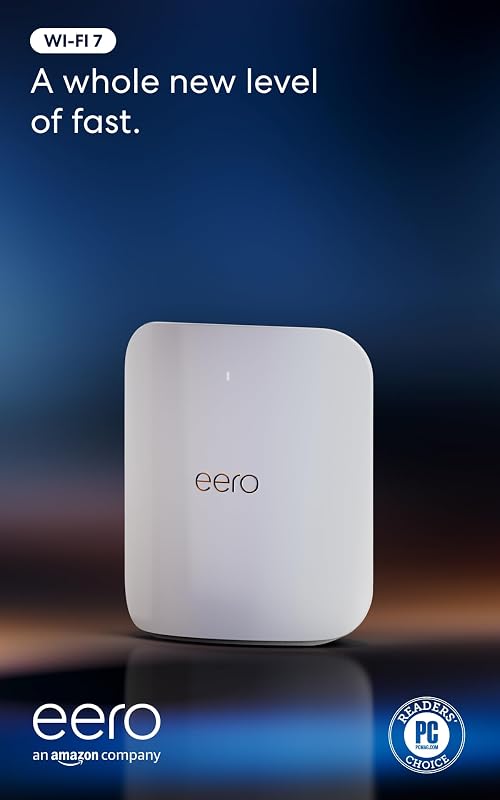
The choice between wired ethernet and wired WiFi comes down to an uncompromising trade-off between direct physical stability and untethered multi-room mobility. Dedicated wired ethernet establishes an isolated, shielded physical pathway from your network infrastructure directly to a stationary endpoint, eliminating airborne radio interference and delivering predictable transmission times. In contrast, wired WiFi leverages structured Ethernet backhaul runs to bridge access points across living spaces, broadcasting wireless frequencies so laptops, smartphones, and tablets can move freely without dropping their local connections.
Choose wired ethernet if you operate fixed workstations or competitive gaming stations that demand absolute sub-millisecond latency stability and dedicated throughput without sharing transmission mediums. Choose wired WiFi if your household requires broad, multi-room coverage for mobile devices alongside automated network management tools and flexible roaming.

Wired Ethernet vs Wired WiFi at a Glance
| Attribute | Wired Ethernet | Wired WiFi |
|---|---|---|
| Transmission Medium | Twisted pair copper cabling | Ethernet backhaul with wireless broadcast |
| Maximum Data Transfer Rate | Determined by network interface card | 5000 Mbps aggregate (4324 Mbps on 5 GHz, 688 Mbps on 2.4 GHz) |
| Physical Port Speeds | 1 Gbps, 2.5 Gbps, 5 Gbps, or 10 Gbps | 2x 2.5 Gbps WAN/LAN ports per node |
| Wireless Generation | Not applicable | Wi-Fi 7 (802.11be) |
| Channel Bandwidth | Not applicable | 240 MHz channels with 4K-QAM |
| Coverage Range | Up to 100 meters per cable segment | Up to 6,600 sq. ft. (3-pack system) |
| Device Capacity | One client per physical port | Over 150 connected devices |
| Roaming Capability | None (stationary physical link) | AI-Driven Seamless Roaming |
| Embedded Security Suite | Not listed | HomeShield basic security and WPA3-Personal |
| Best For | Stationary esports and data-intensive workstations | Whole-home multi-device roaming and smart homes |
Latency and Connection Stability
Latency represents the round-trip time required for a packet of data to travel from a client terminal to a host server and return. In real-time computing applications, such as high-frequency stock trading, remote desktop control, and interactive multiplayer gaming, overall throughput matters far less than steady, repeatable packet timing. When evaluating wired ethernet or WiFi for gaming, variance in ping-frequently measured as jitter-causes visible micro-stutters, input registration delays, and desynchronization during high-stakes competitive matches.
Direct wired ethernet bypasses the challenges inherent to open-air radio transmission. By routing electrical pulses through insulated, twisted-pair copper conductors, an Ethernet drop achieves dedicated full-duplex data flow. Packet delivery occurs across an isolated link that remains untouched by domestic RF interference, building layout materials, or neighborhood network saturation. When running an ethernet cable to an endpoint, round-trip transmission to a local gateway routinely clocks in at under one millisecond, maintaining an unyielding baseline that does not fluctuate when other household members stream media or operate appliances.
A wired backhaul mesh system, such as the Deco 7 Dual-Band BE5000 WiFi 7 Mesh Wi-Fi System, closes much of the performance gap found in legacy wireless configurations. Because satellite nodes communicate with the central router through dedicated 2.5 Gbps wired cabling rather than competing for wireless airtime, overall transmission delay drops substantially compared to standard wireless repeaters. The inclusion of Wi-Fi 7 technologies like Multi-Link Operation (MLO) and 240 MHz channels allows endpoints to transmit data more efficiently. Nevertheless, the final wireless hop between the node and the receiving device remains vulnerable to ambient radio frequency contention, reflection off building materials, and dynamic channel negotiation. Evaluating wired ethernet vs mesh WiFi latency confirms that even next-generation wireless introduces several milliseconds of baseline jitter that physical lines simply avoid.
Edge: Wired Ethernet provides absolute packet consistency and near-zero jitter because physical cables eliminate the environmental radio frequency interference that impacts even the best wireless hops.
Speed, Bandwidth, and Peak Throughput
Local data transmission rates dictate how quickly large assets transfer across your local area network, influencing file backups, media server ingestion, and raw internet throughput from high-speed service providers. Direct comparisons of wired ethernet vs WiFi speed require distinguishing between theoretical aggregate capacity and sustained, single-device point-to-point throughput under real-world conditions. Evaluating hardware capabilities alongside alternatives like the eero pro 6e vs max 7 illustrates how different modern network designs negotiate raw transmission ceilings.
A direct wired ethernet configuration offers symmetrical, unshared bandwidth matched precisely to the hardware ports installed on your router, switch, and client device. Standard consumer installations feature dedicated gigabit links, while updated hardware environments routinely utilize 2.5 Gbps, 5 Gbps, or 10 Gbps Ethernet transceivers. Because an Ethernet line operates in full duplex, a 2.5 Gbps connection transmits and receives data simultaneously at full line speed without protocol contention or packet collisions, delivering continuous, flat-line data ingestion for heavy network-attached storage workloads.
The Deco 7 BE5000 Wi-Fi 7 system demonstrates impressive theoretical numbers, offering dual-band speeds of up to 4324 Mbps on the 5 GHz band and 688 Mbps on the 2.4 GHz band, bolstered by 4K-QAM modulation. Each unit also integrates two ultra-fast 2.5 Gbps WAN/LAN ports, allowing the system to ingest and output multi-gigabit speeds through its wired backhaul backbone. In direct tests of WiFi 7 mesh vs ethernet cable deployments, however, wireless speeds degrade proportionally with distance, physical obstructions, and client antenna limitations. While modern smartphones and laptops can reach impressive bursts within line-of-sight of a node, a direct wire sustains its rated link speed across the entire run without throughput degradation.
Edge: Wired Ethernet guarantees non-fluctuating, full-duplex transfer rates without the signal drop-off caused by distance, walls, or client receiver limitations.
Coverage, Capacity, and Whole-Home Mobility
Physical coverage defines how effectively a network infrastructure distributes connectivity across a structure without dead zones or degraded transfer pockets. In modern residential environments filled with handheld devices, smart home appliances, and untethered laptops, anchoring connectivity to a single location can severely limit daily convenience. In this operational theater, examining whether is wired backhaul WiFi worth it becomes central to designing an adaptable home infrastructure.
A direct wired ethernet setup provides zero native wireless coverage. Every client requires an accessible physical RJ45 port and a patch cord running along baseboards, through conduits, or across flooring. While this rigid point-to-point link remains ideal for stationary hardware like desktop workstations or rackmount storage, it offers no utility for smartphones, tablets, handheld game consoles, or lightweight smart-home hardware that lack physical Ethernet ports. To support modern mobile computing, pure wired networks require the secondary deployment of independent wireless access points.
Wired WiFi fundamentally resolves this limitation by blanketing extensive residential layouts with synchronized, high-throughput wireless coverage. The Deco BE25 3-pack covers up to 6,600 square feet and accommodates over 150 connected devices across its dual internal antennas. Integrated AI-Driven Seamless Roaming monitors client signal strength and automatically transitions roaming devices between nodes using self-learning algorithms and a single unified network name. Shoppers evaluating whole-home mesh frameworks like the tp-link deco xe75 vs google nest wifi pro will note that anchoring each mesh node via an Ethernet backhaul maintains strong signal integrity from room to room, giving mobile users continuous performance without signal dropouts.
Edge: Wired WiFi delivers expansive multi-room coverage and untethered connectivity for mobile devices, blanketing large homes through automated roaming algorithms.
Physical Installation and Cable Infrastructure
The architectural demands of installing, routing, and terminating network lines present significant practical challenges during network upgrades. Deciding between WiFi vs wired ethernet requires a realistic appraisal of home ownership, structural access, construction materials, and aesthetic tolerance for visible cabling. Evaluating dedicated switches and access points, as examined in the netgear gs308 vs tp-link omada eap670 comparison, highlights the balance between structured cabling and distributed wireless deployment.
Implementing a comprehensive wired ethernet setup across an existing residence demands extensive physical labor. Running Category 6 or Category 6a cables through finished drywall, attics, crawlspaces, or baseboard conduits requires specialized tools, including crimpers, punch-down blocks, wall plates, and structural drill bits. Unless a home was pre-wired during construction, establishing direct Ethernet drops to multiple bedrooms and workspaces can be cost-prohibitive, technically daunting, or prohibited entirely under residential lease agreements. The physical clutter of loose patch cables running across living spaces creates tripping hazards and aesthetic compromises.
Wired WiFi mesh configurations strike an effective balance in infrastructure investment. Rather than routing individual copper lines to every computer, television, and console, a homeowner only needs to run a minimal number of backbone Ethernet cables between the primary gateway and satellite nodes. The Deco 7 BE5000 units require only two cable connections-one for power and one for the 2.5 Gbps backhaul link-to transform a single wall drop into an expansive connectivity zone servicing dozens of nearby wireless endpoints. For households seeking high stability without running dozens of individual wall drops, setting up a wired mesh backbone minimizes renovation disruptions while delivering strong performance.
Edge: Wired WiFi requires substantially fewer cable runs and physical modifications, using structured backhaul lines to service dozens of devices from each node.
Device Management, Security, and Software Features
A reliable home network must provide straightforward visibility into connected hardware, robust cybersecurity protections, and intuitive controls for household members. When choosing between wired ethernet or WiFi for home office environments, administrative controls, guest isolation, and integrated firewall protections dictate how effectively a user can segment sensitive company assets from insecure consumer hardware. Advanced network architectures, such as those analyzed in our netgear nighthawk rs300 vs ubiquiti unifi dream router breakdown, emphasize the value of software-level network governance.
Standard wired ethernet relies entirely on the upstream capabilities of the connected switch, firewall, or router for security and traffic controls. Unmanaged switches offer no user interface, Quality of Service (QoS) adjustments, or device identification features. While direct physical connections prevent unauthorized drive-by wireless eavesdropping, managing network behavior across raw Ethernet links requires navigating manual router firmware interfaces, establishing local VLANs, or configuring software-level client firewalls. For everyday users, monitoring and managing a decentralized, purely wired network can prove unintuitive and administratively cumbersome.
Wired mesh solutions integrate comprehensive, user-friendly software ecosystems that simplify everyday administration. The Deco BE25 operates on an OpenWRT-based architecture managed via an intuitive mobile app, voice commands, and remote cloud access. TP-Link includes HomeShield security features directly out of the box, providing automated network security scans, IoT device identification, basic parental controls, and weekly performance reports. The system also supports built-in VPN Client and VPN Server configurations, enabling home devices to route through secure tunnels without installing separate software on every endpoint, alongside advanced WPA3-Personal encryption and Alexa integration. Similar modern ecosystems, like those evaluated in the google nest wifi pro vs asus zenwifi xt9 comparison, illustrate the convenience of having automated security and bandwidth prioritization readily accessible on mobile interfaces.
Edge: Wired WiFi offers far superior out-of-the-box management tools, integrating built-in IoT security, automated app-based monitoring, and VPN functionality without requiring complex manual switch configuration.
Pros and Cons
Wired Ethernet
Pros
- Zero wireless interference or jitter
- Dedicated full-duplex transmission speeds
- Lowest possible local latency
- Direct physical point-to-point reliability
Cons
- Zero native mobile device support
- Requires physical cable drop per client
- Lacks integrated mobile app controls
Wired WiFi

Pros
- Covers up to 6,600 square feet
- Supports over 150 connected devices
- Simultaneous 2.5G wired and wireless backhaul
- Dual 2.5 Gbps WAN/LAN ports per unit
- AI-driven seamless roaming algorithms
Cons
- Wireless hop vulnerable to physical obstacles
- Higher latency jitter than direct cables
- Requires separate standalone modem
View Deco 7 Dual-Band BE5000 WiFi 7 on Amazon
Who Should Buy Each One
Choose Wired Ethernet If
- You participate in competitive multiplayer gaming where every millisecond of ping and input responsiveness directly impacts performance.
- You manage stationary creative workstations or network-attached storage systems that regularly transfer multi-gigabyte files across local servers.
- You live in an environment with dense radio-frequency congestion, such as a high-rise apartment complex where wireless channels are oversaturated.
- Your home is already pre-wired with Category 6 infrastructure, allowing direct wall-jack connections without additional renovation.
Choose Wired WiFi If
- Your household relies heavily on portable devices, such as smartphones, tablets, and lightweight laptops that lack native Ethernet ports.
- You want expansive coverage across up to 6,600 square feet without drilling holes to place hardwired drops in every individual room.
- You require integrated smart home management, parental controls, and IoT security through an intuitive mobile application.
- You prefer an automated network system that seamlessly shifts client connections between nodes using intelligent roaming algorithms.
Final Verdict
For most modern households, a wired backhaul WiFi mesh network represents the most balanced and practical networking solution. By establishing physical 2.5 Gbps Ethernet links between nodes like the Deco BE25, you create a robust backbone that removes backhaul congestion while projecting Wi-Fi 7 speeds, AI-driven roaming, and unified management across thousands of square feet. This hybrid configuration satisfies the bandwidth demands of modern smart homes, streaming hardware, and mobile workstations without requiring intrusive cable installations across every living area.
However, pure wired ethernet remains the undisputed benchmark for users who refuse to compromise on latency stability, packet consistency, and raw line throughput. If your daily routine centers on competitive esports, high-frequency remote computing, or continuous workstation data synchronization, running a direct Ethernet cable to your machine delivers an unyielding physical link that no open-air wireless standard can replicate. In performance-critical scenarios, eliminating the wireless hop entirely is well worth the physical effort of routing dedicated copper cables.
FAQ
Is wired backhaul WiFi really better than standard wireless mesh?
Yes. In a standard wireless mesh system, satellite nodes use open radio bands to communicate with the base router, consuming wireless bandwidth and increasing latency. Wired backhaul connects the nodes using physical Ethernet cables, freeing up the wireless spectrum entirely for client devices and eliminating inter-node signal degradation.
Does wired ethernet reduce gaming ping compared to WiFi 7?
Direct wired ethernet delivers lower and substantially more consistent ping than Wi-Fi 7. While Wi-Fi 7 introduces faster theoretical rates and wider 240 MHz channels, open-air radio transmission is still subject to environmental interference, physical obstacles, and channel sharing that introduce ping spikes and micro-stuttering.
Can you mix wired ethernet devices into a wired WiFi mesh setup?
Yes. Systems like the Deco BE25 include dual 2.5 Gbps WAN/LAN ports on each node. You can run an Ethernet cable into a node to establish the wired backhaul, and then connect a desktop PC, gaming console, or unmanaged network switch into an available port to enjoy direct wired performance from that access point.
Is a wired WiFi mesh setup worth the effort of running Ethernet cables?
Connecting mesh nodes via physical Ethernet cables is well worth the effort for larger properties. It allows nodes placed far apart or separated by thick masonry walls to maintain full-speed communication with the router, ensuring devices connected to distant nodes experience high throughput without connection drops.
Do portable devices like smartphones benefit from a wired backhaul mesh?
Smartphones and tablets experience higher real-world speeds and reduced latency on a wired backhaul mesh. Because the access points do not have to split their wireless antennas between communicating with the router and communicating with your phone, the entire wireless link is dedicated to your handheld device.
Which option provides better security for remote working?
Wired ethernet provides superior physical security because data packets travel through an isolated copper medium that cannot be monitored without tapping the physical line. However, a wired mesh system like the Deco BE25 includes practical software-level protections out of the box, such as HomeShield network scanning, OpenWRT architecture, WPA3 encryption, and integrated VPN client support.