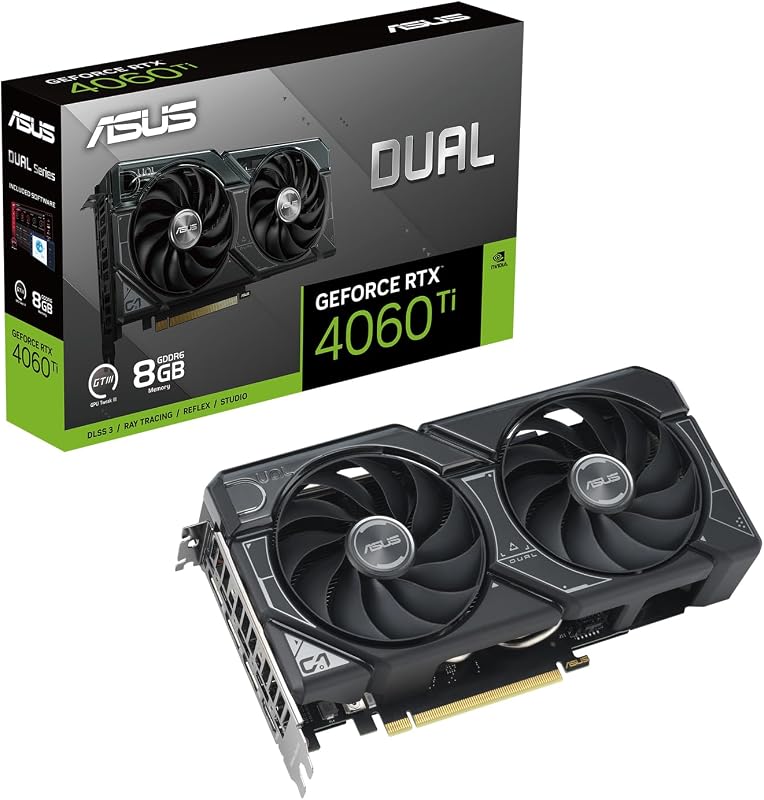
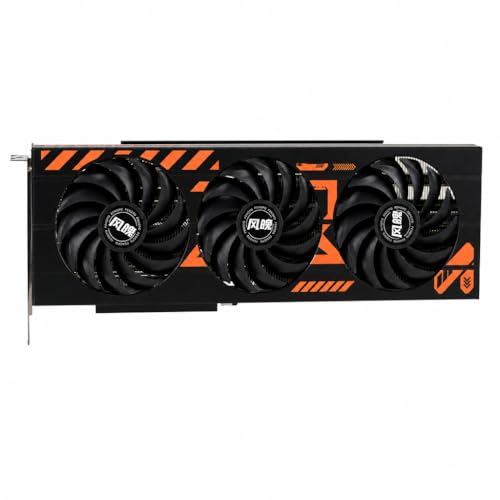
The technical divide between the Nvidia RTX 3060 and the Nvidia RTX 3080 centers on memory capacity, bus architecture, and system integration. While the MSI RTX 3060 features a factory-standard 12GB GDDR6 layout on a full PCIe x16 lane configuration tailored for desktop gaming, this modified server-grade RTX 3080 repurposes the Ampere platform with a massive 20GB GDDR6X buffer over a 320-bit bus to target memory-dense machine learning environments.
Mainstream PC gamers and daily creative workstation users should select the RTX 3060 for its plug-and-play desktop reliability and standard motherboard bandwidth. Builders prioritizing massive neural network datasets, high-parameter AI inference, and local language models should opt for the expanded memory footprint of the RTX 3080.

Nvidia RTX 3060 vs Nvidia RTX 3080 at a Glance
| Feature | Nvidia RTX 3060 | Nvidia RTX 3080 |
|---|---|---|
| Manufacturer / Brand | MSI | Generic |
| VRAM Capacity | 12 GB | 20 GB |
| VRAM Type | GDDR6 | GDDR6X |
| Memory Bus Width | 192-Bit | 320-Bit |
| GPU Core Clock | 1710 MHz / 1777 MHz Boost | 1710 MHz (1.7 GHz) |
| Memory Clock / Speed | 1807 MHz (15 Gbps) | 19 Gbps (1188 GHz listed) |
| Card Bus Interface | PCI-Express x16 (PCIe 4) | PCI-Express x4 |
| Video Outputs | 3x DisplayPort 1.4a, 1x HDMI 2.1 | 3x DisplayPort, 1x HDMI |
| Power Connectors & Supply | The listing does not specify | 8+8 pin (850W PSU recommended) |
| Cooling & Dimensions | 2 Fans (9.25″L x 4.88″W) | 3 Fans (11.8″L x 8.7″W) |
| Best For | Standard Desktop Gaming | AI Compute & Local LLMs |
VRAM Capacity and Memory Bus Architecture
The memory subsystem represents the most critical divergence between these two graphics cards. The RTX 3060 provides 12GB of GDDR6 memory operating across a 192-bit bus, delivering 15 Gbps of effective memory speed. This balance of memory capacity and throughput is tailored to standard desktop graphics workflows, modern game rendering pipelines, and everyday video production. A 12GB frame buffer allows users to load rich texture assets and modest compute matrices without saturating the local graphic memory. Readers evaluating mid-tier generational upgrades often compare this capacity against options like the nvidia rtx 3060 vs 3070, where memory capacity contrasts sharply with raw compute core counts.
In contrast, this specialized RTX 3080 listing features a modified 20GB GDDR6X configuration running across an ultra-wide 320-bit memory bus with a rated 19 Gbps memory throughput. GDDR6X memory utilizes advanced signaling to provide substantially higher raw data bandwidth to the GPU core compared to standard GDDR6. By pairing 20GB of high-speed memory with a 320-bit interface, the 3080 accommodates massive mathematical models, large neural matrices, and sprawling render buffers that would completely overflow smaller pools. When analyzing the RTX 3060 vs 3080 VRAM differences, the 20GB model delivers an uncompromised threshold for memory-bound tasks.
The operational cost of running up against VRAM limitations is severe: when a workload exceeds the card’s physical memory buffer, data must spill over into slower system memory across the motherboard, degrading processing throughput. The 12GB buffer on the RTX 3060 is well-suited for standard workloads, but the 20GB buffer on the RTX 3080 prevents memory exhaustion during heavy scientific computing and deep learning iterations.
Edge: Nvidia RTX 3080 for its superior 20GB GDDR6X capacity and wider 320-bit memory pipeline.
Artificial Intelligence and Compute Workloads
Compute performance is the central focus of the modified RTX 3080. The product data specifies that this 20GB GDDR6X GPU is optimized directly for AI mapping applications, compute task acceleration, and local large language model (LLM) execution, citing explicit support for frameworks like Qwen, GLM, and MiniMax. In practical deep learning workflows, parameter footprints dictate whether a model can load into GPU memory for low-latency inference. The Nvidia RTX 3080 AI performance profile benefits from this tailored 20GB envelope, enabling developers to run quantized and half-precision checkpoints locally without fragmenting layers across multiple graphics adapters.
The RTX 3060 is built on Nvidia Ampere architecture and provides dedicated Tensor Cores and Streaming Multiprocessors, allowing it to perform neural acceleration and AI-enhanced features. However, when deciding on the RTX 3060 or RTX 3080 for AI development, the RTX 3060 is constrained by its 12GB boundary. Developers running small neural networks, basic visual upscaling, or modest machine learning proofs-of-concept will find the 3060 fully capable, but larger modern foundation models cannot fit into its memory space without aggressive quantization that degrades output fidelity. Those evaluating Ampere compute configurations across tiers often monitor the step-up dynamics explored in analyses such as the nvidia rtx 3060 ti vs 3080.
For specialized machine learning practitioners, compute execution relies on rapid matrix transformations. The RTX 3060 vs RTX 3080 compute comparison demonstrates that the 3080 is explicitly adapted as an enterprise-adjacent compute workhorse. Its expanded architecture and tailored firmware make it a purpose-built solution for running complex weights locally.
Edge: Nvidia RTX 3080 due to its specialized AI optimization and support for massive local LLM parameter sets.
PCIe Interface and Motherboard Data Transfer
A crucial technical element revealed in the specifications is the physical motherboard interface. The MSI RTX 3060 utilizes a full PCI-Express x16 connection running on modern PCIe 4 standards. This full 16-lane configuration ensures maximum bidirectional bandwidth between the desktop processor, system memory, and the graphics card. In standard desktop computing and gaming, high PCIe bus bandwidth prevents pipeline bottlenecks during real-time asset streaming, draw-call submission, and frame buffering.
By comparison, the generic RTX 3080 listing specifies a PCI-Express x4 connection. Operating on an x4 lane link limits the physical data pathways between the motherboard and the GPU. While a PCI-Express x4 interface is common in server environments or secondary compute risers where models are loaded into local VRAM once and executed iteratively on-chip, it presents a significant hurdle for applications requiring continuous, high-volume texture streaming. Shoppers examining alternatives within the platform family often review standard lane allocations seen in cards like the nvidia rtx 3060 vs 3070 ti to understand standard desktop throughput.
For compute-heavy local LLM inference, an x4 physical connection is adequate because model weights remain stationed inside the card’s 20GB VRAM pool once initialized. However, for real-time applications that constantly transfer large geometry or video frames across the host bus, the RTX 3060 maintains a major system architectural advantage with its native x16 interface.
Edge: Nvidia RTX 3060 for its complete, full-bandwidth PCI-Express x16 motherboard connection.
Gaming Performance and Display Capabilities
Evaluating the RTX 3060 or RTX 3080 for gaming reveals two entirely distinct design philosophies. The MSI RTX 3060 is engineered specifically as a retail consumer gaming graphics card. It leverages Ampere architecture enhancements, including 2nd generation Ray Tracing Cores, dedicated Tensor Cores, and support for ultra-high resolutions up to 7680×4320. Its display array includes three DisplayPort 1.4a jacks and a modern HDMI 2.1 port, supporting high refresh rates and modern desktop monitor standards right out of the box.
The modified RTX 3080 listing confirms support for gaming alongside its primary server and AI acceleration roles. It provides standard visual connectivity consisting of three DisplayPort outputs and one HDMI port (though the listing does not specify the revision levels of these connections). While the underlying Ampere GPU inside the RTX 3080 possesses substantial rendering capability, the PCIe x4 bus constraint introduces potential asset-streaming bottlenecks in fast-paced open-world games that stream large textures across system RAM into the GPU.
For standard PC gaming installations, the MSI RTX 3060 delivers seamless compatibility, standard consumer driver pipelines, and native support across modern operating systems. Those considering high-end gaming options often contrast these setups with factory cards analyzed in guides like the nvidia rtx 3070 vs 3080 or upper-echelon models like the nvidia rtx 3060 ti vs 3080 ti. For dependable gaming without driver or interface quirks, the 3060 is the more balanced choice.
Edge: Nvidia RTX 3060 due to its unconstrained PCIe x16 gaming bus and confirmed HDMI 2.1 / DisplayPort 1.4a display outputs.
Power Requirements and Thermal Engineering
Thermal management and power delivery dictate chassis compatibility and infrastructure demands. The MSI RTX 3060 features a compact physical footprint measuring 9.25 inches in length and 4.88 inches in width. It uses a Torx Twin Fan dual-axial cooling system designed to fit into standard mid-tower and compact desktop cases while operating efficiently on standard consumer desktop power supplies (the listing does not specify exact wattage thresholds for the 3060).
On the other hand, the modified RTX 3080 is a substantial piece of hardware. It measures 11.8 inches in length and 8.7 inches in width, requiring a cavernous chassis or open-air server rack to install properly. The card features a triple-fan cooling array built into a dual-width server-style housing to expel heat generated by its high-performance processor and 20GB of GDDR6X memory. Furthermore, power delivery demands dedicated infrastructure: it requires dual 8+8 pin supplemental power connections and explicitly mandates an 850W or higher power supply unit.
Users integrating the RTX 3080 must ensure their chassis has enough physical clearance to house an 8.7-inch wide card and confirm their power supply can deliver stable high-wattage current over dual 8-pin cables. The RTX 3060 offers far simpler thermal and electrical integration for ordinary desktop enclosures.
Edge: Nvidia RTX 3060 for its compact dual-fan dimensions and accessible power integration.
Hardware Provenance and Manufacturing Reliability
When assessing whether an RTX 3080 is worth it, buyers must account for hardware origin and production characteristics. Any thorough Nvidia RTX 3060 review will highlight that the MSI model is an established, factory-built consumer component from a recognized board partner. It includes full retail documentation, standard manufacturer quality controls, predictable component placement, and uniform heatsink engineering.
Conversely, this Nvidia RTX 3080 review reveals a non-standard hardware implementation. Manufactured under a Generic brand label, the listing states explicitly that the card is a modified server GPU optimized for AI mapping applications. Most importantly, the product data notes: “The appearance of different batches of 3080 cards will differ. It depends on what we have in hand.” This disclosure confirms that the visual design, cooling shroud configuration, and underlying board donor may vary from order to order.
For production servers and dedicated AI experimenters, custom modified cards are a well-known method to access massive VRAM capacity that does not exist in standard consumer desktop channels. However, for users who demand uniform hardware builds, predictable warranties, and standard aesthetic presentation, the MSI RTX 3060 provides verified manufacturer consistency that a modified generic card cannot match.
Edge: Nvidia RTX 3060 for its verified retail manufacturing provenance and structural consistency.
Pros and Cons
Nvidia RTX 3060

Pros
- Full PCIe x16 interface bandwidth
- Compact 9.25-inch dual-fan footprint
- HDMI 2.1 and DisplayPort 1.4a
- Factory retail MSI manufacturing consistency
Cons
- Narrower 192-bit memory bus
- Smaller 12GB GDDR6 buffer
- Lower capacity for large LLMs
View Nvidia RTX 3060 on Amazon
Nvidia RTX 3080

Pros
- Massive 20GB GDDR6X memory capacity
- Wide 320-bit memory bus width
- Optimized for local LLM inference
- Triple-fan high-performance cooling
Cons
- Limited to PCIe x4 interface
- Requires 850W power supply
- Generic card with batch appearance variance
View Nvidia RTX 3080 on Amazon
Who Should Buy Each One
Choose the Nvidia RTX 3060 If
- You are building or upgrading a standard home desktop PC for gaming at high refresh rates.
- Your chassis has limited interior clearance and requires a compact 9.25-inch dual-fan card.
- You need full PCIe x16 lane bandwidth for seamless asset streaming without interface bottlenecks.
- You want the out-of-the-box reliability and documentation of a recognized retail brand like MSI.
Choose the Nvidia RTX 3080 If
- You run local AI models, LLMs (such as Qwen, GLM, or MiniMax), and deep learning workloads that require 20GB of VRAM.
- Your system can accommodate a large 11.8-inch by 8.7-inch triple-fan dual-width card.
- Your power supply delivers 850W or higher with dedicated 8+8 pin graphics connections.
- You prioritize extreme memory bandwidth over a 320-bit bus above consumer gaming features.
Final Verdict
For the vast majority of PC builders and mainstream gamers, the Nvidia RTX 3060 is the sensible, reliable recommendation. By combining a 12GB GDDR6 memory buffer with a full-bandwidth PCIe x16 motherboard interface, a compact dual-fan form factor, and verified MSI retail assembly, it delivers dependable desktop gaming and everyday creative performance without demanding excessive chassis space or massive power supplies.
The modified 20GB Nvidia RTX 3080 wins decisively in compute-dense applications where memory capacity is the absolute governing factor. If your daily workflow involves fine-tuning transformer weights, running offline local language models, or processing large machine learning datasets that choke standard graphics cards, the 20GB GDDR6X memory configuration on a 320-bit bus justifies its physical footprint, 850W power requirement, and PCIe x4 layout.
FAQ
Can the modified Nvidia RTX 3080 still be used for gaming?
Yes, the listing states that this enhanced GPU configuration is suitable for gaming as well as AI computing tasks and LLM inference. However, because it runs on a PCI-Express x4 connection rather than a full x16 bus, gaming performance may be limited by host-to-GPU data transfer speeds in titles that stream assets continuously.
How does the RTX 3060 vs 3080 specs compare regarding memory?
The RTX 3060 features 12GB of standard GDDR6 memory on a 192-bit bus with a 15 Gbps speed rating, while this modified RTX 3080 features 20GB of high-speed GDDR6X memory operating across a wide 320-bit bus at 19 Gbps.
What power supply is required for the Nvidia RTX 3080?
The listing explicitly mandates an 850W or higher power supply and requires dual 8+8 pin power connectors to deliver adequate current to the card.
Why does the RTX 3080 listing say the appearance may differ between batches?
This RTX 3080 is a modified server-oriented graphics card sold under a Generic brand label rather than a standard consumer retail card. The manufacturer notes that physical appearance and cooling shrouds vary depending on the specific donor hardware available during assembly.
What display outputs are available on the MSI RTX 3060?
The MSI RTX 3060 is equipped with three DisplayPort version 1.4a outputs and one HDMI version 2.1 port, supporting display resolutions up to 7680×4320.
Does the RTX 3060 have enough memory for artificial intelligence tasks?
The RTX 3060 includes 12GB of GDDR6 memory, which is sufficient for light AI experimentation, image generation, and running smaller quantized models. However, larger foundational models and extensive training workflows generally require the expanded 20GB buffer offered by the modified RTX 3080.