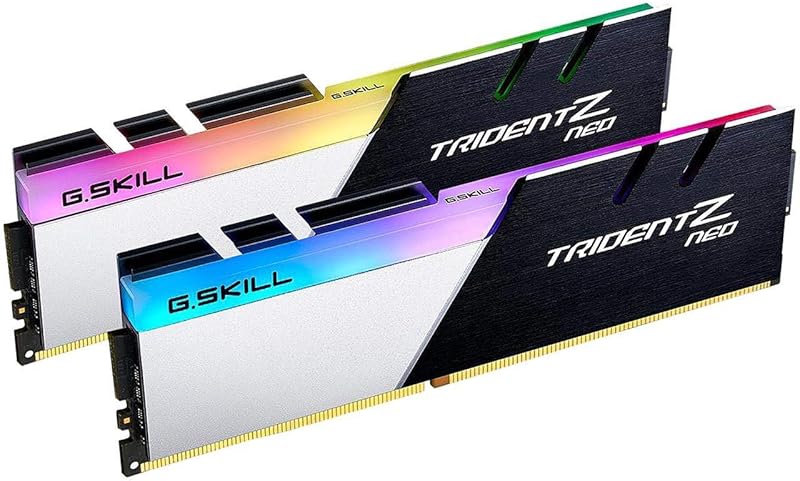
The decisive difference between these two memory choices centers on channel architecture and raw transfer speed: Crucial supplies a high-frequency dual-channel 4000MHz kit in a two-stick configuration, whereas Patriot delivers a single 16GB module clocked at 3200MHz.
Builders assembling high-refresh gaming rigs who want peak dual-channel bandwidth immediately should choose Crucial Ballistix DDR4. Users upgrading slot-constrained motherboards who want a 16GB module with room to double their capacity later should choose Patriot Viper Steel DDR4.
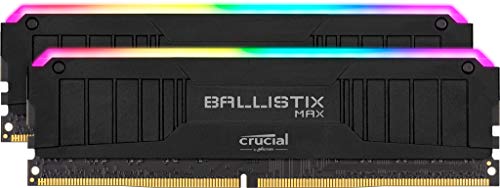
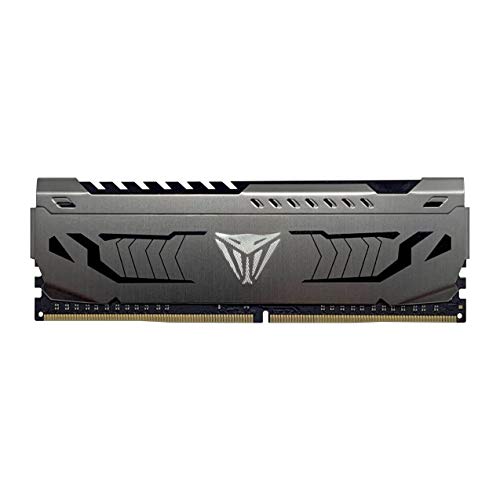
Crucial Ballistix DDR4 vs Patriot Viper Steel DDR4 at a Glance
| Feature | Crucial Ballistix DDR4 | Patriot Viper Steel DDR4 |
|---|---|---|
| Memory Capacity | 16GB (2 x 8GB) | 16GB (1 x 16GB) |
| Memory Speed | 4000 MHz | 3200 MHz |
| CAS Latency | CL18 | CL16 |
| Tested Timings | Not listed | 16-20-40 |
| Tested Voltage | 1.35V | 1.35V |
| Form Factor | 288-Pin DIMM | 288-Pin UDIMM |
| Thermal / Visual Design | Lightweight with LED Monitor | Aluminum Heat Spreader |
| Overclocking Profile | Standard DDR4 Profile | XMP 2.0 Support |
| Platform Validation | Desktop | Tested across Intel and AMD platforms |
| Best For | High-bandwidth gaming systems | Slot-constrained desktop upgrades |
Memory Frequency and Data Transfer Bandwidth
Memory frequency dictates how many millions of data cycles a RAM module processes every second. The Crucial Ballistix DDR4 4000MHz specs state a 4000 MHz transfer rate, operating significantly faster than the 3200 MHz peak listed for the Patriot module. For high-demand tasks, memory bandwidth directly affects how rapidly the central processing unit retrieves assets, textures, and instruction sets stored in system memory.
In this Crucial Ballistix DDR4 review comparison, the 800 MHz frequency delta gives Crucial a distinct operational advantage in throughput. When reading memory-heavy titles or compute workloads, higher data transfer rates prevent data bottlenecks between the CPU cache and physical DRAM. The Patriot Viper Steel 3200MHz CL16 configuration provides solid mainstream bandwidth, but it cannot match the raw per-second transfer ceiling of a 4000 MHz module.
For builders assessing g.skill trident z neo ddr4 vs crucial ballistix ddr4 alternatives, clock frequency remains the most prominent hardware metric determining memory throughput. Operating at 4000 MHz allows Crucial to deliver substantial bandwidth advantages during processing-heavy workloads that push beyond standard JEDEC frequencies.
Edge: Crucial Ballistix DDR4 because its 4000 MHz frequency provides a substantially wider data transfer pipeline than 3200 MHz memory.
Memory Channel Architecture and Kit Configuration
Channel configuration determines how many independent communication paths exist between the memory controller and system memory. Crucial equips its package as an 8GBx2 kit totaling 16GB, while Patriot configures its 16GB offering as a single physical stick (1x16GB). This structural difference completely reshapes how memory interacts with desktop motherboards from the moment of installation.
Running two 8GB modules on a standard dual-channel motherboard enables Crucial to leverage a 128-bit memory bus immediately. In contrast, running a single Patriot module restricts the motherboard to a 64-bit single-channel bus, halving the theoretical peak bandwidth regardless of the memory clock speed. As discussed in our corsair vengeance rgb pro ddr4 vs crucial ballistix ddr4 guide, installing matched dual-rank or dual-channel pairs avoids leaving significant CPU performance on the table.
However, the Patriot layout provides functional advantages for motherboards with only two DIMM slots, such as Mini-ITX or microATX boards. Installing a single 16GB Patriot module leaves an empty socket ready for another identical module later, expanding total system capacity to 32GB without discarding existing RAM. Choosing Crucial fills both slots on a two-slot board immediately, capping the system at 16GB unless the entire kit is replaced.
Edge: Crucial Ballistix DDR4 because its dual-module packaging unlocks the full throughput of dual-channel system architecture out of the box.
Latency Timings and Real-World Responsiveness
Column Address Strobe latency measures the delay between a read command sent to memory and the moment the data becomes accessible. The Patriot Viper Steel DDR4 review specifications show a rated latency of CL16 with tested timings of 16-20-40. Crucial rates its Ballistix MAX kit at CL18, which presents a higher cycle delay count than the Patriot module.
True memory responsiveness depends on the mathematical relationship between cycle count and clock speed. A cycle at 4000 MHz completes in half a nanosecond, meaning Crucial achieves an absolute first-word latency of 9.0 nanoseconds at CL18. Patriot runs at 3200 MHz with a 0.625-nanosecond cycle time, producing a true latency of 10.0 nanoseconds at CL16. Even with a nominally higher CAS latency number, the Crucial memory responds faster in real terms.
Shoppers comparing the kingston fury beast ddr4 vs patriot viper steel ddr4 should note that Patriot provides detailed sub-timings (16-20-40) directly on the product listing, whereas Crucial lists only the primary CL18 rating. Even so, the faster frequency of Ballistix offsets its higher timing numbers across practical desktop computing tasks.
Edge: Crucial Ballistix DDR4 because its 4000 MHz clock rate produces a 9.0-nanosecond true latency, outpacing the 10.0-nanosecond response of CL16 at 3200 MHz.
Thermal Dissipation and Physical Module Build
Thermal management is essential for long-term component reliability and maintaining signal integrity when operating desktop RAM at 1.35 volts. Patriot integrates a dedicated aluminum heat spreader with a specific design element aimed at absorbing and dissipating heat generated by the DRAM ICs. Aluminum remains the standard physical material for transferring heat away from sensitive memory components.
Crucial approaches module construction from a different angle, utilizing a lightweight assembly that incorporates an LED monitor feature. The complete Crucial kit weighs 236 grams and includes onboard monitoring hardware, enabling users to keep visual track of operational status. While Patriot relies strictly on passive conduction through solid aluminum, Crucial blends physical thermal dissipation with active hardware monitoring.
Readers evaluating the g.skill ripjaws v ddr4 3600 vs patriot viper steel ddr4 match-up often prioritize thick heat sinks when building inside compact enclosures with restricted airflow. The substantial aluminum shield on the Viper Steel module provides rugged physical protection during installation and consistent passive cooling under sustained execution loops.
Edge: Patriot Viper Steel DDR4 because its dedicated aluminum heat spreader offers durable passive thermal cooling without relying on software or external monitoring elements.
Overclocking Profiles and Hardware Compatibility
System stability depends heavily on how easily desktop hardware adopts rated memory speeds without manual sub-timing adjustments. Patriot features explicit XMP 2.0 support for automatic overclocking, and the manufacturer confirms testing across modern Intel and AMD platforms. This ensures that enabling the extreme memory profile in the motherboard BIOS applies the 3200 MHz clock, 16-20-40 timings, and 1.35V operational voltage automatically.
Crucial also operates at an identical 1.35 volts to reach its rated 4000 MHz CL18 profile, matching standard DDR4 desktop motherboard DIMM pinouts. However, stabilizing a 4000 MHz memory frequency places significant demands on the CPU integrated memory controller. While most modern processors easily maintain a 3200 MHz memory clock, achieving 4000 MHz often requires high-tier motherboards and capable silicon capable of handling high-speed Infinity Fabric or gear ratios without instability.
When asking whether kingston fury beast ddr4 vs crucial ballistix ddr4 makes more sense for everyday gaming, overall system compatibility is crucial. Patriot offers broad plug-and-play reliability across a massive spectrum of desktop hardware, while Crucial targets performance-focused builds where the motherboard explicitly supports DDR4-4000 speeds.
Edge: Patriot Viper Steel DDR4 because its 3200 MHz XMP 2.0 profile offers straightforward compatibility across a wider range of Intel and AMD desktop processors.
Pros and Cons
Crucial Ballistix DDR4
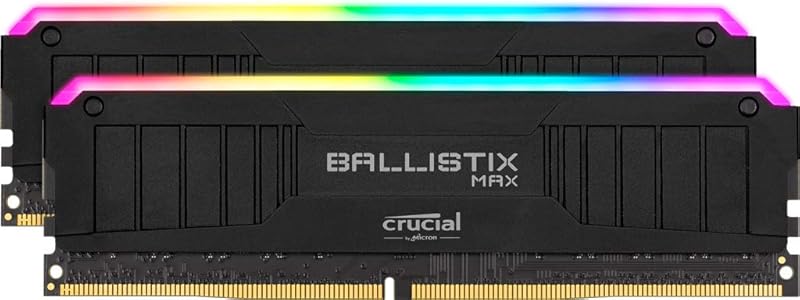
Pros
- 4000MHz high-frequency data transfer rate
- Dual-channel 2x8GB configuration out of box
- 0ns true first-word response latency
- Integrated LED monitor visual feature
Cons
- Requires capable motherboard for 4000MHz stability
- Occupies two memory slots immediately
View Crucial Ballistix DDR4 on Amazon
Patriot Viper Steel DDR4

Pros
- Single 16GB module leaves expansion slots free
- Proven XMP 2.0 automatic overclocking
- Durable custom aluminum heat spreader
- Validated across Intel and AMD platforms
Cons
- Single-channel operation halves initial memory bus
- Lower 3200MHz maximum clock speed
View Patriot Viper Steel DDR4 on Amazon
Who Should Buy Each One
Choose the Crucial Ballistix DDR4 If
- You want 4000 MHz high-speed dual-channel throughput ready for installation immediately.
- Your desktop motherboard and processor memory controller reliably support 4000 MHz memory profiles.
- You value onboard LED hardware monitoring capabilities alongside a lightweight module footprint.
- Your system has four memory slots and you do not require single-stick upgrade staging.
Choose the Patriot Viper Steel DDR4 If
- You own a motherboard with two memory slots and want to keep one slot open for a future 16GB upgrade.
- You prefer a dedicated aluminum heat spreader for passive component cooling without active monitoring hardware.
- Your system processor is optimized for standard 3200 MHz operation with verified XMP 2.0 automatic profiles.
- You want tested timings of 16-20-40 running at 1.35 volts across either AMD or Intel platforms.
Final Verdict
For most desktop users choosing between Crucial Ballistix vs Patriot Viper Steel 16GB configurations, Crucial Ballistix DDR4 is the higher-performing choice. By providing two 8GB modules operating in dual-channel mode at 4000 MHz, it unlocks superior bandwidth and lower true latency (9.0 nanoseconds versus 10.0 nanoseconds) compared to single-channel memory. Gamers and content creators looking to maximize CPU throughput will get far better immediate performance from the dual-stick Crucial kit.
Patriot Viper Steel DDR4 wins when system expansion flexibility and platform compatibility take precedence. A single 16GB module allows owners of compact or entry-level two-slot motherboards to double memory capacity later without discarding existing components. Its proven 3200 MHz XMP 2.0 profile and aluminum heat spreader make it an accessible, reliable upgrade for systems where pushing memory controllers to 4000 MHz is unnecessary or unsupported.
FAQ
Does Crucial Ballistix DDR4 run in dual-channel mode out of the box?
Yes. Crucial Ballistix DDR4 includes two 8GB modules (BLM2K8G40C18U4BL). When installed into the appropriate matching slots on a dual-channel desktop motherboard, the kit runs in dual-channel mode immediately.
Can Patriot Viper Steel DDR4 3200MHz work on both Intel and AMD platforms?
Yes. The manufacturer listing notes that Patriot Viper Steel has been tested across modern Intel and AMD desktop platforms to ensure reliable operation when loading its XMP 2.0 profile.
Is Crucial Ballistix DDR4 or Patriot Viper Steel DDR4 for gaming better?
Crucial Ballistix DDR4 is better for gaming because it supplies two memory sticks for 128-bit dual-channel bandwidth and runs at 4000 MHz, which helps prevent CPU-bound frame rate drops during intensive gaming sessions.
Why does Patriot Viper Steel show CL16 while Crucial Ballistix shows CL18?
CAS latency indicates the number of clock cycles between commands. Patriot operates at 3200 MHz with a CL16 cycle delay, while Crucial operates at 4000 MHz with a CL18 cycle delay. Because Crucial runs faster cycles, its true response time is 9.0 nanoseconds compared to 10.0 nanoseconds for Patriot.
Is Patriot Viper Steel DDR4 worth it for two-slot motherboards?
Yes. Because the Patriot memory comes as a single 16GB stick, it leaves the second memory slot open, allowing owners of two-slot boards to add another module later to reach 32GB total capacity.
What operating voltage do both memory kits require?
Both Crucial Ballistix DDR4 and Patriot Viper Steel DDR4 operate at a tested voltage of 1.35 volts to maintain their factory-specified frequencies and timings.