The core distinction between the Samsung T9 and the SanDisk Extreme Portable SSD centers on heat regulation during high-throughput transfers versus certified physical protection against the elements. While both drives leverage high-speed USB connectivity capable of reaching 2,000 MB/s, the Samsung T9 prioritizes sustained write consistency and thermal management, whereas the SanDisk Extreme Portable SSD incorporates an official IP65 enclosure designed to survive dust exposure and water spray.
Creative professionals who process continuous video files or capture direct ProRes footage should lean toward the Samsung T9 for its dedicated thermal architecture, while mobile field operators needing a lightweight, weather-sealed backup drive should choose the SanDisk Extreme Portable SSD.
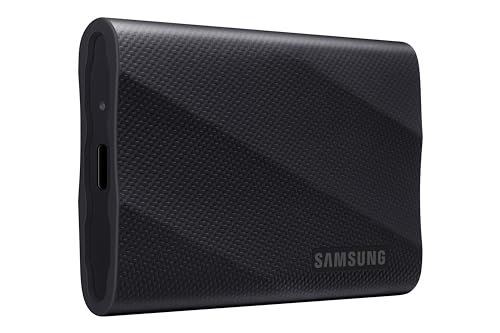

Samsung T9 vs SanDisk Extreme Portable SSD at a Glance
| Feature | Samsung T9 | SanDisk Extreme Portable SSD |
|---|---|---|
| Maximum Read Speed | Up to 2,000 MB/s | Up to 2,000 MB/s |
| Maximum Write Speed | Up to 2,000 MB/s | Lower than read speed (exact speed not specified) |
| Thermal Technology | Dynamic Thermal Guard | Not listed |
| Ingress Protection (IP Rating) | Not listed | IP65 (dust resistant, water spray tested at 30 kPa) |
| Drop Resistance | Up to 9.8 feet | Up to 3 meters (approx. 9.8 feet) |
| Hardware Encryption | AES 256-bit hardware encryption | 256-bit AES encryption (password protection) |
| Weight | Not listed | 1.6 ounces |
| Physical Dimensions | 2.4-inch form factor (full dimensions not listed) | 3.35″L x 2″W x 0.39″Th |
| Mobile Video Recording | Supports iPhone 15 ProRes 4K at 60fps | Not specified |
| Best For | High-volume sustained file transfers and studio editing | Field travel and weather-exposed outdoor backups |
Transfer Speeds and Write Performance
External drive throughput defines how quickly large media directories move between machines, but peak numbers do not always tell the entire story. In any detailed Samsung T9 review, the focus centers on symmetrical throughput. Samsung specifies that the T9 delivers both read and write speeds of up to 2,000 MB/s over a USB 3.2 Gen 2×2 interface with UASP mode enabled. This means that dumping multi-gigabyte files to the drive takes virtually the same amount of time as reading files off the drive, provided the host device supports the matching connection protocol.
The SanDisk Extreme Portable SSD also advertises transfer speeds reaching up to 2,000 MB/s, representing a major uplift over older revisions. However, the official listing specifies that while read speeds hit up to 2,000 MB/s, write speeds are lower, without quoting an exact sustained write metric. In practical data operations, this asymmetry matters when backing up massive production bins or exporting timelines. Readers comparing older models in our samsung t7 vs sandisk extreme portable ssd breakdown will recognize this dynamic, where read velocity outpaces write velocity during sustained intake.
For high-resolution capture pipelines, the Samsung T9 transfer speed advantage becomes even clearer. Samsung explicitly lists support for recording ProRes 4K footage at 60 frames per second straight from an iPhone 15 Pro, which requires uninterrupted write stability without momentary buffering drops. The Extreme Portable SSD states it can move 1,000 high-resolution photos in under 60 seconds, but without a verified write baseline, it leaves high-bitrate video ingest somewhat less defined.
Edge: Samsung T9, due to matched sequential read and write speeds reaching up to 2,000 MB/s and documented support for ProRes 4K 60fps video ingest.
Thermal Management and Heavy Workloads
When high-performance solid state drives push close to 2,000 MB/s, internal components generate substantial heat. Unchecked heat inevitably leads to thermal throttling, where drive firmware throttles performance down to baseline speeds to avoid hardware damage. The Samsung T9 thermal performance relies on proprietary Dynamic Thermal Guard technology. This thermal solution is engineered to withstand and disperse heat during prolonged operations, keeping exterior skin temperatures under 140 degrees Fahrenheit in controlled testing to comply with IEC 62368-1 safety standards.
By contrast, the SanDisk Extreme Portable SSD review materials from the manufacturer do not specify an active or proprietary thermal heat spreader mechanism. The drive uses a compact, low-profile enclosure that keeps the drive exceptionally thin, but the listing makes no mention of specific temperature-governing standards or sustained thermal limits. For intermittent data transfers-such as backing up documents, downloading photo batches, or storing personal media libraries-passive cooling is completely adequate. However, during continuous multi-hour read and write cycles, drives without robust thermal management often reduce their speeds to manage heat buildup.
When asking whether to buy the Samsung T9 or SanDisk Extreme for video editing, thermal engineering serves as the key deciding factor. Video editing suites constantly pull assets, render scratch files, and output complex timelines. Samsung manufactures its DRAM and NAND components completely in-house, pairing them with the Dynamic Thermal Guard to keep transfer rates steady across extended editing sessions. Readers investigating pro-tier drives in our samsung t9 vs sandisk extreme pro portable analysis will note that heat dissipation remains vital for maintaining top-tier speeds.
Edge: Samsung T9, thanks to its engineered Dynamic Thermal Guard that maintains skin temperatures under 140°F during intensive processing.
Weather Resistance and Drop Durability
Drives deployed outside a controlled studio setting encounter dust, rain, and accidental physical impacts. In this category, the SanDisk Extreme IP65 rating sets an uncompromising standard for outdoor readiness. SanDisk notes that the Extreme Portable SSD is tested according to IEC 60529 IP65 standards, proving it can withstand direct water flow at 30 kPa for 3 minutes, while limiting dust ingress so that environmental exposure does not disrupt operation. This makes the Extreme Portable SSD a resilient choice for wildlife photographers, event videographers, and active travelers who work in unpredictable weather.
The Samsung T9 approaches physical durability from an impact perspective, but it lacks an official ingress protection rating. The product data confirms rugged durability capable of enduring drops of up to 9.8 feet, matching the shock-absorbing drop threshold of the SanDisk drive. However, the listing provides no data regarding water or dust resistance. Exposing the T9 to rain, splashes, or heavy dust could lead to drive failure or port corrosion, since it is not sealed against moisture intrusion. For users who need ruggedness akin to the T9’s sibling drive, our samsung t7 shield vs sandisk extreme portable ssd comparison highlights how dedicated rubberized shielding behaves in damp conditions.
Both models deliver solid drop resistance, with the Extreme Portable SSD surviving drops up to 3 meters (approximately 9.8 feet) and the T9 rated for up to 9.8 feet. However, the absence of listed moisture or dust seals on the T9 tilts all outdoor durability metrics heavily toward SanDisk. Those who frequently handle field assignments near waterways, misty forests, or dusty job sites will gain substantial peace of mind from SanDisk’s certified IP65 construction.
Edge: SanDisk Extreme Portable SSD, offering certified IP65 water and dust resistance alongside 3-meter drop protection.
Form Factor, Weight, and Travel Convenience
A portable drive should integrate cleanly into a creator’s travel pack without adding unnecessary bulk. Evaluating the SanDisk Extreme Portable SSD vs Samsung T9 on physical portability reveals a distinct design split. The SanDisk Extreme Portable SSD features an ultra-compact footprint measuring 3.35 inches long, 2.0 inches wide, and just 0.39 inches thick. More remarkably, it weighs only 1.6 ounces. It also features a built-in carabiner loop cutout, allowing users to clip it straight to camera bags, backpacks, or belts for immediate access.
The Samsung T9 is listed with a 2.4-inch form factor, but the listing leaves its specific weight, full exterior dimensions, and enclosure material unstated. While categorized as a portable external solid state drive designed to accompany laptops, tablets, and gaming consoles, the inclusion of internal thermal dissipation components generally necessitates a thicker shell. Although it remains comfortably portable for studio bags and desktop setups, it lacks the featherweight profile and integrated strap loop found on the SanDisk design.
When deciding between the Samsung T9 or SanDisk Extreme for travel, every ounce and pocket dimension counts. The SanDisk Extreme slides into small pouches, laptop sleeves, or shirt pockets without creating an awkward bulge. If your workflow requires carrying multiple external drives simultaneously inside a compact sling or gear belt, the negligible weight and sub-half-inch profile of the SanDisk drive make it substantially easier to transport.
Edge: SanDisk Extreme Portable SSD, providing an ultra-light 1.6-ounce weight, 0.39-inch thickness, and a built-in clip loop.
Device Compatibility, Security, and Management Software
Hardware utility depends heavily on broad system support and firmware maintenance. The Samsung T9 provides broad compatibility across PCs, Macs, Android tablets, modern consoles-explicitly listing the Sony PlayStation 5, Microsoft Xbox Series X, and Microsoft Xbox Series S-and Apple smartphones including the iPhone 15 and 16 series. It pairs with Samsung Magician Software, an established desktop management utility that handles firmware updates, drive health monitoring, and security management. Samsung also equips the drive with AES 256-bit hardware encryption, protecting stored contents directly at the controller level.
The SanDisk Extreme Portable SSD lists compatibility across desktops, laptops, tablets, smartphones, PCs, Macs, and the Sony PlayStation 5. Unlike the T9, the listing does not explicitly list Microsoft Xbox Series consoles or direct iPhone 15 ProRes support. For data security, the Extreme Portable SSD offers password protection backed by 256-bit AES encryption, requiring a software download supported on Windows 10 and higher or macOS version 12 and higher. For similar software discussions, readers can explore our sandisk extreme pro portable vs wd my passport ssd comparison to see how brand software ecosystems differ.
Samsung holds a distinct advantage in drive lifecycle maintenance through its in-house component manufacturing. Samsung builds its own DRAM, NAND flash memory, and controller firmware, creating a unified hardware stack monitored via Samsung Magician. While SanDisk delivers effective password encryption for general computer users, Samsung’s explicit multi-console validation, native iPhone ProRes optimization, and integrated drive health suite provide a more versatile environment for professional cross-platform production.
Edge: Samsung T9, featuring comprehensive device validation including Xbox consoles, direct iPhone 15 ProRes capture, and the Samsung Magician software suite.
Pros and Cons
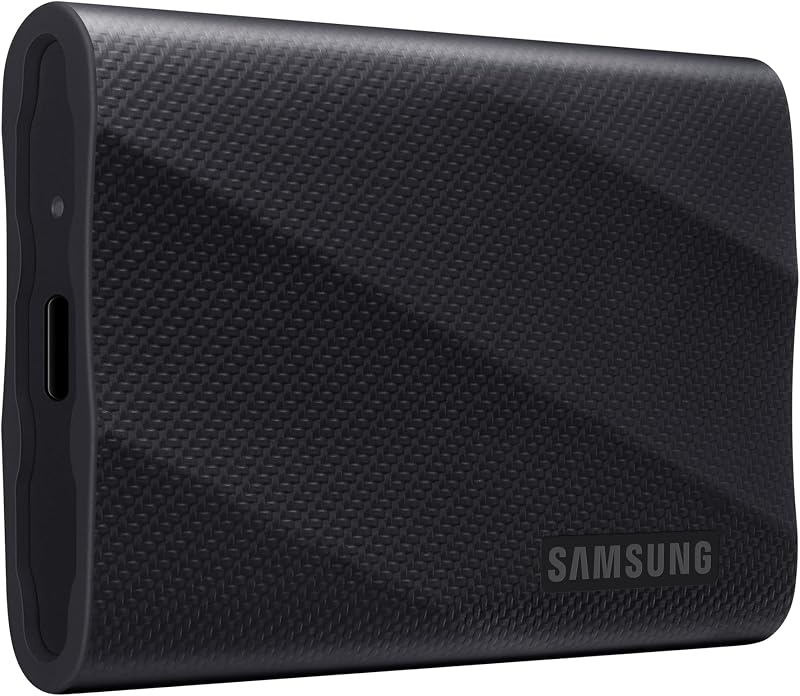
Samsung T9
Pros
- Up to 2,000 MB/s sustained write speed
- Dynamic Thermal Guard manages operational heat
- Supports iPhone 15 ProRes 4K 60fps
- Samsung Magician software drive monitoring
- Drop protection up to 9.8 feet
Cons
- No IP water or dust rating listed
- Weight not specified in product data
SanDisk Extreme Portable SSD

Pros
- IP65 water and dust protection
- Up to 2,000 MB/s read speed
- Weighs only 1.6 ounces
- Slim 0.39-inch pocket-sized profile
- Drop protection up to 3 meters
Cons
- Write speed lower than read speed
- Thermal management system not listed
View SanDisk Extreme Portable SSD on Amazon
Who Should Buy Each One
Choose the Samsung T9 If
- You need matching read and write transfer speeds up to 2,000 MB/s for large data exports.
- You edit high-bitrate video projects and require Dynamic Thermal Guard to prevent thermal throttling.
- You plan to capture 4K 60fps ProRes video directly from an iPhone 15 Pro.
- You want integrated drive diagnostics and firmware tools via Samsung Magician Software.
Choose the SanDisk Extreme Portable SSD If
- You work in outdoor environments requiring IP65 protection against water spray and fine dust.
- You prioritize an ultra-light storage device, weighing just 1.6 ounces with a 0.39-inch thickness.
- You want a drive with an integrated loop to clip onto a camera bag or backpack while traveling.
- You need reliable password protection with 256-bit AES encryption for everyday mobile backups.
Final Verdict
For most creative professionals, video editors, and power users, the Samsung T9 stands out as the superior operational drive. By pairing sequential read and write speeds of up to 2,000 MB/s with the Dynamic Thermal Guard cooling system, it eliminates the performance drops that often plague high-speed storage under heavy workloads. Add in certified iPhone 15 ProRes 4K recording support, full console compatibility, and in-house component architecture, and the T9 represents a powerhouse workstation companion designed to handle intensive data transfers without hesitation.
On the other hand, if your priority is field survival and pocketability rather than sustained peak write speeds, the SanDisk Extreme Portable SSD is the clear winner. Weighing just 1.6 ounces and boasting an IP65 rating against rain, moisture, and dust, it thrives in challenging outdoor environments where the T9 should not tread. When asking is SanDisk Extreme Portable SSD worth it, the answer is an easy yes for travel photographers, commuters, and field creators who need durable, weather-sealed backup storage on the go.
FAQ
Can the Samsung T9 record ProRes video directly from an iPhone?
Yes, the Samsung T9 listing explicitly confirms support for recording iPhone 15 ProRes 4K video at 60 frames per second. Samsung recommends using the included cable to ensure adequate bandwidth and power delivery during direct camera recording.
Is the SanDisk Extreme Portable SSD waterproof?
The SanDisk Extreme Portable SSD holds an IP65 ingress protection rating. It is tested to withstand water flow at 30 kPa for 3 minutes and resists dust contact. However, it is water-resistant rather than fully submersible, and SanDisk notes that the drive must be clean and dry before use.
Does the Samsung T9 feature water or dust resistance?
The product data for the Samsung T9 mentions rugged drop durability up to 9.8 feet, but it does not specify an IP rating for dust or water resistance. If you require water protection, consider drives with certified sealing such as those analyzed in our samsung t7 shield vs sandisk extreme pro portable breakdown.
How fast is the write speed on the SanDisk Extreme Portable SSD?
The SanDisk Extreme listing specifies read speeds of up to 2,000 MB/s, but explicitly notes that write speeds are lower without providing a specific numerical maximum. In contrast, the Samsung T9 offers sustained write speeds of up to 2,000 MB/s.
Do both drives support hardware encryption?
Yes, both models provide 256-bit AES encryption to safeguard confidential data. The Samsung T9 utilizes AES 256-bit hardware encryption managed via Samsung Magician, while the SanDisk Extreme Portable SSD provides password protection powered by 256-bit AES encryption through downloadable software for Windows and macOS.
Can I use these drives with gaming consoles?
Both drives support gaming console connectivity. The SanDisk Extreme Portable SSD listing explicitly confirms compatibility with the Sony PlayStation 5. The Samsung T9 listing confirms compatibility with the Sony PlayStation 5 as well as the Microsoft Xbox Series X and Microsoft Xbox Series S consoles.