The decisive difference between the Samsung T9 and the SanDisk Extreme Pro Portable lies in environmental chassis protection versus internal thermal regulation. While both external solid state drives target identical peak sequential bandwidth up to 2,000 MB/s over a USB 3.2 Gen 2×2 bus, the SanDisk drive carries an official IP65 ingress rating to guard against dust and splashing water in field environments, whereas the Samsung drive utilizes internal thermal regulation to control surface temperatures during extended desktop transfers.
Choose the Samsung T9 if you work primarily in studio or office settings where heavy write sessions demand predictable thermal throttling thresholds and integrated hardware encryption. Choose the SanDisk Extreme Pro Portable if your creative projects take you outdoors where rain, trail dust, and physical attachment points dictate hardware survival.
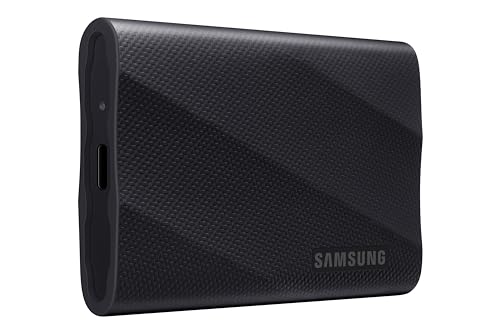
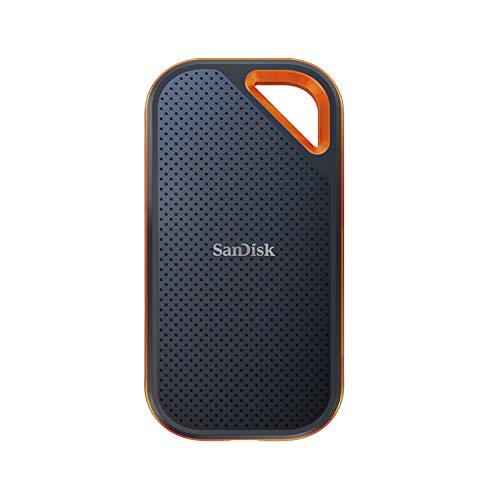
Samsung T9 vs SanDisk Extreme Pro Portable at a Glance
| Attribute | Samsung T9 | SanDisk Extreme Pro Portable |
|---|---|---|
| Maximum Sequential Read | Up to 2,000 MB/s | Up to 2,000 MB/s |
| Maximum Sequential Write | Up to 2,000 MB/s | Up to 2,000 MB/s |
| Host Interface | USB 3.2 Gen 2×2 (USB 3.0 compatible) | USB 3.2 Gen 2×2 (USB-C, USB 3.0 compatible) |
| Ingress Protection Rating | Not listed | IP65 water and dust resistance |
| Drop Resistance | Up to 9.8 feet | Up to 3 meters (approx. 9.8 feet) |
| Thermal Dissipation Design | Dynamic Thermal Guard (IEC 62368-1 compliance) | Forged aluminum chassis heatsink with silicone shell |
| Hardware Data Security | AES 256-bit hardware encryption | Not listed |
| Drive Utility Software | Samsung Magician Software | SanDisk Memory Zone app |
| Manufacturer Warranty | Not listed | 5-year limited warranty |
| Best For | Studio post-production and long-duration desktop writes | Outdoor shooting, location photography, and travel backup |
Environmental Protection and Field Durability
External solid state drives intended for mobile creators must withstand physical impact, moisture, and fine particulates. When working on commercial sets or capturing travel documentary footage, a sudden rain shower or blowing sand can ruin sensitive storage hardware. In this category, the ingress protection design directly influences how confident an operator feels when setting the drive down on damp surfaces or working without a climate-controlled tent.
The SanDisk Extreme Pro Portable stands out with its verified IP65 water and dust resistance, built directly into a silicone exterior wrapping a forged aluminum chassis. An IP65 rating confirms that the enclosure is dust-tight and capable of resisting low-pressure water streams directed at it from any angle. Additionally, the enclosure features an integrated carabiner loop, allowing users to clip the drive directly to a camera rig, belt loop, or backpack strap. The unit also specifies drop resistance up to 3 meters, matching roughly 9.8 feet of impact tolerance against shock and vibration. When comparing rugged options like the samsung t7 shield vs sandisk extreme pro portable, this level of certified sealing proves indispensable for unpredictable environments.
By contrast, looking into the samsung t9 ip rating reveals that the listing does not specify an official IP water or dust resistance level. The T9 provides drop protection up to 9.8 feet and features a durable external shell, but without verified ingress sealing, exposing the drive to rainfall or grit introduces serious risk. The lack of an integrated lanyard or carabiner slot also means it must ride in an equipment pocket or camera pouch rather than securing directly to exterior hardware.
Edge: SanDisk Extreme Pro Portable, because its certified IP65 water and dust rating provides measurable defense against field hazards where the Samsung model lists no ingress protection.
Thermal Regulation and Sustained Write Speeds
High-speed external drives generate substantial heat when operating at full throughput, especially during continuous transfers of multi-gigabyte video folders. When internal temperatures spike, storage controllers inevitably throttle transfer speeds to prevent silicon degradation. A comparison between the sandisk extreme pro portable vs samsung t9 requires looking closely at how each chassis dissipates that thermal energy over extended durations.
The Samsung T9 addresses sustained performance through proprietary Dynamic Thermal Guard technology. Samsung specifies that its thermal management solution conforms to the IEC 62368-1 safety standard, guaranteeing that exterior skin temperatures remain below 140 degrees Fahrenheit under heavy workloads. Because Samsung manufactures its DRAM and NAND flash components in-house, the internal controller firmware is tuned precisely to maintain consistent sustained read and write speeds up to 2,000 MB/s without sudden drops caused by thermal shock. A detailed look at the samsung t9 vs crucial x10 pro shows that this deliberate thermal engineering makes the samsung t9 sustained write speed particularly stable for desktop workloads.
The Extreme Pro Portable relies on a passive hardware solution: its forged aluminum body is engineered to function as an internal heatsink, drawing heat away from the NVMe core and radiating it through the metal frame beneath its protective silicone shell. The manufacturer emphasizes that this forged chassis helps maintain higher sustained speeds during extended transfers. However, unlike the T9, the SanDisk listing does not cite specific surface temperature compliance standards, making Samsung’s thermal safeguards more transparent for users running extended export queues.
Edge: Samsung T9, thanks to its documented IEC 62368-1 skin temperature compliance and Dynamic Thermal Guard system that carefully balances continuous write operations.
Transfer Performance and Video Editing Workflows
For modern content creation, external solid state drives often double as live editing volumes rather than simple archive boxes. High-resolution codecs require constant sequential throughput to avoid dropped frames during timeline scrubbing and live capture. Examining whether you should choose the samsung t9 or sandisk extreme pro portable for video editing depends heavily on interface standards and real-world connection configurations.
On paper, both drives achieve identical transfer benchmarks. The Extreme Pro Portable leverages an NVMe architecture delivering maximum read and write speeds of up to 2,000 MB/s over a USB 3.2 Gen 2×2 interface. Running a sandisk extreme pro portable speed test against sustained 4K or 8K video archives demonstrates prompt file ingest when connected to an authentic 20 Gbps USB port. In workflows where creators compare the sandisk extreme pro portable vs crucial x10 pro, the SanDisk unit exhibits the raw sequential capability expected of modern creator drives.
The Samsung T9 matches these figures identically, listing sequential read and write speeds of up to 2,000 MB/s when paired with host devices supporting USB 3.2 Gen 2×2 with UASP mode enabled. Furthermore, Samsung explicitly confirms mobile video capabilities, noting that the T9 supports Apple iPhone 15 Pro ProRes 4K recording at 60 frames per second using the included connection cable. Because both drives offer 4TB storage options and identical peak interface ceilings, raw throughput on compatible 20 Gbps hardware yields virtually indistinguishable performance.
Edge: Tie, as both external solid state drives share identical 2,000 MB/s maximum read and write throughput across the USB 3.2 Gen 2×2 protocol.
Host Compatibility and Operating System Ecosystems
A high-speed external drive must interface cleanly across diverse production hardware, including custom workstations, laptops, tablets, and field cameras. The underlying USB protocol dictates how drives behave across different operating environments, especially when evaluating the samsung t9 or sandisk extreme pro portable for mac machines that often default to alternate bus architectures.
The Samsung T9 specifies extensive multi-platform compatibility, explicitly listing functionality across Windows PCs, Mac computers, tablets, and smartphones, including the iPhone 15 and 16 series. Beyond computer hardware, Samsung explicitly certifies the T9 for major home gaming consoles, including the Sony PlayStation 5 as well as Microsoft Xbox Series X and Series S. The manufacturer tested configuration details mention Windows 11 Pro operating systems running ASUS ROG STRIX motherboards, demonstrating standard plug-and-play UASP deployment across enterprise and gaming rigs alike.
The SanDisk Extreme Pro Portable documents wide support across desktops, laptops, tablets, and smartphones using standard USB and USB-C connectivity. However, shoppers evaluating the samsung t7 vs sandisk extreme pro portable should note that Apple computers lack native USB 3.2 Gen 2×2 (20 Gbps) controller support on many Thunderbolt ports. Consequently, both the SanDisk and Samsung drives fall back to 10 Gbps speeds (roughly 1,000 MB/s) on standard Mac Thunderbolt interfaces. Because Samsung explicitly validates its hardware against modern gaming consoles and specific iPhone ProRes capture profiles, its compatibility sheet provides marginally clearer assurance for varied media systems.
Edge: Samsung T9, due to its broader documented compatibility verification spanning mobile capture rigs and modern gaming consoles.
Software Utilities, Encryption, and Drive Maintenance
Managing an external drive involves more than just dragging files into directories; maintaining controller health, installing security updates, and securing proprietary footage are vital parts of modern data workflows. A thorough samsung t9 review and sandisk extreme pro portable review must evaluate the utility software bundled by each storage maker.
The Samsung T9 integrates seamlessly with Samsung Magician Software. This proprietary utility provides diagnostic tracking, continuous drive health monitoring, benchmark testing, and automated firmware updates. In addition, the T9 includes built-in AES 256-bit hardware encryption, allowing creators to password-protect sensitive client materials without imposing processing overhead on the host computer. Sourcing DRAM, NAND flash, and firmware entirely in-house gives Samsung full control over component reliability and long-term diagnostic reporting.
The SanDisk Extreme Pro Portable approaches software differently, directing mobile users toward the SanDisk Memory Zone app, which assists with automatic space clearing and basic file organization on portable devices. While the SanDisk product listing emphasizes that the drive ships with updated firmware and carries a reassuring 5-year limited manufacturer warranty, the listing does not specify hardware-level AES 256-bit encryption. For professionals seeking comparisons like the sandisk extreme pro portable vs wd my passport ssd, the absence of listed hardware encryption on the SanDisk drive represents a key trade-off against Samsung’s integrated security architecture.
Edge: Samsung T9, because it features AES 256-bit hardware encryption alongside the full-featured Samsung Magician management suite.
Pros and Cons
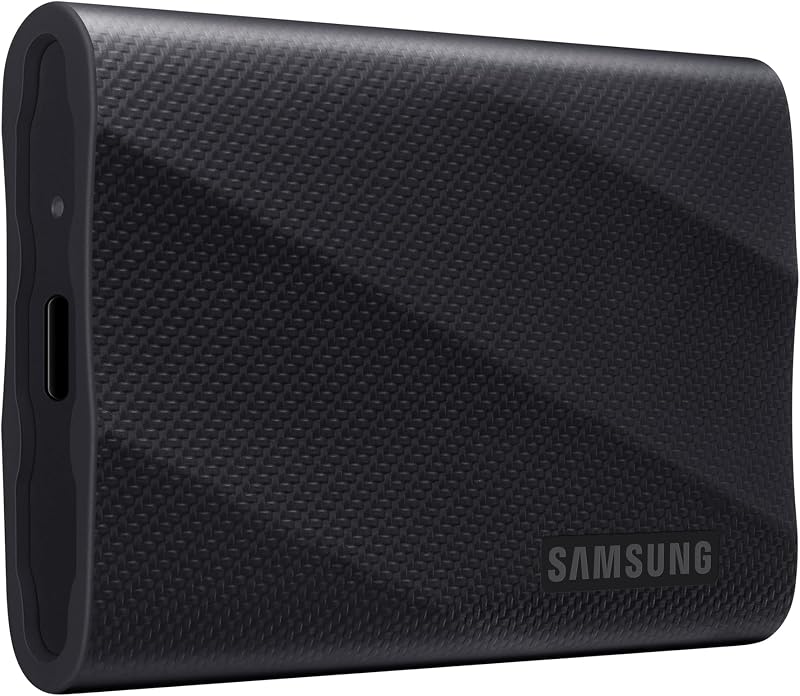
Samsung T9
Pros
- Up to 2,000 MB/s read and write speeds
- Dynamic Thermal Guard limits surface heat
- AES 256-bit hardware encryption
- Samsung Magician software tracks drive health
- Drop resistance up to 9.8 feet
Cons
- Listing does not specify water resistance
- No built-in carabiner loop
SanDisk Extreme Pro Portable

Pros
- IP65 dust and water resistance
- Up to 2,000 MB/s transfer speeds
- Forged aluminum chassis acts as heatsink
- Built-in carabiner attachment loop
- 5-year limited manufacturer warranty
Cons
- Hardware encryption is not specified
- Lacks deep diagnostic suite like Magician
View SanDisk Extreme Pro Portable on Amazon
Who Should Buy Each One
Choose the Samsung T9 If
- You transfer massive continuous file archives indoors and want verified IEC 62368-1 thermal skin temperature limits.
- You need AES 256-bit hardware encryption to safeguard confidential commercial video or client files.
- You record ProRes 4K 60fps footage directly from an iPhone 15 or 16 using certified manufacturer hardware.
- You want granular drive diagnostics, health tracking, and firmware updates through Samsung Magician Software.
Choose the SanDisk Extreme Pro Portable If
- You shoot video, nature photography, or commercial media outdoors where exposure to rain or splashing water is likely.
- You require certified IP65 dust and water resistance to safeguard your storage against unpredictable field environments.
- You prefer an enclosure with a built-in carabiner loop to secure your drive directly onto travel luggage or camera cages.
- You prioritize having a verified 5-year limited manufacturer warranty accompanying your field storage device.
Final Verdict
For most creators operating in studios, office desks, or controlled indoor sets, the Samsung T9 represents the superior overall drive. Its combination of 2,000 MB/s bandwidth, Dynamic Thermal Guard temperature management, AES 256-bit hardware encryption, and robust software utility via Samsung Magician delivers an exceptional data management package. The peace of mind that comes from managed thermal ceilings during long continuous exports makes the T9 uniquely suited for desktop workstations and ProRes camera rigs.
However, when asking is sandisk extreme pro portable worth it, the answer is an unqualified yes for field documentary crews, landscape photographers, and adventurous travel videographers. The Extreme Pro Portable matches the T9 in maximum 2,000 MB/s sequential speed while introducing rugged IP65 dust and water protection that the Samsung drive lacks. If your workflow involves unpredictable weather, dusty trails, or clipping storage to your gear bag with a carabiner, the SanDisk Extreme Pro Portable is the drive to buy.
FAQ
Does the Samsung T9 have an official IP rating for water and dust resistance
No, the Samsung T9 listing does not specify an official IP ingress protection rating for water or particulate resistance. While it features rugged durability capable of withstanding drops up to 9.8 feet, users operating in heavy rain, mud, or dusty outdoor environments should keep the drive protected inside a sealed case.
Can the SanDisk Extreme Pro Portable survive heavy rainfall
The SanDisk Extreme Pro Portable features an official IP65 rating, meaning it is dust-tight and resistant to water projected from a nozzle or splashing from any direction. While it is not designed to be submerged deeply underwater, it easily withstands rain showers, damp ground, and splashing on outdoor production shoots.
Do both drives achieve 2,000 MB/s transfer speeds on Mac computers
Neither drive will reach its maximum 2,000 MB/s sequential speed on standard Apple Mac computers because modern Mac Thunderbolt ports typically do not support the USB 3.2 Gen 2×2 (20 Gbps) protocol. Instead, both drives connect over standard USB 3.2 Gen 2, capping real-world sequential speeds closer to 1,000 MB/s on macOS systems.
Can I record ProRes 4K video directly to these drives from an iPhone
Yes, the Samsung T9 explicitly states support for recording Apple iPhone 15 Pro ProRes 4K video at 60 frames per second using the included USB-C cable. The SanDisk Extreme Pro Portable also features standard USB-C smartphone compatibility, allowing mobile videographers to ingest high-bitrate media files directly to the external drive.
How do the thermal systems on these two drives differ
The Samsung T9 utilizes Dynamic Thermal Guard technology to manage controller output and maintain external skin temperatures below 140 degrees Fahrenheit in accordance with IEC 62368-1 standards. The SanDisk Extreme Pro Portable uses a forged aluminum chassis that acts as a structural heatsink beneath a protective silicone skin to pull heat away from the internal NVMe drive.
Does the SanDisk Extreme Pro Portable offer built-in hardware encryption
The product listing for the SanDisk Extreme Pro Portable does not specify hardware-based encryption. In contrast, the Samsung T9 explicitly provides AES 256-bit hardware encryption, which can be configured and managed alongside drive firmware updates through Samsung Magician Software.