The defining distinction between these two vocal powerhouses comes down to digital processing flexibility versus legendary analog purity: one microphone functions as an all-in-one digital audio production hub right on your desk, while the other remains an iconic studio broadcast standard built strictly for professional analog signal chains.
Content creators seeking immediate plug-and-play USB operation alongside onboard automated audio processing should choose the Shure MV7+, while traditional audio engineers and studio broadcasters operating a dedicated mixer or preamp setup will get maximum acoustic performance from the Shure SM7B.

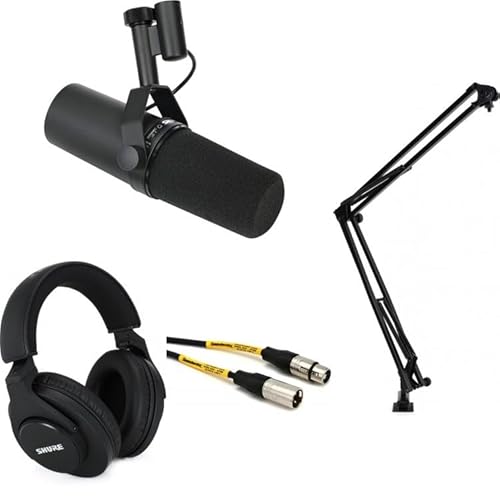
Shure MV7+ vs Shure SM7B at a Glance
| Attribute | Shure MV7+ | Shure SM7B |
|---|---|---|
| Connectivity | Dual USB Type-C and XLR | XLR Only |
| Onboard Audio Processing | DSP (Denoiser, Digital Pop Filter, Reverb, Auto Level) | Analog (Two acoustic tailoring settings) |
| Software Certification | OBS Certified | Not listed |
| Hardware Controls | Multi-color LED touch panel with tap-to-mute | Rear acoustic frequency response switches |
| Included Stand Hardware | SH-DESKTOP2 low-profile weighted base stand | SH-BROADCAST1 articulating desktop boom stand |
| Included Monitoring Gear | Not listed | SRH440A closed-back studio headphones |
| Polar Pattern | Unidirectional dynamic | Unidirectional dynamic |
| Signal-to-Noise Ratio | Not listed | 75 dB |
| Enclosure Construction | Stainless steel | Stainless steel |
| Item Weight | 16 ounces | 16 ounces |
| Best For | Streamers, podcasters, and modern desktop creators | Studio recording, vocal booths, and broadcast radio |
Connectivity and Audio Interface Requirements
The interface connection determines how seamlessly a vocal microphone integrates into your workstation and what supplementary hardware you must manage. In an era where creators shift between home desks, streaming setups, and collaborative studio spaces, connectivity dictates whether you need a travel-friendly single-cable solution or an immovable rack of studio conversion gear. A direct digital pipeline eliminates extra conversion stages, whereas an analog output guarantees compatibility with commercial consoles.
Looking at the shure mv7 vs sm7b architecture reveals a massive philosophical divide. The MV7+ features dual outputs: a modern USB Type-C port and a standard balanced XLR connection. This dual-output design enables a user to run the digital USB connection directly into a computer for instant communication, while simultaneously feeding the XLR connection into an external recorder or mixer. In direct contrast, the SM7B is purely an analog dynamic microphone with an XLR output. It carries no internal digital converters, no USB connectivity, and no onboard computer interface logic.
This variance highlights the critical reality of sm7b audio interface requirements. The SM7B demands an external audio interface or mixer equipped with clean, high-gain preamplifiers to elevate its signal to usable broadcast levels. In contrast, when comparing shure mv7+ usb vs xlr operational modes, the MV7+ gives you the option to bypass outboard gear completely via USB-C or slot into an analog rig whenever you choose. Creators who lack external audio gear gain instant functionality from the hybrid design, while the analog icon requires an end-to-end hardware commitment.
Edge: Shure MV7+ for offering flexible dual USB-C and XLR connections that adapt to both standalone computers and traditional studio signal chains.
Digital Signal Processing and Hardware Controls
Integrated hardware controls and onboard digital signal processing define how much manual tuning is required before your voice hits the stream or recording track. Real-time control gives vocalists the power to suppress background noise, manage sudden volume spikes, and cut off unwanted room noise instantly. For solo operators without a dedicated live audio engineer, automated processing built straight into the microphone shell ensures clean vocal presentation throughout long recording sessions.
The MV7+ showcases an extensive digital signal processing suite powered by internal DSP. As detailed in any comprehensive blue yeti vs shure mv7+ assessment, the MV7+ incorporates a Real-Time Denoiser that actively eliminates ambient room distractions, alongside Voice Isolation Technology. It also includes an Auto Level Mode that continuously adjusts gain for consistent volume, a digital popper stopper to eliminate explosive breath sounds, and onboard reverb algorithms featuring Plate, Hall, and Studio options. These functions are paired with a customizable multi-color LED touch panel supporting 16.8 million colors, visual audio level metering, and a tap-to-mute strip.
The SM7B takes an uncompromising, minimalist analog approach. It features no internal computer chips, no digital noise filters, no LED lights, and no digital muting capabilities. Its onboard hardware controls are restricted entirely to two passive mechanical switches on the rear plate that adjust its acoustic frequency response, allowing users to tailor the microphone to specific vocal characteristics. Any noise reduction, level leveling, or compression for the SM7B must take place further down the chain through analog hardware rack units or digital workstation software.
Edge: Shure MV7+ for its robust internal DSP featuring real-time noise reduction, auto-leveling, and an interactive LED metering and mute panel.
Vocal Reproduction and Studio Sound Character
Vocal capture quality is the foundation of any recording equipment choice. Broadcast microphones must capture spoken articulation clearly while attenuating room reflections, handling mechanical vibrations, and preserving low-end resonance. While digital compensation can alter tone after the fact, the baseline acoustic transducer determines how naturally spoken dialogue translates across broadcast radio, commercial voiceovers, and competitive podcasting.
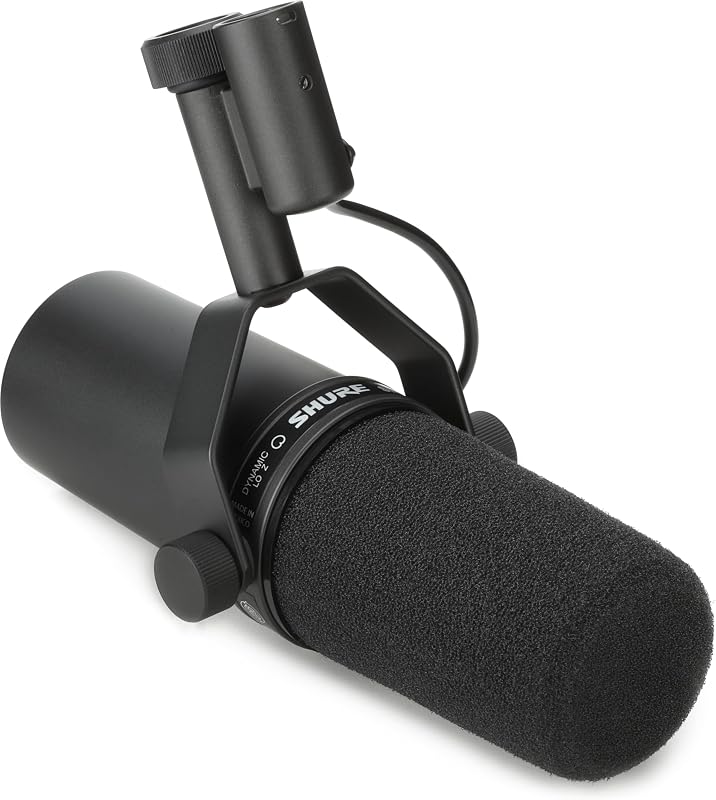
The SM7B has long defined vocal capture in the recording industry. With its large diaphragm dynamic element, 75 dB signal-to-noise ratio, and wide-range frequency delivery, the SM7B provides a natural, smooth, and full-bodied spoken acoustic signature. The listing notes that its two tailored acoustic settings allow users to adapt the capture to a wide range of voices, from harsh voice actors to soft-spoken hosts. Evaluated against alternatives in guides like our shure mv7+ vs rode podmic comparison, the SM7B excels at rejecting ambient off-axis sound naturally through its unidirectional cardioid acoustic chamber without introducing digital artifacts.
The MV7+ achieves pristine vocal clarity by relying on its Voice Isolation Technology coupled with its dynamic capsule and real-time DSP. In a thorough shure mv7+ review, the microphone proves remarkably adept at keeping voices upfront and intelligible even in untreated, reverberant rooms where lesser dynamic microphones struggle. However, its baseline sound profile relies more heavily on its internal digital tuning and filtering to approximate that legendary low-mid proximity warmth that the SM7B delivers naturally through its chassis depth and diaphragm geometry.
Edge: Shure SM7B for its iconic, uncolored dynamic vocal reproduction and natural acoustic warmth that set the benchmark for studio vocal clarity.
Included Accessories, Stands, and Workspace Ergonomics
The physical mounting hardware and monitoring accessories supplied with a microphone significantly influence how easily it integrates into your workspace. Vocal microphones cannot sit loosely on a table; they require stable isolation from desk thumps, computer vibrations, and typing noise. An articulating boom stand clears desk surface area, while a compact base provides quick mobility for creators with limited space.
The MV7+ package focuses on a compact desktop presence. It includes the Shure by Gator SH-DESKTOP2 Low-Profile Mic Stand, which features a weighted rectangular base measuring 4.5 inches by 8 inches, an ergonomic grip twist clutch for height adjustments, and an integrated vibration-absorbing gasket designed to attenuate surface noise. It also comes packed with a USB-C to USB-C cable and a 3/8-inch to 5/8-inch threaded mounting adapter. This package is engineered for small desks where an overhead arm would block webcams or monitor sightlines.
The SM7B kit supplies an entire studio workstation setup. It includes the heavy-duty SH-BROADCAST1 Deluxe Articulating Desktop Mic Boom Stand, boasting a 32.25-inch arm reach, a 2.17-inch clamp range, 360-degree rotation, and an integrated cable channel to conceal wiring. In addition, the SM7B bundle includes Shure SRH440A closed-back studio headphones featuring 40mm neodymium drivers and a 9.84-foot straight cable, along with a 10-foot Cableworks Composer Series XLR microphone cable. The 360-degree rotation listed in the SM7B specifications allows effortless positioning around multi-screen workstations.
Edge: Shure SM7B for its comprehensive bundle providing a full-reach articulating boom stand, professional studio headphones, and dedicated XLR cabling.
Streaming and Content Creation Workflow
A fast-paced streaming and content creation workflow requires equipment that responds instantly without interrupting gameplay, video recording, or live audience interaction. Streamers and solo creators routinely balance screen sharing, camera feeds, chat moderation, and game audio. In these scenarios, a microphone that integrates directly with broadcasting software and provides immediate visual feedback saves critical time and prevents production mishaps.
The MV7+ was explicitly engineered for modern creator workflows, boasting official OBS Certified status. This certification ensures seamless operation with Open Broadcaster Software, letting streamers manage their vocal feed confidently. The touch-sensitive multi-color LED strip serves as a live audio meter to prevent clipping, and tapping anywhere on the panel engages the quick mute function to silence the feed instantly without a loud mechanical click. When comparing modern alternatives like the shure mv7+ vs rode nt-usb+, the MV7+ stands out for its built-in digital pop filter and real-time denoiser, which keep computer fan noise and keyboard clicks from spilling into the stream.
Using the SM7B in a live streaming context requires an entirely different setup. Because it lacks onboard software integration, digital noise suppression, and physical mute switches, a streamer must purchase, configure, and monitor an external audio interface and software noise gates. While the SM7B provides an authoritative broadcast presence on camera, managing it during a live stream demands greater technical oversight. For creators weighing shure mv7+ or sm7b for streaming, the MV7+ eliminates nearly all workflow friction right out of the box.
Edge: Shure MV7+ for its OBS Certified status, real-time tap-to-mute LED panel, and automatic digital background noise filtering.
Pros and Cons
Shure MV7+

Pros
- Dual USB-C and XLR output connectivity
- Built-in DSP with real-time denoiser
- Customizable multi-color LED touch panel
- Official OBS Certified integration
- Auto Level Mode with digital pop filter
Cons
- Relies on digital processing for maximum clarity
- Low-profile desk stand lacks boom arm elevation
Shure SM7B
Pros
- Legendary studio dynamic vocal warmth
- Complete bundle with articulating boom stand
- Includes SRH440A studio monitoring headphones
- Two onboard acoustic tailoring settings
- 75 dB signal-to-noise ratio
Cons
- Strictly XLR with no USB plug-and-play
- Demanding audio interface gain requirements
Who Should Buy Each One
Choose the Shure MV7+ If
- You want a direct USB Type-C plug-and-play connection that bypasses the need for an external audio interface.
- You stream live content regularly and need native OBS Certified software integration with an instant tap-to-mute LED panel.
- Your room has noticeable background noise, computer fan hum, or keyboard clatter that requires an onboard real-time denoiser and digital pop filter.
- You prefer a compact, low-profile weighted base desktop stand that keeps your desk setup streamlined without clamping to furniture.
Choose the Shure SM7B If
- You already own or plan to invest in a dedicated high-gain audio interface, mixer, or professional preamp signal chain.
- You produce professional voiceovers, studio vocals, or studio broadcasts where a pure, uncolored analog signal with a 75 dB signal-to-noise ratio is mandatory.
- You want a complete studio hardware package out of the box that includes a 32.25-inch articulating boom arm and SRH440A studio monitoring headphones.
- You want mechanical tone-shaping switches on the microphone body to adjust frequency response without relying on computer software.
Final Verdict
For the vast majority of modern content creators, podcasters, and live streamers, the MV7+ emerges as the practical winner. Its hybrid USB-C and XLR connectivity gives users an immediate setup path via digital cable while preserving future compatibility with professional analog soundboards. Backed by OBS certification, internal auto-leveling, a real-time denoiser, and an interactive multi-color LED touch panel with quick muting, the MV7+ handles acoustic management internally so creators can focus entirely on production without troubleshooting external hardware.
The SM7B remains the definitive choice for established broadcast facilities, sound engineers, and dedicated vocalists working within treated studio environments. If you possess a high-end analog signal chain capable of meeting the microphone’s gain demands, the SM7B delivers an uncompressed, authentic vocal presence that digital processing strives to replicate. When evaluating shure mv7+ vs rode podmic usb or standard broadcast gear, the SM7B bundle with its 32.25-inch boom arm and SRH440A headphones provides an enduring studio centerpiece for those who prioritize analog pedigree over digital automation.
FAQ
Does the Shure MV7+ sound identical to the Shure SM7B over XLR?
The MV7+ delivers a warm, broadcast-style vocal capture over its XLR connection, but it does not sound identical to the SM7B. The SM7B features a larger physical housing, a different internal acoustic structure, and dedicated rear frequency switches that produce a fuller low-mid resonance and smoother high-frequency roll-off. While the MV7+ provides clear voice isolation, its capsule design is uniquely tuned to function alongside its internal DSP.
What are the audio interface requirements for the Shure SM7B?
The SM7B is a pure analog dynamic microphone that requires a balanced XLR connection and an external audio interface, mixer, or dedicated microphone preamplifier. Because dynamic broadcast microphones possess low output sensitivity, the connected interface must supply substantial clean gain to achieve robust broadcast volumes without generating unwanted preamp hiss.
Is the Shure SM7B worth it for beginner podcasters compared to the MV7+?
For beginners, the SM7B is generally more complex than necessary because it requires external audio interfaces, preamps, and XLR cables to produce sound. The MV7+ is far better suited for beginners and intermediate creators because it plugs directly into a computer using USB-C, includes automated gain management and noise suppression, and still includes an XLR port for future studio expansion.
Can you use both USB and XLR outputs on the Shure MV7+ at the same time?
Yes, the MV7+ allows creators to use the USB Type-C and XLR outputs simultaneously. This capability lets you record an uncompressed analog backup track to an external hardware recorder via XLR while simultaneously sending processed digital audio over USB to your streaming computer or digital audio workstation.
Which microphone is better for streaming: Shure MV7+ or SM7B?
The MV7+ is significantly better optimized for streaming workflows. It holds official OBS Certified status, features an onboard Real-Time Denoiser to eliminate computer fan and keyboard noise, provides Auto Level Mode to smooth out vocal dynamics, and includes a tap-to-mute LED touch panel for instant audio cutoffs during live broadcasts.
What accessories come packaged with each microphone bundle?
The MV7+ bundle includes the microphone, a USB-C to USB-C cable, a 3/8-inch to 5/8-inch adapter, and the SH-DESKTOP2 low-profile weighted base mic stand with an ergonomic twist clutch. The SM7B bundle includes the microphone, the SH-BROADCAST1 articulating desktop boom stand with a 32.25-inch reach, a 10-foot Cableworks XLR cable, and Shure SRH440A closed-back studio headphones.


