The single fundamental difference deciding between the iRobot Roomba j7+ and the iRobot Roomba s9+ comes down to frontline obstacle intelligence versus pure, heavy-duty suction power. The Roomba j7+ uses an active front-facing camera powered by PrecisionVision Navigation to detect, identify, and maneuver around low-profile hazards such as electrical cords, stray socks, and pet accidents in real time. In contrast, the Roomba s9+ serves as a legacy powerhouse engineered around a high-airflow motor delivering four times the suction of the j7+ alongside a specialized D-shaped body that scrubs deep along wall edges and inside 90-degree corners.
Choose the Roomba j7+ if your home has active floor clutter, loose cables, or pets prone to unexpected accidents that would easily trap a standard robotic vacuum. Choose the Roomba s9+ if your priority is pulling heavy shedding, embedded dander, and deep grit from thick carpets across a floor plan kept mostly clear of small obstacles.

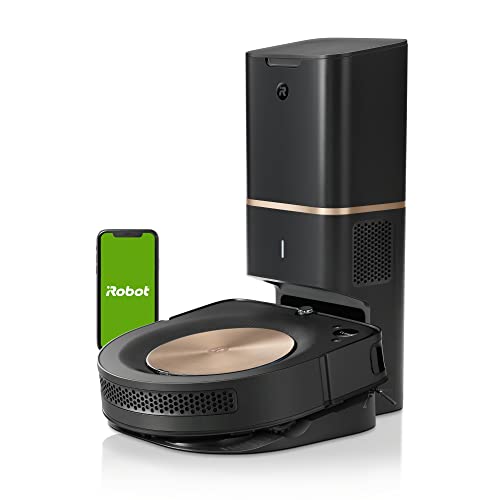
iRobot Roomba j7+ vs s9+ at a Glance
| Feature | iRobot Roomba j7+ | iRobot Roomba s9+ |
|---|---|---|
| Navigation Technology | PrecisionVision Navigation with front camera | Careful Drive Mode and smart mapping sensors |
| Suction Multiplier | 10x Power-Lifting Suction | 40x Power-Lifting Suction |
| Obstacle Avoidance | Identifies cords, socks, shoes, and pet waste | Detects objects taller than 2.5 cm |
| Chassis and Corner Design | Circular chassis with Edge-Sweeping Brush | D-shaped chassis with PerfectEdge Technology |
| Brush Roller System | Dual Multi-Surface Rubber Brushes (7-inch width) | 40% larger Dual Multi-Surface Rubber Brushes |
| Pet Waste Guarantee | P.O.O.P. replacement guarantee included | Not listed |
| Self-Emptying Capacity | Up to 60 days in enclosed Clean Base bag | Up to 60 days in enclosed Clean Base bag |
| Battery Runtime | 120 minutes | 120 minutes |
| Mop Synchronization | Not listed | Imprint Link Technology with Braava jet m6 |
| Best For | Cluttered living spaces and pet accident prevention | Deep carpet cleaning and corner dirt extraction |
Suction Power and Deep Carpet Cleaning
Suction strength determines how thoroughly a robotic vacuum extracts embedded debris, fine sand, and allergen particles trapped deep inside carpet fibers. In real-world operation, surface sweeping collects visible dust bunnies and loose crumbs, but dense rugs require intense static pressure and continuous airflow to loosen compacted soil. When evaluating vacuum performance on fibrous surfaces, raw suction power dictates whether the machine simply grooms the top layer or cleans deep down into the carpet backing.
The difference between these two machines on carpet is substantial. The Roomba j7+ features a 3-Stage Cleaning System that delivers 10x the Power-Lifting Suction compared to the Roomba 600 series, operating on a single fixed power level designed to balance energy use with dependable surface maintenance. On the other hand, the Roomba s9+ operates as a dedicated powerhouse, generating 40x the suction power of baseline models. When reviewing the irobot roomba j7 vs s9+, the s9+ clearly produces significantly stronger air velocity, allowing its intake channel to loosen and extract dense debris from medium- and high-pile rugs where lesser suction leaves particles behind.
Choosing the lower suction of the j7+ means you will enjoy quieter operation and reliable daily debris management across hardwood and low-pile mats, but you may still need a manual upright vacuum for monthly deep-carpet sanitation. The 40x suction on the s9+ pulls ground-in dirt in a single run, making the Roomba j7+ vs s9+ for carpet debate an easy win for the heavier-hitting model.
Edge: Roomba s9+ because its 40x power-lifting suction provides vastly superior airflow to extract deep debris and fine grit from dense carpet fibers.
Obstacle Avoidance and Navigation Intelligence
Navigation intelligence determines whether an automated cleaner completes its scheduled run autonomously or ends up stranded under furniture, wrapped in power cords, or spreading pet messes across your home. Traditional robotic navigation relies on bumper impacts and simple optical tracking to navigate floor spaces, which works well in tidy rooms but introduces major operational risks in lived-in households where small items are regularly left on the ground.
This is where the Roomba j7+ holds its greatest technical advantage. Equipped with PrecisionVision Navigation and a front-mounted optical camera, the j7+ scans the floor ahead in real time, visually recognizing and dodging household hazards like phone charging cords, shoes, socks, and solid pet waste. iRobot backs this system with the P.O.O.P. (Pet Owner Official Promise), guaranteeing a free replacement robot if the j7+ fails to avoid pet waste. In contrast, the Roomba s9+ relies on Careful Drive Mode and downward sensors to guide its methodical row-by-row cleaning. Its listing notes that it cleans around objects taller than 2.5 cm without jostling them, meaning flat obstacles like low cords, stray clothing, and pet droppings fall below its detection threshold and will be run directly over.
For busy homeowners, this technical divergence completely alters daily usage habits. As explored when comparing the irobot roomba i3 vs j7+, the j7+ removes the tedious chore of pre-cleaning your floors before every scheduled run. Running the s9+ requires a manual floor check every single time to ensure no dropped charging cables or pet messes lie in its path, sacrificing peace of mind whenever you schedule cleanings while away from home.
Edge: Roomba j7+ due to its PrecisionVision camera navigation that reliably detects low-profile cords, socks, and pet waste with an official replacement guarantee.
Pet Hair Extraction and Roller Design
Pet-friendly households face two distinct challenges: lifting stubborn shedding out of floor textiles and handling pet-related messes without mechanical damage. Traditional bristled brush rollers quickly become tangled with pet hair, requiring frequent manual cutting and disassembly. Dual rubber rollers flex to adjust across varying floor textures and allow hair to slide straight down into the dust channel without wrapping tightly around a core axle.
Both models use dual multi-surface rubber brushes, but their dimensions and underlying suction support differ significantly. The Roomba s9+ features rubber brushes that are 40% larger than those found in Roomba i Series models, spanning nearly the entire width of its flat front bumper. Combined with its 40x suction, this extra-wide cleaning path scoops up heavy shedding and deeply embedded dander in fewer passes. The Roomba j7+ utilizes a standard 7-inch cleaning path width with dual rubber rollers supported by 10x suction. In direct Roomba j7+ vs s9+ for pet hair assessments, the j7+ easily handles shedding on hard surfaces and low rugs, but its narrower roller width requires more passes to gather thick seasonal shedding from long-haired pets.
However, evaluating the iRobot Roomba j7+ or s9+ for pets also requires assessing floor hazards. While the s9+ extracts hair more aggressively, running it in a home where pets are prone to digestive accidents invites disaster. If pet hair removal from heavy rugs is your exclusive priority, the wider rollers and 40x suction of the s9+ deliver superior extraction, as also shown in our irobot roomba i7+ vs s9+ analysis. But for homes with young pets or litter-box tracking issues, the accident-avoidance hardware of the j7+ remains the safer overall choice.
Edge: Roomba s9+ because its 40% wider rubber rollers and 40x suction lift stubborn pet hair from carpet pile with fewer passes.
Edge Cleaning and Chassis Architecture
Robotic vacuum body shapes directly influence how close the internal cleaning brushes can get to baseboards, wall trims, and room corners. Standard circular vacuums must rely entirely on spinning side brushes to sweep perimeter debris inward toward a centrally mounted brush roll. If the side brush spins too fast, it can scatter crumbs across the room; if it spins too slowly, debris nestled against walls remains untouched.
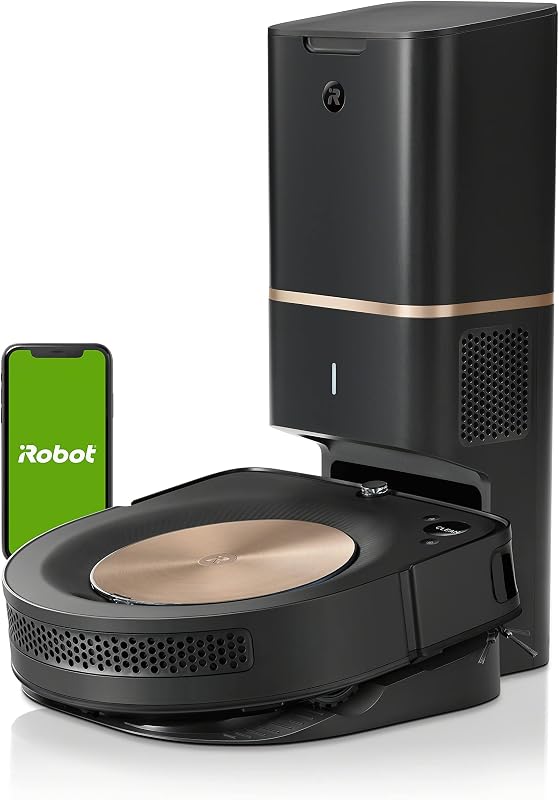
The Roomba s9+ abandons the conventional circular chassis in favor of a specialized D-shaped body engineered with PerfectEdge Technology. This design pairs a straight front edge with advanced edge sensors and a corner-specific brush to sweep dirt out of tight 90-degree junctions. Because its wide dual rubber rollers are placed at the very front of the square nose rather than tucked between the wheels, the s9+ physically drives its suction intake directly against baseboards and straight into room corners.
The Roomba j7+ uses a classic round form factor with an Edge-Sweeping Brush protruding from the right side. While the sweeping brush effectively pulls perimeter dust into the central 7-inch cleaning path on straight runs, the curved bumper physically prevents the roller intake from contacting the innermost point of a 90-degree corner. For homes with intricate cabinetry toe-kicks, numerous room dividers, and extensive baseboards, the physical profile of the s9+ reaches perimeter grime that circular vacuums leave behind.
Edge: Roomba s9+ due to its D-shaped chassis and PerfectEdge Technology that reaches flush against baseboards and deep into tight corners.
Self-Emptying Docking and Daily Maintenance
Self-emptying bases transform robot vacuums from high-maintenance gadgets into automated appliances that run for weeks without human intervention. By drawing debris out of the robot bin into an enclosed dock bag, these systems prevent dust clouds during emptying and ensure the vacuum always has sufficient bin capacity to complete its next scheduled run.
Both the Roomba j7+ and Roomba s9+ include the Clean Base Automatic Dirt Disposal system. Each dock uses enclosed disposal bags engineered to hold up to 60 days of dirt, dust, and pet hair. When the vacuum finishes cleaning or detects that its internal bin has filled, it returns to the dock where a high-power evacuation motor empties the bin into the bag. As detailed in our breakdown of the irobot roomba j7 vs j7+, moving to an automated Clean Base setup completely removes the daily chore of manually tapping out small plastic dust compartments over a trash can.
Maintenance routines across both vacuums are nearly identical. Both rely on replaceable cartridge filters to trap fine dust and dander, and both require users to periodically clean hair from the dual rubber rollers and wipe sensor windows. The j7+ listing notes the inclusion of an extra corner brush along with its Clean Base, line cord, filter, and dirt disposal bag, whereas the s9+ listing includes the Clean Base, disposal bag, and filter. Because both docks deliver identical 60-day debris capacities and enclosed allergen-trapping bags, neither model establishes a functional advantage in docking performance.
Edge: Tie because both models share the 60-day enclosed Clean Base dirt disposal system and comparable cartridge filter maintenance schedules.
Smart Mapping and iRobot OS Features
Smart mapping software determines how precisely you can direct cleaning routines, manage room-by-room access, and integrate a robotic cleaner into smart home routines. Modern mapping systems allow users to divide floor plans into labeled zones, set boundaries to safeguard fragile items, and deploy spot cleanings using voice commands or mobile apps.
Both models are powered by iRobot OS and feature Imprint Smart Mapping, which stores multiple floor plans for multi-level homes and enables targeted room scheduling. Both vacuums connect with Amazon Alexa, Google Home, and Apple Siri, and both support away-from-home routines that automatically trigger cleaning when your smartphone leaves the house and pause when you return. Both also support spot cleaning commands to address immediate messes without vacuuming the entire floor plan.
However, specific ecosystem integrations separate the two. The Roomba s9+ listing explicitly highlights Imprint Link Technology, which enables synchronized cleaning runs alongside the Braava jet m6 robot mop. Once the s9+ finishes vacuuming, it signals the Braava jet m6 to mop hard floors automatically in perfect sequence. The s9+ also provides explicit Clean Zones and Keep Out Zones, alongside Vera smart home controller compatibility. While the j7+ leverages iRobot OS to recommend seasonal cleaning schedules and provides visual obstacle confirmation photos in the app, the automated vacuum-then-mop sequencing of the s9+ offers superior whole-home workflow coordination, much like the advanced integration options seen with the irobot roomba j7+ vs combo j9+.
Edge: Roomba s9+ because its Imprint Link Technology natively coordinates automated vacuum-and-mop sequences with the Braava jet m6.
Pros and Cons
Irobot Roomba j7+

Pros
- PrecisionVision camera avoids cords and pet waste
- Backed by official pet waste replacement guarantee
- Self-emptying Clean Base holds 60 days of debris
- Personalized habit suggestions via iRobot OS
- 120-minute lithium-ion battery runtime
Cons
- Only 10x suction power compared to baseline
- Narrower 7-inch cleaning path width
- Circular chassis cannot reach deep into corners
View iRobot Roomba j7+ on Amazon
Irobot Roomba s9+
Pros
- Massive 40x suction power for deep carpet cleaning
- PerfectEdge Technology cleans flush against baseboards
- 40% larger dual rubber rollers resist hair tangles
- Imprint Link coordinates with Braava jet m6 mop
- Self-emptying Clean Base holds 60 days of debris
Cons
- Careful Drive only detects objects taller than 2.5 cm
- Lacks real-time cord and pet waste camera avoidance
- Requires manually pre-clearing floors before cleaning
View iRobot Roomba s9+ on Amazon
Who Should Buy Each One
Choose the Roomba j7+ If
- Your home frequently has loose charging cords, shoes, socks, or pet toys scattered on the floor.
- You live with cats or dogs and need guaranteed avoidance of unexpected pet waste backed by the P.O.O.P. promise.
- You want a truly autonomous daily cleaning schedule without needing to tidy floors before the robot runs.
- Your flooring consists primarily of hardwood, tile, laminate, or low-pile area rugs.
Choose the Roomba s9+ If
- You have medium- to high-pile carpets that demand 40x suction power to extract deeply embedded dirt and grit.
- You want maximum corner and edge cleaning along baseboards through a D-shaped body and PerfectEdge Technology.
- Your living spaces are generally kept tidy and free of low-profile clutter taller than 2.5 cm.
- You own or plan to add a Braava jet m6 robot mop to run automated vacuum-then-mop cleaning cycles.
Final Verdict
Deciding between these two flagship cleaners comes down to an essential trade-off between operational autonomy and deep-cleaning power. When compiling an honest Roomba j7+ review, the standout strength is clearly its PrecisionVision camera system. By accurately detecting and avoiding power cables, dropped laundry, and pet accidents, the j7+ solves the single most frustrating problem with robotic vacuums: getting stuck midway through a run. For most busy households, an automated cleaner that operates reliably without requiring pre-cleaning floor checks delivers far better practical value than a high-power machine that risks tangling on a phone charger.
On the other hand, shoppers wondering is Roomba s9+ worth it will find their answer in homes with extensive wall-to-wall carpets and shedding pets. With 40x the suction power of baseline models, 40% wider dual rubber brushes, and a D-shaped frame built for corners, the s9+ cleans fibrous floor coverings with unmatched thoroughness. If your floor plan is kept neat and your primary goal is maximizing dirt and pet hair extraction from thick rugs, the Roomba s9+ remains the ultimate cleaning powerhouse; for everyone else, the intelligent hazard avoidance of the Roomba j7+ makes it the superior everyday choice.
FAQ
Is the Roomba s9+ worth it over the j7+ for homes with pets?
The s9+ is worth choosing if your primary issue is pet hair trapped deep inside medium- or high-pile carpets, where its 40x suction power and 40% larger rubber rollers pull up shedding that other vacuums leave behind. However, if your pets are prone to digestive accidents or leave toys around, the j7+ is the safer choice due to its PrecisionVision camera and official pet waste avoidance guarantee.
How does the Roomba j7+ avoid pet waste?
The Roomba j7+ uses PrecisionVision Navigation, which combines a front-facing optical camera with machine intelligence in iRobot OS. This system recognizes solid pet waste on the floor in real time, routes the robot around the hazard, and alerts you via the app. iRobot backs this with their P.O.O.P. guarantee, promising a free replacement unit if it fails to avoid pet waste.
Can the Roomba s9+ detect charging cables and small floor clutter?
The Roomba s9+ uses Careful Drive Mode and sensor systems that identify objects taller than 2.5 cm to clean around them without rough contact. However, flat floor clutter like phone charging cords, thin socks, and low-profile pet accidents fall below this height threshold. As a result, the s9+ will roll over low clutter, potentially tangling its rollers or dragging cables.
How long do the batteries last on the Roomba j7+ and Roomba s9+?
Both the Roomba j7+ and Roomba s9+ are equipped with lithium-ion batteries that deliver up to 120 minutes of runtime on a single charge. When the battery runs low during an extended cleaning job, both robots automatically return to their Clean Base dock, recharge, and then resume cleaning right where they stopped.
Which vacuum performs better on deep-pile carpets?
The Roomba s9+ performs significantly better on deep-pile carpets. It delivers 40x the suction power compared to the baseline Roomba 600 series, whereas the j7+ delivers 10x suction. The higher suction airflow of the s9+, combined with its wider dual rubber brushes, allows it to lift compacted dirt and fine dust from deep within thick carpet fibers far more effectively.
Do both the Roomba j7+ and s9+ empty their own dustbins?
Yes, both models feature the Clean Base Automatic Dirt Disposal system. When either vacuum docks, the base suctions all debris out of the robot bin into an enclosed allergen-locking bag that holds up to 60 days of dust, keeping hands clean and eliminating the need for daily manual bin emptying.
Can both models store multiple floor plans?
Yes, both the Roomba j7+ and Roomba s9+ use Imprint Smart Mapping through iRobot OS. This software lets both vacuums learn, map, and store multiple floor plans across different levels of your home, allowing you to customize room boundaries, label specific areas, and schedule targeted room cleanings on any floor.


