Choosing between a propane gas grill and a natural gas grill represents the defining decision when designing an outdoor cooking setup. Liquid propane grills rely on self-contained, refillable 20-pound tanks that grant complete freedom of movement across decks, lawns, and patios. In contrast, natural gas grills connect directly to a residential utility supply line via a flexible hose, delivering continuous fuel that never runs dry in the middle of a cookout at the expense of a permanent, anchored position.
Select a propane gas grill if you value tank portability, rent your living space, or need the flexibility to rearrange your patio layout at a moment’s notice. Choose a natural gas grill if you have an accessible exterior gas line, cook outdoors frequently throughout the week, and want the uninterrupted convenience of never swapping or refilling an empty cylinder again.


Propane Gas Grill vs Natural Gas Grill at a Glance
| Feature | Propane Gas Grill | Natural Gas Grill |
|---|---|---|
| Fuel Source | Refillable 20 lb liquid propane cylinder | Plumbed residential natural gas utility line |
| Portability and Placement | High; cart with wheels or casters | Fixed; tethered to exterior gas line hookup |
| Burner Heating Output | 19,000 BTU to 500°F Broil Zone in 5 minutes | 19,000 BTU to 50,000 BTU (650°F in 10 minutes) |
| Burner Configurations | 3 to 4 main burners with Broil or Sear Zone | 3 to 5 heating elements (4+1 burners) |
| Total Cooking Area Range | 360 to 525 square inches | 360 to 630 square inches |
| Assembly and Setup Complexity | Quick cart assembly; connects directly to tank | Cart assembly plus fuel line plumbing hookup |
| Construction Materials | Cast aluminum, porcelain enamel, 304/430 stainless steel | Cast aluminum, porcelain enamel, 304 stainless steel |
| Convenience Enhancements | Foldable shelves, tool hooks, snap-on rails | Viewing window, LED knob lights, quick-connect hose |
| Best For | Flexible backyard layouts and portable patio cooking | Permanent patio installations and outdoor kitchens |
Fuel Supply, Portability, and Backyard Placement
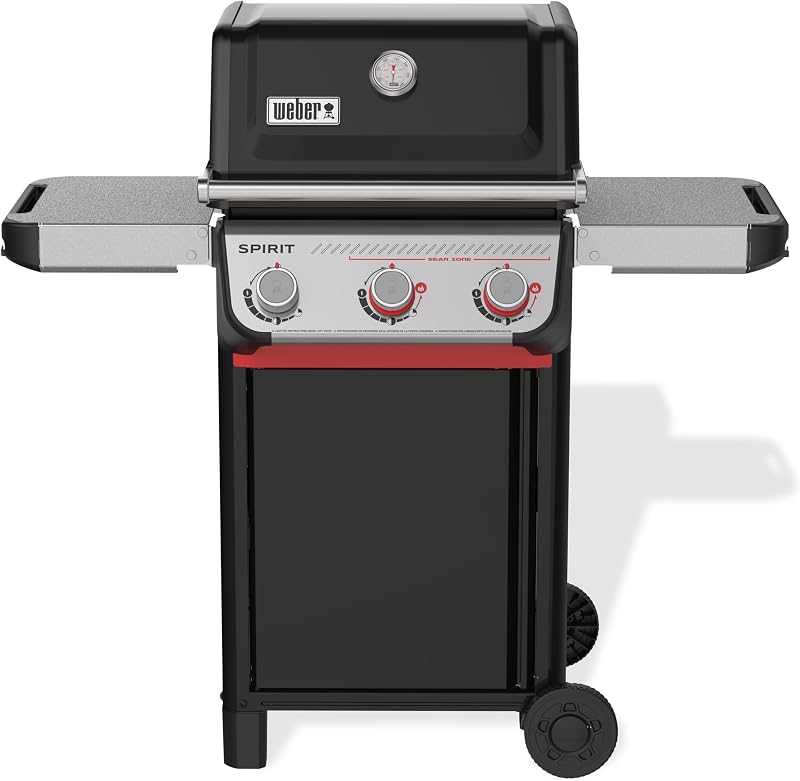
The primary functional difference between these two outdoor cooking methods lies in how the fuel reaches the burners and how that mechanism dictates backyard mobility. A propane gas grill uses a pressurized 20-pound steel cylinder that rests inside or alongside the cart frame. This independent fuel source gives outdoor cooks complete autonomy over appliance positioning. Well-engineered units such as the Weber Spirit E-325 Gas Grill include heavy-duty metal carts and folding side tables that make moving the grill into seasonal storage or shifting it away from shifting winds simple. Similarly, models like the Monument Grills 4 Burner Propane Gas Grill integrate dedicated propane tank holders and large, sturdy wheels that stabilize the tank while rolling across pavers or turf.
Conversely, a natural gas grill operates as a semi-permanent fixture anchored to a specific location on your property. Plumbed directly into your home gas meter via a specialized hose assembly, these units cannot travel beyond the reach of their supply line. The Monument Grills 4+1 Burner Natural Gas Grill comes equipped with an included natural gas hose and lockable swivel casters, but its working radius remains bound to the exterior outlet pipe. While this configuration eliminates the hassle of tracking tank volume or lifting heavy cylinders, it prevents you from rolling the cooker across the lawn or reconfiguring your patio layout for seasonal gatherings. Much like managing stationary versus portable power systems in a dual fuel vs gas generator comparison, tying yourself to a plumbed utility demands a clear commitment to a single designated cooking station.
If you live in a rental property, expect to relocate within a few years, or enjoy rearranging your outdoor furniture based on the direction of sunlight and wind, the tethered design of a natural gas grill presents logistical hurdles. The natural gas option demands an established backyard infrastructure, while propane provides plug-and-play operation straight out of the box in virtually any outdoor environment.
Edge: Propane Gas Grill because self-contained tank storage enables unrestricted positioning and easy transport across any backyard or patio layout.
Heat Output and Cooking Performance
Fuel chemistry directly influences thermal dynamics, flow rates, and burner engineering. Liquid propane carries significantly higher energy density per unit volume than natural gas, containing roughly 2,500 BTUs per cubic foot compared to approximately 1,000 BTUs per cubic foot for natural gas. Grill manufacturers compensate for this physical reality by outfitting natural gas grills with larger internal orifices and manifold valves, ensuring higher fuel volume flows through the burners to deliver comparable heat to the cooking grates. Comparing propane vs natural gas grill heat output reveals that performance parity depends on manufacturer engineering rather than raw fuel chemistry.
Evaluating real-world heat generation shows impressive high-temperature capabilities on both sides of the aisle. The Monument Grills 4-burner propane grill features an Advanced Broil Zone and 304 stainless steel burners capable of pushing grate temperatures to 500°F within 5 minutes on full blast. Its natural gas counterpart, the Monument Grills M415BZNG, pairs 50,000 BTUs of total power across 5 heating elements with a specialized U-shaped flame layout and a dense V-shaped flame tamer, achieving 650°F in just 10 minutes for fast searing. High-heat searing requires precise airflow management, much like controlling firebox airflow when choosing a charcoal vs gas grill.
Meanwhile, the Weber Spirit E-325 Gas Grill in its natural gas configuration delivers 19,000 BTUs across 3 primary burners alongside red Boost Burner controls that unleash 40 percent more power in the Sear Zone. The identical 19,000 BTU rating on the propane Spirit E-325 demonstrates that once burner orifices are calibrated for their designated fuel type, both grill styles produce even heat distribution, rapid preheating, and searing temperatures capable of producing restaurant-quality char marks on steaks, burgers, and poultry.
Edge: Tie because properly calibrated burner orifices allow modern grills on both fuels to deliver rapid preheating and intense high-temperature searing.
Installation Logistics and Patio Infrastructure
The upfront effort required to start grilling highlights one of the sharpest contrasts between these two appliances. A propane gas grill review routinely emphasizes straightforward assembly and immediate readiness. Models like the Monument Grills Mesa II 410FBZ advertise assembly times that can take as little as 30 minutes. Once the frame, cook box, side shelves, and burners are secured, the user simply attaches a standard threaded regulator hose to a 20-pound cylinder, executes a brief soapy water leak test, and begins cooking. No permits, pipe threading, or professional utility inspections are required.
In contrast, setting up a natural gas grill requires a dedicated natural gas grill fuel line hookup. If your patio already features an exterior quick-connect shut-off valve stubbed out from the house foundation, connecting the appliance is as simple as inserting the hose fitting. However, if your patio lacks a plumbed line, you must hire a licensed plumbing or mechanical contractor to tap into your home gas line, run black iron or corrugated stainless steel tubing through walls or underground trenches, and install an exterior shut-off station. This infrastructural work adds logistical steps before the first steak touches the grate, prompting many homeowners to consider whether an exterior gas line upgrade is worth the investment.
This structural requirement also dictates long-term property planning. Investing in a permanent outdoor gas hookup mirrors the permanent commitments seen in home mechanical upgrades like a heat pump vs gas furnace conversion. Once the line is trenched and pressurized, the grill location becomes permanent. For homeowners designing an integrated kitchen island, this permanence is a benefit; for those seeking a quick weekend setup on an open patio, it introduces significant Friction.
Edge: Propane Gas Grill because it operates immediately out of the box with a standard tank, avoiding the plumbing work and structural modifications required for natural gas lines.
Cooking Capacity, Configurations, and Feature Sets
Physical space and specialty grilling hardware define daily outdoor cooking convenience. When comparing models within both categories, burner counts, grate dimensions, and ancillary prep surfaces scale across entry-level and family-sized tiers. The propane-powered Weber Spirit E-325 provides 360 square inches of primary cooking space across porcelain-enameled cast-iron grates, complemented by folding metal side tables and integrated tool hooks that maximize small patio spaces. Stepping up in size, the Monument Grills 4-burner propane grill expands cooking capacity to 525 square inches of total grilling area, including a flip-up warming rack and dual foldable side shelves.
Natural gas grills frequently cater to larger patio areas and permanent cooking stations, offering generous prep space and high burner counts. The Monument Grills 4+1 natural gas cooker provides 630 square inches of total cooking area, divided between a 450-square-inch primary cooking grid and an expansive 180-square-inch secondary warming rack. Furthermore, this natural gas unit incorporates convenience upgrades such as an integrated viewing window set into the double-layered lid, LED-illuminated control knobs for night grilling, and a built-in bottle opener. These features reflect how fixed outdoor kitchen setups resemble the expansive multi-zone layouts found when comparing the weber spirit ii e-310 vs genesis e-435.
Both fuel categories share identical high-end component materials in their respective flagship lines. The Weber Spirit series across both propane and natural gas iterations features heavy-duty cast-aluminum cook boxes engineered to prevent rust, stainless steel Flavorizer Bars that vaporize drippings to enhance smoky flavor profiles, and Snap-Jet ignition knobs that light each burner independently with one hand. Meanwhile, Monument Grills deploys corrosion-resistant 304 stainless steel burner tubes across both fuel variants to guarantee durable heat generation over long ownership cycles.
Edge: Natural Gas Grill because dedicated plumbed models frequently feature larger total cooking surfaces up to 630 square inches and integrated luxury extras like viewing windows and illuminated knobs.
Operating Convenience and Maintenance Demands
Day-to-day operation reveals the continuous trade-off between fuel management and maintenance routines. The primary drawback of a propane gas grill is the persistent anxiety of running out of fuel mid-cook. A 20-pound cylinder holds a finite supply of liquefied gas, requiring the user to monitor tank weight, keep a backup cylinder on hand, or drive to a local hardware store or exchange kiosk for a fresh tank. Running low while reverse-searing thick steaks or slow-cooking ribs disrupts meal preparation and introduces ongoing operational chores.
A natural gas grill eliminates fuel anxiety entirely. Connected to a municipal utility, the fuel supply is continuous and uninterrupted, flowing on demand regardless of how long the burners run. This continuous supply makes natural gas grills ideal for frequent outdoor cooking, high-heat cleanout cycles, and impromptu weeknight dinners where checking fuel levels would otherwise add unwanted friction. Unlike the ash disposal and fuel-hopper monitoring documented in a pellet grill vs gas grill comparison, natural gas requires zero fuel replenishment.
From a maintenance and cleaning perspective, both configurations require identical attention to grease management. Liquid fats, carbon buildup, and food drippings accumulate on heat deflectors and lower fireboxes regardless of fuel source. The Weber Spirit models utilize slide-out grease trays and large drip pans to streamline grease removal, while Monument Grills relies on a funnel-style grease management system paired with removable 430 stainless steel drip pans and enamel-coated interiors. Cleanliness and sanitation depend on grate care and grease tray cleaning rather than whether the gas entering the burner manifold is propane or methane.
Edge: Natural Gas Grill because continuous utility delivery eliminates the logistical burden of checking, refilling, and transporting heavy fuel cylinders.
Pros and Cons
Propane Gas Grill
Pros
- Unrestricted tank mobility across backyard spaces
- No permanent plumbing modifications required
- Rapid 500°F heating within 5 minutes
- Compact folding shelf and cart designs
Cons
- Tanks can run empty during cookouts
- Requires regular cylinder transportation and refills
View Weber® Spirit® E-325 Gas Grill Outdoor on Amazon
Natural Gas Grill

Pros
- Endless, uninterrupted residential utility fuel supply
- No heavy propane tanks to lift or refill
- High total output reaching 50,000 BTU
- Expansive cooking surfaces up to 630 square inches
Cons
- Tethered permanently to exterior gas line hookup
- Requires plumbed gas line infrastructure
View Monument Grills 4+1 Burner Natural Gas on Amazon
Who Should Buy Each One
Choose the Propane Gas Grill If
- You want complete flexibility to relocate your grill across decks, patios, or yards to match seasonal seating arrangements or storage needs.
- You live in a rental property, apartment, or home where running an exterior plumbed gas line is structurally prohibited or impractical.
- You prefer an immediate setup process that bypasses mechanical permits, licensed plumbing contractors, and trenching through landscaping.
- You grill occasionally on weekends and do not mind exchanging or refilling a standard 20-pound cylinder several times per season.
Choose the Natural Gas Grill If
- You already have a plumbed exterior natural gas quick-connect valve on your patio or plan to build a permanent outdoor kitchen island.
- You cook outdoors multiple times per week and want the uninterrupted convenience of endless fuel without checking tank levels or running out mid-sear.
- You want to eliminate the physical lifting, vehicle transportation, and recurring errand runs associated with 20-pound propane tanks.
- You host large gatherings and require high-capacity cooking surfaces that run continuously for hours without fuel degradation.
Final Verdict
For most backyard chefs, the propane gas grill remains the practical recommendation due to its adaptability, rapid deployment, and zero-infrastructure requirements. Grills such as the Weber Spirit E-325 and the Monument Grills Mesa II provide high-temperature searing, durable cast-iron and stainless steel construction, and versatile multi-burner performance without requiring permanent property modifications. Propane lets you position your cooking station wherever airflow and patio aesthetics dictate, making it the superior option for renters, mobile backyard setups, and anyone seeking immediate grilling capability.
However, if you own a home equipped with an exterior gas connection or are designing a permanent outdoor kitchen island, the natural gas grill represents the ultimate quality-of-life upgrade. Eliminating fuel runs entirely transforms outdoor cooking into an effortless routine as seamless as turning on an indoor kitchen range. If endless fuel, expansive cooking grates, and permanent patio integration align with your lifestyle, choosing a dedicated plumbed grill like the Monument Grills M415BZNG delivers unmatched long-term operating convenience.
FAQ
Can you convert a propane grill to run on natural gas?
Some grill manufacturers offer certified conversion kits with modified burner orifices, specialized manifold valves, and matching gas hoses, but conversion compatibility varies widely by model. For instance, the Monument Grills M415BZNG listing specifies that it only supports natural gas and should not be modified. Attempting an unapproved conversion creates severe fire hazards because propane and natural gas operate under vastly different manifold pressures and orifice sizes.
Does natural gas produce less heat than propane during cooking?
Although propane has a higher energy density per cubic foot than natural gas, commercial natural gas grills compensate by using larger burner orifices that allow a higher volume of gas to pass through the heating elements. As evidenced by models like the Monument Grills natural gas grill reaching 650°F in 10 minutes and delivering 50,000 BTUs, properly calibrated natural gas grills achieve high searing temperatures identical to their propane counterparts.
Is a natural gas grill worth it if I do not already have an outdoor line?
A natural gas grill is worth the extra investment if you cook outdoors frequently throughout the week, host large gatherings, and plan to remain in your home for several years. However, if you grill infrequently or anticipate moving soon, the plumbing and installation costs required to extend an exterior utility line often outweigh the convenience of eliminating fuel cylinder refills.
How long does a standard 20-pound propane tank last?
A standard 20-pound propane tank provides roughly 18 to 20 hours of continuous cooking time on a medium-sized three-burner grill operating at moderate heat settings. If you frequently utilize high-output Broil Zones or preheat with all burners on full blast, fuel consumption increases, exhausting a cylinder in roughly 10 to 14 hours of total operating time.
Do natural gas and propane grills impart different flavors to grilled food?
Both propane and natural gas burn cleanly, releasing primarily water vapor and carbon dioxide without leaving petroleum odors or soot on your ingredients. The classic smoky barbecue flavor associated with gas grilling originates from meat juices, fats, and marinades dripping onto hot Flavorizer Bars or heat tents and vaporizing back up into the food, rather than from the fuel gas itself.
What routine maintenance is required for exterior natural gas hookups?
Exterior natural gas hookups require periodic visual inspections of the quick-disconnect fitting, seasonal checks of the rubber hose for cracking or weather-induced degradation, and regular leak testing using a soapy water solution around the connection joints. In addition, always keep the protective dust plug inserted into the quick-connect outlet whenever the grill hose is disconnected to prevent dirt and insects from clogging the valve.


