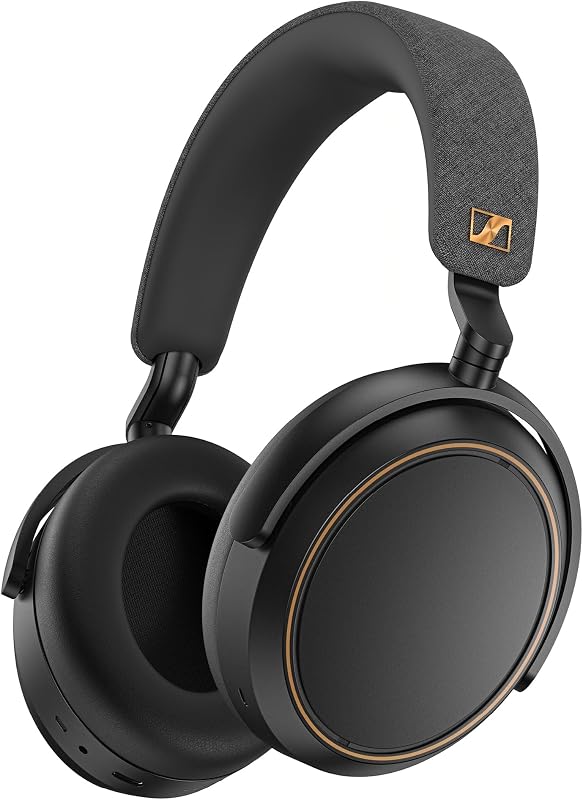
The single deciding factor between the AKG K371 and the Hifiman Sundara is acoustic architecture: the K371 is a closed-back dynamic headphone built for portable isolation and studio tracking, whereas the Sundara is an open-back planar magnetic headphone designed for stationary, high-resolution listening in quiet spaces.
Choose the AKG K371 if you need passive sound isolation, easy drivability from any audio source, and a collapsible frame for studio tracking or travel; choose the Hifiman Sundara if you want an expansive acoustic stage, lightning-fast planar magnetic detail, and a stationary setup paired with dedicated amplification.


AKG K371 vs Hifiman Sundara at a Glance
| Feature | AKG K371 | Hifiman Sundara |
|---|---|---|
| Operating Principle | Closed-Back, Over-Ear | Open-Back, Over-Ear |
| Transducer Type | 50mm Titanium-Coated Dynamic | Planar Magnetic |
| Frequency Response | 5 Hz – 40,000 Hz | 6 Hz – 75,000 Hz |
| Impedance | 32 ohms | 32 ohms |
| Sensitivity | 114 dB | 92 dB |
| Weight | Not listed | 342 g |
| Cable Connections | Detachable Mini-XLR to 3.5mm | Detachable Dual 3.5mm |
| Folding Mechanism | Foldable Notched Headband | Non-Folding Headband |
| Included Cables | 3m coiled, 3m straight, 1.2m straight | Single straight cable |
| Best For | Studio tracking, field recording, mobile production | Stationary critical listening, open-room mixing |
Acoustic Isolation and Studio Versatility
The distinction between closed back vs planar magnetic headphones begins with containment. The AKG K371 relies on closed-back earcups with oval isolating ear pads designed to seal out ambient noise and prevent audio from leaking into sensitive condenser microphones. In live tracking rooms, broadcast booths, and commuter environments, this acoustic barrier keeps external distractions out while preventing metronome clicks or monitor mixes from bleeding into your recordings.
Conversely, the Hifiman Sundara features an open-back design with a noise control rating of none. Sound passes freely through its outer metal grilles, allowing people nearby to hear your audio while letting room noise enter your listening field uninhibited. If you work in an untreated or noisy environment, comparing the acoustic containment of the beyerdynamic dt 770 pro vs akg k371 demonstrates how closed enclosures maintain pristine focus despite external chaos, whereas the Sundara demands a private, controlled room to function effectively.
By confining audio within an isolating shell, the K371 functions seamlessly across mobile workstations, podcast setups, and tracking booths. The Sundara cannot serve in live recording situations where microphones are active, narrowing its studio role purely to playback and editing in solitude.
Edge: AKG K371, because its closed-back isolation contains audio bleed and blocks external background noise across versatile recording environments.
Driver Technology and Soundstage Expansion
Transducer architecture dictates how these two models resolve micro-details and render acoustic space. The AKG K371 uses 50mm titanium-coated dynamic transducers paired with pure oxygen-free copper voice coils. This dynamic setup creates punchy, impactful transient hits and robust low-frequency energy inside a sealed cavity, though the overall AKG K371 vs Hifiman Sundara soundstage reveals the physical limitations of closed-back enclosures, resulting in an intimate presentation that stays close to the ears.
The Hifiman Sundara employs a planar magnetic driver featuring a newly developed hi-tech diaphragm that is 80% thinner than the previous HE400 series. Because planar magnetic conductive traces are spread evenly across a flat, ultra-thin membrane suspended between magnetic arrays, the entire surface moves uniformly without cone breakup. This construction results in faster transient response, precise instrument layering, and an open, three-dimensional acoustic space that feels like listening to room monitors rather than enclosed headphones.
Listeners seeking wide spatial boundaries and natural instrument decay will find the Sundara substantially more three-dimensional. While an beyerdynamic dt 770 pro vs hifiman sundara head-to-head highlights how planar speed outpaces traditional dynamic drivers, the comparison with the K371 leads to the exact same outcome.
Edge: Hifiman Sundara, thanks to its ultra-thin planar magnetic diaphragm that provides faster transients and a vastly more expansive soundstage.
Sensitivity, Amplification, and Drive Requirements
Power delivery can alter your purchasing decision before sound quality even enters the conversation. Although both models share a nominal 32-ohm impedance, their efficiency ratings sit at opposite ends of the engineering spectrum. The AKG K371 delivers a high sensitivity rating of 114 dB, allowing it to reach authoritative monitoring volumes straight out of a laptop, audio interface, smartphone, or portable recorder without requiring dedicated external amplification.
The Sundara, by comparison, drops to an insensitive 92 dB. While the 32-ohm Hifiman Sundara impedance seems forgiving on paper, driving a 92 dB planar magnetic diaphragm requires substantial current to achieve full dynamic swing and bass impact. When plugged into low-output consumer headphone jacks, the Sundara often sounds quiet, flat, or compressed unless connected to a dedicated desktop amplifier.
Shoppers weighing the beyerdynamic dt 900 pro x vs hifiman sundara frequently run into this exact amplification hurdle. The K371 removes the requirement for secondary gear, making it fully operational regardless of the hardware you plug it into on location.
Edge: AKG K371, as its 114 dB sensitivity allows effortless volume and dynamic headroom from any basic source device.
Frequency Extension and Studio Mixing Accuracy
Evaluating the AKG K371 or Hifiman Sundara for mixing depends on whether your workflow prioritizes target-curve translation or high-frequency extension. The K371 is engineered to match the AKG reference response curve target, delivering an exceptionally linear response with a stated frequency range of 5 Hz to 40,000 Hz. The titanium-coated 50mm dynamic drivers extend deep into sub-bass frequencies, giving mixing engineers immediate feedback on low-end rumble and kick drum weight that could otherwise compromise a master.
The Sundara expands frequency boundaries even further, specifying an ultra-wide range of 6 Hz to 75,000 Hz. Its planar diaphragm produces upper-treble air, rapid speed on cymbal crashes, and micro-harmonic details that dynamic cones struggle to articulate with equal agility. However, the open design trades away some sub-bass punch in exchange for seamless mid-range neutrality and effortless top-end resolution.
In practice, a thorough AKG K371 review reveals that its low-frequency impact provides superior sub-bass evaluation for modern electronic, hip-hop, and pop production. Conversely, a comprehensive Hifiman Sundara review shows that its linear midrange and rapid transient response allow mastering engineers to isolate EQ anomalies and vocal sibilance with clinical accuracy.
Edge: Tie, as the K371 provides superior low-end monitoring against a reference curve, while the Sundara offers superior upper-treble extension and transient clarity.
Gaming Immersion and Positional Tracking
When selecting the AKG K371 or Hifiman Sundara for gaming, the choice balances pinpoint competitive directional cues against acoustic isolation. The Sundara excels in stationary competitive play thanks to its open back and fast planar driver. Soundwaves disperse naturally, creating pinpoint imaging that lets players track footsteps, grenade bounces, and ambient spatial cues across virtual environments with exceptional depth.
The K371 provides a closed environment that keeps your gaming session silent to roommates while shutting out household distractions. While its frequency response delivers impactful cinematic explosions and clear dialogue, its closed earcups cannot replicate the wide externalized imaging found in open designs. Reviewing the philips shp9500 vs hifiman sundara underscores how open architecture naturally aids directional awareness in video games.
For gamers operating in a quiet, dedicated gaming room who want lifelike atmospheric rendering and positional accuracy, the planar magnetic architecture of the Sundara creates a distinctly immersive, boundary-free environment.
Edge: Hifiman Sundara, as its open planar magnetic architecture provides wider positional imaging and superior directional awareness.
Build Architecture, Ergonomics, and Cable Versatility
Physical longevity and carrying requirements reveal stark design philosophies. The K371 is built with portability in mind, featuring a foldable notched headband that collapses the earcups into a compact footprint. AKG includes a protective carrying pouch and three separate detachable cables in the box: a 3-meter coiled cable, a 3-meter straight cable, and a 1.2-meter straight cable, all terminating in a mini-XLR connector that locks securely into the left earcup.
The Hifiman Sundara abandons folding joints entirely for an all-metal headband assembly featuring an independent weight-spreading head strap. Weighing in at 342 grams, the Sundara evenly distributes its mass across your cranium, preventing pressure hotspots during marathon desktop sessions. For connectivity, Hifiman provides a single cable using standard dual 3.5mm connectors at the earcups, prioritizing connection robustness over field transportability.
While the Sundara offers a sturdier metal chassis, the comprehensive package provided with the K371 solves real-world workflow challenges. As seen in comparisons like the beyerdynamic dt 900 pro x vs akg k371, having multiple cable lengths and a collapsible design makes mobile deployment far easier.
Edge: AKG K371, due to its versatile three-cable package, secure mini-XLR connector, and collapsible headband.
Pros and Cons
AKG K371

Pros
- High 114 dB sensitivity drives easily
- Includes three detachable mini-XLR cables
- Effective passive closed-back noise isolation
- Deep 5 Hz sub-bass extension
- Collapsible notched headband for travel
Cons
- Narrower soundstage than open planars
- Intimate acoustic separation
Hifiman Sundara

Pros
- Ultra-thin planar magnetic diaphragm
- Massive 6 Hz to 75 kHz frequency range
- Expansive three-dimensional soundstage
- Weight-spreading suspension headband
- Fast transient response and clarity
Cons
- Low 92 dB sensitivity requires amplification
- Zero noise isolation leaks audio freely
- Non-folding frame limits portability
View Hifiman Sundara on Amazon
Who Should Buy Each One
Choose the AKG K371 If
- You need passive acoustic isolation to prevent microphone bleed during vocal recording or podcasting.
- You work on mobile laptops or field recorders without a dedicated headphone amplifier.
- You require a foldable headphone that packs into a bag with multiple cable lengths.
- You produce bass-heavy music genres that require monitoring sub-frequencies down to 5 Hz.
Choose the Hifiman Sundara If
- You listen primarily at a stationary desk inside a quiet, controlled room.
- You already own or plan to purchase a dedicated headphone amplifier capable of driving a 92 dB load.
- You prioritize an expansive, airy soundstage for classical music, acoustic genres, or competitive gaming.
- You want the transient speed, micro-detail, and extended 75 kHz response of a planar magnetic diaphragm.
Final Verdict
For most creators, field engineers, and everyday listeners, the AKG K371 is the more practical and versatile tool. Its combination of closed-back sound isolation, high 114 dB sensitivity that runs from any device, folding frame, and complete three-cable accessory package makes it an effortless fit across modern audio production environments. It delivers deep, reference-targeted frequency response while keeping your sound isolated from the room.
However, when stationary fidelity is your sole priority and ambient isolation is not required, the Hifiman Sundara takes the lead. Its ultra-thin planar magnetic diaphragm produces a level of transient clarity, acoustic separation, and soundstage dimensionality that closed dynamic models cannot match. If you have a quiet room and adequate amplification to drive its 92 dB sensitivity, the Sundara delivers a high-fidelity listening experience that justifies every desktop requirement.
FAQ
AKG K371 or Hifiman Sundara for mixing?
The AKG K371 is better for tracking, live monitoring, and sub-bass balance because its closed back contains noise and isolates low frequencies down to 5 Hz. The Hifiman Sundara is superior for master bus adjustments, mid-range balance, and reverb staging due to its open acoustic presentation and rapid planar transient response, provided you mix in a quiet environment.
AKG K371 or Hifiman Sundara for gaming?
The Hifiman Sundara is the stronger pick for gaming immersion and positional awareness thanks to its open-back planar design, which renders footsteps and distance cues across a wide space. The AKG K371 is only preferred for gaming if you play in a noisy environment or need to prevent microphone bleed while using a desktop mic.
Do I need a dedicated headphone amplifier for the Hifiman Sundara?
Yes, in most cases. Although the Sundara has an impedance of 32 ohms, its sensitivity is relatively low at 92 dB. Standard smartphone and basic laptop audio outputs frequently struggle to provide enough current, which can leave the Sundara sounding quiet, thin, or lacking in bass impact without external amplification.
Does the AKG K371 leak sound during microphone recording?
No, the AKG K371 uses a closed-back acoustic enclosure paired with isolating oval ear pads designed specifically to keep sound contained. This ensures backing tracks, click tracks, or reference audio do not bleed into sensitive condenser microphones during vocal or acoustic instrument tracking.
How does the AKG K371 frequency response compare to the Hifiman Sundara?
The AKG K371 is rated from 5 Hz to 40,000 Hz and adheres closely to the AKG reference response curve target, delivering robust sub-bass and a neutral profile. The Hifiman Sundara extends even further from 6 Hz to 75,000 Hz, prioritizing upper-harmonic air, ultra-fast transients, and flat midrange clarity.
Is Hifiman Sundara worth it for everyday travel and commuting?
No, the Hifiman Sundara is not suitable for commuting. Because it is an open-back headphone with zero passive isolation, environmental noise enters freely, and your audio leaks outward to people around you. Additionally, its non-folding frame and demanding power requirements make it strictly a stationary desktop headphone.