Choosing between the AMD Ryzen 7 7800X3D and the AMD Ryzen 9 7900X comes down to a fundamental architectural trade-off: specialized gaming cache versus raw multi-core computing power. The Ryzen 7 7800X3D utilizes an enormous 96 MB L3 cache pool engineered specifically to accelerate gaming frame rates, while the Ryzen 9 7900X provides 12 physical cores and 24 threads alongside a rapid 5.6 GHz top frequency to drive intense productivity workloads.
Gamers seeking the smoothest possible frame pacing and maximum cache memory should choose the Ryzen 7 7800X3D, while digital artists, software developers, and video editors demanding high-thread parallel execution should select the Ryzen 9 7900X.

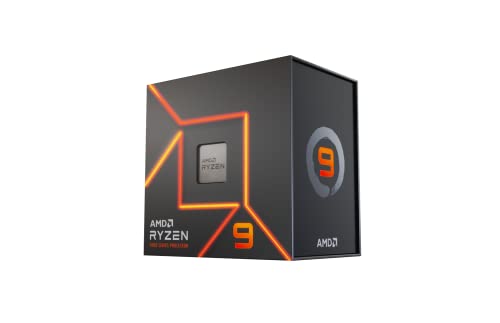
AMD Ryzen 7 7800X3D vs Ryzen 9 7900X at a Glance
| Feature | AMD Ryzen 7 7800X3D | AMD Ryzen 9 7900X |
|---|---|---|
| Processor Series | Ryzen 7 | Ryzen 9 |
| Physical CPU Cores | 8 cores | 12 cores |
| Concurrent Threads | 16 threads | 24 threads |
| Base Clock Speed | 4.2 GHz | 4.7 GHz |
| Overclocking Boost Speed | Not listed | 5.6 GHz |
| L2 Cache | 8 MB | 12 MB |
| L3 Cache | 96 MB | 64 MB |
| Total Installed Cache | 104 MB | 76 MB |
| Thermal Design Wattage | 120 watts | 170 watts |
| Maximum Operating Temperature | 89°C | Not listed |
| Integrated Graphics Frequency | 2200 MHz | Not listed |
| Supported Platform | Windows 10, Windows 11 | Linux, Windows |
| Best For | Dedicated Gaming Systems | Heavy Multithreaded Workstations |
Cache Architecture and Gaming Capabilities
In modern desktop processors, memory subsystem latency directly governs real-world gaming performance. When games calculate complex world state logic, entity positions, and physics simulations, the CPU repeatedly reaches for assets stored in memory. The Ryzen 7 7800X3D vs 7900X cache specs reveal two distinct engineering philosophies. The 7800X3D is equipped with an 8 MB L2 cache and an extraordinary 96 MB L3 cache, bringing the total installed cache to 104 MB. In contrast, the 7900X incorporates a 12 MB L2 cache paired with a 64 MB L3 cache for 76 MB of total cache memory.
That extra 32 MB of L3 cache on the 7800X3D allows the processor to retain massive instruction sets and datasets directly on-chip. By reducing the frequency with which the CPU cores must fetch information across the system bus from system RAM, the processor prevents execution pipeline stalls. When deciding between the 7800X3D or 7900X for gaming, this massive pool of fast-access storage delivers more consistent frame generation and reduced stuttering during intensive game sequences. Similar trends appear when analyzing the amd ryzen 7 7800x3d vs ryzen 9 7950x3d, where specialized 3D cache configurations routinely outperform conventional layouts in real-time gaming engines.
While the 7900X possesses a respectable 64 MB L3 cache, it spreads this capacity across a higher core configuration. For pure gaming workloads that rely heavily on single-thread response and near-zero memory access latency, the larger buffer of the 7800X3D maintains superior cache hit rates that translate directly to elevated frame consistency.
Edge: AMD Ryzen 7 7800X3D wins because its 96 MB L3 cache drastically reduces data fetch times in latency-sensitive gaming engines.
Core Count and Multithreaded Productivity
While cache size drives gaming consistency, overall multi-core throughput dictates how rapidly a machine chews through heavy production tasks. The 7800X3D vs 7900X productivity performance dynamic shows an entirely different balance of power. The Ryzen 9 7900X features a dodeca-core design packing 12 physical cores and 24 concurrent threads. On the other side, the Ryzen 7 7800X3D utilizes an octa-core layout consisting of 8 cores and 16 threads.
When selecting the 7800X3D or 7900X for video editing, 3D scene rendering, local code compilation, or high-resolution media transcoding, core count is the governing bottleneck. The 7900X delivers 50 percent more physical execution units and threads than the 7800X3D. This structural advantage allows creative applications to divide computational tasks across multiple cores simultaneously, finishing batch operations in significantly less time. Readers evaluating professional setups often explore comparisons like the amd ryzen 7 7800x3d vs ryzen 9 7950x to see how higher core counts reshape creative workflows.
Although the 8-core, 16-thread structure of the 7800X3D remains perfectly capable of moderate everyday multitasking, it cannot match the throughput of a true 12-core silicon layout when full system loads persist across multiple hours of rendering or file processing.
Edge: AMD Ryzen 9 7900X wins convincingly due to its 12 cores and 24 threads providing 50 percent more processing resources for heavy multithreaded tasks.
Clock Speeds and Processing Frequency
Processor clock frequency measures how many cycles of instruction execution each core can perform every single second. In any detailed AMD Ryzen 7 7800X3D review, frequency management represents a critical point of discussion. The 7800X3D operates with a listed base clock speed of 4.2 GHz. The product listing does not specify an overclocking or boost frequency for the 7800X3D, reflecting conservative operating parameters designed to safeguard its vertically stacked 3D cache structure.
Conversely, an AMD Ryzen 9 7900X review reveals an aggressive frequency profile built for speed. The 7900X features a base clock speed of 4.70 GHz and an overclocking boost speed that climbs all the way to 5.60 GHz. This substantial frequency headroom gives the 7900X an immediate advantage in applications that depend on raw instruction velocity rather than cache volume. Buyers comparing frequency targets often look at modern options such as the intel core i7-14700k vs amd ryzen 7 7800x3d to evaluate clock speeds against cache sizes.
That 500 MHz advantage in base clock, combined with a 5.60 GHz maximum ceiling, ensures that the 7900X handles single-threaded math functions, software decompression, and frequency-sensitive legacy applications with exceptional efficiency.
Edge: AMD Ryzen 9 7900X wins with its higher 4.70 GHz base clock and rapid 5.60 GHz overclocking capability.
Power Consumption and Thermal Requirements
Operating wattage and thermal thresholds dictate your choice of power supply unit, cooling hardware, and chassis ventilation. Evaluating Ryzen 7 7800X3D power consumption vs 7900X reveals substantial differences in thermal design power (TDP). The 7800X3D operates within a conservative 120-watt envelope, accompanied by a specified maximum operating temperature (Tjmax) of 89°C. This 120W figure makes the processor comparatively straightforward to power and cool inside mainstream desktop enclosures.
In contrast, the 7900X demands a 170-watt operating envelope to drive its 12 cores at high clock frequencies. The manufacturer listing does not specify a maximum operating temperature for the 7900X, but a 170W rating requires substantial thermal dissipation infrastructure. Anyone wondering is Ryzen 9 7900X worth it must factor in the need for a robust thermal cooling solution to sustain sustained clock speeds under full loads. Mainstream gaming builders exploring options like the amd ryzen 5 7600 vs ryzen 7 7800x3d often prioritize moderate thermal output to maintain quieter fan operation.
The 50-watt gap in power draw gives the 7800X3D an undeniable operational edge for builders who want high gaming performance without placing heavy thermal loads on their system cooling setup.
Edge: AMD Ryzen 7 7800X3D wins by delivering its performance within a leaner 120-watt power profile and a defined 89°C operating ceiling.
Platform Compatibility and Integrated Graphics
Examining the Ryzen 9 7900X vs AMD Ryzen 7 7800X3D on platform integration reveals that both chips share a cutting-edge technological foundation. Both processors are manufactured using 5 nm process technology, fit identical Socket AM5 desktop motherboards, and measure exactly 1.57 inches long by 1.57 inches wide. Each processor also comes with an integrated AMD Radeon Graphics controller, ensuring basic display output and troubleshooting capabilities without requiring a discrete graphics card during initial system configuration.
However, specific listing attributes diverge slightly between the two models. The 7800X3D lists a dedicated graphics frequency of 2200 MHz, whereas the graphics frequency for the 7900X is not specified in its product data. On the operating system side, the 7800X3D listing officially specifies Windows 10 and Windows 11 compatibility, while the 7900X listing officially details both Linux and Windows support. System builders looking at general AM5 configurations often compare chips like the amd ryzen 7 7700x vs ryzen 9 7900x to determine platform versatility.
Because both units share identical physical socket dimensions, identical 5 nm architecture, and integrated Radeon visual capabilities, neither chip holds a definitive architectural platform advantage over the other.
Edge: Tie, since both processors share Socket AM5 integration, 5 nm manufacturing, and built-in AMD Radeon graphics.
Pros and Cons
AMD Ryzen 7 7800X3D

Pros
- Massive 96 MB L3 cache memory
- Lower 120W power envelope
- Dedicated 2200 MHz integrated graphics
- Modern 5 nm processor technology
Cons
- Lower 4.2 GHz base clock speed
- Fewer cores than Ryzen 9
- Boost clock speed not listed
View AMD Ryzen 7 7800X3D on Amazon
AMD Ryzen 9 7900X

Pros
- 12 cores and 24 threads
- High 5.6 GHz boost speed
- Higher 4.70 GHz base frequency
- Official Linux and Windows support
Cons
- Higher 170W power consumption
- Smaller 64 MB L3 cache
- Graphics frequency not listed
View AMD Ryzen 9 7900X on Amazon
Who Should Buy Each One
Choose the AMD Ryzen 7 7800X3D If
- Your primary desktop objective is competitive or high-refresh gaming where massive 96 MB L3 cache minimizes frame drops.
- You want a system that runs inside a leaner 120-watt power ceiling with lower overall thermal output.
- Your workload rarely involves heavy multi-core tasks beyond 8 cores and 16 concurrent threads.
- You prefer a defined maximum operating temperature threshold of 89°C for predictable thermal monitoring.
Choose the AMD Ryzen 9 7900X If
- You rely on intensive creative applications like 3D modeling, software compilation, or video rendering that scale directly across 12 cores and 24 threads.
- You need extreme execution speeds reaching up to 5.60 GHz for frequency-dependent processing tasks.
- Your build incorporates Linux as a primary or dual-boot operating environment alongside Windows.
- Your computer setup includes high-end cooling capable of comfortably managing a 170-watt power draw.
Final Verdict
For dedicated PC gaming setups, the AMD Ryzen 7 7800X3D is the superior choice. Its massive 96 MB L3 cache gives it a distinct operational edge in managing gaming latency, allowing modern game engines to run with unmatched consistency. Combined with a sensible 120-watt power profile and Socket AM5 flexibility, it delivers specialized processing efficiency where gamers need it most.
However, when desktop priorities shift toward heavy workstation productivity, the AMD Ryzen 9 7900X wins the day. Its 12 physical cores, 24 concurrent threads, and blisteringly fast 5.60 GHz overclocking clock provide the necessary muscle to chew through rendering, encoding, and multitasking workloads that leave 8-core chips lagging behind. If heavy production is your daily routine, choose the Ryzen 9 7900X; if gaming is your primary pursuit, buy the Ryzen 7 7800X3D.
FAQ
Can the Ryzen 7 7800X3D fit in the same motherboard as the Ryzen 9 7900X?
Yes. Both processors utilize the Socket AM5 interface and share identical physical dimensions of 1.57 inches by 1.57 inches, allowing them to mount onto the exact same motherboard socket type.
What is the difference in L3 cache between the 7800X3D and 7900X?
The Ryzen 7 7800X3D features 96 MB of L3 cache, whereas the Ryzen 9 7900X includes 64 MB of L3 cache. Combined with their respective L2 cache pools, the 7800X3D provides 104 MB of total cache while the 7900X provides 76 MB.
Which processor consumes less power under load?
The Ryzen 7 7800X3D consumes less power, featuring a rated thermal design power of 120 watts compared to the 170-watt thermal design power of the Ryzen 9 7900X.
Do both processors come with integrated graphics?
Yes. Both the Ryzen 7 7800X3D and Ryzen 9 7900X feature integrated AMD Radeon Graphics controllers. The 7800X3D specifies a graphics frequency of 2200 MHz, while the frequency for the 7900X integrated graphics is not specified in the listing.
Which CPU is better suited for video rendering and multi-threaded tasks?
The Ryzen 9 7900X is significantly better suited for video rendering and heavy multi-threaded production tasks because it possesses 12 cores and 24 threads, compared to the 8 cores and 16 threads found on the Ryzen 7 7800X3D.
What operating systems do these processors support according to the listings?
The Ryzen 7 7800X3D listing officially specifies support for Windows 10 and Windows 11 platforms, while the Ryzen 9 7900X listing explicitly lists support for both Linux and Windows operating systems.