The choice between an impact driver and a hammer drill comes down to the direction of mechanical force: an impact driver produces rapid rotational blows to drive stubborn fasteners without stripping screw heads, whereas a hammer drill delivers concussive, linear forward blows to pulverize masonry, stone, and brick.
Choose an impact driver if your projects revolve around deck building, structural framing, cabinetry, or repetitive fastening in wood and metal. Choose a hammer drill if you need to bore clean anchor holes into brick foundations, concrete slabs, or mortar beds.



Impact Driver vs Hammer Drill at a Glance
| Feature | Impact Driver | Hammer Drill |
|---|---|---|
| Primary Force Mechanism | Tangential rotational anvil strikes | Linear axial concussive impacts |
| Standard Chuck System | 1/4-inch hex quick-release or 1/2-inch square drive | 1/2-inch three-jaw keyless or SDS-Plus chuck |
| Primary Metric | Rotational torque (inch-pounds or foot-pounds) | Blow rate (IPM) or impact energy (Joules) |
| Rotational Speed Range | 0 to 2400 RPM (up to 3300 IPM rotational) | 0 to 3000 RPM (up to 48,000 IPM concussive) |
| Fastener Cam-Out Resistance | High; downward force not required to prevent slip | Low; reactive torque forces bit out of fastener |
| Masonry Boring Capability | Poor; limited to small holes with specialty bits | High; pulverizes aggregate efficiently |
| Head Length and Profile | Compact (5.55 to 7.9 inches) | Extended (11.75 to 13 inches) |
| Best For | Driving long screws, framing, lag bolts, and automotive repair | Drilling anchor holes in brick, block, and concrete slabs |
Fastening Torque and Rotational Impact Power
Rotational torque defines the core capability of an impact driver. When driving a heavy screw into seasoned lumber, a conventional drill binds once friction increases, transferring all twisting force back into the operator’s wrist. An impact driver bypasses this issue through internal spring-loaded hammer and anvil mechanisms. As resistance builds, the tool strikes tangentially in the direction of rotation thousands of times per minute. The DEWALT DCK240C2 combo kit pairs an impact driver producing 1,700 in-lb of rotational torque with a standard drill driver, providing enough driving power for large structural timber screws without requiring heavy downward pressure on the handle.
For high-demand mechanical and industrial fastening, specialized high-torque drivers expand this concept further. The Seesii WH9 Pro delivers 579 ft-lbs of tightening torque and 665 ft-lbs of loosening torque with three selectable speed gears topping out at 2400 RPM and 3300 IPM. This design isolates the user from jarring torque spikes, allowing rapid driving of heavy lag screws or automotive lug nuts that would stall a standard drill motor or violently twist the operator’s arm. Builders comparing the milwaukee 2903-20 vs 2904-20 often evaluate similar thresholds between pure rotational control and auxiliary impact features.
In contrast, a hammer drill does not generate tangential impact force. While models like the Hammerhead HAHD075 feature a robust 7.5-amp motor reaching up to 3000 RPM, the tool relies on a standard three-jaw friction grip. Using a hammer drill to drive long fasteners frequently leads to stripped heads and snapped bit tips because the user must exert massive bodily pressure to prevent the bit from camming out of the screw slot. In any direct evaluation of impact driver fastening vs masonry drilling, dedicated rotational tools hold an unmistakable advantage for driving fasteners.
Edge: Impact Driver because its spring-loaded rotational anvils drive long fasteners without transferring violent twist back into the operator’s wrists.
Masonry Boring and Concussive Forward Energy
Drilling hard aggregate like poured concrete, granite, or cured mortar requires fracturing the brittle structure before clearing the debris. A hammer drill accomplishes this with axial impacts, hammering the bit directly forward along its shaft while spinning. In corded consumer tools like the Hammerhead HAHD075, mechanical cam plates ride over each other to generate up to 48,000 impacts per minute. This high-frequency chipping turns brick and concrete into fine dust that the rotating flutes extract from the bore hole.
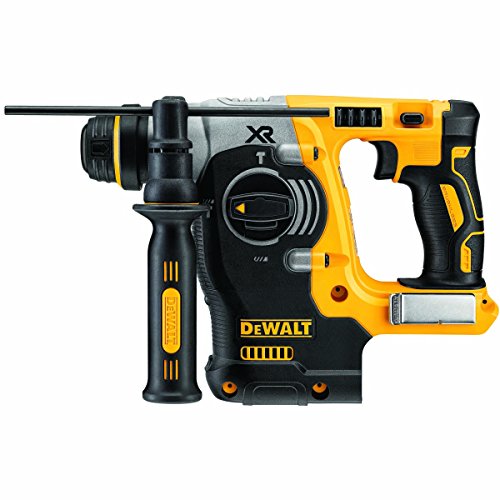
Heavy-duty rotary hammers take linear concussive force even further with pneumatic piston mechanisms. The DEWALT DCH273B rotary hammer utilizes an internal striker mechanism engineered in Germany to deliver 2.1 Joules of discrete impact energy at 1100 RPM. This pneumatic punch shatters dense aggregate rapidly and cleanly. Tradespeople working on anchoring tasks often consult a dedicated hammer drill review to determine whether standard cam-action or true pneumatic SDS power is required for their jobsite demands, similar to assessments made in the dewalt dcd800 vs dcd996 comparison.
An impact driver completely lacks forward concussive force. When users ask: can an impact driver drill concrete? The answer is strictly limited. While an impact driver can bore small anchor holes in soft brick using specialized masonry-rated hex bits, its rotational strikes merely scrape the cutter against hard stone rather than fracturing it. This generates extreme friction, overheating the bit tip and dulling carbide cutters in seconds. For boring into concrete slabs or solid foundation footers, an impact driver cannot substitute for a dedicated hammer tool.
Edge: Hammer Drill because its linear concussive mechanism rapidly fractures aggregate where rotational drivers merely grind and overheat.
Chuck Systems and Bit Shank Compatibility
The interface connecting tool to bit dictates operational versatility and jobsite speed. Impact drivers almost universally employ a 1/4-inch quick-release hex collet or a squared anvil for sockets. The impact driver in the DEWALT DCK240C2 kit features a one-handed loading 1/4-inch chuck that accepts standard 1-inch bit tips directly. This setup enables quick changes between Phillips, Torx, and hex head driver bits. The Seesii WH9 Pro features a 1/2-inch fixed square head designed specifically to lock onto impact-rated sockets, eliminating bit slippage entirely under high rotational shock loads.
Hammer drills utilize chuck designs engineered to withstand heavy forward blows rather than rotational pulses. The Hammerhead HAHD075 employs a 1/2-inch keyless all-metal chuck that clamps down onto cylindrical and flatted shanks up to 13mm in diameter. This allows the drill to accept standard jobber twist bits for steel and wood, as well as straight-shank carbide masonry bits. However, standard three-jaw friction chucks can loosen over time under severe percussion, requiring occasional re-tightening during deep hole drilling.
Dedicated rotary hammers solve slippage entirely by utilizing keyed SDS drive systems. The DEWALT DCH273B uses an SDS-Plus chuck holding bits up to 20mm in diameter, where spring-loaded ball bearings lock into milled bit grooves. This architecture allows the bit to slide axially back and forth with the pneumatic piston strokes while transferring maximum rotational force. You cannot insert standard 1/4-inch hex driver bits into an SDS chuck without bulky adapters that introduce severe bit wobble. Understanding chuck limitations is essential when weighing Makita or Milwaukee options such as the makita xfd131 vs xph12z.
Edge: Tie because impact drivers offer unmatched rapid-change convenience for hex bits, while hammer drills accommodate large-shank and SDS masonry bits built for impact resistance.
Size, Weight, and Worksite Maneuverability
Working overhead, between narrow floor joists, or inside pre-hung cabinetry requires a tool with minimal clearance and low mass. The impact driver in the DEWALT DCK240C2 measures just 5.55 inches in head length and weighs only 2.8 pounds. This ultra-compact profile fits into tight wall bays and allows hours of repetitive overhead screw driving without arm fatigue. Even heavy-duty high-torque models like the Seesii WH9 Pro maintain a compact 7.9-inch body, remaining nimble enough for automotive wheel wells and chassis assembly.
Hammer drills are physically bulkier due to the internal components required for axial hammering. The corded Hammerhead HAHD075 measures 11.75 inches long and weighs 5.2 pounds. It includes an auxiliary side handle and a depth gauge to help users control the substantial push force needed for masonry drilling. The cordless DEWALT DCH273B measures 13 inches long, 4.2 inches wide, and 8.6 inches tall, housing its brushless motor, pneumatic cylinder, and vibration damping assemblies inside an extended chassis.
When selecting an impact driver or hammer drill for building a deck, tool dimensions matter substantially. Deck frames involve driving hundreds of structural screws between ledger boards and tight joist pockets where an 11-to-13-inch hammer drill simply cannot fit. Tradesmen evaluating kits like the dewalt dcd771 vs dcd998 often note that compact driver dimensions prove far more versatile for general woodworking than long hammer-action drill bodies.
Edge: Impact Driver because its short head length and low overall weight allow comfortable access to tight spaces and reduce fatigue during overhead work.
Vibration Control and User Fatigue
The direction of impact force dramatically alters how tool operation feels in the hands. In an impact driver, percussive force is directed horizontally around the rotational axis. Because the anvils strike perpendicular to the user’s arm, very little vibration travels directly up the wrist and elbow. The Seesii WH9 Pro mitigates handling strain with TPE anti-slip grips and a vibration-dampening motor cover, while an auto-stop function protects fasteners and internal motors from over-tightening damage.
Hammer drills deliver axial concussive force directly aligned with the user’s arm. To drill concrete effectively with a mechanical cam hammer drill like the Hammerhead HAHD075, the operator must lean significant body weight into the back of the housing. This forces thousands of linear shocks per minute straight into the hands, wrists, and shoulders, causing arm fatigue over prolonged drilling sessions. The corded Hammerhead includes a soft grip handle and adjustable side handle to improve mechanical leverage, but significant vibration remains inherent to cam-action designs.
Pneumatic rotary hammers employ active engineering to solve this fatigue problem. The DEWALT DCH273B includes the SHOCKS Active Vibration Control system, which decouples the rear handle from the motor chassis using internal dampening linkages. This system reduces vibration felt by the user compared to rotary hammers without dampening, helping protect against long-term vibration-induced joint strain. Similar vibration control evaluations appear when comparing high-performance options like the dewalt dcd777 vs dcd996.
Edge: Impact Driver because its rotational strikes generate zero axial kickback into the operator’s joints during heavy driving tasks.
Multi-Mode Versatility and Application Scope
The versatility of each tool depends on its internal gearing and mode controls. Rotary hammers frequently feature multi-position dials to adapt to distinct tasks. The DEWALT DCH273B features a rotating dial with three application modes: Drill (rotation only for wood and metal), Hammer Drill (rotation with pneumatic hammering for masonry), and Chip (hammering without rotation for light chiseling, tile lifting, or slotting mortar). This multi-function capability allows tradespeople to remove bathroom tile, bore through structural walls, and chisel concrete patches with a single tool.
Two-in-one mechanical hammer drills like the Hammerhead HAHD075 offer rotation-only drilling and hammer drilling modes. Switching to rotation-only lets the user drill up to 25mm in wood and 12mm in metal using standard twist bits, aided by a variable speed trigger with lock-on functionality for continuous operation. However, the manufacturer listing specifically cautions that the Hammerhead HAHD075 cannot be used on reinforced concrete walls, highlighting the performance ceiling of mechanical cam designs compared to pneumatic systems.
Impact drivers are specialized tools optimized for driving fasteners rather than general drilling. While variable-speed triggers and multi-gear speed selectors-such as the three forward gears on the Seesii WH9 Pro (1700, 2100, and 2400 RPM)-provide precise control over delicate fasteners, impact drivers lack dedicated chipping modes or mechanical slip clutches. Anyone reading an impact driver review will quickly learn that attempting delicate drilling in thin plastics or soft finishes with an impact driver carries a risk of snapping small bits when the impact anvil engages.
Edge: Hammer Drill because multi-mode selectors allow switching between standard drilling, masonry hammering, and dedicated demolition chiseling.
Pros and Cons
Impact Driver

Pros
- High rotational torque up to 1700 in-lb
- Compact head lengths as short as 5.55 inches
- Prevents wrist-twisting reactive torque during heavy fastening
- Quick-release 1/4-inch hex collet for fast bit swaps
- Significantly lighter weight reduces overhead arm fatigue
Cons
- Cannot efficiently drill into hard cured concrete
- Lacks linear forward concussive hammering mechanism
- Cannot accept standard round-shank or SDS masonry bits
View DEWALT 20V MAX Cordless Drill on Amazon
Hammer Drill

Pros
- Powerful linear concussive blows up to 48000 IPM
- Available pneumatic impact energy up to 2.1 Joules
- Multi-mode switches for drilling hammer drilling and chipping
- Accommodates standard straight-shank and SDS-Plus bits
Cons
- Bulkier chassis up to 13 inches long
- Prone to camming out and stripping screw heads
- Higher vibration transfers shock into operator joints
View DEWALT 20V MAX SDS Rotary Hammer on Amazon
Who Should Buy Each One
Choose the Impact Driver If
- Your projects primarily involve building decks, framing walls, or driving long structural timber screws.
- You need an ultra-compact tool that fits into tight framing bays, cabinet boxes, and awkward joist spaces.
- You want to eliminate wrist strain and stripped screw heads caused by reactive drill torque.
- You regularly work on automotive lug nuts, mechanical machinery, or heavy lag bolt assemblies.
Choose the Hammer Drill If
- You frequently drill anchor holes into brick, concrete block, masonry walls, or foundation footers.
- You need the versatility of a three-mode tool capable of standard drilling, masonry drilling, and light mortar chiseling.
- You install electrical conduit, cable trays, strut mounts, and mechanical hanging hardware into commercial ceilings.
- You need a tool that accepts round-shank bits, large twist bits, and dedicated SDS-Plus masonry steel.
Final Verdict
For the vast majority of homeowners, woodworkers, and general contractors, the impact driver is the superior everyday tool. Its compact dimensions, light handling, and relentless rotational torque make it indispensable for driving screws, assembling furniture, building outdoor decks, and fastening structural framing. Because the internal hammer-and-anvil assembly absorbs rotational resistance, you can drive heavy structural fasteners with one hand without twisting your wrist or stripping bit heads.
However, when a job calls for setting anchors in solid masonry, an impact driver cannot compete with a dedicated hammer drill. The linear, concussive pulverizing action of tools like the DEWALT DCH273B or Hammerhead HAHD075 breaks through brick, mortar, and concrete slabs cleanly and quickly. If your work routinely touches masonry foundations, concrete walls, or tile demolition, adding a hammer drill to your arsenal is entirely worth the investment.
FAQ
Can an impact driver drill concrete
An impact driver can drill small, shallow holes in soft brick or mortar if you use specialized masonry-rated 1/4-inch hex-shank bits. However, it cannot drill into dense, cured concrete slabs or foundation walls effectively. Because an impact driver strikes rotationally rather than forward along the bit, the carbide tip grinds against the stone instead of chipping it, causing rapid overheating and premature bit failure.
Impact driver or hammer drill for building a deck
An impact driver is the clear choice for building a deck. Deck construction requires sinking hundreds of ledger screws, structural framing bolts, and composite deck screws into wood and framing members. The rotational torque of an impact driver drives these fasteners flush without stripping the drive heads or twisting your wrist, and its compact head fits easily between narrow joists.
When to use impact driver vs hammer drill
Use an impact driver whenever you are driving threaded fasteners, such as wood screws, drywall screws, cabinet fasteners, lag bolts, or automotive nuts. Use a hammer drill whenever you need to bore holes into hard masonry surfaces like concrete floors, brick chimneys, cinder blocks, or stone walls.
Impact driver torque vs hammer drill ipm: which matters more
The importance of torque versus IPM depends entirely on the material and task. Rotational torque (measured in inch-pounds or foot-pounds) matters most when sinking screws into dense lumber or breaking loose rusted bolts. Blow rate (measured in impacts per minute) matters most when drilling masonry, where high-speed linear strikes fracture the rock aggregate so the drill flutes can evacuate dust.
Is a hammer drill worth it for basic home repairs
A hammer drill is worth having if your home features brick, stucco over masonry, or concrete foundation walls where you plan to mount shelves, hose reels, television brackets, or outdoor lighting. If your home is primarily wood-stud framing and drywall, an impact driver paired with a standard drill driver will cover almost all routine maintenance and renovation needs.
Can a hammer drill be used as a regular drill or screwdriver
Yes, most hammer drills include a selector switch that turns off the concussive hammering action, leaving only standard rotation for drilling wood, plastic, and metal. While you can use them to drive screws in rotation-only mode, they are heavier, longer, and more prone to stripping fastener heads than a dedicated impact driver because they lack tangential anti-cam-out impact mechanisms.