The single difference that determines whether you should choose the XFD16Z or the XPH07Z is the inclusion of a dedicated masonry hammer mechanism paired with maximum torque output. The XPH07Z incorporates an internal percussion hammer system delivering up to 31,500 blows per minute alongside a class-leading 1,090 in.lbs. of rotational force, engineered specifically to blast through masonry, poured concrete, and stubborn timber framing. In contrast, the XFD16Z is built strictly as a dedicated driver-drill, sacrificing hammer percussion to prioritize a shorter 6-7/8-inch chassis and lighter handling for precision fastening and repetitive wood boring.
Woodworkers, finish carpenters, cabinetmakers, and general remodelers who never drill into masonry should choose the Makita XFD16Z for its superior balance, compact profile, and self-ratcheting metal chuck. General contractors, structural builders, electricians, and plumbers who regularly anchor into block, brick, or high-density framing lumber should select the Makita XPH07Z for its hammer functionality and superior rotary power.


Makita XFD16Z vs Makita XPH07Z at a Glance
| Feature | Makita XFD16Z | Makita XPH07Z |
|---|---|---|
| Tool Category | Driver-Drill (Tool Only) | Hammer Driver-Drill (Tool Only) |
| Maximum Torque | 970 in.lbs. | 1,090 in.lbs. |
| Maximum Rotational Speed | 1,800 RPM | 2,100 RPM |
| Blows Per Minute (BPM) | Not listed (No hammer mode) | 0-31,500 BPM |
| Overall Tool Length | 6-7/8 inches | The listing does not specify |
| Operating Weight | 4.65 lbs. (with 5.0Ah battery) | The listing does not specify |
| Chuck Size & Mechanism | 1/2-inch all-metal self-ratcheting | 1/2-inch keyless (material not listed) |
| Motor Type | Makita-built Brushless | BL Brushless Motor |
| Speed Range Settings | 2-speed (0-550 & 0-1,800 RPM) | 2-speed (0 to 2,100 RPM max) |
| Best For | Cabinetry, woodworking, and assembly | Masonry anchoring and heavy construction |
Masonry Hammer Action and Impact Capabilities
The primary mechanical divergence in any makita xfd16z vs xph14z or XPH07Z evaluation comes down to impact capabilities. The XPH07Z integrates a synchronized percussion assembly designed specifically for masonry drilling. When switched into hammer mode, the tool delivers between 0 and 31,500 blows per minute (BPM). This linear hammering action chips away at dense aggregates like poured concrete, brick walls, mortar joints, and cinder block while the chuck rotates, allowing carbide-tipped masonry bits to chew through structural stone without bogging down. For contractors setting concrete wedge anchors, Tapcon screws, or running conduit through foundation walls, hammer action is non-negotiable.
The XFD16Z contains no hammer assembly whatsoever. It is purely a rotary driver-drill. When considering the question of the Makita XFD16Z or XPH07Z for masonry, the XFD16Z can technically spin a masonry bit, but without percussion pulses, the bit simply grinds against aggregate, generating extreme heat, dulling bit tips, and progressing at a glacial pace. If your work involves anchoring electrical boxes to exterior brick or installing sill plates to stem walls, using a non-hammer drill turns a two-minute job into a prolonged struggle. However, omitting the internal percussion cams and ratchets allows the XFD16Z to eliminate unnecessary front-end mechanical complexity, resulting in a cleaner rotational output ideal for delicate woodworking.
Choosing the hammer mechanism on the XPH07Z gives you total jobsite versatility across diverse building materials, ensuring you never need to carry a separate hammer tool for standard anchoring tasks. The trade-off is the extra internal hardware, which naturally adds front-end mass to the tool. The XFD16Z keeps things streamlined for users whose scope of work never touches stone or masonry.
Edge: Makita XPH07Z, because its 31,500 BPM hammer mechanism enables rapid, effortless drilling through brick, block, and concrete.
Torque Output and Heavy-Duty Fastening
Rotational force defines how well a tool handles high-resistance driving, and examining the Makita XFD16Z torque vs XPH07Z reveals a noticeable separation in muscle. The XPH07Z delivers an astonishing 1,090 in.lbs. of maximum torque. This sheer twisting power places it near the top of the heavy-duty cordless category, making it an absolute monster for driving large-diameter structural timber screws, boring with 2-9/16-inch self-feed bits, or turning massive hole saws through laminated veneer lumber (LVL). When facing maximum resistance, that additional leverage prevents the motor from stalling under extreme load.
The XFD16Z is certainly not underpowered, generating 970 in.lbs. of maximum torque from its Makita-built brushless motor. In almost any woodworking or general remodeling scenario, 970 in.lbs. represents abundant twisting force. It effortlessly pulls multi-inch auger bits through framing lumber and sinks long structural lag screws without hesitation. In comparing the makita xph14z vs xph07z and other top-tier options, the difference between 970 and 1,090 in.lbs. only becomes critical at the absolute edge of demanding commercial framing or industrial fabrication.
The practical result of this difference between Makita XFD16Z and XPH07Z is how relaxed the motor operates during strenuous tasks. The XPH07Z can power through demanding continuous timber boring with broader headroom before reaching its thermal or mechanical limits. However, the XFD16Z provides more than enough torque for 95% of standard carpentry, plumbing, and electrical rough-in work, while delivering a friendlier torque profile for driving cabinet hardware where over-torquing can instantly ruin finished pieces.
Edge: Makita XPH07Z, because its 1,090 in.lbs. of maximum torque provides superior muscle for extreme timber boring and large structural fasteners.
Rotational Speed and Gearbox Performance
Drilling efficiency depends heavily on chuck velocity, particularly when working with small to medium twist bits and high-speed steel cutters. The XPH07Z features an upper-end rotational ceiling of 2,100 RPM. This higher speed lets you rip through sheet metal, aluminum, and clean dimensional lumber rapidly. The increased RPM proves particularly valuable when drilling hundreds of repetitive holes for commercial wiring or mechanical ducting, where faster bit speed translates directly into saved labor hours over a full workday.
The XFD16Z utilizes a robust 2-speed transmission delivering 0 to 550 RPM in low gear and 0 to 1,800 RPM in high gear. While 1,800 RPM is the established benchmark for professional driver-drills, it trails the XPH07Z by 300 RPM at the top end. In low gear (0-550 RPM), the XFD16Z focuses all its brushless energy into controlled, high-torque driving, which helps prevent screw heads from stripping and gives operators delicate tactile control when seating fasteners flush.
In real-world use, this discrepancy in max rotational speed means the XPH07Z completes continuous high-speed boring slightly faster. A comprehensive Makita XPH07Z vs XFD16Z breakdown highlights that while 1,800 RPM is ideal for large spade bits, paddle bits, and hole saws that require controlled speed to prevent burning wood fibers, 2,100 RPM provides an advantage when clearing small-diameter pilot holes and running twist bits through metal framing studs.
Edge: Makita XPH07Z, because its higher 2,100 RPM maximum rotational speed clears holes faster in steel and clean dimensional lumber.
Tool Dimensions and Handling Ergonomics
Ergonomics and physical footprint dictate user fatigue and operational versatility on the jobsite. The XFD16Z holds a distinct advantage here, measuring an ultra-compact 6-7/8 inches in overall tool length. This stubby front-to-back profile makes an immense difference when working inside pre-assembled cabinet boxes, navigating tight wall cavities, drilling between floor joists, or driving fasteners in awkward attic spaces. Furthermore, the XFD16Z weighs only 4.65 lbs. when equipped with an 18V 5.0Ah battery, keeping operator strain minimal during extended overhead installations.
The Amazon listing for the XPH07Z does not specify its exact physical dimensions or operating weight. However, heavy-duty hammer driver-drills with high-torque gearboxes and integrated percussion cams require a physically larger motor housing, an elongated metal gear assembly, and a robust clutch collar. This structural requirement makes heavy hammer drills inherently longer and heavier than compact driver-drills. Holding a bulky tool overhead to install conduit or reach deep inside tight cabinetry leads to rapid forearm and shoulder fatigue.
For carpenters evaluating the Makita XFD16Z or XPH07Z for woodworking, maneuverability is paramount. When performing detailed bench work, furniture assembly, or trim carpentry, the compact 6-7/8-inch length of the XFD16Z allows you to keep your arm closer to your body for superior control. Similar to comparisons seen in the makita xfd131 vs xfd16z series, shaving down tool length significantly improves maneuverability in restrictive workspaces.
Edge: Makita XFD16Z, because its compact 6-7/8-inch length and 4.65-pound operating weight drastically reduce user fatigue in restricted spaces.
Chuck Construction and Bit Security
Bit retention directly affects accuracy, safety, and productivity. The XFD16Z comes equipped with a 1/2-inch all-metal self-ratcheting chuck. The self-ratcheting mechanism provides distinct audible and mechanical clicks as you hand-tighten the sleeve around a bit shank, locking the internal carbide-faced jaws firmly into place. This ratcheting bite prevents round-shank drill bits, augers, and hole saw arbors from spinning loose under heavy torsional resistance, a frequent frustration that damages bit shanks and mars chuck jaws.
The product data for the XPH07Z confirms a heavy-duty 1/2-inch chuck, but the listing does not specify whether it features the same all-metal self-ratcheting mechanism as the XFD16Z. While all heavy-duty Makita 1/2-inch chucks are engineered to withstand significant torque, the explicit listing confirmation of an all-metal self-ratcheting system on the XFD16Z gives buyers guaranteed assurance regarding durability and bit retention under heavy side-loads.
In high-torque driving, chuck slippage can instantly halt workflow. When running deep augers through wet lumber, the reverse torsional snap can loosen standard friction chucks. As discussed across tool comparisons like the makita xph12z vs xph07z, a reinforced metal ratcheting sleeve ensures long-term resistance against jobsite drops, abrasive dust ingress, and heavy vibration without warping the chuck collar.
Edge: Makita XFD16Z, because its documented all-metal self-ratcheting 1/2-inch chuck guarantees superior bit gripping strength and durability.
Motor Architecture and Energy Optimization
Both tools leverage Makita’s advanced brushless engineering, but their motor management profiles cater to different workload demands. The XPH07Z features an electronically-controlled BL Brushless motor designed to optimize battery energy use, delivering up to 50% longer run time per charge. The internal controller actively monitors operating resistance, dynamically matching torque output and RPM to the changing demands of the application. By eliminating carbon brushes, the motor runs cooler and more efficiently, extending overall tool lifespan under brutal conditions.
The XFD16Z utilizes a Makita-built brushless motor engineered for efficient power transfer and extended runtime. Like its counterpart, the brushless design generates zero frictional contact from brushes, reducing internal heat buildup and maximizing energy transfer from the 18V LXT battery pack. In standard drilling applications, brushless motor efficiency ensures you can drive hundreds of cabinet screws or drill dozens of stud penetrations on a single charge.
The advanced electronic optimization highlighted on the XPH07Z provides a distinct advantage when cycling through varied materials, such as transitioning from framing timber into masonry. In a thorough Makita XPH07Z review, this smart energy management preserves battery reserves when resistance drops, while instantly surging power when heavy friction is detected. For a user evaluating comparisons like the makita xfd131 vs xph07z, this active motor management ensures the tool delivers heavy power without prematurely draining battery packs.
Edge: Makita XPH07Z, because its electronically-controlled BL motor dynamically matches torque and RPM for up to 50% extended runtime per charge.
Pros and Cons
Makita XFD16Z

Pros
- Compact head length at 6-7/8 inches
- Balanced weight of 4.65 pounds with battery
- Durable all-metal 1/2-inch self-ratcheting chuck
- Strong 970 inch-pounds of max torque
Cons
- Lacks hammer mode for masonry drilling
- Lower top rotational speed of 1,800 RPM
Makita XPH07Z
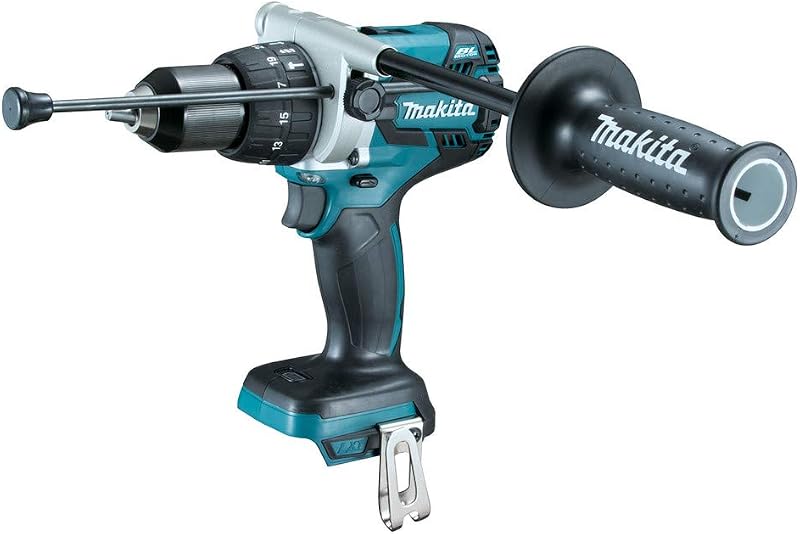
Pros
- Massive 1,090 inch-pounds of max torque
- Fast hammer drilling up to 31,500 BPM
- High top speed reaching 2,100 RPM
- Electronically matched torque and RPM control
Cons
- Heavier physical profile for tight spaces
- Specific chuck material not listed
Who Should Buy Each One
Choose the Makita XFD16Z If
- Your primary work consists of cabinet installation, furniture making, trim carpentry, and indoor woodworking.
- You need an ultra-compact front-to-back footprint of 6-7/8 inches to drill and drive inside tight boxes and stud bays.
- You want a lighter tool at 4.65 lbs. with battery to minimize overhead fatigue during long workdays.
- You prioritize an all-metal self-ratcheting chuck to guarantee zero bit slippage during high-torque boring.
- You do not drill into concrete, brick, cinder block, or stone.
Choose the Makita XPH07Z If
- You regularly drill anchor holes into concrete, stone, brick, or mortar using a high-impact 31,500 BPM hammer mode.
- You require maximum power output with 1,090 in.lbs. of torque to turn massive hole saws and structural timber lags.
- You want a faster 2,100 RPM top speed for rapid production drilling in metal and clean lumber.
- You demand intelligent electronic motor control that dynamically matches power to resistance for maximum battery runtime.
- You work on commercial jobsites, structural framing, plumbing, or electrical rough-ins across mixed materials.
Final Verdict
For the majority of woodworkers, residential remodelers, finish carpenters, and DIY enthusiasts, the Makita XFD16Z is the smarter purchase. With an impressive 970 in.lbs. of max torque, it provides more than enough rotary muscle to conquer heavy structural screws and large auger bits, yet confines that power into an ergonomic 6-7/8-inch body weighing just 4.65 pounds with battery. The addition of an all-metal self-ratcheting chuck ensures your bits stay locked tight without constant retightening. Unless you consistently drill into masonry, carrying the extra length and weight of a full-size hammer drill offers little daily benefit.
On the other hand, the Makita XPH07Z is undeniably the superior choice for commercial contractors, electricians, plumbers, and builders who tackle demanding jobsite environments. If you frequently anchor into masonry, its 31,500 BPM hammer mechanism and 1,090 in.lbs. of raw torque give you the capability to replace multiple tools with a single unit. While evaluating whether the Makita XPH07Z is worth it depends on your specific trade, its blistering 2,100 RPM rotational speed and intelligent electronic energy management make it an unmatched workhorse for heavy construction. When masonry drilling and absolute peak torque are mandatory, the XPH07Z wins decisively; for everything else, the compact agility of the XFD16Z takes the crown.
FAQ
Can the Makita XFD16Z drill into concrete or brick?
The Makita XFD16Z is a dedicated driver-drill without a percussion hammer mechanism. While it can technically turn a masonry bit using standard rotary action, it lacks the 31,500 BPM impact pulses required to fracture concrete or brick aggregate efficiently. Attempting to drill concrete without hammer action results in severe bit overheating, rapid dulling, and slow progress. If you regularly drill into masonry, the XPH07Z hammer drill is required.
What makes the Makita XPH07Z hammer drill better for heavy timber?
The Makita XPH07Z delivers 1,090 in.lbs. of maximum torque compared to the 970 in.lbs. produced by the XFD16Z. This additional 120 in.lbs. of rotational force gives the XPH07Z greater resistance against stalling when driving massive structural screws, turning large self-feed bits, or running heavy hole saws through wet or dense framing timber.
Does the Makita XFD16Z include a battery and charger?
The Makita XFD16Z listed here is sold as “Tool Only,” meaning the battery and charger are not included in the package. It operates on Makita’s 18V LXT lithium-ion battery platform, allowing you to use existing 18V LXT batteries from your collection, such as the 5.0Ah pack referenced in the tool’s weight specification.
Why does the Makita XFD16Z feature an all-metal self-ratcheting chuck?
The all-metal 1/2-inch self-ratcheting chuck on the XFD16Z is engineered to provide superior bit gripping strength and long-term durability. As you tighten the chuck collar around a drill or driver bit, the internal ratcheting mechanism clicks into place, locking the jaws to prevent the bit from slipping, spinning, or dropping out under heavy torsional stress.
How does the maximum rotational speed compare between the XFD16Z and XPH07Z?
The Makita XPH07Z achieves a maximum rotational speed of 2,100 RPM, whereas the Makita XFD16Z tops out at 1,800 RPM. The extra 300 RPM on the XPH07Z allows for faster drilling through sheet metal and dimensional lumber when using small-to-medium twist drill bits, speeding up high-volume production tasks.
Is the Makita XFD16Z worth it for standard woodworking and cabinetry?
Yes, the Makita XFD16Z is exceptionally well-suited for woodworking and cabinetry. Its compact length of only 6-7/8 inches and balanced operating weight of 4.65 pounds allow it to fit easily into tight cabinets, drawers, and between studs, while the 2-speed transmission (0-550 & 0-1,800 RPM) provides delicate speed control for setting finish screws without stripping.
What does the BL Brushless motor provide on the Makita XPH07Z?
The BL Brushless motor on the XPH07Z eliminates carbon brushes, allowing the motor to run cooler and more efficiently for an extended operating lifespan. Furthermore, the motor is electronically controlled to dynamically match torque and RPM to the changing demands of the application, delivering up to 50% longer runtime per charge compared to non-brushless alternatives.


