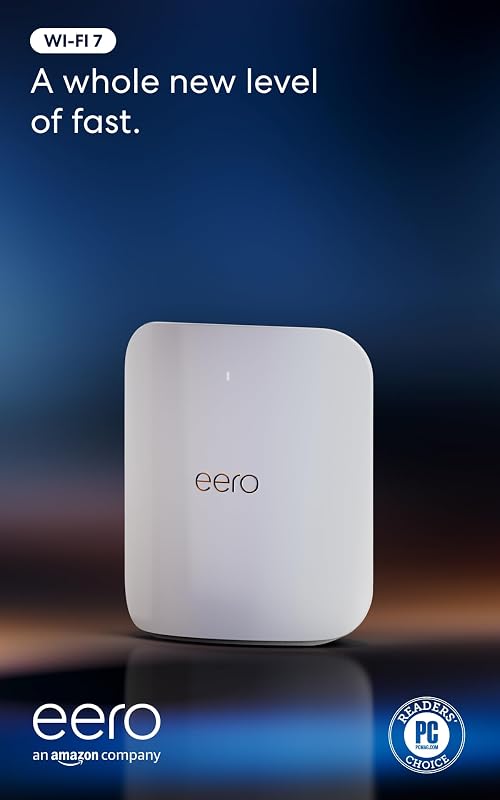
The deciding difference between the Netgear Orbi RBK752 and the TP-Link Deco XE75 comes down to wireless generation and spectrum allocation: the Deco XE75 incorporates a dedicated 6 GHz frequency band via WiFi 6E, whereas the Orbi RBK752 operates entirely on standard WiFi 6 frequencies across dual 5 GHz and 2.4 GHz channels. While both employ tri-band architecture, the Deco XE75 utilizes this newer 6 GHz band to eliminate legacy client interference, whereas the Orbi RBK752 leans on a traditional 5 GHz dedicated backhaul to coordinate nodes across medium-to-large properties.
Choose the Netgear Orbi RBK752 if you want an established, robust WiFi 6 mesh system with multiple Gigabit Ethernet ports on each unit to blanket up to 5,000 square feet of living space. Choose the TP-Link Deco XE75 if you live in a device-heavy smart home and want expansive three-node coverage across 7,200 square feet with future-proof WiFi 6E capability.


Netgear Orbi RBK752 vs TP-Link Deco XE75 at a Glance
| Feature | Netgear Orbi RBK752 | TP-Link Deco XE75 |
|---|---|---|
| Wi-Fi Generation | WiFi 6 (802.11ax) | WiFi 6E (802.11ax) |
| Total Wireless Bandwidth | AX4200 (Up to 4.2 Gbps) | AXE5400 (Up to 5.4 Gbps) |
| Frequency Band Configuration | Tri-Band (2.4 GHz + 5 GHz + 5 GHz) | Tri-Band (2.4 GHz + 5 GHz + 6 GHz) |
| Advertised Coverage | Up to 5,000 sq. ft. (2-pack) | Up to 7,200 sq. ft. (3-pack) |
| Maximum Device Capacity | Up to 40 devices | Up to 200 devices |
| Wired Ethernet Ports | 3 LAN on router, 2 LAN on satellite (6 total listed) | 3 Gigabit ports per unit (9 total across 3-pack) |
| Security Protocols | WPA2-PSK | WPA-Personal, WPA2-Personal, WPA3-Personal |
| Bundled Security Software | NETGEAR Armor (30-day trial included) | TP-Link HomeShield (Free basic tier included) |
| Included Hardware Nodes | 1 Router + 1 Satellite Extender | 3 Mesh Units |
| Best For | Traditional gigabit homes wanting stable WiFi 6 | High-density households needing 6 GHz spectrum |
Wireless Spectrum and WiFi 6 vs WiFi 6E Architecture
The primary technical divide when evaluating Orbi RBK752 vs Deco XE75 WiFi 6E systems lies in the frequency spectrum they broadcast. The Netgear Orbi RBK752 is a pure WiFi 6 system utilizing the 2.4 GHz and 5 GHz bands. It deploys a tri-band system where one 5 GHz band is reserved to shuttle data between the router and the satellite extender. Because both active bands reside within standard radio bands, transmissions must navigate the crowded airwaves typical of suburban neighborhoods, where neighboring routers, older streaming sticks, and legacy tablets fight for the same 5 GHz spectrum channels.
In contrast, the TP-Link Deco XE75 introduces the newly opened 6 GHz wireless band, expanding the boundaries of home networking. This brand-new frequency band operates completely free from the clutter of legacy WiFi 4 and WiFi 5 devices. The Deco XE75 gives network administrators two distinct configuration choices: keep the 6 GHz band as an exclusive wireless backhaul channel between the three mesh units, or open it up as a dedicated client access network for modern smartphones, laptops, and tablets that support WiFi 6E. Comparing wider multi-band setups like the netgear orbi 970 vs tp-link deco xe75 highlights how essential clean spectrum is for avoiding channel overlap.
This architectural advantage gives the Deco XE75 an edge in environments surrounded by neighboring wireless signals. The Orbi RBK752 delivers rock-solid performance over its dual 5 GHz arrangement, but it cannot access the wider 160 MHz channels on 6 GHz that modern high-performance devices use to escape local radio interference. For homes that have upgraded to modern mobile phones and workstation laptops, the Deco XE75 offers clean spectrum lanes that standard WiFi 6 routers cannot supply.
Edge: TP-Link Deco XE75 provides next-generation WiFi 6E access to the clear 6 GHz band, eliminating legacy wireless interference.
Deco XE75 vs Orbi RBK752 Speed and Throughput Capabilities
When analyzing Deco XE75 vs Orbi RBK752 speed, maximum data throughput highlights another clear technical distinction. The Netgear Orbi RBK752 offers an AX4200 speed rating, delivering combined theoretical speeds of up to 4.2 Gbps across its three bands, alongside a maximum upstream data transfer rate of 2100 Mbps. Netgear optimizes this bandwidth by assigning sufficient transmission lanes for 4K and 8K streaming, high-definition teleconferencing, and multi-room audio. It integrates with existing internet service providers on plans up to 2 Gbps, making it well matched for standard fiber and cable connections.
The TP-Link Deco XE75 steps up the performance ceiling with an AXE5400 rating, generating up to 5,400 Mbps of aggregate wireless capacity. This bandwidth is distributed systematically: up to 2402 Mbps on the 6 GHz band with HE160 channel width, 2402 Mbps on the 5 GHz band with HE160, and 574 Mbps on the 2.4 GHz band. The Deco XE75 also claims a higher maximum upstream data transfer rate of 2700 Mbps. Exploring flagship multi-gigabit mesh systems such as the netgear orbi rbk752 vs tp-link deco be85 demonstrates how total throughput ceiling dictates head-room for multi-gig home plans.
In everyday use, the practical speed benefit depends heavily on device compatibility and node distances. If your devices only support WiFi 6 or WiFi 5, the maximum single-device speed on both systems will be constrained by the 5 GHz channels. However, the Deco XE75 provides wider 160 MHz channel support on both its 5 GHz and 6 GHz frequencies, allowing compatible receivers to negotiate higher link rates than the standard 80 MHz channel widths typically enforced on standard WiFi 6 nodes. The Orbi RBK752 provides dependable speeds, but the Deco XE75 yields higher headroom across all three bands.
Edge: TP-Link Deco XE75 delivers higher aggregated theoretical bandwidth of 5,400 Mbps and broader 160 MHz channel capacity.
TP-Link Deco XE75 vs Orbi RBK752 Coverage and Node Distribution
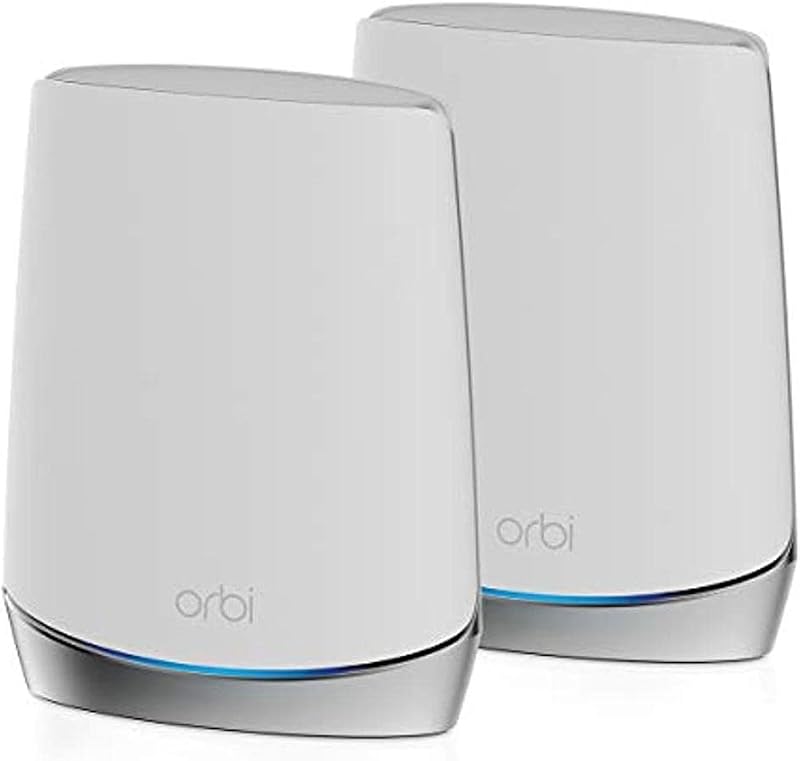
Physical coverage and system structure represent a key operational difference in the TP-Link Deco XE75 vs Netgear Orbi RBK752 comparison. The Orbi RBK752 is sold as a two-pack consisting of one primary router and one dedicated satellite extender. Together, this pair is rated to cover up to 5,000 square feet. Each unit features internal antennas-six individual antennas per unit-arranged to distribute directional wireless signals horizontally and vertically across multi-story buildings. For broader spaces, Netgear allows homeowners to extend coverage by up to 2,500 square feet with each additional satellite purchased separately.
On the other hand, the TP-Link Deco XE75 package reviewed here ships as a three-pack system capable of blanketing up to 7,200 square feet right out of the box. Having three physical units rather than two provides superior placement flexibility. Instead of trying to span an entire floor plan with two high-output points, you can position three Deco nodes in a triangular layout across your property. To see how alternative two-node systems handle mid-sized properties, examine the eero 6+ vs netgear orbi rbk752 breakdown.
Device density metrics also reflect this structural divergence. The Orbi RBK752 listing rates its hardware to support up to 40 connected devices smoothly. While adequate for an average family, modern smart homes with connected switches, smart bulbs, cameras, and appliances easily surpass that figure. The Deco XE75 listing specifies capacity for up to 200 connected devices, driven by AI-driven mesh algorithms that steer clients to the best node based on movement, signal quality, and real-time network traffic. For large properties and smart homes with dozens of ambient IoT nodes, the TP-Link Deco XE75 vs Orbi RBK752 coverage battle clearly favors TP-Link.
Edge: TP-Link Deco XE75 covers up to 7,200 square feet across three included nodes and handles up to 200 connected clients.
Netgear Orbi RBK752 or TP-Link Deco XE75 for Gaming and Latency
Selecting the Netgear Orbi RBK752 or TP-Link Deco XE75 for gaming hinges on how each platform mitigates network latency and packet loss. Competitive online gaming requires minimal ping spikes, which occur whenever wireless signals experience transmission collisions or backhaul congestion. The Orbi RBK752 combats latency by reserving one of its 5 GHz bands purely for node-to-node data routing. This isolates inter-router chatter from client traffic, preventing game streams from slowing down when another household member watches a 4K movie on the front-facing band.
The Deco XE75 handles gaming traffic with an even more effective tool: dedicated 6 GHz backhaul. Because the 6 GHz band is completely devoid of legacy devices, assigning inter-node communication to this frequency provides an ultra-quiet connection line between rooms. Alternatively, a PC gamer with a WiFi 6E network card can connect directly to the 6 GHz network, bypassing neighborhood WiFi congestion completely. Reading comparisons between modern performance mesh kits like the eero max 7 vs netgear orbi rbk752 shows how latency minimization has shifted toward clean wireless channels.
Both systems support hardwired gaming connections, but their physical ports are laid out differently. The Orbi RBK752 router features three Gigabit Ethernet LAN ports alongside its internet port, while the satellite provides two additional Gigabit Ethernet ports. The Deco XE75 provides three auto-sensing Gigabit ports on each of its three units, giving you nine total Gigabit ports throughout the home. This allows you to position a Deco node in an entertainment center or home office and wire consoles, PCs, and hubs without buying separate network switches.
Edge: TP-Link Deco XE75 offers superior latency control thanks to clear 6 GHz spectrum and nine total Gigabit Ethernet ports.
Network Management, Security Protocols, and Hardware Value
Network software, ongoing security, and device specifications are central factors when examining any Netgear Orbi RBK752 review or TP-Link Deco XE75 review. The Orbi RBK752 runs on a Netgear proprietary Linux-based operating system, managed through the Orbi mobile application. It features advanced router firewall protections and handles wireless encryption via WPA2-PSK. For integrated cybersecurity, it includes a 30-day trial of NETGEAR Armor, which shields connected smart gadgets from online intrusions and provides a virtual private network (VPN). However, once that trial lapses, maintaining comprehensive security updates requires an ongoing paid subscription.
TP-Link outfits the Deco XE75 with TP-Link Firmware featuring integrated HomeShield software. Unlike platforms that lock basic safeguards behind paywalls, HomeShield provides free baseline tools, including a network security scan, IoT device identification, standard parental controls, Quality of Service (QoS) bandwidth prioritization, and weekly or monthly network status reports. TP-Link is also a signatory of the U.S. Cybersecurity and Infrastructure Security Agency (CISA) Secure-by-Design pledge. In terms of modern wireless standards, the Deco XE75 supports WPA3-Personal encryption alongside WPA2 and WPA, whereas the Orbi RBK752 listing lists only WPA2-PSK.
When asking is TP-Link Deco XE75 worth it or is Netgear Orbi RBK752 worth it, long-term ownership value plays a significant role. The Deco XE75 contains 512 MB of installed RAM to handle dense client lists, integrates voice commands via Amazon Alexa to toggle guest networks, and comes with a 2-year warranty accompanied by 24/7 technical support. Netgear provides robust hardware build quality, but its reliance on WPA2 and a shorter security software trial period makes TP-Link the more complete software bundle. Looking into similar ecosystems in the netgear orbi rbk752 vs google nest wifi pro review reinforces the importance of built-in security features.
Edge: TP-Link Deco XE75 wins with modern WPA3 encryption, free built-in HomeShield security tools, and a 2-year hardware warranty.
Pros and Cons
Netgear Orbi RBK752
Pros
- Fast AX4200 tri-band WiFi 6 throughput
- Broad 5,000 sq. ft. coverage from two nodes
- Dedicated 5 GHz backhaul channel
- Three Gigabit LAN ports on main router
Cons
- Lacks modern 6 GHz WiFi 6E band
- Device capacity capped at 40 clients
- WPA2 security without native WPA3 support
View Netgear Orbi RBK752 on Amazon
TP-Link Deco XE75

Pros
- Future-proof WiFi 6E with 6 GHz band
- Expansive 7,200 sq. ft. three-pack coverage
- Supports up to 200 connected devices
- Nine total Gigabit ports across three nodes
- Free basic HomeShield security and WPA3
Cons
- 6 GHz signals have reduced wall penetration
- Requires compatible client hardware for 6 GHz
View TP-Link Deco XE75 on Amazon
Who Should Buy Each One
Choose the Netgear Orbi RBK752 If
- You live in a home up to 5,000 square feet and want broad coverage from just two hardware nodes.
- Your network consists of fewer than 40 connected devices that operate on standard WiFi 6 and WiFi 5 standards.
- You need multiple dedicated Gigabit Ethernet ports grouped together on the central router unit (three LAN ports) for a cluster of media devices.
- You subscribe to an internet service provider tier up to 2 Gbps and prefer a proven, Linux-based networking platform with optional Netgear Armor defense.
Choose the TP-Link Deco XE75 If
- You want to future-proof your network with WiFi 6E and utilize the pristine, uncrowded 6 GHz wireless frequency band.
- You need to eliminate dead spots across large footprints up to 7,200 square feet using a balanced three-pack mesh arrangement.
- Your home is packed with smart tech, IoT appliances, and streaming hardware totaling up to 200 concurrent devices.
- You insist on the latest WPA3-Personal wireless security standards and want free integrated parental controls and QoS via TP-Link HomeShield.
Final Verdict
Between the Netgear Orbi RBK752 and the TP-Link Deco XE75, the TP-Link Deco XE75 emerges as the overall winner for the vast majority of modern households. By bringing WiFi 6E technology and the 6 GHz wireless band to a consumer mesh package, it resolves the spectrum congestion issues that plague legacy 2.4 GHz and 5 GHz bands. With 5,400 Mbps of aggregate bandwidth, an expansive 7,200-square-foot coverage envelope delivered via three nodes, a 200-device connection ceiling, WPA3 encryption, and nine Gigabit Ethernet ports, the Deco XE75 provides unmatched performance and longevity.
The Netgear Orbi RBK752 remains a dependable, high-quality WiFi 6 mesh system that excels in homes with moderate device counts and layouts suited to a two-node configuration. If your household devices do not support WiFi 6E, your network tops out under 40 clients, and you prefer the industrial design and established performance of Netgear’s dedicated 5 GHz backhaul, the Orbi RBK752 delivers rock-solid gigabit internet. However, for buyers wanting greater coverage, higher capacity, and immediate access to the 6 GHz spectrum, the Deco XE75 is the superior choice.
FAQ
Does the Netgear Orbi RBK752 support the new 6 GHz WiFi band?
No, the Netgear Orbi RBK752 is a WiFi 6 system, not a WiFi 6E system. It broadcasts over standard 2.4 GHz and dual 5 GHz frequency bands, utilizing one of the 5 GHz bands as a dedicated wireless backhaul to link the router and satellite.
Can the TP-Link Deco XE75 use its 6 GHz band exclusively for backhaul?
Yes, by default the Deco XE75 uses the 6 GHz frequency band as a dedicated wireless backhaul channel between the three mesh nodes to ensure peak stability. Alternatively, users can toggle settings in the Deco mobile app to allow WiFi 6E-compatible client devices to connect directly to the 6 GHz band.
How many wired Ethernet ports are available on each system?
The Netgear Orbi RBK752 provides three Gigabit LAN ports and one Gigabit WAN port on the main router, plus two Gigabit LAN ports on the satellite extender, totaling six ports across the two-pack. The TP-Link Deco XE75 provides three auto-sensing Gigabit ports on each node, offering nine Gigabit ports across the three-pack.
Which mesh router system handles more simultaneous smart home devices?
The TP-Link Deco XE75 supports significantly more devices, with listing specifications rating it for up to 200 connected clients using AI-driven mesh traffic management. The Netgear Orbi RBK752 listing rates its connection capacity for up to 40 connected devices.
Do both mesh systems work with any internet service provider?
Yes, both systems connect directly to an existing modem or gateway and replace your previous wireless router. The Orbi RBK752 is compatible with provider plans up to 2 Gbps, while the Deco XE75 lists compatibility with all major internet service providers, including fiber, cable, and DSL services.
What built-in security features are included with each mesh kit?
The Deco XE75 includes TP-Link HomeShield, offering free basic network security scans, IoT device identification, Quality of Service (QoS), and parental controls, backed by WPA3-Personal encryption. The Orbi RBK752 features advanced firewall protection and WPA2-PSK, along with a 30-day trial of NETGEAR Armor cybersecurity software.