The single difference that decides the choice between an oscillating tool and a reciprocating saw comes down to cutting motion and surgical control versus raw demolition velocity. An oscillating multi-tool relies on rapid, microscopic side-to-side vibrations to make delicate plunge cuts, detail sand, and trim flush against finished surfaces without kicking back, whereas a reciprocating saw employs an aggressive, inch-long push-pull stroke designed to tear through framing studs, thick metal pipes, and demolition debris at high speed.
Choose an oscillating tool if your projects demand clean woodwork modifications, drywall electrical cutouts, flush trimming door casings, or intricate surface scraping. Choose a reciprocating saw if you are tearing down walls, cutting through rough framing lumber, pruning tree branches, or severing structural pipes where brute cutting power matters more than edge finish.


Oscillating Tool vs Reciprocating Saw at a Glance
| Attribute | Oscillating Tool | Reciprocating Saw |
|---|---|---|
| Primary Motion | Rapid micro-oscillation (3° arc) | Reciprocating stroke (1 in. to 1-1/8 in.) |
| Operating Speed | 3,000 to 22,000 OPM / RPM | Up to 2,900 to 3,400 SPM |
| Tool Weight Range | 1.23 kg (2.7 lbs) to 3.36 lbs | 4.2 lbs to 5.4 lbs |
| Tool Overall Length | Approx. 13.2 inches | 14.5 to 16.0 inches |
| Power Configurations | 20V battery platform or 2.5A corded | 18V or 20V battery platform |
| Blade Clamp Style | Tool-free quick change or bolt clamp | Keyless multi-position clamp |
| Secondary Functions | Sanding, scraping, grout removal | Rough cutting and pruning only |
| Best For | Trim carpentry, flush cuts, and fine detail | Demolition, structural framing, and pipe removal |
Cutting Motion and Stroke Mechanics
Understanding the difference between oscillating tool and reciprocating saw mechanics starts with the movement of the blade. An oscillating tool operates by pivoting a small accessory back and forth across a narrow arc of roughly 3 degrees. The Synxiter cordless oscillating tool, for example, delivers between 6,000 and 21,000 oscillations per minute across a 3-degree oscillating angle, while the corded DEKOPRO corded oscillating multi tool cycles from 3,000 up to 22,000 RPM using a 2.5-Amp, 300-watt electric motor. Because the swing arc is so tight, the blade does not grab the material or yank the operator’s hands, making it exceptionally stable when starting a cut directly on a pencil line.
In contrast, when analyzing an oscillating tool stroke vs reciprocating saw stroke, the reciprocating saw relies on a linear, push-and-pull stroke that travels significant distances. The DEWALT DCS367B reciprocating saw utilizes a 1-1/8-inch stroke length paired with a brushless motor delivering up to 2,900 strokes per minute. Similarly, the RYOBI PCL515B reciprocating saw produces a 1-inch stroke length capable of cycling up to 3,400 strokes per minute. This long, linear stroke clears chips and sawdust aggressively from the kerf, allowing the teeth to bite deeply into heavy lumber and metal tubing.
The mechanical trade-off between these two approaches determines how workpieces respond to the cutting edge. The rapid micro-movements of an oscillating head generate minimal vibration in the surrounding workpiece, preventing drywall from cracking or fragile trim from splitting. The aggressive reciprocating stroke, however, causes considerable vibration and movement, requiring the tool’s shoe to be firmly braced against the material to prevent severe kickback and chatter.
Edge: Tie. The reciprocating saw wins decisively on stroke length and material clearing speed, while the oscillating tool wins on rotational stability and low-impact control.
Precision, Flush Trimming, and Detail Work
When an exacting job demands delicate woodworking or flush-cutting components against an existing boundary, an oscillating tool is virtually unmatched. The flat profile of oscillating blades allows them to rest parallel to a floor or wall, making it simple to slide the blade under door jambs when installing new flooring. The DEKOPRO kit provides a dedicated flush cut blade and a 1-1/4-inch end cut saw blade specifically engineered for plunge cuts where no pilot hole exists. The operator can rest the tool body steady, introduce the high-speed oscillating edge to baseboard or casing, and execute a flat, surgical cut without gouging adjacent drywall or floorboards.
Attempting to use a reciprocating saw for precision cuts reveals the inherent limitations of its aggressive push-pull design. While the DEWALT DCS367B features a keyless 4-position blade clamp that lets users mount the blade upside down or sideways for cuts closer to adjacent framing, the tool still relies on a full 1-1/8-inch stroke length. If you attempt to trim trim moldings or plunge into finished cabinetry with a long reciprocating blade, the teeth tend to grab the wood, wander across the surface, and leave jagged, splintered edges. For readers comparing alternative compact reciprocating models, our DEWALT DCS367 vs DCS380 comparison outlines how body orientation impacts clearance in tight framework.
Furthermore, an oscillating tool review routinely highlights the capability to work directly in sharp 90-degree internal corners without over-cutting the adjoining edge. Segmented circular blades and narrow end-cut blades allow operators to stop the cut at a precise point in the corner. A reciprocating saw blade projects outward and oscillates back and forth across its stroke, meaning the tip of the blade inevitably impacts framing or pipes hidden directly behind the target surface.
Edge: Oscillating Tool. Its microscopic 3-degree stroke and flat blade designs allow for surgical plunge cuts and flat flush trimming that a reciprocating saw cannot replicate.
Demolition Speed and Heavy Material Removal
When rough framing, subfloors, and structural elements need to come down quickly, speed and cutting throughput become the overriding priorities. This is where a reciprocating saw review highlights why the tool remains an essential job-site staple. Running at up to 3,400 strokes per minute on the RYOBI PCL515B or using the high-torque brushless power plant of the DEWALT DCS367B, a reciprocating saw devours heavy framing timber, nail-embedded studs, and outdoor fence posts in seconds. The extended high-speed steel blades, ranging from 6 inches on the RYOBI spec up to standard demolition lengths, slice straight through dimensional lumber that an oscillating blade cannot even span.
By comparison, the oscillating multi tool cutting capacity is limited by blade reach and heat accumulation. Standard straight blades, such as the three straight saw blades supplied with the Synxiter 20V kit, generally offer a usable plunge depth between 1.5 and 2 inches. Attempting to sever a structural 4×4 post or slice through multiple sistered 2×4 studs with an oscillating tool is tedious and inefficient. The small 3-degree stroke causes sawdust to pack tightly inside deep cuts, generating intense frictional heat that dulls the cutting teeth and risks scorching the timber.
For builders asking is a reciprocating saw worth it for serious renovation, the answer is clear once structural alterations begin. Removing an old exterior door frame, slicing off rusted structural bolts, or cutting through old cast iron waste lines requires the heavy-duty stroke of a reciprocating mechanism. Those weighing different heavy-duty cordless reciprocating options can read our DEWALT DCS380 vs Milwaukee 2821-20 analysis to see how standard-size saws compare under prolonged demolition loads.
Edge: Reciprocating Saw. Its long stroke length and full-length wood and metal blades chew through thick structural members and demolition framing in a fraction of the time.
Drywall, Plumbing, and Job Site Versatility
Evaluating an oscillating tool or reciprocating saw for drywall reveals how task specifics dictate tool choice. An oscillating multi-tool is the premier choice for cutting clean rectangular openings for single-gang or double-gang electrical boxes. Because the plunge cut can be initiated directly on the face of the drywall without a starter hole, the operator can cut clean lines without blowing out the gypsum backing or puncturing hidden electrical wires tucked tightly against the rear of the wallboard. Conversely, a reciprocating saw will rip through gypsum board rapidly when gutting an entire room, but the stroke depth risks puncturing plastic vapor barriers, electrical wiring, and plumbing stacks hidden inside the stud cavity.
When selecting an oscillating tool or reciprocating saw for plumbing tasks, the diameter and location of the pipe determine the ideal tool. Cutting through accessible PVC, ABS drain pipes, or copper supply lines during rough-in framing is best handled by a reciprocating saw, which cuts through thick-walled pipes in seconds. However, if a copper water line or PVC trap needs to be cut flush against a finished subfloor or inside a cramped vanity cabinet, an oscillating tool fitted with a metal or carbide blade can reach directly into the opening to deliver a flush cut without damaging the surrounding cabinetry.
Versatility also extends into non-cutting operations where the reciprocating saw has zero capability. The Synxiter oscillating multi-tool includes a 22-piece accessory collection featuring a flexible scraper for peeling away old adhesive, a sanding pad holder, and 15 sanding papers for detail surface preparation. The DEKOPRO kit likewise includes a scraper blade, a sanding pad, and 10 sheets of sanding paper spanning grits from P60 to P320. These accessories allow an oscillating tool to strip caulking, sand raw wood contours, and remove grout from tile joints-tasks that a reciprocating saw cannot perform.
Edge: Oscillating Tool. It handles precision drywall cutouts and tight plumbing trims while expanding into detail sanding, scraping, and grout removal.
Size, Weight, and Maneuverability
Navigating confined work zones requires a tool that balances reach, weight, and hand fatigue. In this head-to-head reciprocating saw vs oscillating tool comparison, physical dimensions heavily influence user comfort. The Synxiter cordless oscillating tool weighs just 1.23 kg (approximately 2.7 pounds) and includes an auxiliary handle to maximize stability during overhead work. The corded DEKOPRO unit measures 13.23 by 4.41 by 3.62 inches and weighs 3.36 pounds, incorporating a soft-grip rubber-coated handle designed to contour to the operator’s palm to reduce strain over extended working sessions.
Reciprocating saws are inherently larger and heavier machines due to the robust mechanical gearing needed to drive a long stroke. The DEWALT DCS367B weighs 5.4 pounds according to its listing specifications (5 pounds as bare tool) and features a compact 14.5-inch overall length designed to fit between standard 16-inch-on-center wall studs. The RYOBI PCL515B spans 16 inches in length, 3 inches in width, and 7 inches in height, with a tool weight of 4.2 pounds. While the compact DEWALT design is significantly more maneuverable than full-sized traditional reciprocating saws, it still requires two hands for stable, safe operation during heavy cutting tasks.
For tradespeople working inside attic crawlspaces, cramped vanity cabinets, or on tall ladders, the light weight and compact inline body of an oscillating tool make single-handed positioning effortless. Built-in LED lights on units like the Synxiter oscillating saw and the DEWALT DCS367B ensure clear visibility in dark corners, but the physical bulk of a 14.5- to 16-inch reciprocating saw naturally prevents it from entering tight spaces where an oscillating tool slips in easily. Those exploring broader brand options in reciprocating cutting tools can check our Milwaukee 2720-20 vs Makita XRJ05Z breakdown for insight into ergonomic trade-offs across professional tool systems.
Edge: Oscillating Tool. Weighing under 3.5 pounds with a slim, inline body, it offers effortless single-handed maneuvering in spaces where a reciprocating saw cannot physically fit.
Pros and Cons
Oscillating Tool

Pros
- Surgical 3° micro-oscillation angle
- Speeds up to 22,000 OPM
- Lightweight build under 3.5 pounds
- Sands, scrapes, and cuts flush
- Plunge cuts without starter holes
Cons
- Shallow cutting depth on framing
- Slow speed on large demolition
View Cordless Oscillating Tool Dewalt 20V on Amazon
Reciprocating Saw
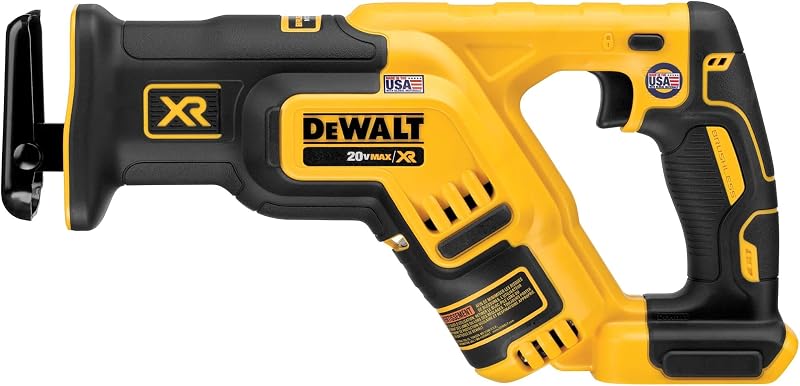
Pros
- Aggressive 1-1/8-inch stroke length
- Fast cutting up to 3,400 SPM
- Four-position clamp for blade versatility
- Slices through thick structural timber
Cons
- Too rough for clean finish cuts
- Heavier weight over four pounds
View DEWALT 20V MAX XR Reciprocating Saw on Amazon
Who Should Buy Each One
Choose the Oscillating Tool If
- You install hardwood, laminate, or tile flooring and must undercut door jambs and casing flush to the subfloor.
- You frequently cut openings in drywall for electrical receptacle boxes, light switches, and wall plates.
- You need a single versatile tool for detail sanding, stripping stubborn adhesives, and clearing out old bathroom tile grout.
- You work in finished interior spaces where preventing accidental damage to adjacent trim and surfaces is critical.
Choose the Reciprocating Saw If
- You tackle home demolition, wall tear-outs, and cutting structural 2×4 framing studs down to size.
- You regularly cut through thick galvanized iron, copper, or PVC drain pipes during rough-in plumbing work.
- You manage yard maintenance tasks like pruning thick tree branches, cutting landscape timbers, and chopping up scrap lumber.
- You need aggressive cutting speed through nail-embedded wood where edge cleanliness and surface finish do not matter.
Final Verdict
For most homeowners, interior remodelers, and finish woodworkers, the oscillating tool is the more indispensable primary purchase. Its ability to produce flawless flush cuts, navigate inside tight corners, plunge directly into drywall, and switch over to detail sanding or scraping makes it a versatile problem-solver that saves hours of tedious manual labor. Saws like the cordless Synxiter or the corded DEKOPRO multi-tool resolve delicate, fine-tolerance finishing dilemmas that no other power tool in your workshop can cleanly handle.
However, the moment your projects involve tearing down partitions, slicing off seized structural bolts, pruning outdoor greenery, or gutting old framing, a reciprocating saw is completely irreplaceable. Units like the compact DEWALT DCS367B and the high-speed RYOBI PCL515B deliver the raw power, long stroke travel, and heavy-duty blade capacity necessary to plow through dense lumber and metal tubing. If you can only buy one tool today, choose the oscillating tool for precision interior craftsmanship, and add a reciprocating saw when heavy renovation and demolition demand aggressive cutting muscle.
FAQ
Can an oscillating tool replace a reciprocating saw for demolition?
An oscillating tool cannot realistically replace a reciprocating saw for heavy demolition. While an oscillating tool can cut individual nails, slice drywall, or trim small pieces of wood, its narrow 3-degree swing arc and shallow blade reach make cutting through 2×4 framing studs, structural posts, and large pipes extremely slow and prone to overheating. A reciprocating saw is engineered specifically with the stroke length and power to rip through demolition materials quickly.
Can you use a reciprocating saw to cut drywall?
A reciprocating saw can cut drywall, but it is primarily suitable for rough demolition where wallboard is being torn out completely. The aggressive 1-inch to 1-1/8-inch stroke of a reciprocating saw makes it difficult to control on fine cuts and risks severing electrical wiring, plumbing pipes, or vapor barriers hidden inside the wall cavity. For installing electrical boxes or creating clean access panels, an oscillating tool is much safer and significantly neater.
Is an oscillating tool good for cutting metal pipes?
An oscillating tool fitted with a bi-metal or carbide-tipped blade can cut thin metal pipes, copper tubing, and protruding nails, particularly when working in flush or cramped spaces where other tools cannot fit. However, for cutting thick structural steel, large-diameter iron drain pipes, or heavy conduit, a reciprocating saw with a dedicated metal-cutting blade is far faster and more efficient.
What does oscillating angle mean on a multi-tool?
The oscillating angle refers to the total degree of arc that the blade pivots back and forth from side to side. For example, both the Synxiter and DEKOPRO models feature a 3-degree oscillating angle. This small angle keeps the blade moving fast enough to shear through wood and metal fibers while maintaining exceptional control and preventing the blade from catching and kicking back against the user.
Why does a reciprocating saw require a pivoting shoe?
A reciprocating saw utilizes a front shoe to rest firmly against the material being cut. Holding the shoe tight against the workpiece stabilizes the saw against the aggressive push-and-pull motion of the stroke, dampening intense vibration, reducing user fatigue, and preventing the blade from chattering violently against the surface of the timber or metal pipe.
Can an oscillating tool sand furniture?
Yes, an oscillating tool works very well for detail and corner sanding. Both the Synxiter and DEKOPRO tool kits include triangular sanding pad holders and multi-grit sandpaper sheets. The rapid micro-vibrations allow the triangular pad to reach deep into 90-degree corners, cabinet edges, and intricate trim profiles that standard circular random orbital sanders cannot access.
Related reading: ego st1521s vs ryobi p20310.