The decisive difference between the Seagate FireCuda 530 and the WD_Black SN7100 lies in their structural design and power envelopes: the FireCuda 530 incorporates a heavy-duty EKWB heatsink and exceptional write endurance for continuous high-load operations, whereas the SN7100 is engineered as an ultra-slim, power-efficient bare drive delivering faster peak write speeds for space-restricted systems.
Choose the Seagate FireCuda 530 if you need sustained drive resilience and turnkey cooling for a desktop workstation or console expansion. Choose the WD_Black SN7100 if you want an agile, high-throughput drive designed to minimize battery drain in laptops and gaming handhelds.
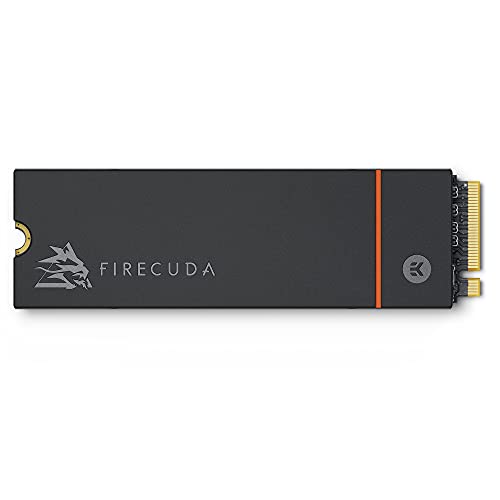

Seagate FireCuda 530 vs WD_Black SN7100 at a Glance
| Attribute | Seagate FireCuda 530 | WD_Black SN7100 |
|---|---|---|
| Maximum Sequential Read | 7300 MB/s | 7250 MB/s |
| Maximum Sequential Write | 6000 MB/s | 6900 MB/s |
| NAND Flash Architecture | 3D TLC NAND | Next Gen TLC 3D NAND |
| Endurance Rating (TBW) | 1275 TBW | Not listed |
| Mean Time Between Failures | 1.8 Million Hours | Not listed |
| Integrated Thermal Heatsink | Yes (Custom EKWB low-profile) | No (Bare PCB) |
| Physical Dimensions (L x W x H) | 3.16″ x 0.87″ x 0.09″ | 3.14″ x 0.86″ x 0.04″ |
| Drive Weight | 10 g | 4.54 g |
| Warranty and Recovery Support | 5-year warranty, 3-year Rescue Services | Not listed |
| Device Management Utility | Not listed | WD_BLACK Dashboard (Windows only) |
| Best For | Desktop workstations and PS5 expansions | Laptops, handhelds, and mobile gaming |
Sequential Read and Write Performance
Sequential throughput dictates how quickly an M.2 drive handles massive single-file movements, including uncompressed video archives, large installer packages, and complex game world streaming. In a direct WD_Black SN7100 vs Seagate FireCuda 530 comparison, both solid-state drives fully saturate the bandwidth of the PCIe Gen4 x4 interface on read workloads. The FireCuda 530 posts a rated maximum read velocity of 7300 MB/s, while the SN7100 achieves 7250 MB/s. In day-to-day operation, this 50 MB/s read variance is functionally imperceptible, delivering essentially identical boot times and initial game asset loading sequences across standard platforms.
The operational divergence becomes evident when evaluating write metrics. The FireCuda 530 caps out at a rated sequential write speed of 6000 MB/s, supported by an installed 1GB cache. In contrast, the WD_Black SN7100 write speed reaches up to 6900 MB/s, representing a noticeable leap over older generational hardware. For content creators exporting sprawling 4K video files or gamers continuously migrating hundreds of gigabytes of game data between internal drives, the SN7100 shaves valuable seconds off sustained ingestion pipelines. This performance profile is explored in broader context within our seagate firecuda 530 vs samsung 990 pro technical breakdown.
Ultimately, while read speeds settle into a practical dead heat, Western Digital utilizes newer NAND processing to push peak write capabilities significantly closer to the theoretical limit of fourth-generation PCIe lanes. Users executing routine, massive write bursts will extract slightly more raw speed from the newer controller and flash implementation on the SN7100.
Edge: WD_Black SN7100 delivers substantially higher peak write speeds at 6900 MB/s compared to 6000 MB/s on the competing drive.
Thermal Dissipation and Physical Form Factor
High-speed Gen4 solid-state controllers generate intense thermal energy during continuous data operations. Without effective heat dissipation, these drives experience thermal throttling, automatically degrading throughput to prevent silicon damage. The physical implementation of these two units establishes completely different operational targets. Seagate outfits the FireCuda 530 with an integrated, custom-built low-profile heatsink engineered alongside liquid-cooling specialist EKWB. This anodized aluminum block spans the length of the 2280 PCB, acting as a passive radiator that absorbs and vents thermal surges before the controller reaches critical limits.
The trade-off for Seagate’s thermal protection is physical bulk. The FireCuda 530 measures 0.09 inches in thickness and weighs 10 grams, which precludes it from fitting into tight laptop chassis or compact handheld gaming enclosures. Conversely, the SN7100 is engineered without an attached heatsink, maintaining an ultra-lean 0.04-inch thickness and an airy weight of 4.54 grams. The listing highlights compatibility with laptops and handheld gaming devices, where every millimeter of clearance is vital. For comparisons against other bare PCB alternatives, see our guide on the seagate firecuda 530 vs kingston kc3000.
If your system features a cramped bay without room for an aftermarket thermal pad or radiator, the slim profile of the SN7100 is mandatory. However, for open desktop motherboard layouts or enclosed console compartments with fixed cooling channels, the integrated EKWB assembly of the FireCuda 530 guarantees sustained thermal stability without forcing you to source third-party heatsinks.
Edge: Seagate FireCuda 530 provides a pre-installed, high-grade EKWB heatsink that maintains peak speeds without aftermarket accessories.
Endurance Ratings, Reliability, and Data Protection
Write endurance determines how many cumulative terabytes can be committed to a solid-state drive before the flash cells begin to degrade. When assessing long-term hardware resilience, the FireCuda 530 TBW endurance stands as an undisputed benchmark within the solid-state category. Seagate rates this 1TB drive for a colossal 1275 TBW (Terabytes Written) alongside a 1.8-million-hour Mean Time Between Failures (MTBF) rating. To exhaust this endurance threshold within its 5-year limited warranty, a user would need to overwrite roughly 700 gigabytes of data every single day. This heavy-duty rating is detailed further in our overview of the older seagate firecuda 530 vs 520 generation.
The product documentation for the SN7100 does not specify an explicit TBW lifespan or MTBF metric. While Western Digital constructs the drive using next-generation TLC 3D NAND manufactured by SanDisk Technologies, the absence of public endurance specifications leaves heavy enterprise and write-intensive production workflows without verifiable limits. Furthermore, Seagate includes three years of Rescue Data Recovery Services directly with the FireCuda 530, offering professional lab recovery coverage if mechanical, electrical, or natural damage compromises the drive.
For users who maintain intensive write-erase cycles-such as staging uncompressed media archives, hosting busy local development servers, or managing high-traffic databases-the transparent durability metrics and included data recovery services provide measurable security that the bare listing of the SN7100 does not match.
Edge: Seagate FireCuda 530 dominates with an exceptional 1275 TBW rating, 1.8M MTBF, and three years of complimentary Rescue Data Recovery Services.
Power Efficiency and Battery Preservation
Solid-state power consumption is a trivial consideration for a high-wattage desktop rig, but it becomes the governing variable when upgrading portable electronics. The SN7100 is purpose-built to address mobile limitations, advertising up to 100% improved power efficiency over its prior generation. In portable architectures like gaming notebooks and handheld consoles, lower operating wattage serves two critical functions: it prolongs battery life during disconnected gaming sessions and minimizes internal ambient heat that would otherwise force small cooling fans into aggressive acoustic states.
The FireCuda 530 approaches system engineering with a pure desktop ethos. Tuned for raw throughput and unyielding speed under heavy thermal loads, its controller architecture demands steady voltage delivery. Placing an unthrottled, heatsink-equipped FireCuda 530 into a mobile ecosystem-assuming it could physically clear the chassis height restrictions-would place an aggressive drain on limited battery reserves while generating excess heat within a compact frame. A similar efficiency dynamic is evaluated in our article covering the seagate firecuda 530 vs crucial t705.
Gamers and remote professionals looking to upgrade an on-the-go workstation will gain tangible benefits from the power-optimized controller inside the SN7100. By balancing rapid 7250 MB/s reads with reduced idle and active milliwatt draw, it preserves runtimes where every minute of disconnected operation counts.
Edge: WD_Black SN7100 delivers up to 100% greater power efficiency tailored specifically for mobile hardware and gaming handhelds.
Platform Compatibility and Software Ecosystem
Platform compatibility determines how friction-free your storage upgrade will be. For console gamers trying to decide between the Seagate FireCuda 530 or WD_Black SN7100 for PS5 systems, physical compliance is critical. Sony mandates that internal M.2 SSDs possess effective heat dissipation while remaining under an 11.25-millimeter total thickness envelope. The FireCuda 530 with its low-profile EKWB heatsink fits Sony’s PS5 expansion bay specifications perfectly out of the packaging, providing a true plug-and-play installation without requiring you to purchase, align, and assemble separate cooling plates.
The SN7100 lists broad device versatility across PC desktops, laptops, handheld gaming consoles, and cites Xbox Series X under its console model compatibility data. However, installing it into a PS5 requires an auxiliary, user-supplied heatsink to avoid thermal degradation, adding installation complexity. For PC builders, Western Digital offsets this by supplying the WD_BLACK Dashboard software utility for Windows. This platform allows users to monitor real-time drive operating temperatures, check remaining life metrics, and update firmware directly through an intuitive graphic interface. The FireCuda listing does not specify a proprietary desktop management software suite.
For PC enthusiasts operating within Windows who appreciate dedicated management dashboards, the SN7100 provides excellent utility. Conversely, for living-room console owners wanting an immediate storage boost, the FireCuda 530 eliminates compatibility guesswork.
Edge: Tie. The FireCuda 530 offers seamless turnkey installation for the PS5, while the SN7100 provides dedicated Windows monitoring software through the WD_BLACK Dashboard.
Pros and Cons
Seagate FireCuda 530

Pros
- Massive 1275 TBW endurance rating
- Pre-installed EKWB low-profile heatsink
- Fast 7300 MB/s sequential read speed
- Includes three years of data recovery services
- 8 million hours MTBF reliability
Cons
- Thicker form factor unsuitable for laptops
- Slower peak write speed than the SN7100
- Heavier build at 10 grams
View Seagate FireCuda 530 on Amazon
WD_Black SN7100

Pros
- Blazing 6900 MB/s sequential write speed
- Up to 100 percent more power efficient
- Ultra-thin profile fits laptops and handhelds
- Lightweight design weighing just 4.54 grams
- Dedicated WD_BLACK Dashboard Windows software
Cons
- Lacks an integrated thermal heatsink
- Endurance TBW rating is not listed
- No bundled data recovery services
View WD_Black SN7100 on Amazon
Who Should Buy Each One
Choose the Seagate FireCuda 530 If
- You need an immediate storage upgrade for the PlayStation 5 that meets all cooling clearance requirements without purchasing an external heatsink.
- You manage heavy sustained write operations, such as video rendering or frequent large archive transfers, that benefit from an industry-leading 1275 TBW endurance rating.
- You want complete peace of mind through a five-year limited warranty supplemented by three years of factory Rescue Data Recovery Services.
- You are building a custom desktop workstation where physical drive thickness is not restricted and motherboard space is plentiful.
Choose the WD_Black SN7100 If
- You are upgrading a slim gaming laptop or portable handheld system that demands an ultra-thin 0.04-inch form factor without a bulky heatsink.
- You prioritize game installations and patch deployment speeds backed by maximum sequential write speeds of up to 6900 MB/s.
- You operate away from wall outlets and need up to 100% improved power efficiency to preserve system battery runtimes.
- You manage your PC storage on a Windows platform and want direct access to the WD_BLACK Dashboard software for real-time drive diagnostics.
Final Verdict
When conducting a thorough Seagate FireCuda 530 review alongside a WD_Black SN7100 review, the winner depends entirely on your hardware configuration. For stationary gaming rigs, professional creative workstations, and PlayStation 5 consoles, the Seagate FireCuda 530 remains the premier investment. Its inclusion of an engineered EKWB cooling structure, a massive 1275 TBW write endurance ceiling, and three years of dedicated data recovery services delivers long-term durability and operational stability that few PCIe Gen4 drives can equal.
However, mobile configurations require a different set of priorities. If you are upgrading a gaming laptop or portable handheld console, the WD_Black SN7100 is the clearly superior match. With its low 4.54-gram weight, slender 0.04-inch profile, up to 100% greater power efficiency, and faster 6900 MB/s sequential write performance, the SN7100 excels in compact, battery-reliant systems where the heavier FireCuda simply cannot fit.
FAQ
Is the Seagate FireCuda 530 or WD_Black SN7100 for PS5 a better out-of-the-box choice?
The Seagate FireCuda 530 is the better choice for the PS5 straight out of the package. Sony requires all internal expansion SSDs to utilize heatsinks that conform to strict internal dimensions. Because the FireCuda 530 comes equipped with an EKWB low-profile heatsink that fits the console’s expansion slot precisely, you can install it immediately. The WD_Black SN7100 ships as a bare drive, meaning you would have to buy and install a compatible aftermarket heatsink before using it safely inside the console.
Can the Seagate FireCuda 530 fit into thin gaming laptops?
In most modern ultra-thin gaming laptops, the Seagate FireCuda 530 with its factory heatsink will not fit. With a thickness of 0.09 inches and an attached metal radiator, it exceeds the strict Z-height clearances found in compact laptop M.2 slots. For notebook expansions, an unshielded drive like the WD_Black SN7100 or alternatives covered in our seagate firecuda 530 vs sk hynix bc901 overview are much better suited.
Why is the WD_Black SN7100 write speed higher than the FireCuda 530?
The WD_Black SN7100 achieves up to 6900 MB/s sequential write speeds compared to the FireCuda’s 6000 MB/s due to SanDisk’s newer generation 3D TLC NAND flash architecture. This upgraded flash design optimizes concurrent write pipelines across memory channels, allowing the drive to write sequential data faster than older fourth-generation controller designs.
Is WD_Black SN7100 worth it for PC gaming handhelds?
Yes, is WD_Black SN7100 worth it for handhelds comes down to power and clearance. The drive features an ultra-thin 0.04-inch single-sided profile and delivers up to 100% greater power efficiency compared to past iterations. These traits help prevent excessive battery consumption and mitigate heat buildup in tight handheld frames, making it an outstanding fit for mobile setups requiring standard 2280 drive bays.
Is Seagate FireCuda 530 worth it if I only play games on a desktop PC?
When asking is Seagate FireCuda 530 worth it for standard PC gaming, the value rests on cooling and longevity. While gaming load times will not feel drastically different between the two drives, the FireCuda 530 includes a pre-installed EKWB heatsink that spares you from motherboard thermal issues, paired with an industry-topping 1275 TBW endurance rating that guarantees the drive will easily outlast your current desktop build.
Which drive is better when choosing the Seagate FireCuda 530 or WD_Black SN7100 for gaming?
When deciding on the Seagate FireCuda 530 or WD_Black SN7100 for gaming, your platform dictates the winner. Stationary desktop and PS5 gamers should favor the FireCuda 530 for its passive heatsink and extreme endurance. Portable and handheld gamers should select the SN7100 for its lower power consumption, fast 6900 MB/s writes, and slim physical footprint.
