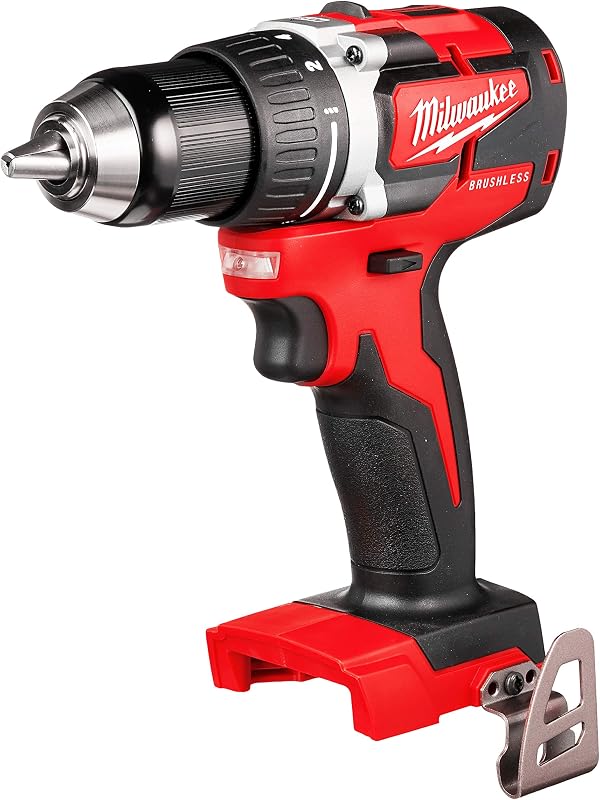
The central performance divide between the Ryobi PCL206B and the Ryobi ONEAND HP 18V BRUSHLESS Cordless 1/2 in. Drill/Driver comes down to motor design and maximum working power. The brushless motor of the PBLDD01 delivers a robust 750 in-lbs of torque alongside a top speed of 2,100 RPM, while the standard motor of the PCL206B produces 515 in-lbs of torque and tops out at 1,750 RPM.
Choose the Ryobi PCL206B if you need a dependable drill for routine household maintenance and already own compatible batteries. Choose the Ryobi ONEAND HP 18V BRUSHLESS Cordless 1/2 in. Drill/Driver if your projects involve structural drilling, heavy fasteners, or continuous trade tasks that require maximum rotational power.


Ryobi PCL206B vs Ryobi ONEAND HP 18V BRUSHLESS Cordless 1/2 in. Drill/Driver at a Glance
| Feature | Ryobi PCL206B | Ryobi ONEAND HP 18V BRUSHLESS Cordless 1/2 in. Drill/Driver |
|---|---|---|
| Motor Type | Standard Motor | Brushless Motor |
| Maximum Torque | 515 in-lbs | 750 in-lbs |
| Top Rotational Speed | 1,750 RPM | 2,100 RPM |
| Gearbox Speeds | 2 Speeds | 2 Speeds |
| Chuck Size & Type | 1/2-inch Keyless Ratcheting | 0.5-inch Keyless |
| Clutch Positions | 24 Positions | Not listed |
| Maximum Wood Capacity | 0.5 inches | 0.5 inches |
| Maximum Metal Capacity | 0.5 inches | 0.5 inches |
| Work Area Illumination | On-board LED Work Light | Not listed |
| Included Power Supply | Tool Only (Sold Separately) | 1x 2.0 Ah High Performance Battery |
| Listed Weight | Not listed | 5.1 pounds |
| Best For | General household drilling and assembly | High-torque construction and heavy driving |
Motor Platform and Power Delivery
The motor design is the primary mechanical difference between these two cordless drills. The PCL206B utilizes a standard brushed motor configuration rated at a maximum power of 600 watts. Brushed motors rely on internal carbon brushes to deliver current to the spinning armature. This proven setup provides dependable power delivery for common maintenance projects, but mechanical contact creates internal friction and thermal buildup under sustained operation. When completing quick tasks such as hanging drywall anchors, installing cabinet hardware, or drilling pilot holes in softwood, the 600-watt brushed power plant functions smoothly and predictably.
By contrast, the PBLDD01 features an advanced brushless motor. Brushless tools eliminate physical brushes in favor of an electronic controller that shifts magnetic fields directly around the rotor. This frictionless delivery reduces internal heat, extends mechanical lifespan, and channels battery amperage directly into rotational energy. When analyzing a dewalt vs ryobi comparison across brushless tools, the presence of a brushless motor consistently denotes higher electrical efficiency. In this head-to-head match, evaluating the ryobi brushless vs brushed drill 18v architecture shows that the brushless PBLDD01 sustains higher output without bogging down under deep loads.
For buyers asking is ryobi hp brushless worth it, the answer depends entirely on workload severity. The standard brushed motor of the PCL206B has fewer electronic components, making it simple and reliable for intermittent home repairs. However, when drilling repetitive holes or driving lag fasteners through tough lumber, the brushless drive system in the PBLDD01 delivers clean, continuous power without thermal throttle. It draws energy from its 18V platform far more efficiently over sustained work sessions.
Edge: Ryobi ONEAND HP 18V BRUSHLESS Cordless 1/2 in. Drill/Driver provides greater electrical efficiency, longer motor durability, and stronger power delivery via its brushless design.
Torque Output and Heavy Fastening
Torque determines the rotational force a drill applies when driving thick fasteners or turning large-diameter accessories. In any practical ryobi pcl206b review, torque is the metric that reveals where the tool shines and where it meets its operational ceiling. The PCL206B produces up to 515 in-lbs of turning force. This level of torque easily drives 3-inch wood screws into wall studs, secures drywall panels, and sinks framing fasteners into soft dimensional lumber. For standard household repairs and minor woodworking assemblies, 515 in-lbs offers adequate turning force without threatening to twist your wrist unexpectedly.
The PBLDD01 significantly widens this performance window by delivering up to 750 in-lbs of maximum torque. That constitutes an increase of 235 in-lbs over the standard tool. In direct ryobi pcl206b vs hp brushless torque comparisons, this extra muscle prevents motor stall when driving structural screws, large-diameter lag bolts, or self-drilling metal screws. The additional turning force pushes through dense knots, damp treated timber, and stubborn hardwoods where lower-powered motors bind. For users assessing the ryobi pcl206b vs psbdd01, moving up to the 750 in-lb rating provides a marked increase in mechanical authority.
The practical cost of extra torque is managing tool feedback. When driving high-torque fasteners, the tool exerts equal rotational force back on the operator. However, having 750 in-lbs on tap means the PBLDD01 never operates at its absolute limit during intermediate tasks. The PCL206B must work near its maximum mechanical threshold when faced with thick materials, which strains the gearbox and drains battery charge more rapidly. The brushless PBLDD01 handles medium-duty driving with effortless headroom.
Edge: Ryobi ONEAND HP 18V BRUSHLESS Cordless 1/2 in. Drill/Driver wins definitively with 750 in-lbs of torque compared to 515 in-lbs on the standard drill.
Operating Speed and Drilling Performance
Rotational speed, measured in revolutions per minute (RPM), dictates how quickly a drill bit cuts through wood, metal, and synthetic materials. Both tools incorporate a 2-speed gearbox that lets the user toggle between high torque for driving and high speed for drilling. The PCL206B tops out at 1,750 RPM on its high setting. This operational pace is well-suited for general twist bits, spade bits, and standard hole-making chores around the home. At 1,750 RPM, the tool removes material steadily without overheating cutting edges prematurely.
The PBLDD01 pushes maximum rotational speed up to 2,100 RPM, offering a substantial 350 RPM advantage. When evaluating the ryobi pbldd01 drill driver for workshop productivity, this higher velocity translates into cleaner entry holes and significantly faster completion times. Drilling smaller pilot holes or boring through sheet goods benefits noticeably from the higher rotational rate because the cutting edges shear fibers rather than tearing them. Both tools list identical drilling capacities of 0.5 inches in wood and 0.5 inches in metal according to the product specifications, but the higher velocity of the PBLDD01 completes those holes in fewer seconds.
Selecting ryobi pcl206b or pbldd01 for woodworking comes down to how much drilling volume you anticipate. The PCL206B produces smooth results when working at a deliberate pace, but high-volume drilling projects reveal the speed difference quickly. Running through dozens of holes for shelf pins, dowels, or pocket joints takes visibly less time at 2,100 RPM. Furthermore, the variable speed trigger on both units allows you to feather the start of each hole, ensuring accuracy before reaching maximum operational velocity.
Edge: Ryobi ONEAND HP 18V BRUSHLESS Cordless 1/2 in. Drill/Driver delivers faster drilling speeds and cleaner cuts with its 2,100 RPM top gear.
Clutch Precision and Driving Control
A drill clutch disconnects motor drive once a specific resistance threshold is reached, preventing screw heads from stripping or sinking too deep into fragile materials. The PCL206B features a 24-position adjustable clutch collar directly behind the chuck. This granular adjustment range gives woodworkers and DIY builders exceptional precision. When switching between short trim screws into pine and heavy cabinet screws into hardwood, finding the exact numbered setting ensures every fastener seats flush with repeatable accuracy.
For the PBLDD01, the listing specifications do not specify the number of clutch settings available on the collar. While it operates as a combination drill with a 2-speed selector, the lack of published clutch increment details makes it difficult to verify its fine-tuning capability from the listing data alone. When driving delicate brass hardware, mounting electrical plates, or assembling flat-pack furniture, having documented, micro-step torque management is essential to prevent gouging or splitting the workpiece.
In side-by-side practical assessments such as a ryobi pcl206b vs psbdd02 comparison, the explicit presence of 24 distinct clutch settings on the PCL206B provides reassurance for finish carpentry and detail work. The PCL206B allows the user to step up power one click at a time, eliminating guesswork. While the high torque of the brushless drill is fantastic for rough construction, the detailed clutch control listed for the PCL206B ensures superior restraint when working with soft composites and thin plastics.
Edge: Ryobi PCL206B wins for documented driving control with its clearly specified 24-position clutch mechanism.
Chuck Construction and Bit Security
The chuck mechanism holds drill bits and driver accessories securely under load. Bit slippage damages bit shanks, mars workpieces, and wastes valuable project time. The PCL206B is equipped with a 1/2-inch keyless ratcheting chuck made with a combination of metal and plastic composite materials. The ratcheting mechanism provides tactile feedback: as you hand-tighten the chuck around a bit, internal teeth lock down with distinct clicks, preventing the jaws from backing off during aggressive drilling or high-vibration reverse cycles.
The listing for the PBLDD01 specifies a 0.5-inch maximum chuck size, accommodating standard 1/2-inch shank contractor bits, spade cutters, and hole saws. However, the listing does not detail whether it incorporates a ratcheting lock or an all-metal sleeve. When considering a ryobi psbdd02 vs ryobi oneand hp 18v brushless cordless 1/2 in. drill/driver match, both drills comfortably handle accessories that exceed the limits of smaller 3/8-inch chucks. Having a full 1/2-inch capacity on both models ensures you never need reduced-shank bits for standard 0.5-inch boring tasks.
Because bit security is paramount when encountering dense materials, the explicit ratcheting design detailed in the ryobi pcl206b specs gives users confidence that the chuck jaws will stay tight. Both drills use standard keyless tightening, meaning no separate chuck keys are required to swap bits between drilling pilot holes and driving fasteners. However, the explicit mechanical description of the ratcheting system on the PCL206B gives it a slight documentation advantage for users concerned with bit retention.
Edge: Ryobi PCL206B provides confirmed bit retention thanks to its explicitly detailed 1/2-inch keyless ratcheting chuck.
Kit Configuration, Weight, and Workspace Visibility
The physical setup and package contents determine how quickly each drill can be put to work on an active job. The PCL206B is packaged as a bare tool (“Tool Only”), meaning the battery and charger are sold separately. This bare-tool configuration is ideal for DIYers who already own Ryobi ONE+ 18V batteries, allowing them to expand their workshop without accumulating redundant charging stations. In addition, the PCL206B features an on-board LED work light positioned to illuminate dark workspaces, such as inside sink vanities, dark basements, or enclosed attic framing.
The PBLDD01 is supplied as a complete kit under model number #PBLDD01K1, including one 2.0 Ah High Performance lithium-ion battery. This kit format provides out-of-the-box operation for shoppers new to the Ryobi cordless platform. The High Performance battery uses a 2 A design engineered to feed demanding brushless motors. However, the complete kit listing registers an item weight of 5.1 pounds. When reading a ryobi pbldd01 review, this total package weight is an essential factor to consider for overhead drilling or extended ladder work, where forearm fatigue builds quickly.
Workplace conditions also play a part in deciding between the two. The PCL206B listing explicitly highlights an on-board LED light to maintain drilling accuracy in low-light spots. The listing for the PBLDD01 does not specify an integrated LED light. For users comparing ecosystem options in our ryobi oneand hp 18v brushless cordless 1/2 in. drill/driver vs ryobi psbdd01 breakdown, kit completeness versus bare-tool convenience often tips the balance. If you need a complete ready-to-work setup right out of the box, the PBLDD01 provides that operational foundation immediately.
Edge: Ryobi ONEAND HP 18V BRUSHLESS Cordless 1/2 in. Drill/Driver takes the edge by including a 2.0 Ah High Performance battery ready for immediate use.
Pros and Cons
Ryobi PCL206B

Pros
- Precise 24-position clutch for fine driving
- 1/2-inch keyless ratcheting chuck for bit grip
- Built-in LED work light for dark spaces
- 600-watt motor handles routine household tasks
Cons
- Battery and charger sold separately
- Lower maximum torque at 515 in-lbs
- Standard motor runs slower at 1,750 RPM
Ryobi ONEAND HP 18V BRUSHLESS Cordless 1/2 In. Drill/Driver

Pros
- High torque output reaching 750 in-lbs
- Fast drilling speeds up to 2,100 RPM
- Efficient brushless motor technology
- Includes 2.0 Ah High Performance battery
Cons
- Total package weight reaches 5.1 pounds
- Clutch position settings not listed
View Ryobi ONEAND HP 18V BRUSHLESS Cordless 1/2 in. Drill/Driver on Amazon
Who Should Buy Each One
Choose the Ryobi PCL206B If
- You already own Ryobi ONE+ 18V batteries and chargers and prefer a bare-tool purchase.
- Your primary tasks involve routine household maintenance, furniture assembly, and light repairs.
- You require a 24-position clutch to ensure delicate screws do not overdrive or strip soft materials.
- You frequently work inside dark cabinets, closets, or basements where an on-board LED work light is essential.
Choose the Ryobi ONEAND HP 18V BRUSHLESS Cordless 1/2 in. Drill/Driver If
- You need maximum driving muscle with 750 in-lbs of torque for structural framing and lag screws.
- You prioritize rapid drilling productivity with high-speed rotation reaching 2,100 RPM.
- You want the efficiency, thermal protection, and long-term durability of a modern brushless motor.
- You are starting fresh without 18V batteries and want a kit that includes a 2.0 Ah High Performance battery.
Final Verdict
When weighing the ryobi pbldd01 vs pcl206b for your workshop, the Ryobi ONEAND HP 18V BRUSHLESS Cordless 1/2 in. Drill/Driver stands out as the superior performer for demanding applications. By combining an advanced brushless motor with 750 in-lbs of maximum torque and a 2,100 RPM top gear, this drill powers through heavy timber, dense metals, and stubborn structural fasteners without breaking a sweat. It provides substantial performance headroom, ensuring your drill never binds or stalls when tackling ambitious renovations or outdoor builds.
On the other hand, the Ryobi PCL206B remains a smart, practical choice for general homeowners and casual DIYers. Its 515 in-lb brushed motor delivers plenty of strength for daily household repairs, while its 24-position clutch offers refined depth control that protects delicate fasteners. If you already own compatible ONE+ 18V batteries and want an easy-handling drill for hanging shelving, repairing trim, and assembling furniture, the PCL206B gives you solid, dependable utility without unnecessary complexity.
FAQ
Are the batteries interchangeable between the PCL206B and the PBLDD01?
Yes. Both drills are engineered around the Ryobi ONE+ 18V lithium-ion battery system. Any 18V ONE+ battery will lock into either tool, allowing you to swap power packs across hundreds of compatible devices in the Ryobi lineup.
Does the Ryobi PCL206B come with a battery and charger?
No. The PCL206B is listed as a “Tool Only” model. The battery and charger are sold separately, making it an ideal option for buyers who already have compatible 18V ONE+ batteries at home.
What battery is included with the Ryobi ONEAND HP brushless drill kit?
The PBLDD01 listing indicates that model #PBLDD01K1 includes one 2.0 Ah High Performance lithium-ion battery, giving you an immediate power source out of the box.
Which drill is better suited for fine woodworking and cabinetry?
The PCL206B has a distinct advantage for delicate assembly because the listing explicitly confirms a 24-position adjustable clutch. This wide range of torque settings lets you sink smaller wood screws flush without overdriving or splitting soft timber.
Can both drills bore holes through metal?
Yes. The specifications for both the PCL206B and the PBLDD01 indicate a maximum drilling capacity of 0.5 inches in metal as well as 0.5 inches in wood, utilizing their standard 1/2-inch chucks.
Does the Ryobi PBLDD01 feature an LED work light?
The product listing for the PBLDD01 does not specify whether an on-board LED work light is included. In contrast, the PCL206B listing explicitly highlights an on-board LED light designed to illuminate dim work areas.
What makes a brushless drill perform differently than a standard drill?
A brushless drill, like the PBLDD01, relies on an electronic controller instead of carbon brushes to transfer electrical current. This setup eliminates physical brush friction, generates less internal heat, delivers higher torque and RPM, and makes more efficient use of battery charge under heavy loads.