The primary technical distinction between G.Skill Trident Z Neo DDR4 and Patriot Viper Steel DDR4 is the operational structure of the memory: a 32GB dual-channel kit rated at 3600MHz versus a standalone 16GB single module rated at 3200MHz. This divergence in module count and memory frequency fundamentally alters available throughput, multi-tasking headroom, and memory bus saturation on modern desktop platforms.
You should choose Trident Z Neo if you are assembling a gaming setup or workstation that demands immediate dual-channel operation, 32GB total capacity, and high-frequency throughput. You should choose Viper Steel if you need a single 16GB module to add into an open memory bank or to complete a functional desktop build with standard 3200MHz operation.
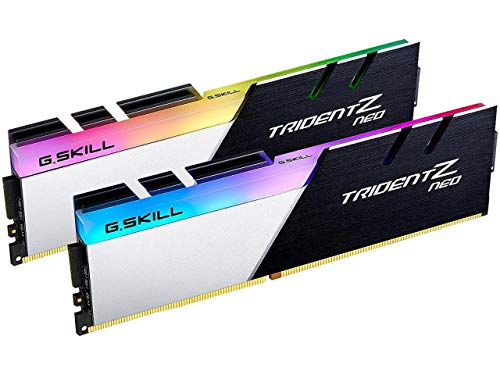
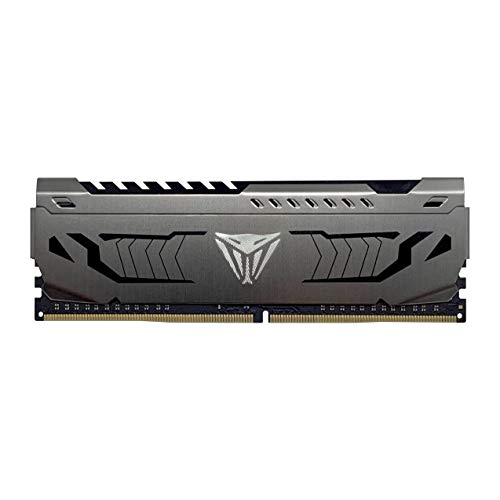
G.Skill Trident Z Neo DDR4 vs Patriot Viper Steel DDR4 at a Glance
| Attribute | G.Skill Trident Z Neo DDR4 | Patriot Viper Steel DDR4 |
|---|---|---|
| Kit Capacity and Modules | 32GB (2 x 16GB) | 16GB (1 x 16GB) |
| Operating Frequency | 3600 MHz (3600MT/s) | 3200 MHz |
| Tested Timings | CL16-19-19-39 | 16-20-40 (CL16) |
| Operating Voltage | 1.35 Volts | 1.35 Volts |
| Overclocking Profile | Intel XMP and JEDEC Default SPD | XMP 2.0 Support |
| Platform Compatibility | Intel and AMD Desktop Platforms | Intel and AMD Desktop Platforms |
| Heat Spreader Construction | Multicolor Aluminum Heat Spreader | Aluminum Heat Spreader |
| Dimensions and Height | 5.2 x 0.67 x 1.7 inches | The listing does not specify |
| Form Factor and Pin Count | 288-pin Non-ECC DDR4 U-DIMM | 288-pin DDR4 UDIMM (listing also notes 240-pin) |
| Best For | High-Performance Dual-Channel Gaming | Single-Slot Expansions and Baseline Builds |
Memory Channel Architecture and Kit Configuration
Memory channel architecture determines how efficiently your processor communicates with system memory. Desktop processors utilize a 128-bit dual-channel bus when two matched memory modules are installed in the proper motherboard slots. When comparing g.skill ripjaws v ddr4 3600 vs patriot viper steel ddr4 configurations or evaluating Patriot Viper Steel DDR4 vs G.Skill Trident Z Neo DDR4, kit configuration is the single largest technical divergence. Trident Z Neo is packaged as a matched 32GB dual-channel set comprising two 16GB modules, whereas Viper Steel is supplied as a single 16GB module.
Because Trident Z Neo provides two identical sticks designed and tested to run as a paired set, your motherboard can immediately populate both memory channels. This doubles the theoretical data transfer path between the CPU memory controller and system RAM. G.Skill specifically warns that memory kits are sold in matched pairs and that combining separate kits or mixing sticks can result in stability issues or boot failure. In contrast, running a single stick of Viper Steel restricts your system to a 64-bit single-channel bus, effectively halving memory bandwidth until a second matching module is sourced.
For demanding workloads, rendering tasks, and modern high-refresh gaming titles, operating on a single memory channel creates an avoidable communication bottleneck. Upgrading to a 32GB dual-module kit like Trident Z Neo delivers the bandwidth modern multi-core processors need to prevent micro-stutter and sustain frame rates under heavy loads. Viper Steel gives you a viable expansion path if your goal is to populate one empty slot in an existing machine, but as a standalone purchase, it limits you to single-channel performance.
Edge: G.Skill Trident Z Neo DDR4 because it supplies a matched pair of modules that activates dual-channel architecture out of the box.
Operating Frequency and System Bandwidth
Memory frequency dictates the data transfer rate of the RAM modules, measured in megahertz or megatransfers per second. Higher operating frequencies translate directly into faster data delivery to the processor cache, reducing memory latency in data-intensive tasks. In this head-to-head evaluation, Trident Z Neo operates at a rated speed of 3600MHz, while Viper Steel runs at 3200MHz. This 400MHz frequency gap represents a noticeable theoretical bandwidth advantage for the faster kit.
When looking at corsair vengeance lpx ddr4 3200 vs g.skill trident z neo ddr4 comparisons, memory frequency often shapes CPU performance scaling. In the comparison of Trident Z Neo vs Viper Steel 3600 vs 3200, the 3600MHz rating on Trident Z Neo is especially beneficial for modern AMD and Intel desktop processors. On AMD platforms, memory frequency is tied directly to the internal Infinity Fabric clock, where 3600MHz represents the widely recognized sweet spot for maintaining a 1:1 ratio. The product listing notes that Trident Z Neo requires BIOS adjustments and motherboard support to achieve this rated speed, as default settings boot at standard JEDEC specifications.
Deciding between G.Skill Trident Z Neo or Patriot Viper Steel for gaming hinges largely on how sensitive your system is to memory throughput. Viper Steel reaches 3200MHz via automatic overclocking, which serves basic desktop workloads admirably. However, the extra 400MHz provided by Trident Z Neo yields higher peak bandwidth, ensuring the processor spends less time waiting for critical game assets to load into memory banks.
Edge: G.Skill Trident Z Neo DDR4 because its 3600MHz frequency rating provides higher overall data throughput than the 3200MHz rating on Viper Steel.
Memory Timings and Absolute Latency
Memory timings describe the delay cycles required for the RAM module to execute specific internal memory operations, such as addressing a row, accessing a column, or writing data. Lower timing figures indicate fewer clock cycles of delay, which translates into lower access latency. When analyzing Trident Z Neo DDR4 3600MHz CL16 alongside Patriot Viper Steel 3200MHz CL16, looking past the primary CAS latency number reveals critical operational differences.
Trident Z Neo lists tested timings of CL16-19-19-39 at its rated 3600MHz speed. Viper Steel features tested timings of 16-20-40 at 3200MHz. While both products feature a primary Column Address Strobe latency of 16 clock cycles, memory timing calculations depend directly on frequency. A CAS latency of 16 cycles at 3600MHz equates to an absolute response time of approximately 8.89 nanoseconds. By contrast, a CAS latency of 16 cycles at 3200MHz results in an absolute latency of 10.0 nanoseconds. This technical distinction is explored further in evaluations like our g.skill trident z neo ddr4 vs crucial ballistix ddr4 breakdown.
Beyond primary CAS latency, the secondary timings on Trident Z Neo (19-19-39) remain tighter relative to its higher frequency than the secondary timings on Viper Steel (20-40). Tighter subtimings reduce turnaround delays between read, write, and precharge commands. This lower cycle delay gives Trident Z Neo an advantage during unpredictable, random-access memory requests, which occur constantly during complex software multitasking and gaming sessions.
Edge: G.Skill Trident Z Neo DDR4 because its combination of 3600MHz speed and CL16-19-19-39 timings delivers lower absolute latency than 3200MHz CL16.
Platform Compatibility and Overclocking Profiles
Both memory products depend on pre-programmed overclocking profiles to achieve their advertised speeds, because DDR4 memory sticks boot at standard JEDEC baseline frequencies by default. To operate at rated speeds, users must enter their system BIOS and activate the appropriate memory profile. How seamlessly this occurs depends on profile implementation and board compatibility.
Trident Z Neo includes an Intel XMP overclock profile as well as a JEDEC default SPD profile. G.Skill notes in its product data that the kit requires BIOS adjustments, with maximum performance contingent on system components such as the motherboard and CPU. G.Skill encourages buyers to consult their motherboard Qualified Vendor List or use the RAM Configurator tool on the G.Skill website to verify compatibility before purchase. When conducting a broader G.Skill Trident Z Neo DDR4 review, having direct access to vendor QVL tools is a significant asset for avoiding memory training failures.
Viper Steel supports XMP 2.0 for automatic overclocking and is explicitly tested across modern Intel and AMD platforms for dependable operation. Similar to patterns seen in our crucial ballistix ddr4 vs patriot viper steel ddr4 comparison, Patriot’s implementation focuses on simple one-click profile activation. Because both memory kits use standard 1.35V operating voltages and offer validated XMP support on Intel and AMD chipsets, platform integration is straightforward across modern desktop systems.
Edge: Tie because both memory modules feature established XMP overclocking profiles tested for modern Intel and AMD desktop motherboards.
Physical Dimensions and Thermal Spreader Design
Thermal dissipation and physical clearance are vital considerations when selecting desktop memory, particularly in systems equipped with large dual-tower air coolers. Memory heatsinks must effectively radiate heat generated by 1.35V operational loads while fitting neatly beneath cooling fans and radiator brackets.
Trident Z Neo features a multicolor aluminum heat spreader designed to manage thermal loads during prolonged operational sessions. Its physical dimensions are listed at 5.2 inches in length, 0.67 inches in width, and 1.7 inches in height, with a kit weight of 5.3 ounces. The 1.7-inch module height (approximately 43mm) provides substantial surface area for heat dissipation, but it requires builders to verify clearance underneath overhang-style CPU air coolers. As seen in our corsair vengeance rgb pro ddr4 vs g.skill trident z neo ddr4 assessment, taller modules demand careful spatial planning inside compact desktop chassis.
Viper Steel incorporates an aluminum heat spreader with a unique design element engineered for structural durability and thermal management. The Patriot listing indicates a single-module package with a 288-pin desktop form factor, though it also mentions 240-pin under specifications. The listing does not specify exact module height dimensions for Viper Steel. In practical terms, single-stick installations present fewer mechanical clearance hurdles than dual-stick arrays, making Viper Steel a simple, unobtrusive component to slot into crowded motherboards.
Edge: Patriot Viper Steel DDR4 because its compact single-module design minimizes potential mechanical interference around CPU cooler mounting hardware.
Pros and Cons
G.Skill Trident Z Neo DDR4
Pros
- Higher 3600 MHz memory speed
- Larger 32GB dual-channel capacity
- Tighter CL16-19-19-39 timings
Cons
- Requires manual BIOS configuration for rated speed
- Taller 1.7-inch module profile
View G.Skill Trident Z Neo DDR4 on Amazon
Patriot Viper Steel DDR4
Pros
- Durable aluminum heat spreader
- Single-stick configuration leaves open slots
- Plug-and-play XMP 2.0 overclock profile
Cons
- Slower 3200 MHz data rate
- Single-channel mode limits bandwidth
- Looser 16-20-40 tested timings
View Patriot Viper Steel DDR4 on Amazon
Who Should Buy Each One
Choose the G.Skill Trident Z Neo DDR4 If
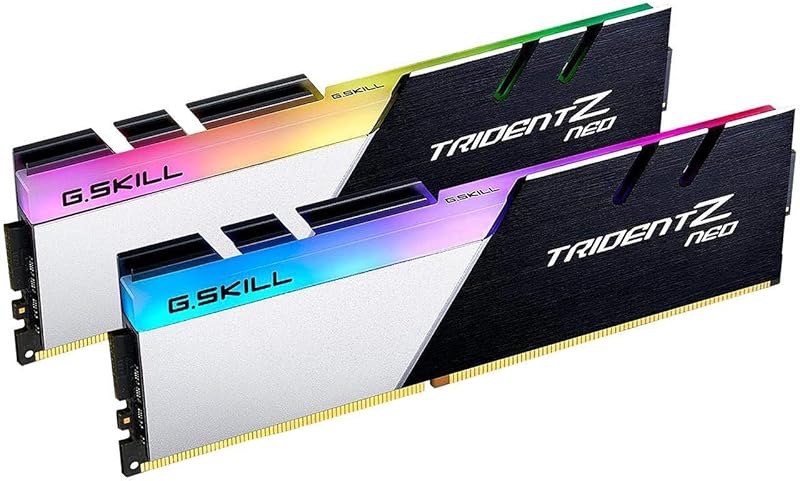
- You want a complete 32GB dual-channel kit that activates high-bandwidth 128-bit operation immediately upon installation.
- Your motherboard and processor are validated on vendor QVL listings to support 3600MHz XMP overclocking.
- You run demanding games or multi-threaded desktop software that benefits from lower absolute latency and tighter timings.
- Your desktop case and CPU cooling solution accommodate modules that stand 1.7 inches tall.
Choose the Patriot Viper Steel DDR4 If

- You need a single 16GB module to upgrade an existing memory setup or populate an open motherboard bank.
- Your motherboard or CPU platform is optimized for 3200MHz operational speeds.
- You prefer a straightforward, single-stick aluminum heat spreader installation with automatic XMP 2.0 support.
- You want a standalone DDR4 desktop component tested across standard Intel and AMD platforms.
Final Verdict
When weighing G.Skill Trident Z Neo vs Patriot Viper Steel, Trident Z Neo emerges as the superior performance choice for modern desktop systems. Its matched 32GB dual-channel configuration, 3600MHz data rate, and tight CL16-19-19-39 timings provide double the memory bus width and significantly higher raw bandwidth compared to a single-stick setup. For builders questioning is G.Skill Trident Z Neo DDR4 worth it, the answer is clear for gaming rigs and high-performance workstations that demand stable high-speed memory.
On the other hand, a Patriot Viper Steel DDR4 review shows that this single 16GB module has a clear, functional role in the desktop market. If you are wondering is Patriot Viper Steel DDR4 worth it, it serves as a practical option for systems that only require a 16GB single-stick capacity boost or for motherboards running older memory controllers where 3200MHz is the stable limit. For any ground-up gaming or workstation build, however, Trident Z Neo remains the clear recommendation.
FAQ
Can Patriot Viper Steel DDR4 run in dual-channel mode?
Because this specific Viper Steel model is sold as a single 16GB module, it operates in single-channel mode when installed on its own. To achieve dual-channel operation, you must install an identical matching module in the corresponding motherboard memory bank.
Does G.Skill Trident Z Neo DDR4 boot at 3600MHz automatically?
No, memory kits boot at default JEDEC SPD speeds when installed using default BIOS settings. To achieve the rated 3600MHz speed and CL16-19-19-39 timings, you must enter your motherboard BIOS and enable the Intel XMP overclocking profile.
Can I mix G.Skill Trident Z Neo DDR4 with another memory kit?
G.Skill explicitly warns against mixing memory kits. Memory modules are sold in matched pairs that are validated to run together as a set. Mixing different memory kits or combining unmatched modules can result in system instability, boot failures, or reduced operating speeds.
Do both memory products support Intel and AMD platforms?
Yes, both products are designed for desktop PC platforms and feature compatibility across Intel and AMD systems. Trident Z Neo includes Intel XMP support with QVL verification tools on the G.Skill website, while Viper Steel features XMP 2.0 support tested on modern Intel and AMD hardware.
What is the physical height of the G.Skill Trident Z Neo modules?
According to the product listing specifications, G.Skill Trident Z Neo modules have a height of 1.7 inches (item dimensions: 5.2 x 0.67 x 1.7 inches). Builders using large CPU air coolers should ensure their cooler bracket provides adequate clearance above the memory slots.
Why does Trident Z Neo have lower latency than Viper Steel at the same CL16 rating?
Although both kits share a CAS latency rating of 16 cycles, absolute latency is a mathematical function of cycle count divided by clock frequency. At 3600MHz, 16 clock cycles take approximately 8.89 nanoseconds to complete, whereas at 3200MHz, 16 clock cycles take 10.0 nanoseconds. Additionally, Trident Z Neo features tighter secondary timings of 19-19-39 compared to 20-40 on Viper Steel.