The decisive difference between cast iron and carbon steel comes down to thermal mass versus cooking agility: cast iron relies on dense, thick walls that soak up heat and hold it relentlessly for deep searing and steady baking, while carbon steel uses a thinner, lighter stamped profile that heats rapidly, maneuvers effortlessly, and responds instantly to flame changes.
Choose cast iron if you prioritize immovable heat retention for thick steaks, rustic cornbread, and campfire cooking; choose carbon steel if you prefer an agile, quick-adjusting pan for high-heat stir-frying, delicate egg cookery, and easy one-handed tossing.


Cast Iron vs Carbon Steel at a Glance
| Feature | Cast Iron | Carbon Steel |
|---|---|---|
| Primary Material | Cast iron (iron-carbon alloy poured into molds) | Carbon steel (iron-carbon sheet stamped and spun) |
| Thermal Response | Slow to heat, slow to cool down | Fast heating, rapid temperature responsiveness |
| Heat Retention | Exceptional thermal mass for steady temperatures | Moderate heat retention; releases heat faster |
| Surface Texture | Slightly textured from sand-casting molds | Smooth rolled sheet surface |
| Handle Design | Integral molded cast iron handles | Attached wooden handles or silicone-sleeved metal |
| Cooktop Compatibility | Stovetop (gas listed), oven, campfire, grill | Gas, electric, induction, glass, campfire, grill |
| Maximum Oven Tolerance | Oven safe (exact maximum temperature not listed) | Up to 600°F to 660°F (silicone sleeve/wood limits vary) |
| Cleaning Requirement | Hand wash only, dry immediately, oil after washing | Hand wash only, dry immediately, oil after washing |
| Best For | Slow roasting, deep frying, baking, high-heat steak searing | Wok stir-frying, sautéing, omelets, fast pan-searing |
Heat Retention and Thermal Mass
The culinary physics of heat retention depend directly on mass. A pan with greater thickness and physical density stores a massive reservoir of thermal energy. When you place a cold, thick cut of meat onto hot cookware, the surface temperature naturally drops. Cookware with immense heat retention minimizes this temperature plunge, ensuring continuous browning without boiling the meat in its own rendered juices. When deciding between Utopia Kitchen Cast Iron Skillet 12 Inch and high-temperature alternatives, cast iron serves as an unwavering heat sink that remains scorching hot regardless of how much cold food hits the cooking surface.
Carbon steel features a lighter structural gauge. While carbon steel heat retention is noticeably better than aluminum or basic stainless steel, it does not match the heavy thermal reserve of thick-walled cast iron. In a culinary test of cast iron or carbon steel for searing dense protein like a two-inch ribeye, cast iron maintains its baseline temperature with exceptional stability. However, the lighter composition of carbon steel allows it to recover lost temperature rapidly once placed over an active flame. While exploring enameled iron alternatives in our le creuset vs staub comparison, thermal density proves to be the ultimate decider for prolonged braising and roasting.
If your daily cooking involves steady, high-temperature frying, deep searing, or hearth-style baking where you want the pan to hold its heat away from the burner, cast iron stands unmatched. Carbon steel provides sufficient heat for browning, but it gives up its heat much faster when loaded with chilled ingredients.
Edge: Cast iron, because its heavier mass holds onto intense heat far longer during demanding cooking tasks.
Weight and Maneuverability
Physical handling fundamentally changes how you interact with cookware every day. Cast iron is notoriously heavy, requiring deliberate two-handed lifting, sturdy pot holders, and stationary cooking techniques. Moving a large twelve-inch cast iron skillet across burners or transferring it into an oven requires wrist strength and secure balance. Single-piece cast iron handles also conduct heat directly from the pan body, meaning you must always keep oven mitts or silicone grips nearby to prevent burns.
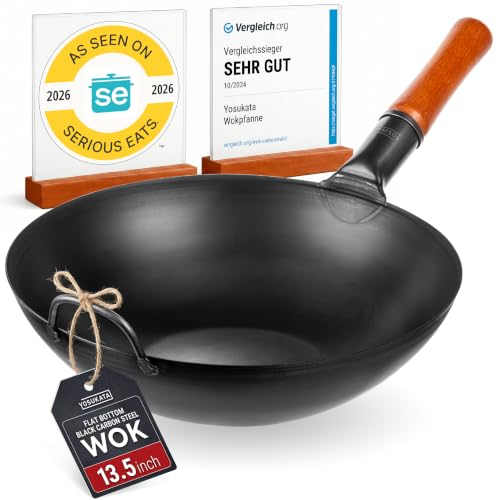
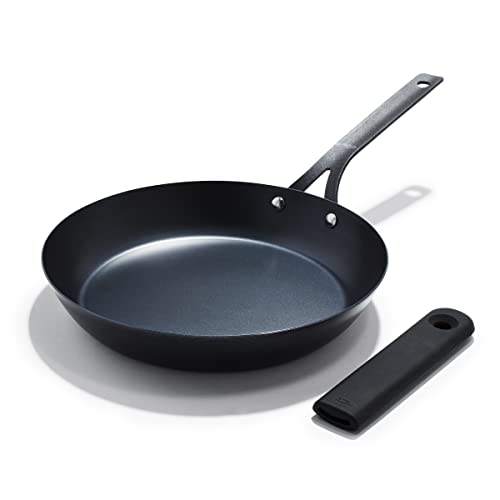
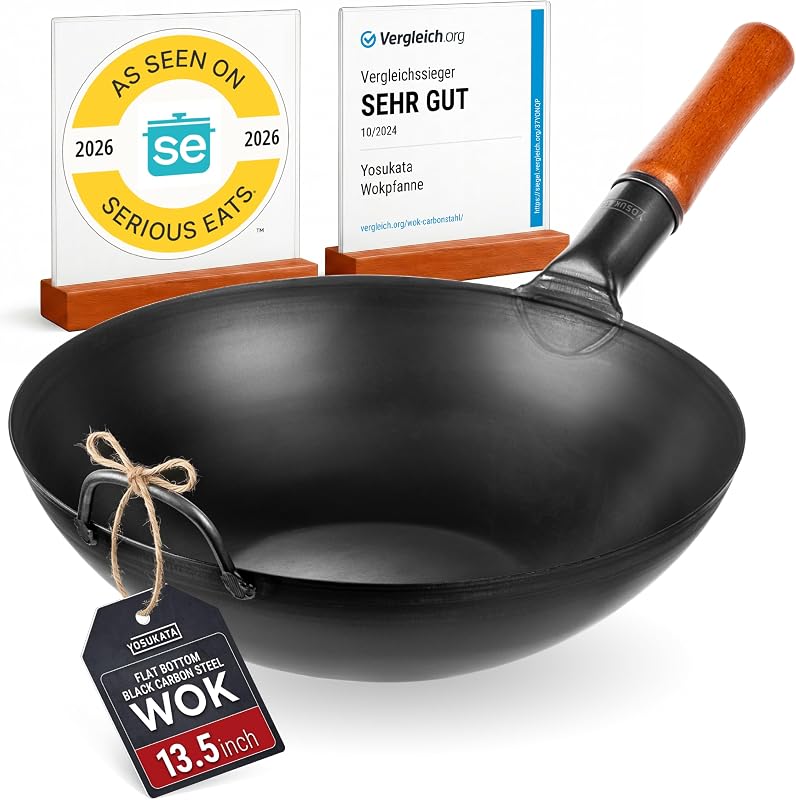
By contrast, the cast iron vs carbon steel weight comparison reveals an immediate ergonomic advantage for carbon steel. Pieces like the OXO Obsidian 10″ Carbon Steel Frying Pan are explicitly engineered as lightweight alternatives to bulky iron skillets. This reduced mass allows you to flip vegetables, tilt the pan to baste proteins, and transfer food onto serving plates with one hand. Furthermore, carbon steel vessels frequently incorporate user-friendly handles, such as the beech wood grip on the YOSUKATA 13.5″ Pre-Seasoned Flat Bottom Black Carbon Steel Wok or OXO’s removable silicone sleeve, both of which protect hands from intense heat during stovetop work.
For cooks who struggle with heavy lifting or who enjoy dynamic sautéing techniques that involve active wrist flicks, carbon steel eliminates physical fatigue. Cast iron provides undeniable stability on the burner, but carbon steel delivers effortless kitchen mobility.
Edge: Carbon steel, thanks to its lighter profile and comfortable, heat-mitigating handle configurations.
Temperature Responsiveness and Heat Control
Temperature responsiveness refers to how quickly a pan heats up when the flame is turned high and how fast it cools down when you lower the burner. In culinary techniques that demand nuanced heat adjustments, responsiveness is critical. If your pan takes ten minutes to drop from a hard sear to a gentle simmer, delicate ingredients risk scorching before the metal can adapt to the lower setting.
Cast iron is sluggish to respond. Because it stores immense thermal energy, lowering your stovetop dial does not instantly cool the cooking surface. In contrast, carbon steel reacts with the nimbleness of professional sauté pans. When stir-frying vegetables or preparing sauces in a wok, you can flash-sear ingredients at maximum heat and drop the flame to prevent garlic or aromatics from burning. This balance of responsiveness and durable metal performance is prized in demanding setups, much like selecting high-performance hardware architectures evaluated in our asus rog strix b650e-f vs msi mpg x670e carbon breakdown.
For recipes requiring precise thermal staging-such as searing scallops before basting with butter, or managing quick-boil reductions-carbon steel gives the cook immediate control over the heat curve without forcing you to pull the pan off the burner entirely.
Edge: Carbon steel, as it adjusts quickly to burner adjustments to prevent delicate foods from scorching.
Seasoning and Non-Stick Development
Both cast iron and carbon steel rely on polymerized cooking oils to form a natural, chemical-free, non-stick patina over time. However, the surface texture of the raw metal influences how that patina builds and performs. Traditional cast iron is poured into sand molds, leaving a microscopic pebbled texture across the skillet floor. Factory pre-seasoning coats this texture, as seen on the Utopia Kitchen Cast Iron Skillet Set, but building a glass-smooth seasoning layer requires repeated cooking sessions and regular oil coats.
Carbon steel begins as rolled sheet metal, resulting in a naturally flat, smooth surface right from the manufacturing floor. When pre-seasoned at high temperatures-such as Yosukata’s 600°F factory treatment-the metal establishes a slick barrier quickly. In practical evaluations of cast iron or carbon steel for eggs, carbon steel often achieves a slide-free omelet surface faster than rough-textured cast iron because eggs have fewer surface valleys to grip. The OXO Obsidian specifically targets this nonstick-like ease, making delicate fish fillets and folded omelets far less stressful to release.
While both materials improve the more you cook with them, carbon steel’s smooth starting plane offers a shorter runway to achieving a slick cooking surface, whereas cast iron takes longer to smooth out its rugged casting marks.
Edge: Carbon steel, because its smooth rolled surface forms a slick non-stick patina with less initial effort.
Cooktop Compatibility and High-Heat Limits
A reliable pan should move seamlessly across cooking environments without warping or failing under extreme temperatures. Cast iron is practically indestructible when exposed to intense heat. Pieces like Utopia Kitchen’s skillets thrive on gas stoves, inside baking ovens, directly on charcoal kettle grills, and over open campfires. They can absorb blazing radiant heat without structural deformation, making them essential companions for rugged outdoor cookery like the ceramic setups examined in our primo oval xl vs vision grills classic guide.
Carbon steel matches this versatility across modern cooktops while broadening indoor versatility. While some basic cast iron listings specify gas compatibility, premium carbon steel models like the OXO Obsidian and Yosukata wok boast universal cooktop compatibility across gas, electric, glass, and induction stoves. OXO rates its carbon steel pan for oven temperatures up to 600°F (with select listing highlights citing up to 660°F), allowing users to finish broiled meats under scorching residential elements. However, certain carbon steel pans feature fixed beech wood handles that prevent oven use entirely, requiring buyers to verify handle materials before purchasing.
While carbon steel provides broader certified cooktop support including induction, cast iron’s single-piece metal casting eliminates any risk of handle failure in blazing campfires and deep-oven applications.
Edge: Tie. Cast iron has no handle limitations under open fires, while carbon steel provides explicit induction and universal cooktop certifications.
Maintenance and Everyday Care
Maintaining raw metals requires attention to detail to preserve the seasoning layer and prevent corrosive rust. Both metals share identical care rules: neither material is dishwasher-safe, neither tolerates long water soaks, and both require prompt drying followed by a thin wipe of protective vegetable oil. In any cast iron vs carbon steel maintenance comparison, treating either pan like standard stainless cookware will quickly result in surface rust.
The differences lie in structural resilience against thermal shock and physical wear. Cast iron’s thick profile makes it heavy and brittle; dropping it on hard tile can crack the metal, but its sheer density means metal spatulas will never bend the cooking surface. Carbon steel contains higher tensile ductility, which prevents cracking, but thin-gauge carbon steel can warp if submerged in cold water while piping hot. Ensuring long-term material integrity requires consistent care, parallel to managing system component health in guides like crucial ballistix ddr4 vs patriot viper steel ddr4.
Daily cleaning for both requires warm water, a non-abrasive sponge, and mild dish soap if necessary, followed by high-heat drying on the burner. Because neither pan offers a shortcut around hand washing and routine re-oiling, maintenance is a dead heat.
Edge: Tie. Both cookware types require hand washing, rapid drying, routine oiling, and protection from rust.
Pros and Cons
Cast Iron

Pros
- Exceptional heat retention
- Even heat distribution
- Campfire and grill safe
- Pre-seasoned with vegetable oil
- Durable one-piece cast handle
Cons
- Significantly heavier physical weight
- Hand wash only maintenance
- Slow to adjust temperatures
View Utopia Kitchen Cast Iron Skillet 12 on Amazon
Carbon Steel
Pros
- Lightweight for easy handling
- Heats quickly and evenly
- Oven safe up to 660°F
- Compatible with all stovetops including induction
- Ergonomic wood or silicone handles
Cons
- Less heat retention than cast iron
- Requires regular hand wash care
- Wooden handles limit oven use
View YOSUKATA 13.5″ Pre-Seasoned Flat Bottom Black on Amazon
Who Should Buy Each One
Choose the Cast Iron If
- You cook thick cuts of steak, pork chops, and burgers that demand uninterrupted, blistering heat retention.
- You regularly bake cornbread, cobblers, and deep-dish pizzas directly inside your kitchen oven.
- You need rugged, virtually indestructible cookware designed for open campfires and charcoal grills.
- You prefer heavy, stationary pans that stay completely stable on the burner while stirring hearty stews.
Choose the Carbon Steel If
- You want a lightweight pan that allows comfortable one-handed flipping, tossing, and plating.
- You prepare fast-cooking recipes, stir-fries, delicate fish, or folded breakfast omelets.
- You cook on an induction cooktop and need verified, responsive magnetic performance.
- You value rapid preheating and quick cooling adjustments over heavy thermal mass.
Final Verdict
For most home cooks seeking an everyday pan that balances performance with physical comfort, carbon steel is the superior general-purpose choice. In this carbon steel vs cast iron evaluation, carbon steel delivers eighty percent of cast iron’s searing capability while shaving off substantial weight. Its smooth stamped body develops a natural non-stick surface quickly, its fast thermal recovery suits modern weeknight meals, and its lighter handling prevents wrist strain during everyday sautéing. If you wonder is carbon steel worth it, the answer is an easy yes for anyone who finds cast iron too heavy for daily use.
Cast iron remains the undisputed champion when pure heat capacity and rugged durability take precedence. For slow-roasting root vegetables, searing thick dry-aged steaks, baking skillet bread, or packing cookware for an outdoor camping trip, cast iron’s dense walls provide reliable, unchanging heat that carbon steel cannot duplicate. If your cooking leans heavily toward classic comfort baking and dense protein searing, traditional cast iron remains an essential kitchen workhorse.
FAQ
Is carbon steel lighter than cast iron?
Yes. The cast iron vs carbon steel weight difference is substantial because carbon steel cookware is pressed and stamped from thin sheets of metal rather than poured into thick sand molds. This makes carbon steel significantly easier to maneuver, lift, and toss with one hand.
Which pan is better for searing steak?
Cast iron holds a slight advantage for searing thick steaks because its immense thermal mass prevents the pan’s surface temperature from plummeting when cold meat is added. Carbon steel also sears exceptionally well, but cast iron provides deeper, more consistent crust formation on thick cuts.
Can you cook eggs in cast iron and carbon steel?
Both materials can cook eggs cleanly once properly seasoned, but carbon steel is generally preferred for eggs and omelets. Because carbon steel features a smooth rolled metal surface rather than the pebbled texture common to cast iron, it develops a slick, low-friction non-stick patina much faster.
Are cast iron and carbon steel induction compatible?
Both materials contain high amounts of iron, making them naturally magnetic. However, carbon steel products like the OXO Obsidian and Yosukata wok explicitly verify broad induction compatibility in their specifications, whereas some cast iron listings only specify gas stovetop use. Always check manufacturer specifications before purchasing for induction ranges.
How do you wash and dry these pans without causing rust?
Both materials must be washed by hand using warm water and a sponge. Never place them in an automated dishwasher or leave them soaking in a sink. After washing, dry the pan immediately using a towel or place it over low burner heat for two minutes, then rub a thin drop of vegetable oil over the surface.
Can carbon steel go in the oven like cast iron?
It depends on the handle material. An all-metal cast iron skillet can enter the oven at virtually any standard cooking temperature. Carbon steel pans like the OXO Obsidian are oven safe up to 600°F (or 660°F depending on configuration), but models featuring traditional wooden handles cannot be placed in the oven.