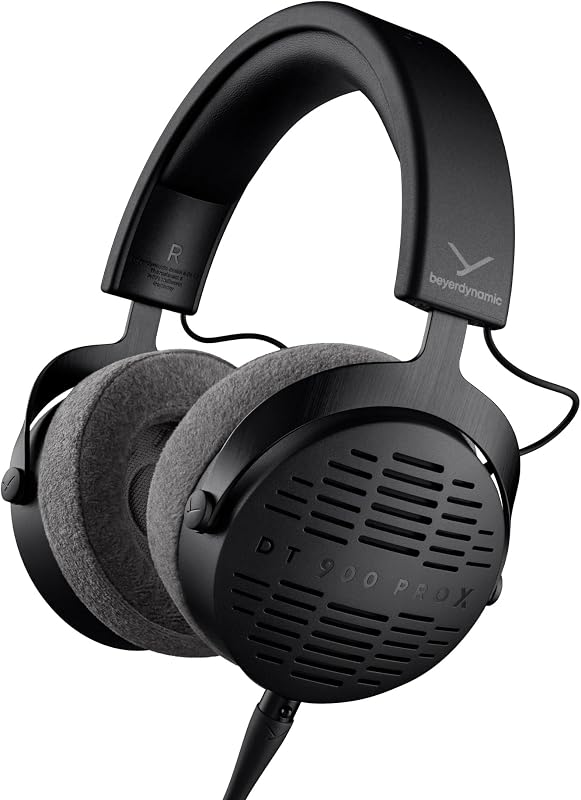
The core difference that decides the choice between these two studio monitors comes down to acoustic driver scale and cabling modularity: the Audio-Technica ATH-M50x provides proprietary 45mm large-aperture drivers paired with a detachable cable system and full 90-degree ear cup swivel, while the Audio-Technica ATH-M20x utilizes 40mm dynamic drivers anchored by a fixed, non-removable 9.8-foot straight cable and 15-degree ear cup articulation.
Audio engineers and critical listeners who require deep acoustic accuracy, modular cabling, and single-ear monitoring flexibility should select the ATH-M50x, whereas home recordists needing a dedicated, closed-back tracking headphone with an extra-long lead for stationary microphone sessions should choose the ATH-M20x.


Audio-Technica ATH-M50x vs ATH-M20x at a Glance
| Feature | Audio-Technica ATH-M50x | Audio-Technica ATH-M20x |
|---|---|---|
| Driver Size | 45 mm large aperture | 40 mm dynamic |
| Magnet & Voice Coil | Rare earth magnets, copper-clad aluminum wire | Rare earth magnets, copper-clad aluminum wire |
| Frequency Range | Extended range (specific Hz bounds not listed) | 15 Hz to 20 kHz |
| Impedance | 38 ohms | Not listed |
| Cable System | Detachable cable design | Attached 9.8-foot left-side straight cable |
| Ear Cup Swivel | 90-degree articulation | 15-degree articulation |
| Acoustic Design | Circumaural closed-back sound isolation | Circumaural closed-back sound isolation |
| Connectors & Termination | Not listed | 3.5 mm mini plug with 1/4″ snap-on adapter |
| Included Equipment & Extras | 2-year warranty on parts and labor | Protective case, headband, user manual, Auray holder |
| Best For | Critical mixing, mastering, and mobile tracking | Stationary tracking, podcasting, and basic monitoring |
Driver Architecture and Sound Quality
Acoustic evaluation begins at the transducer assembly, where driver diameter dictates how much air the diaphragm moves and how effortlessly it resolves frequency extremes. The ATH-M50x features proprietary 45mm large-aperture drivers built with rare earth magnets and copper-clad aluminum wire voice coils. This acoustic engineering provides exceptional clarity across an extended frequency response, with particular emphasis on deep, accurate bass reproduction. Because the larger diaphragm surface displaces more air with less excursion, low-frequency transients remain tight and controlled rather than smeared during demanding playback sessions. In any rigorous Audio-Technica ATH-M50x review, this bass discipline and resolving power are the defining technical traits.
In contrast, the ATH-M20x relies on 40mm dynamic drivers that also utilize rare earth magnets and copper-clad aluminum wire voice coils. The manufacturer tunes this smaller driver assembly for enhanced low-frequency performance across a stated frequency bandwidth of 15 Hz to 20 kHz. While both designs share the same copper-clad voice coil metallurgy, the 40mm driver must work harder to project lower octaves. The result is a frequency response that delivers solid punch for tracking rhythm sections, but lacks the ultimate micro-detail and sub-bass precision found in the larger 45mm configuration. Readers exploring wider monitor options can see how driver execution contrasts across categories in our audio-technica ath-m50x vs sennheiser hd 560s comparison.
When assessing ATH-M50x vs M20x sound quality, the distinction centers on accuracy versus baseline tracking emphasis. The ATH-M50x presents an extended acoustic picture where mid-range nuances, vocal sibilance, and delicate reverb tails remain clearly separated from low-end fundamentals. The ATH-M20x produces a reliable, punchy monitoring environment that handles tracking duties admirably, but does not present the same spatial precision or extended range required for surgical mixing judgments. For critical decisions where subtle frequency masking cannot be tolerated, the larger drivers make an undeniable operational impact.
Edge: Audio-Technica ATH-M50x delivers superior acoustic resolution and deeper, more controlled bass reproduction through its larger 45mm proprietary drivers.
Cable System and Studio Longevity
Cable management represents one of the most critical mechanical differences in the ATH-M20x vs ATH-M50x decision. The ATH-M50x incorporates a detachable cable assembly, allowing users to uncouple the cord directly at the base of the left ear cup. In a professional work environment, headphone cables endure constant punishment from rolling studio chairs, foot snags, and console entanglement. A detachable interface ensures that if an internal copper lead fractures, the headphone itself remains fully functional; replacing the wire requires only seconds and no specialized tools or soldering irons.
Conversely, the ATH-M20x is manufactured with an attached 9.8-foot (3.0-meter) cable that exits permanently from the left ear cup. This integrated design simplifies assembly and eliminates connection resistance at the ear cup, making it ready to plug into audio interfaces out of the box. However, the non-removable connection means that any internal wire shear, damaged strain relief, or broken plug puts the entire headphone out of service unless you perform manual cable repair. Similar trade-offs between fixed leads and modular cabling are explored in our audio-technica ath-m20x vs beyerdynamic dt 770 pro analysis.
Beyond repairability, the ATH-M50x detachable cable design unlocks operational versatility across varied environments. A sound engineer can connect a short straight cable for desktop editing, a coiled cable for console mixing to prevent floor dragging, or a longer line for tracking booths. With the ATH-M20x, you are permanently married to the full 9.8-foot length regardless of whether you sit inches from a laptop or paces away from a mixing rack. For users debating is ATH-M50x worth it on build structure alone, the modular cable connection provides a massive longevity safeguard.
Edge: Audio-Technica ATH-M50x wins easily because its detachable cable system protects your gear investment and allows quick replacement when cords wear out.
Ear Cup Articulation and Monitoring Flexibility
Headphone frame articulation determines how well a monitoring tool integrates into dynamic studio tracking and live mixing workflows. The ATH-M50x features 90-degree swiveling ear cups that rotate smoothly on vertical and horizontal axes. This generous range of movement allows audio engineers, producers, and DJs to swing one ear cup completely off the ear while keeping the other anchored firmly in place. One-ear monitoring is standard practice during live tracking sessions, broadcast production, and vocal takes where performers need to hear their natural acoustic voice alongside the headphone cue mix.
The ATH-M20x takes a far more rigid structural approach, offering only 15-degree swiveling ear cups. This limited pivot range is engineered specifically to help the ear pads contour naturally against the temporal bone and jawline of varied head shapes. While this 15-degree tilt ensures comfortable clamping force and an acoustic seal during normal listening, it does not support one-ear tracking. Attempting to rest one side behind the ear forces the headband into an awkward twist, causing the frame to slide off the head or apply unbalanced pressure against the cranium.
Storage and transit ergonomics also separate the two designs. The 90-degree pivot mechanism on the ATH-M50x allows the ear cups to fold completely flat, making the headphone compact enough to slip neatly into gear bags without taking up excessive vertical depth. The ATH-M20x remains locked in its fixed horseshoe geometry, requiring more storage space and leaving its yoke hinges exposed to lateral stress during transport. For comparable fit and ergonomic assessments, read our audio-technica ath-m20x vs sennheiser hd 660s2 breakdown.
Edge: Audio-Technica ATH-M50x takes this category due to 90-degree ear cup swivel that supports one-ear monitoring and flat-folding storage.
Tracking Performance and Hardware Connectivity
Headphones used in recording spaces face different operational requirements than those dedicated purely to post-production balance. When evaluating the ATH-M50x or ATH-M20x for tracking, the physical reach of the cable and interface compatibility become immediate priorities. The ATH-M20x is supplied with an attached 9.8-foot cable terminating in a 3.5mm mini plug, accompanied by a 1/4″ snap-on adapter. In a vocal booth or live drum room, that long 9.8-foot cable allows musicians to move freely around instrument stands, pedalboards, and microphone booms without yanking the headphone jack from the monitoring distribution box.
The ATH-M50x lists an impedance rating of 38 ohms, making it exceptionally easy to drive from low-output headphone amplifiers, laptop audio outputs, mobile devices, and professional audio interfaces alike. The listing data does not specify the exact included cable lengths or termination adapters for the ATH-M50x, though its detachable nature accommodates specialized studio cabling. While both headphones function as reliable closed-back monitors, the ATH-M20x bundle explicitly includes an Auray headphone holder with a padded cradle and a protective headphone case, making it an all-in-one tracking station right out of the box.
For high-volume tracking environments where guitarists or drummers generate substantial acoustic pressure, both units deliver solid signal clarity without early breakup. The enhanced low-frequency tuning of the ATH-M20x helps bassists and drummers latch onto tempo grooves during recording passes. However, if tracking turns immediately into mixing, the ATH-M50x provides the impedance efficiency and sonic fidelity required to transition seamlessly between recording takes and critical mix decisions. Those interested in studio gear pairings can review our audio-technica ath-m50x vs sennheiser hd 660s2 guide.
Edge: Audio-Technica ATH-M20x secures a practical edge for stationary tracking setups thanks to its built-in 9.8-foot cable run, 1/4″ snap-on adapter, and included desk holder.
Sound Isolation and Headband Construction
Acoustic bleed can ruin sensitive vocal takes, while ambient studio noise compromises critical listening. Both the ATH-M50x and the ATH-M20x employ circumaural, closed-back architectures designed specifically to isolate the listener from outside sound and prevent cue bleed from leaking into live studio microphones. The ear pads contour entirely around the ears, establishing a mechanical boundary that attenuates ambient environmental noise in untreated spaces, broadcast booths, and active editing suites.
Where these two models diverge is in their physical construction materials and component grading. The ATH-M50x uses professional-grade earpad and headband materials engineered to provide enhanced durability and long-session comfort. Its robust construction is supported by an official 2-year warranty on parts and labor from Audio-Technica. In any comprehensive Audio-Technica ATH-M20x review, the materials are noted for their generous cushioning on the headband and earpads, providing high comfort during tracking blocks, but using a simpler headband chassis that lacks the reinforcement found on its higher-series sibling.
Both models feature passive sound isolation without electronic cancellation circuits, ensuring there is no artificial DSP coloration introduced into your monitoring stream. Whether you are cutting vocals or editing spoken word podcasts, the circumaural seal on both pairs performs reliably. For an in-depth view of how closed-back isolation compares to open designs, see our audio-technica ath-m20x vs sennheiser hd 560s comparison. Because both headphones leverage closed-back circumaural seals to block external sound, acoustic isolation performance remains fundamentally balanced across both frames.
Edge: Tie, as both models use circumaural closed-back designs that contour around the ear to deliver effective passive sound isolation.
Pros and Cons
Audio-Technica ATH-M50x

Pros
- Proprietary 45mm large aperture drivers
- Modular detachable cable connection
- 90-degree swiveling ear cups
- Two-year parts and labor warranty
Cons
- Ear cups do not swivel beyond 90 degrees
- More complex moving parts in hinges
View Audio-Technica ATH-M50x on Amazon
Audio-Technica ATH-M20x

Pros
- Generous 9.8-foot studio tracking cable
- Includes snap-on 1/4 inch adapter
- Bundled with headphone holder and case
- Effective circumaural passive sound isolation
Cons
- Non-detachable fixed cable design
- Limited 15-degree ear cup swivel
View Audio-Technica ATH-M20x on Amazon
Who Should Buy Each One
Choose the Audio-Technica ATH-M50x If
- You need critical acoustic translation, wide bandwidth, and accurate bass control for mixing and mastering audio.
- You require a detachable cable interface so you can replace damaged cords without discarding your headphones.
- You monitor tracks using one ear while performing DJ sets, recording vocals, or running live sound consoles.
- You want a robust frame that folds flat for easy transport and is backed by a 2-year manufacturer warranty.
Choose the Audio-Technica ATH-M20x If
- You need a dedicated tracking headphone for stationary vocalists, podcasters, or instrumentalists in a studio booth.
- You want a long 9.8-foot straight cable that reaches console headphone outputs or floor interfaces with ease.
- You need an immediate bundle package that comes complete with a headphone holder, protective case, and 1/4″ adapter.
- You want closed-back sound isolation for basic audio monitoring without paying for features like 90-degree swivel hinges.
Final Verdict
For audio engineers, music producers, and content creators who require professional-grade precision, the Audio-Technica ATH-M50x is the definitive choice. Its proprietary 45mm large-aperture drivers deliver the acoustic control, transient speed, and low-frequency accuracy necessary for making dependable mixing and mastering adjustments. Combined with a modular detachable cable system that safeguards against common wire failure and 90-degree swiveling ear cups that enable effortless one-ear monitoring, the ATH-M50x represents an enduring studio tool that adapts to virtually any recording or editing workflow.
The Audio-Technica ATH-M20x remains an exceptionally capable closed-back monitor for musicians who need a reliable tracking tool. Its 40mm dynamic drivers are tuned specifically for low-frequency clarity, making it easy for vocalists and instrumentalists to lock into rhythm tracks during recording passes. While its fixed 9.8-foot cable and 15-degree swivel limit its versatility for mobile editing and DJ tasks, those exact features make it an ideal set-and-forget headphone for stationary studio desks, podcast tables, and tracking rooms.
FAQ
Is the ATH-M50x worth it compared to the ATH-M20x?
Yes, the ATH-M50x is well worth the step up for users involved in mixing, mastering, or field recording. The larger 45mm proprietary drivers provide noticeable gains in acoustic resolution and low-end accuracy, while the detachable cable mechanism and 90-degree swiveling ear cups dramatically improve long-term durability and ergonomic versatility.
Can you detach the cable on the ATH-M20x?
No, the ATH-M20x features a permanently attached 9.8-foot straight cable that exits from the left ear cup. If you require a detachable cable system that allows you to swap broken cords or change wire lengths, you should choose the ATH-M50x.
Should you choose the ATH-M50x or ATH-M20x for mixing?
The ATH-M50x is the superior choice for mixing. Its 45mm drivers with rare earth magnets and copper-clad aluminum voice coils offer the extended frequency clarity and deep, uncolored bass response needed to identify acoustic masking and set accurate EQ levels, whereas the ATH-M20x is voiced primarily for basic tracking.
Which headphone works better for live tracking sessions?
The ATH-M20x is exceptionally well suited for stationary tracking sessions because its 9.8-foot single-sided cable provides plenty of slack to move around microphones and instruments, and its 1/4″ snap-on adapter connects directly into studio headphone distribution amps without extra purchases.
Do these headphones require an external headphone amplifier to run?
Neither headphone requires a dedicated high-powered amplifier. The ATH-M50x has a low impedance of 38 ohms, allowing it to reach strong listening volumes directly from laptop outputs, audio interfaces, and mobile devices, and the ATH-M20x is similarly designed for easy driving from standard 3.5mm outputs.
How does the ear cup swivel compare between the two models?
The ATH-M50x provides full 90-degree swiveling ear cups that rotate outward for quick single-ear monitoring and fold flat for compact storage. The ATH-M20x features only 15-degree swiveling ear cups, which adjust just enough to conform to your head shape but do not support single-ear listening styles.